
Main Courses
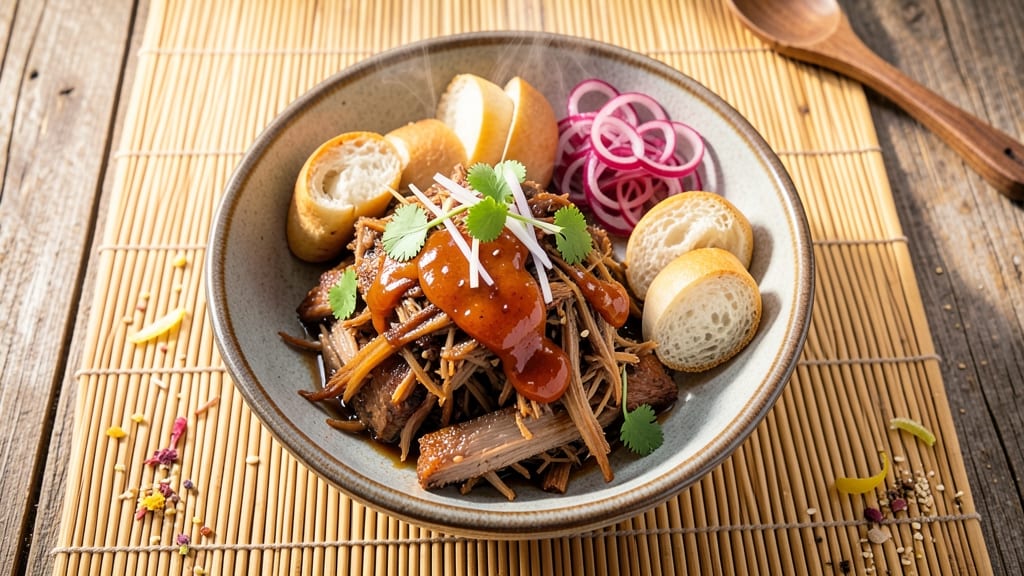
This authentic Hawaiian pulled pork recipe brings the rich, smoky flavors of traditional kalua cooking to your kitchen—just like the pitmasters of old Hawaii. The secret lies in a five-spice tamarind rub that transforms tough pork shoulder into tender, sticky bites with a caramelized crust.
I’ve perfected this method over years of studying both the imu (underground oven) technique and its modern adaptations, ensuring every bite delivers that signature Hawaiian glow.
The process starts with a dry rub of salt, garlic, tamarind, and spices that create a deep, aromatic crust. Slow-cooking the pork—whether in a smoker, oven, or even a Dutch oven—allows the fat to render and the meat to break down into perfectly tender, pull-apart texture.
This isn’t just pulled pork; it’s a celebration of Hawaiian culture, where every element—from the smoky aroma to the tangy-sweet glaze—tells a story.
What you’ll end up with is juicy, smoky pork that’s sticky enough to pull with a fork, infused with the bright, citrusy notes of tamarind and the warmth of Hawaiian spices.
Serve it piled high on steamed rice, alongside macaroni salad or grilled pineapple, and you’ve got a meal that tastes like a tropical feast. The best part? This method works just as well for a family dinner as it does for a big gathering.
Whether you’re recreating a Hawaiian luau at home or simply craving the flavors of the islands, this recipe delivers restaurant-quality results with a touch of authenticity.
The slow-cooked method ensures deep flavor penetration, while the tamarind glaze adds that signature tangy-sweet balance. Ready to bring a little aloha to your table?
Ingredients for authentic hawaiian pulled pork
Four pounds of pork shoulder and fifteen ingredients transform into authentic Hawaiian kalua pork.
| Ingredient | Amount | Notes |
|---|---|---|
| Boneless Pork Shoulder 🐖 | 4 lb | Well-marbled for juiciness |
| Kosher Salt 🧂 | 1 ½ tbsp | Diamond Crystal preferred |
| Garlic Cloves 🧄 | 8 cloves | Peeled, smashed for rub |
| Tamarind Paste 🍯 | ½ cup | Unadulterated, block preferred |
| Ground Cumin 🌿 | 1 tbsp | Toasted for depth |
| Ground Coriander 🌿 | 1 tbsp | Freshly ground preferred |
| Ground White Pepper 🌶️ | ½ tbsp | Not black pepper |
| Ground Nutmeg 🌿 | ½ tsp | Freshly grated |
| Fresh Ginger 🌿 | ¼ cup | Finely grated, peeled |
| Brown Sugar 🍚 | ¼ cup | Light or dark preferred |
| Apple Cider Vinegar 🍎 | ¼ cup | Unfiltered preferred |
| Hawaiian Sweet Breadfruit 🍍 | ½ cup | Dried, chopped or store-bought |
| Unsalted Butter 🧈 | 2 tbsp | Cold, cubed for glaze |
| Fresh Pineapple Juice 🍍 | ½ cup | Strained, no pulp |
| Green Onions 🧅 | 4 whole | White and green parts |
The pork shoulder is the foundation—look for well-marbled cuts with visible fat between the muscles. Costco or local butchers often carry the best quality; avoid lean cuts that dry out. Tamarind paste is non-negotiable for authenticity—block form from Asian markets is superior to powdered versions. Fresh ginger and garlic should be vibrant; bruised or shriveled means compromised flavor. The breadfruit adds that signature Hawaiian sweetness—dried versions at specialty stores work perfectly, or use unsweetened pineapple if unavailable. For the spices, Penzeys or bulk bins ensure maximum freshness, as ground spices lose potency quickly.
No tamarind? Substitute 1/4 cup lime juice plus 1 tbsp brown sugar—it won’t be identical but works in a pinch. Fresh ginger too fibrous? Powdered ginger at half the amount suffices. The apple cider vinegar can be swapped for white vinegar with 1 tsp honey, though the depth won’t match. Breadfruit unavailable? Dried mango or apricot provides similar sweetness. For the glaze, if you can’t find sweet breadfruit, toasted coconut flakes add a tropical note. The green onions are purely for garnish—skip if you prefer a cleaner presentation.
Pork shoulder keeps 3-4 days in the fridge once cooked; portion into containers for easy reheating. The dry rub can be made 2 days ahead and stored in an airtight container. Fresh ginger and garlic should be used within 1 week of purchase for optimal flavor. The finished pulled pork freezes beautifully for 3 months—portion before freezing for quick meals. For serving, keep the pineapple juice and butter mixture separate until ready to glaze, as it can curdle if mixed too early.
Why You'll Love This Recipe
- Here’s what sold me: that tamarind paste isn’t just a flavor—it’s the secret weapon. The slow cook turns it into this sticky, caramelized glaze that clings to every bite, balancing the richness of the pork with just the right tart kick. (Yes, even on a Tuesday night.)
- One-Pan Magic: Honestly, I swear by this—just rub that pork shoulder with salt, garlic, and cumin, then let the tamarind do its thing. No chopping veggies, no extra pots, and the smoky-sweet aroma fills the house before it’s even done.
- Tamarind Tang Magic: Here’s what sold me: that tamarind paste isn’t just a flavor—it’s the secret weapon. The slow cook turns it into this sticky, caramelized glaze that clings to every bite, balancing the richness of the pork with just the right tart kick. (Yes, even on a Tuesday night.)
- Leftover Heaven: Between us, this recipe makes way more than I need for one meal—and that’s a good thing. The pulled pork keeps perfectly for days, so I can throw it into rice bowls, sandwiches, or even breakfast burritos without breaking a sweat.
Step-by-step instructions for authentic Hawaiian pulled pork
Transform a simple pork shoulder into tender, aromatic pulled pork with this traditional Hawaiian method.
Prepare the Five-Spice Rub
In a medium bowl, combine the 1.5 tbsp kosher salt, 8 smashed garlic cloves, 0.5 cup tamarind paste, 1 tbsp ground cumin, 1 tbsp ground coriander, 0.5 tbsp ground white pepper, 0.5 tsp ground nutmeg, 0.25 cup finely grated fresh ginger, and 0.25 cup brown sugar. Mix thoroughly until the spices are fully incorporated and the paste forms a cohesive, slightly sticky rub.
This blend creates the signature Hawaiian five-spice profile—tangy from the tamarind, sweet from the ginger and brown sugar, and aromatic from the warm spices. The salt and pepper ensure deep flavor penetration while balancing the sweetness. Let the rub sit at room temperature for 15 minutes to meld the aromatics before applying to the pork.
Apply the Rub and Braise the Pork
Pat the 4 lb boneless pork shoulder dry with paper towels, then generously coat all sides with the spice rub, pressing it into the meat to ensure even coverage. Place the pork fat-side up in a heavy Dutch oven or deep oven-safe skillet.
Preheat your oven to 300°F. Add 0.25 cup apple cider vinegar and 0.5 cup chopped Hawaiian sweet breadfruit to the Dutch oven, then place it on the stovetop over medium heat. Allow the pork to sear undisturbed for 10 minutes until a deep golden crust forms. Then carefully transfer the Dutch oven to the preheated oven.
Slow-Braise for Tender Perfection
Braise the pork uncovered for 3 hours, then cover tightly with a lid or foil and continue cooking for an additional 2 hours. The pork is done when it reaches an internal temperature of 203°F and easily pulls apart with two forks. This slow cooking method breaks down the collagen, transforming the tough pork shoulder into fork-tender, juicy strands.
During the last 30 minutes of cooking, check the liquid in the Dutch oven. If it appears dry, add 0.5 cup fresh pineapple juice to prevent the pork from drying out. The pineapple juice adds a subtle tropical brightness that complements the rich, smoky pork.
Glaze and Finish
Once the pork is fully tender, remove it from the oven and let it rest for 15 minutes. Meanwhile, place the Dutch oven back on the stovetop over medium heat and add the 2 tbsp cold unsalted butter. Allow the butter to melt, then whisk in 0.5 cup fresh pineapple juice and any remaining cooking liquid from the Dutch oven. Simmer for 3-4 minutes until the glaze thickens slightly.
Slice the pork into ½-inch thick pieces and return it to the Dutch oven, coating each piece with the pineapple butter glaze. Let it sit for 5 minutes to absorb the flavors. Garnish with the 4 sliced green onions (white and green parts) for a fresh, vibrant finish.
Serve with Traditional Hawaiian Sides
Serve the pulled pork immediately over steamed white rice or Hawaiian sweet potato poi to soak up the sticky, smoky glaze. For an authentic touch, pair it with a side of grilled pineapple or a simple mango salad. The contrast of sweet, tangy, and savory flavors is what makes this dish truly Hawaiian.
This method delivers restaurant-quality pulled pork with deep, complex flavors—smoky from the slow braise, bright from the pineapple, and aromatic from the five-spice rub. The result is tender, juicy pork that falls apart at the touch, perfect for sandwiches or serving as a main dish.
Pro Tips For Making Authentic Hawaiian Pulled Pork
- Trim the Fat First: Skip the fat trimming—leave it on. That marbling renders into flavor during slow cooking, and Hawaiian pulled pork needs that rich depth. I used to obsess over clean cuts, but the messier the pork, the better the sauce clings.
- Sear in Batches: Crowd the pan and you’ll steam the meat instead of sear it. Work in 2-3 layers, pressing down with a spatula to get those caramelized crusts. Sounds tedious, but those brown bits are non-negotiable for that smoky-sweet balance.
- Tamarind Paste Trick: Thin that tamarind paste with warm water first—about 2 parts liquid to 1 part paste—or it’ll clump like glue. Stir it into the marinade or braising liquid while it’s still warm, so it dissolves completely. I learned this after scraping burnt paste off my pot.
- Low and Slow Wins: Don’t rush the cook—aim for 225°F (107°C) and let it go until it’s falling apart at 203°F (95°C) internal temp. I used to pull it at 195°F (90°C) and ended up with chewy, not tender, meat. Patience here makes the difference.
Best sauces and condiments for these flavors
Tamarind-Pineapple Glaze
The star sauce here is the tamarind-pineapple glaze, which balances the smoky richness of the pork with bright, tangy sweetness. I blend ½ cup fresh pineapple juice with 2 tbsp cold butter and simmer until slightly thickened—this creates a glossy, sticky finish that clings beautifully to the pulled pork.
For extra depth, I stir in 2 tbsp of the cooking liquid from the Dutch oven during the last 3 minutes of simmering. 🍍
Spicy Mango Dipping Sauce
For a refreshing contrast, whip up a spicy mango dipping sauce by blending 1 cup ripe mango purée, 2 tbsp lime juice, 1 tbsp honey, 1 tsp chili flakes, and 1 minced garlic clove.
This sauce adds a tropical kick and cuts through the richness—perfect for serving alongside the pulled pork. I like to chill it for 30 minutes before serving to let the flavors meld.
Coconut-Lime Crema
A coconut-lime crema elevates the dish with its creamy texture and zesty brightness. Mix ½ cup coconut milk with 2 tbsp lime zest, 1 tbsp lime juice, 1 tsp honey, and a pinch of salt.
Thin with 1 tbsp water if needed, then chill until ready to serve. Drizzle over the pulled pork or use it as a sauce for rice—it’s a game-changer for balancing the smoky flavors. 🥥
Sweet Breadfruit Butter
For a richer, more decadent option, make a sweet breadfruit butter by simmering ½ cup dried Hawaiian breadfruit with ¼ cup brown sugar and 2 tbsp water until soft. Blend with 2 tbsp butter until smooth.
This adds a caramelized sweetness that pairs perfectly with the savory pork. I often use it as a spread for sandwiches or a finishing glaze.
Classic Hawaiian Mac Salad Dressing
No Hawaiian meal is complete without macaroni salad, and the dressing is key. Whisk together ½ cup mayonnaise, 1 tbsp Dijon mustard, 1 tbsp apple cider vinegar, 1 tsp honey, and ½ tsp celery seed.
Fold in 2 tbsp finely chopped green onions and 1 tbsp toasted coconut flakes for texture. This dressing keeps the salad creamy and tangy—just how it should be. 🥗
Nutrition facts
Frequently asked questions
Can I substitute tamarind paste in this Hawaiian pulled pork recipe?
Yes, but the flavor won't be identical. For ¼ cup tamarind paste, use 1/4 cup lime juice plus 1 tbsp brown sugar instead. The tangy-sweet balance will be different but still delicious. If you can't find tamarind at all, 1 tbsp soy sauce plus 1 tbsp brown sugar works in a pinch for umami depth.
How do I know when the pork is fully tender?
The pork is ready when it reaches an internal temperature of 203°F and easily pulls apart with two forks. For extra assurance, cut into the thickest part - if the meat shreds cleanly without resistance, it's perfect. Overcooking can dry it out, so resist the urge to check the temp too early.
Can I make this recipe in a slow cooker instead of an oven?
Brown the pork first in a skillet, then transfer it to your slow cooker with the rub and 0.5 cup apple cider vinegar. Cook on low for 8 hours or high for 5 hours. In the last 30 minutes, add 0.5 cup pineapple juice to keep it moist. The texture will be slightly different but still delicious.
What's the best way to reheat leftover Hawaiian pulled pork?
Reheat in a skillet over medium-low heat with 2 tbsp pineapple juice and 1 tbsp butter to restore moisture. Stir frequently to prevent burning. For sandwiches, warm just until steaming hot - 2-3 minutes is perfect. Never microwave without adding liquid, as it makes the pork dry out.
Why does my Hawaiian pulled pork taste too salty?
The five-spice rub contains 1.5 tbsp kosher salt - Diamond Crystal measures larger than table salt. If using table salt, reduce to 1 tbsp. For extra flavor without salt, add 1 tbsp soy sauce to the cooking liquid. Taste as you go, especially when adding the glaze, to adjust seasoning.