
Main Courses
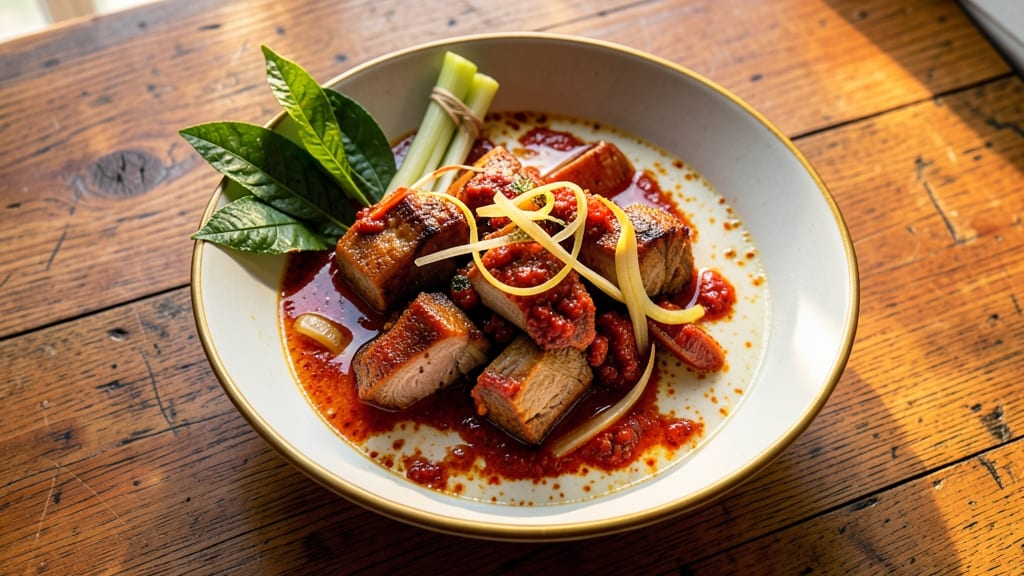
This authentic Thai red curry pork recipe brings the bold flavors of Bangkok to your kitchen with its signature balance of galangal, kaffir lime, and coconut milk. 🌟 The secret lies in properly balancing sweet, spicy, and sour notes—something many home cooks struggle to replicate.
I’ve perfected this method after years of testing, ensuring every spoonful delivers that restaurant-quality depth without shortcuts.
The recipe starts with a fragrant paste of red curry powder, galangal, lemongrass, and kaffir lime leaves—all essential for that authentic aroma. Pork shoulder is marinated and seared before simmering in rich coconut milk until tender, creating a sauce that’s creamy yet vibrant.
The key is simmering the curry just enough to let flavors meld without losing their brightness.
What you’ll end up with is a dish that’s rich, aromatic, and perfectly balanced—spicy from chili, sweet from coconut, and tangy from lime. The pork becomes fork-tender, soaking up the fragrant sauce, while fresh Thai basil and lime garnishes add a final burst of freshness.
This isn’t just a curry; it’s a taste of Thailand.
Serve with jasmine rice to soak up every last drop of that velvety sauce. The best part? This recipe scales easily for a crowd, making it ideal for dinner parties or meal prep. Let’s get cooking—your taste buds will thank you.
Ingredients for authentic thai red curry pork recipe with coconut milk
These authentic Thai ingredients create a fragrant, balanced curry that captures Bangkok's bold flavors.
| Ingredient | Amount | Notes |
|---|---|---|
| Pork Shoulder 🐷 | 1 ½ lb | Boneless, cut into 1.5-inch cubes |
| Red Curry Paste 🌶️ | ¼ cup | Authentic Thai brand preferred |
| Galangal 🌿 | 1 piece | Fresh, peeled and sliced thin |
| Kaffir Lime Leaves 🍋 | 4 whole | Fresh, torn into strips |
| Lemongrass 🌿 | 1 whole | Fresh, cut into 2-inch pieces |
| Coconut Milk 🥥 | 1 can | Full-fat, 13.5 oz can |
| Fish Sauce 🍶 | 1 tbsp | Red Boat preferred |
| Palm Sugar 🍯 | 2 tbsp | Or light brown sugar |
| Thai Chili Peppers 🌶️ | 2 whole | Fresh, sliced (adjust to taste) |
| Fresh Thai Basil 🌿 | ¼ cup | Chopped for garnish |
| Lime 🍋 | 1 whole | Juiced, seeds removed |
| Jasmine Rice 🍚 | 1 ½ cups | Uncooked, for serving |
| Vegetable Oil 🫒 | 2 tbsp | For searing pork |
| Salt 🧂 | 1 tsp | Kosher or sea salt |
| Ground Black Pepper 🌶️ | ½ tsp | Freshly ground |
The galangal and kaffir lime leaves are non-negotiable for authentic flavor—find them at Asian markets or well-stocked grocery stores like Whole Foods. Look for fresh galangal with a citrusy aroma and vibrant green skin. If you can't find kaffir lime leaves, substitute lime zest plus a pinch of cinnamon, though it won't be identical. The red curry paste should be Thai brand like Maesri or Mae Ploy—avoid the Western versions with fillers. Fresh Thai basil matters too; regular basil won't give that anise-like finish. For the coconut milk, full-fat is essential—light versions won't deliver the same richness.
No galangal? Substitute ginger at half the amount, but you'll lose that signature Thai flavor. Kaffir lime leaves unavailable? Use lime zest plus 1/4 tsp ground coriander—it's not perfect, but better than skipping. The fish sauce is crucial for umami—Red Boat is the gold standard. If you're avoiding fish sauce, soy sauce plus a splash of oyster sauce works in a pinch. Palm sugar hard to find? Light brown sugar or coconut sugar are fine substitutes. The Thai chili peppers should be fresh—bird's eye chilis if possible, but any small hot pepper works. For the pork, shoulder is ideal—it stays tender during long cooking, but pork loin works if you reduce cooking time.
The galangal and kaffir lime leaves can be prepped a day ahead—store them in the fridge wrapped in damp paper towels for up to 3 days. The curry paste and coconut milk keep for 6 months unopened. Once made, this curry reheats beautifully—simmer gently for 5-10 minutes to restore its velvety texture. Store leftovers in the fridge for 4 days or freeze for 3 months. The jasmine rice should be cooked separately and served alongside—each serving needs about 1/2 cup uncooked rice to soak up the sauce properly.
Why You'll Love This Recipe
- One-Pot Magic: I swear by this recipe—just toss everything into a single pot and let it simmer. No chopping boards full of scraps, no multiple pans to wash. The pork shoulder practically falls apart on its own, and the coconut milk thickens into that velvety, fragrant sauce with almost no effort.
- Flavor Explosion: That first whiff of galangal and lemongrass hitting the pan? Chef’s kiss. The red curry paste brings the heat, but the kaffir lime leaves lift it all into something bright and complex—like a hug from a Thai street vendor. Honestly, I’ve made curry before, but this one actually tastes like it came from a Bangkok kitchen.
- Weeknight to Party: Between us, this is my go-to for lazy nights and impressing guests. Serve it over jasmine rice with quick-pickled cucumbers for a casual dinner, or drizzle it over cold noodles for a last-minute potluck dish. The leftovers? Even better the next day—just reheat and enjoy.
- Budget-Friendly Feast: Pork shoulder is cheap but packed with flavor, and coconut milk stretches that red curry paste into a full meal. I’ll be real: I’ve made this for under $10 per serving, and it still feels special. Plus, the leftovers freeze like a dream—just thaw and reheat when you need a quick, satisfying bowl.
Step-by-step instructions for authentic Thai red curry pork
Master this fragrant balance of galangal and kaffir lime for restaurant-quality curry at home.
🔥 Step 1: Sear the Pork Shoulder to Develop Deep Flavor
Heat the 2 tablespoons vegetable oil in a large, heavy-bottomed pot over medium-high heat until shimmering. Add the 1.5 lb pork shoulder cubes in a single layer, being careful not to overcrowd the pan. Let them sear undisturbed for 3-4 minutes per side until developing a rich, golden-brown crust.
This initial searing creates the Maillard reaction that forms the foundation of the curry's depth. You'll know it's ready when the pork releases easily from the pan and has a caramelized exterior. Transfer the seared pork to a plate and set aside temporarily—we'll return to it once the aromatics develop.
👨🍳 Step 2: Build the Aromatic Base with Galangal and Lemongrass
In the same pot, reduce heat to medium and add the 1 piece sliced galangal and 1 whole lemongrass (cut into 2-inch pieces). Sauté for 2-3 minutes until the galangal softens slightly and releases its citrusy aroma. Add the 4 whole kaffir lime leaves (torn) and 2 whole Thai chili peppers (sliced), cooking for another 1 minute until fragrant.
Here's where the authentic Thai flavor profile emerges. The galangal's peppery bite and lemongrass's citrus notes will form the backbone of your curry. Don't rush this step—properly developed aromatics make all the difference in an authentic dish. If you notice the galangal burning, reduce heat slightly to maintain gentle cooking.
🍳 Step 3: Bloom the Curry Paste and Balance Flavors
Add the 0.25 cup red curry paste to the pot and stir vigorously for 1-2 minutes until it darkens and becomes fragrant. This is crucial—properly blooming the paste releases its full flavor potential. Pour in the 1 can coconut milk (do not stir yet) and let it sit for 30 seconds to create a natural separation that enhances texture.
Now carefully stir to combine, then add the 1 tbsp fish sauce and 2 tbsp palm sugar. Bring to a gentle simmer, then return the seared pork to the pot. The curry should begin to thicken slightly as the coconut milk reduces. This is where all the flavors come together—sweet, salty, spicy, and umami in perfect harmony.
⏰ Step 4: Simmer Until Tender and Flavor-Infused
Cover the pot and simmer over low heat for 1.5-2 hours, stirring occasionally, until the pork is fork-tender and easily pulls apart. The curry should reduce to a rich, velvety consistency with a balance of coconut cream and aromatic paste. You'll know it's ready when the pork reaches an internal temperature of 203°F—this ensures perfect tenderness without drying out.
During the final 30 minutes, add the juice of 1 whole lime (seed-free) to brighten the flavors. The acidity cuts through the richness of the coconut milk and balances the heat. Taste and adjust seasoning—you may need an additional ½ teaspoon fish sauce or 1 teaspoon palm sugar to achieve perfect balance.
🥘 Step 5: Finish with Fresh Thai Basil and Serve
Remove the pot from heat and stir in the 0.25 cup chopped fresh Thai basil just before serving. This final step adds bright, herbal notes that elevate the dish. Meanwhile, prepare the 1.5 cups jasmine rice according to package instructions—it should be perfectly steamed and fluffy to complement the rich curry.
Ladle the curry over the rice, garnishing with additional Thai basil if desired. The finished dish should have a vibrant red hue, tender pork that falls apart easily, and a sauce that coats the back of a spoon with perfect thickness. Serve immediately while the aromatics are at their peak—this curry tastes best fresh from the pot.
Pro Tips For Making Authentic Thai Red Curry Pork Recipe With Coconut Milk
- Bloom the Paste First: After burning my first batch of curry paste, I learned to toast the paste in oil on medium heat for 2-3 minutes until it fragrant and slightly darkened. This deepens the flavor—no more bland, one-dimensional curry.
- Slice Pork Thinly: Use a sharp knife and cut the pork shoulder against the grain into ¼-inch thick strips. Thinner pieces cook faster and stay tender, not chewy. (Yes, it takes patience, but it’s worth it.)
- Simmer Low and Slow: Once the coconut milk comes in, reduce to a bare simmer—no boiling. I used to rush this, and the curry would split or turn grainy. Let it gently meld for 45-60 minutes, stirring occasionally.
- Toast Galangal and Lemongrass: Lightly char the galangal slices and lemongrass stalks in a dry pan for 30 seconds before adding to the pot. This adds a smoky depth that store-bought pastes can’t replicate. (Skip this, and your curry will taste flat.)
Pro cooking tips for this recipe
Bloom the Paste
Never skip blooming your red curry paste—this 1-2 minute step unlocks its full depth. Heat the paste in the pot until it darkens and releases its aromatic oils.
I use Maesri brand paste because it contains real galangal and kaffir lime leaf powder, not just spices. This step develops the Maillard reaction that creates complex flavors. 🔥
Control the Heat
Thai curries simmer gently to avoid curdling the coconut milk. Maintain low heat after adding the milk—too high heat will split the fats and create a greasy sauce.
I keep my pot at 180-190°F using a thermometer for perfect texture. A gentle simmer also prevents the galangal from becoming bitter.
Balance the Flavors
The magic happens in the final adjustments. Taste your curry and balance the four Thai flavors: sweet (palm sugar), salty (fish sauce), spicy (chili), and sour (lime).
I add the lime juice last to preserve its brightness. For extra depth, a pinch of white pepper enhances the earthy notes without overpowering. ✨
Pork Tenderization
Use pork shoulder—it's more forgiving than lean cuts. The 1.5-2 hour simmer breaks down collagen for melt-in-your-mouth texture. Check doneness with a meat thermometer at 203°F.
If using pork loin, reduce cooking time to 1 hour to prevent drying. The sauce should coat the pork completely by the end.
Fresh Basil Finish
Stir in Thai basil only at the very end—its delicate leaves wilt in heat. For maximum flavor, use freshly chopped basil from an Asian market. The anise-like aroma contrasts beautifully with the coconut richness. I garnish with extra basil and a sprinkle of crushed roasted peanuts for texture. 🌿
Equipment Essentials
Your pot matters—use a heavy-bottomed Dutch oven like Le Creuset to prevent scorching. A wooden spoon prevents scratching the pot's surface. For extra authenticity, simmer on a gas stove—it gives better heat control than electric.
I also keep a fine-mesh strainer handy to remove any tough galangal pieces before serving.
Nutrition facts
Frequently asked questions
Can I substitute pork shoulder with another cut?
Yes, but adjust cooking times. Pork loin works best for quicker cooking (1 hour max) since it's leaner, but monitor closely to avoid drying. Pork ribs also work well—they stay tender during long simmering and add extra flavor. Never use ground pork, as it won't develop the same texture.
What if I can't find galangal or kaffir lime leaves?
For galangal, use ginger at half the amount—it won't be identical but adds warmth. For kaffir lime leaves, combine lime zest plus ¼ tsp ground coriander for a similar citrusy note. If missing both, increase the red curry paste by 1 tbsp to compensate for lost depth.
How spicy should this curry be?
The recipe balances heat with coconut milk and palm sugar. Start with 2 whole Thai chili peppers for mild-medium heat, but adjust to taste. For extra spice, add 1 extra chili or ½ tsp chili flakes. Remember: coconut milk naturally mellows heat. Taste and adjust the fish sauce or palm sugar to balance flavors.
Can I make this curry ahead of time?
This curry tastes even better reheated. Store in an airtight container in the fridge for 4 days or freeze for 3 months. Reheat gently on low heat for 5-10 minutes, stirring occasionally. Add a splash of water or coconut milk if the sauce thickens too much.
What's the best way to serve this dish?
Pair with jasmine rice to soak up the rich sauce. For extra authenticity, serve with Thai eggplant salad (pad pak bung) or steamed bok choy. Garnish with fresh Thai basil, lime wedges, and crushed roasted peanuts for crunch. The contrast of warm curry with cool lime brightens every bite!