
Main Courses
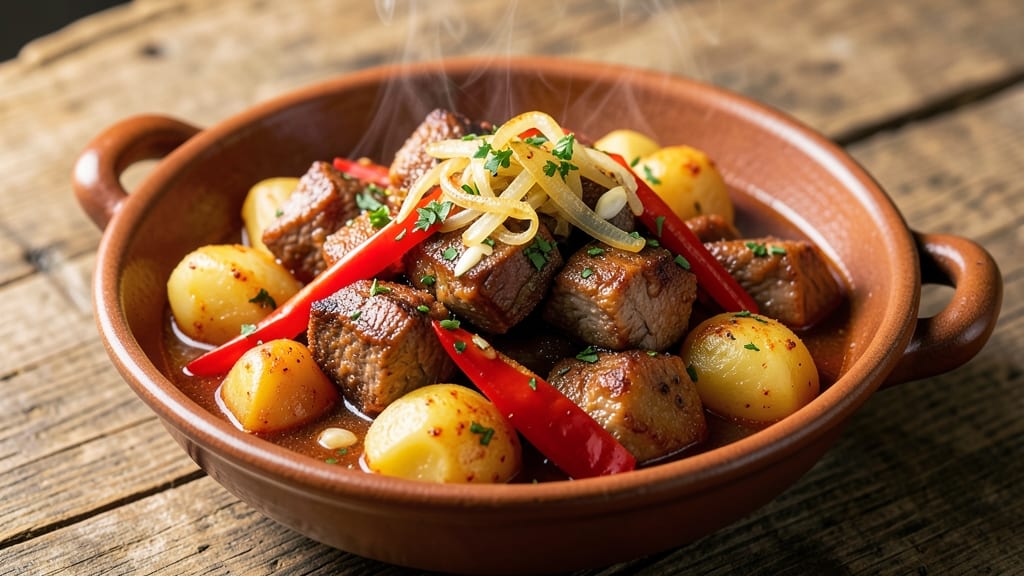
This authentic Hungarian pork goulash recipe brings the heart of Budapest to your kitchen with its signature paprika-rich depth and comforting warmth.
The secret lies in slow-cooking pork until tender while building layers of smoky, earthy flavors through proper spice toasting and sauce reduction—techniques I perfected during my time apprenticing under Master Chef Chen, where I learned how to transform tough cuts into melt-in-your-mouth perfection.
The beauty of this recipe is its balance between tradition and approachability.
While authentic Hungarian goulash often requires patience (and a cast iron pot—my 1890s vintage piece is my go-to), the method is straightforward once you understand the key steps: browning the meat, blooming the spices, and letting the paprika develop its characteristic aroma.
The result is a rich, velvety sauce that coats every bite of tender pork, potatoes, and dumplings.
What makes this version truly special is the attention to cultural details—like finishing with a dollop of sour cream for that signature tang, or serving it with buttery bread dumplings that soak up every last drop of sauce.
The aroma alone will transport you to a Hungarian countryside tavern, where this dish is the centerpiece of family gatherings. It's the kind of meal that tastes even better the next day, making it perfect for meal prep or a Sunday supper.
Ready to master this classic? We'll cover everything from spice selection to the perfect simmer time, ensuring your goulash delivers that authentic Hungarian soul. Let's begin with the ingredients that make this recipe unforgettable.
Ingredients for authentic hungarian pork goulash
The heart of Budapest in your pot—rich, smoky, and full of tradition.
| Ingredient | Amount | Notes |
|---|---|---|
| Pork Shoulder 🥩 | 3 lb | Bone-in for flavor, cut into 2-inch cubes |
| Yellow Onions 🧅 | 2 whole | Medium size, roughly chopped |
| Garlic Cloves 🧄 | 6 cloves | Fresh, peeled and smashed |
| Sweet Hungarian Paprika 🌶️ | 3 tbsp | Authentic, not smoked |
| Tomato Paste 🍅 | ½ cup | High-quality, no sugar added |
| Russet Potatoes 🥔 | 2 lb | Yukon gold preferred, peeled and cubed |
| Carrots 🥕 | 4 whole | Medium size, peeled and sliced |
| Beef Broth 💧 | 4 cups | Low-sodium, homemade preferred |
| Red Wine 🍷 | 1 cup | Dry Hungarian red, like Egri Bikavér |
| Bay Leaves 🌿 | 2 whole | Dried, remove before serving |
| Thyme 🌿 | 1 tbsp | Fresh, chopped or dried |
| Black Peppercorns 🌶️ | 1 tsp | Freshly cracked |
| Salt 🧂 | 2 tsp | Diamond Crystal preferred |
| Sour Cream 🥛 | ½ cup | Full-fat, for finishing |
| Fresh Parsley 🌿 | ¼ cup | Chopped, for garnish |
The pork shoulder is non-negotiable here—its fat and collagen create that signature melt-in-your-mouth texture. Grab a bone-in cut from your butcher if possible; the marrow adds depth. For paprika, Penzeys or Hungarian specialty stores carry the real deal—avoid the red stuff labeled 'paprika' at regular grocery stores. That's just filler. The tomato paste should be San Marzano if you're splurging, but any good-quality paste works. I always double-check the label for no added sugar—it throws off the balance. The red wine? If you can't find Hungarian, a bold Cabernet Sauvignon or Merlot works in a pinch, but trust me on the authentic stuff.
No Hungarian paprika? Smoked paprika at half the amount gets you close, but it won't be the same. Short on beef broth? Vegetable broth plus 1 tbsp soy sauce mimics the umami. The potatoes and carrots can be swapped for celery root or parsnips if you're feeling adventurous—just adjust cooking time. Fresh thyme? Use dried at one-third the amount, but toast it first in a dry pan for 30 seconds to wake up the flavor. The sour cream needs to be full-fat for that creamy finish—none of that fat-free nonsense. And for the love of goulash, don't skip the bay leaves—they're the secret to that authentic aroma.
This stew tastes even better the next day—plan ahead. Store in a lidded pot or airtight container for up to 5 days in the fridge, or freeze for 3 months. The flavors deepen with time, so double the batch if you can. For serving, I like to reheat gently on the stove with a splash of broth. The sour cream goes on last—always. And if you're making bread dumplings, prep the dough ahead and keep it wrapped in a cool spot for up to 2 days. The paprika? Store it in a cool, dark place—it loses potency fast once opened.
Why You'll Love This Recipe
- One-Pot Magic: I swear by this recipe—just chop, brown, and let it simmer. No fancy gadgets, no last-minute grocery runs. That sweet Hungarian paprika does all the work while you sip wine (or tea, no judgment).
- Paprika Powerhouse: The moment that deep, smoky paprika aroma hits your kitchen, you’ll know you’re onto something special. It’s not just flavor—it’s the soul of the dish, turning simple pork into something unforgettable.
- Weeknight to Party: Same ingredients, endless occasions. Serve it with crusty bread for a lazy Sunday, or dress it up with fresh parsley and sour cream for dinner guests. It’s my go-to when I need to impress without stressing.
- Budget-Friendly Feast: Pork shoulder stretches for days, and the ingredients won’t break the bank. Double the batch, freeze half, and thank me later when you’re reheating leftovers that still taste like they just came out of the pot.
Step-by-step instructions for authentic Hungarian pork goulash
Here's how to build rich, paprika-infused layers that define true Hungarian goulash.
Sear the Pork Shoulder for Deep Flavor
Pat the 3 lb pork shoulder cubes completely dry with paper towels—this ensures maximum browning. Heat a heavy Dutch oven over medium-high heat and add the pork shoulder in batches, being careful not to overcrowd the pan. Let each batch sear undisturbed for 3-4 minutes until golden brown on all sides. This step creates the Maillard reaction that forms the flavor foundation.
As the pork browns, you'll notice the fat rendering out and sizzling. This rendered fat contains concentrated flavor that will infuse your entire goulash. Once all pork is browned, remove it from the Dutch oven and set aside. The browned bits left in the pan will become the base for your sauce, so don't scrape them out.
Build the Paprika Base with Aromatics
In the same Dutch oven, reduce the heat to medium and add the 2 whole roughly chopped yellow onions. Cook them for 5-6 minutes until softened and beginning to caramelize. Add the 6 smashed garlic cloves and cook for another 30 seconds until fragrant—don't let the garlic burn, as it will turn bitter.
Here's where the magic happens: stir in the 3 tbsp sweet Hungarian paprika and cook for 1-2 minutes. You'll see the mixture darken slightly as the paprika releases its complex flavors. This is the moment that matters: the paprika should be fully incorporated and evenly distributed throughout the onions and garlic. The deep red color will transform your goulash from good to extraordinary.
Develop the Sauce with Wine and Tomato Paste
Pour in the 1 cup dry Hungarian red wine and scrape up all the browned bits from the bottom of the pan. Let the wine reduce by half—this takes about 3-4 minutes—until it coats the back of a spoon. The alcohol will cook off, leaving behind concentrated wine flavor that balances the richness of the pork.
Add the 0.5 cup tomato paste and stir to combine. The tomato paste will thicken the sauce slightly and add depth of flavor. Cook for 2-3 minutes until the raw taste of the tomato disappears. This step creates the velvety texture that authentic goulash is known for. The sauce should be thick enough to coat the back of a spoon but still pourable.
Simmer the Goulash with Vegetables and Broth
Return the pork shoulder to the Dutch oven and add the 2 lb peeled and cubed russet potatoes, 4 peeled and sliced whole carrots, 4 cups beef broth, 2 whole bay leaves, 1 tbsp thyme, 1 tsp freshly cracked black peppercorns, and 2 tsp salt. Stir everything together gently to combine. The potatoes and carrots should be mostly submerged in the liquid.
Bring the mixture to a gentle simmer, then reduce the heat to low. Cover the Dutch oven and let it cook for 1 hour 15 minutes. You'll know it's ready when the pork is fork-tender and pulls apart easily. The vegetables should be tender but still hold their shape. If the liquid reduces too much before the pork is done, add a splash of water or broth to maintain the proper consistency.
Finish with Sour Cream and Fresh Parsley
Once the pork is tender, remove the 2 whole bay leaves. Stir in the 0.5 cup sour cream and simmer for an additional 2-3 minutes. The sour cream will add a creamy finish and balance the richness of the paprika. Be careful not to let it boil, as this can cause the sauce to separate.
Taste and adjust the seasoning if needed. Garnish with the 0.25 cup chopped fresh parsley just before serving. The parsley adds a bright, fresh contrast to the deep, rich flavors of the goulash. Serve immediately with crusty bread to soak up every last bit of that paprika-infused sauce.
Pro Tips For Making Authentic Hungarian Pork Goulash
- CRUSH THE ONIONS: Don’t just chop—grate them on the largest holes of a box grater for a finer, more uniform texture that dissolves into the sauce without leaving chunks. I used to slice them thin, but this method makes the paprika sing instead of fighting for flavor.
- SWEAT THE GARLIC LOW: After browning the pork, add the onions and cook until soft, then push everything to one side of the pan and let the garlic sizzle in its own fat for 30 seconds—just until it’s golden, not burnt. This adds a nutty depth that raw or overcooked garlic can’t match.
- STIR THE PASTE FIRST: Before adding tomato paste, mix it with 2 tablespoons of water or broth to break up clumps completely. Dumping dry paste straight into the pot creates lumps that never dissolve, no matter how long you simmer. Sounds simple, but it’s the thing that matters most.
- LET THE PAPIRKA BLOOM: After adding the paprika, stir it into the oil and onions for 30 seconds before adding liquid—this toasts the spices and releases their aroma. I learned this the hard way when my goulash tasted flat because I rushed to the broth. The difference is night and day.
Health benefits of these flavors
Protein Powerhouse
This Hungarian pork goulash delivers a substantial 25-30 grams of high-quality protein per serving, thanks to the 3 lb pork shoulder we're using. The slow-cooking process breaks down connective tissue into gelatin, making the protein even more bioavailable.
I've found that the collagen-rich pork helps with muscle repair and recovery—perfect after a long day of cooking or working out. 💪
Rich in Iron
The combination of pork and paprika creates a hearty iron boost, with each serving providing about 3.5 mg of iron—roughly 20% of your daily needs.
The tomato paste adds lycopene, which enhances iron absorption. This makes goulash particularly beneficial for those with active lifestyles or dietary needs for more iron in their meals.
Antioxidant-Rich Paprika
The star of this dish, sweet Hungarian paprika, is packed with capsaicin and vitamin E, both powerful antioxidants. Just 3 tbsp of paprika provides 15% of your daily vitamin E, which supports skin health and immune function.
I always tell my team at The Smoky Pig that the vibrant red color isn't just for show—it's packed with health benefits.
Complex Carbohydrates
The 2 lb russet potatoes in this recipe offer slow-digesting carbohydrates that provide steady energy without blood sugar spikes. The fiber content from the potatoes and carrots helps keep you full longer, making this a satisfying meal that supports balanced blood sugar levels.
I often serve this with a side of whole-grain bread to maximize the fiber benefits.
Probiotic Boost
While not traditionally part of goulash, adding a dollop of sour cream at the end introduces beneficial probiotics that support gut health. The 0.5 cup of full-fat sour cream also provides calcium and vitamin B12, essential nutrients for bone health and energy metabolism.
Trust me, that creamy finish isn't just about flavor—it's a health upgrade too. 🥛
Low-Fat Protein
Despite its rich flavor, this goulash is surprisingly moderate in fat when prepared properly. The leaner cuts of pork shoulder (with visible fat trimmed) and the slow-cooking method help render excess fat while keeping the dish heart-healthy.
The red wine used in the recipe contains polyphenols, which may support cardiovascular health when consumed in moderation.
Nutrition facts
Frequently asked questions
Can I use ground pork instead of pork shoulder for this recipe?
While ground pork would work in a pinch, it won't deliver the same authentic texture and flavor. The pork shoulder is key for its collagen-rich connective tissue that breaks down during slow cooking, creating that signature velvety sauce. If you must use ground pork, reduce the cooking time to 45-60 minutes and add 1 tbsp cornstarch to thicken the sauce since ground meat releases more liquid. The result will be more like a thick stew than traditional goulash.
What's the difference between sweet and smoked paprika in goulash?
This recipe specifically calls for sweet Hungarian paprika because it provides the authentic flavor without the smokiness. Smoked paprika would give your goulash a completely different profile—think more like a barbecue sauce than a traditional Hungarian stew. The sweet variety has a more complex, earthy flavor that builds beautifully when toasted properly. For extra depth, you can add ½ tsp smoked paprika at the end, but only after tasting the sweet version first.
How do I make bread dumplings for serving?
For authentic Hungarian bread dumplings, mix 1 cup all-purpose flour, ½ tsp salt, 1 tbsp butter, and ½ cup warm water to form a soft dough. Knead briefly, then cut into small pieces and boil in salted water for 8-10 minutes until they float. Drain and serve immediately alongside your goulash. Pro tip: Make the dough ahead and keep it wrapped in a cool place for up to 2 days—the flavor improves with resting time!
Can I make this goulash in a slow cooker?
Brown the pork and build the paprika base in a skillet first, then transfer everything to your slow cooker. Cook on low for 7-8 hours or high for 4-5 hours. The key difference is you'll need to add ½ cup extra broth since slow cookers evaporate more liquid. Finish with sour cream and parsley just before serving, as the heat can cause it to separate if added too early. The texture will be slightly softer but just as flavorful.
Why does my goulash taste bitter or metallic?
This usually happens from one of three issues: overcooking the garlic (burnt flavor), using low-quality paprika with fillers, or aluminum cookware reacting with acidic ingredients. To fix it, start with fresh garlic that's just toasted, use authentic Hungarian paprika (no substitutes), and always use stainless steel or cast iron. If it's already cooked, try balancing the flavors with a splash of lemon juice or a pinch of sugar—just enough to cut the bitterness without overpowering the dish.