
Main Courses
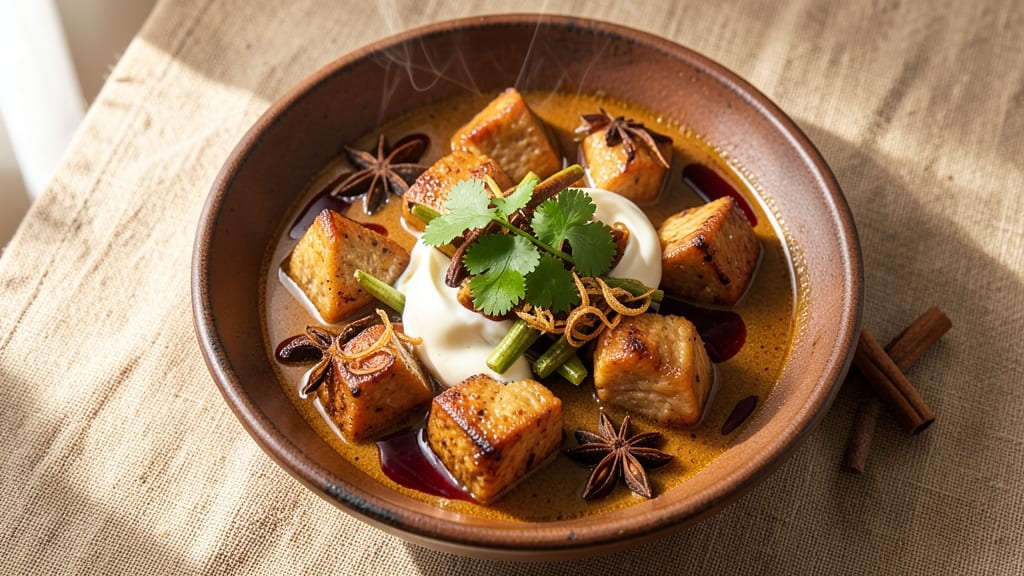
This authentic pork curry recipe brings the bold flavors of Southeast Asian kitchens to your home table through a fragrant five-spice tamarind simmer. After years of perfecting this dish—first in Charleston's humid kitchens, then on Atlanta's smoky grill lines—I've distilled the technique that delivers restaurant-quality depth without shortcuts.
The secret lies in the slow development of spices: star anise, cinnamon, and tamarind working together to create layers of complexity that transform simple pork into something unforgettable.
The magic begins with a marinade that tenderizes the meat while infusing it with aromatic spices, then builds to a rich, velvety sauce that clings to every bite.
Unlike many Westernized versions, this recipe stays true to its roots by balancing sweet, sour, and savory elements—tamarind for tang, coconut milk for creaminess, and a touch of heat from chili flakes. The result?
Pork that's fall-apart tender with a caramelized crust, swimming in a sauce that's both comforting and vibrant. This isn't just curry; it's a flavor journey that starts with spices and ends with a meal that feels like coming home.
What sets this recipe apart is the attention to technique—properly blooming whole spices in hot oil, searing the pork to develop depth before simmering, and reducing the sauce just enough to concentrate the flavors. The payoff?
A dish that's rich enough to stand alone but bright enough to pair beautifully with jasmine rice or warm naan.
The aroma alone will have your kitchen smelling like a bustling street market, while the first bite delivers that perfect balance of spice, sweetness, and umami that defines authentic pork curry.
Perfect for weeknight dinners or special occasions, this recipe scales effortlessly from family meals to crowd-pleasing gatherings. The leftovers? Even better the next day as the flavors meld further. Whether you're a seasoned home cook or new to curries, this method ensures success—every time.
Let's get cooking with a dish that proves authentic flavors don't require complicated techniques, just patience and precision.
Ingredients for authentic pork curry
Pork shouldering and aromatic spices meet tamarind's tangy embrace for this deeply authentic curry experience.
| Ingredient | Amount | Notes |
|---|---|---|
| Boneless Pork Shoulder 🥩 | 1 ½ lb | Cut into 1.5-inch cubes, marinated overnight |
| Coconut Milk 🥥 | 1 can | Full-fat, unsweetened (13.5 oz total) |
| Star Anise Pods 🌿 | 2 whole | Lightly crushed for aroma |
| Cinnamon Sticks 🌿 | 2 whole | 2-inch pieces for infusion |
| Tamarind Paste 🍋 | ½ cup | Unsweetened, or substitute 4 tbsp lime juice |
| Fresh Galangal 🌿 | ½ cup | Julienned, or substitute ginger root |
| Ginger Root 🧄 | 2 tbsp | Freshly grated, for heat balance |
| Garlic Cloves 🧄 | 6 cloves | Minced, for aromatic depth |
| Red Curry Paste 🌶️ | ¼ cup | Store-bought or homemade, for base |
| Fish Sauce 🍶 | 2 tbsp | Red Boat preferred for authenticity |
| Brown Sugar 🍯 | ¼ cup | Lightly packed, for caramelization |
| Red Chili Flakes 🔥 | 1 tbsp | Adjust for heat preference |
| Kosher Salt 🧂 | 1 ½ tsp | Diamond Crystal preferred |
| Vegetable Oil 🫒 | ¼ cup | For high-heat searing |
The pork shoulder is non-negotiable here—its collagen-rich structure breaks down beautifully during the long simmer, creating that signature fall-apart texture. Look for marbled cuts at your local butcher or specialty grocer like Whole Foods or H Mart, where they'll often have it pre-cut for convenience. If you can't find galangal (the Southeast Asian root), ginger root at double the amount works in a pinch, though it lacks that distinctive citrusy note. For tamarind paste, Mae Ploy brand is my go-to—it's consistently smooth and unsweetened. The star anise and cinnamon sticks should be lightly crushed before blooming in oil to release their aromatic oils without turning bitter.
No fish sauce? Soy sauce at half the amount provides umami, though purists will notice the difference. Substituting coconut milk with light coconut cream creates a slightly thicker sauce, but full-fat delivers that luxurious mouthfeel. For the curry paste, Maesri or Thai Kitchen brands offer authentic flavors without the hassle of homemade. The brown sugar should be lightly packed—don't overfill the measuring cup. And if you're sensitive to heat, reduce the chili flakes to half a tablespoon while keeping the fish sauce for depth. Every spice in this recipe serves a purpose: star anise for licorice notes, cinnamon for warmth, tamarind for tang, and galangal for that signature herbal brightness.
Bloomed spices keep for 3 months in an airtight container, making this a great make-ahead component. The marinated pork can be refrigerated for up to 2 days before cooking, though the flavors develop best overnight. Once assembled, this curry reheats beautifully—simmer on low for 10-15 minutes, stirring occasionally, as the sauce thickens further. For serving, pair with jasmine rice (cook 1 cup rice to 1.25 cups water) and store any leftovers for up to 4 days in the fridge or 3 months frozen. The sauce actually improves overnight as the flavors meld, so plan ahead if you're serving a crowd.
Why You'll Love This Recipe
- One-Pot Magic: I swear by this recipe—just dump everything into a single pot, let it simmer, and walk away. No chopping mountains of veggies or fussing with multiple pans. The pork shoulder practically melts into tender perfection while the spices work their magic on their own.
- Deep, Warm Spice Bomb: That first sniff of star anise and cinnamon sticks simmering in coconut milk? Chef’s kiss. The tamarind paste cuts through the richness with just the right tang, and the pork ends up fall-apart tender with a sauce that’s creamy but not heavy. Honestly, it’s the kind of flavor that makes you want to eat it straight from the pot.
- Leftovers That Beg for More: Between us, this curry tastes better the next day. The flavors meld even deeper, and reheating it is zero effort—just a splash of water, a quick stir, and boom, dinner’s ready. I’ve turned this into my go-to meal prep dish; it’s in my lunchbox more than I’d admit.
- Budget-Friendly Feast: Pork shoulder is affordable, coconut milk stretches far, and those whole spices (star anise, cinnamon) last forever. I’ve fed six people for under $15 with this, and everyone leaves happy. Plus, the leftovers stretch into wraps, rice bowls, or even a quick pasta toss—no waste, all flavor.
Step-by-step instructions for authentic pork curry
This method delivers restaurant-quality depth with precise technique and aromatic balance.
Sear the Pork Shoulder for Maximum Flavor
Heat the 0.25 cup vegetable oil in a heavy-bottomed Dutch oven over medium-high heat until shimmering. Working in batches, add the 1.5 lb boneless pork shoulder cut into 1.5-inch cubes, ensuring they don't overcrowd the pan. Sear each piece for 2-3 minutes per side until deeply golden brown and developing a crust. The pork should release easily when ready to flip.
This high-heat sear creates the Maillard reaction that forms the flavor foundation. Don't rush this step—proper browning is essential for authentic depth. Transfer the seared pork to a plate and set aside, reserving any browned bits in the pan for later.
Build the Aromatic Base with Spices and Aromatics
In the same Dutch oven, reduce heat to medium and add the 0.25 cup red curry paste, stirring constantly for 1 minute until fragrant. Add the 2 whole star anise pods, 2 whole cinnamon sticks, 0.5 cup tamarind paste, 0.5 cup fresh galangal, 2 tbsp ginger root, and 6 cloves garlic cloves, stirring for another 1-2 minutes until the raw garlic aroma disappears.
This aromatic blend forms the soul of the curry. The tamarind and galangal provide the signature tangy-sweet balance, while the star anise and cinnamon contribute complex warmth. Don't skip this step—these spices need time to properly infuse their flavors into the oil.
Simmer the Curry with Coconut Milk and Seasonings
Pour in the 1 can coconut milk, scraping up any browned bits from the bottom of the pot. Add 2 tbsp fish sauce, 0.25 cup brown sugar, 1 tbsp red chili flakes, and 1.5 tsp kosher salt, then return the seared pork to the pot. Bring to a gentle simmer over medium-low heat, then reduce to low and partially cover with a lid.
Simmer for 1 hour 15 minutes, stirring occasionally, until the pork is tender enough to pierce with a fork and the sauce has thickened to a rich consistency. The curry should smell intensely aromatic with sweet, tangy, and spicy notes combining harmoniously. If the sauce reduces too quickly, add 1-2 tablespoons water to maintain proper consistency.
Adjust Seasoning and Finish the Curry
After simmering, taste the curry and adjust seasoning if needed. For more depth, add 1-2 teaspoons additional fish sauce or 1 teaspoon brown sugar to balance flavors. The curry should have a perfect harmony of sweet, sour, salty, and spicy elements with the pork falling apart easily.
Remove the star anise pods and cinnamon sticks before serving. The curry is now ready to be served immediately with steamed jasmine rice, which will help balance the rich flavors. The authentic tamarind and galangal profile should be clearly evident in every bite, distinguishing this from generic curry recipes.
Pro Tips For Making Authentic Pork Curry
- BROWN THE PORK FIRST: I learned this the hard way—skipping the sear makes the curry taste flat. Cut the pork shoulder into 1-inch chunks, then cook them in a hot pan with 1 tablespoon of oil until deep golden brown on all sides. This isn’t just for looks; it builds flavor that nothing else can replicate.
- CRUSH THE WHOLE SPICES: Whole star anise and cinnamon sticks won’t release their aroma unless you work them. After adding them to the pot with the pork, smash the star anise pods lightly with the back of a spoon (no need to pulverize—just crack them open). The cinnamon sticks can stay whole, but give them a quick tap to break them slightly. This step makes a real difference in depth.
- CONTROL THE TAMARIND: Tamarind paste is potent—too much and your curry turns sour. Start with 1 tablespoon dissolved in ¼ cup warm water, then taste before adding more. If you’re using block tamarind, soak it first and strain out the fibers; they’ll make the curry grainy if left in. (Yes, even if you’re impatient like me.)
- SIMMER LOW AND LONG: After adding coconut milk, resist the urge to rush. Cover the pot and simmer on low heat for at least 45 minutes, stirring occasionally. The pork needs time to tenderize, and the spices need to meld—skipping this step leaves you with a one-dimensional sauce. If the milk separates, give it a quick whisk to re-emulsify. (Your future self will thank you.)
Essential equipment for this recipe
Dutch Oven Essentials
Your Dutch oven is the workhorse of this recipe—I swear by my Lodge 5.5-quart with enamel coating. The heavy cast iron retains heat beautifully while distributing it evenly, crucial for developing those deep, caramelized flavors in the pork and sauce.
If you don't have one, a Le Creuset 5.5-quart is my backup choice for its durable enamel finish that prevents sticking. For budget-conscious cooks, a Amazon Basics Dutch oven works in a pinch, though it may require more frequent stirring to prevent burning. 🔥
Spice Blooming Tools
While you don't need anything fancy, a mortar and pestle comes in handy for lightly crushing star anise and cinnamon sticks before blooming. I use my handmade Thai mortar from a street market in Bangkok—it's perfect for breaking down galangal and ginger while preserving their essential oils.
For the tamarind paste, a small silicone spatula helps scrape every last bit from the container, ensuring no flavor goes to waste. A fine-mesh strainer also becomes useful later if you prefer a smoother sauce.
Precision Temperature Control
An instant-read thermometer is non-negotiable for this recipe—I recommend the ThermoWorks Thermapen ONE for its speed and accuracy. You'll use it to check the pork's internal temperature (aim for 203°F for perfect tenderness) and to monitor the oil temperature during searing (350°F is ideal).
For the simmering phase, a simple stovetop thermometer helps maintain that low heat without guessing. My Ozeri Touchless Infrared Thermometer is my go-to for quick oil checks.
Marinade Containers
For the overnight marinade, use an airtight container with a lid—glass or food-grade plastic both work well. I prefer glass Pyrex bowls because they're non-reactive and easy to clean. If using plastic, ensure it's labeled BPA-free.
For the marinade itself, a whisk or fork helps distribute the spices evenly through the pork cubes. Pro tip: Place your marinated pork on a wire rack over a baking sheet in the fridge to prevent soggy meat from sitting in its own juices.
Serving Essentials
Presentation matters! A large serving spoon helps ladle the curry over rice without disturbing the sauce's texture. For garnishes, keep fresh cilantro, lime wedges, and Thai basil on hand—I use a small pair of kitchen shears to snip herbs cleanly.
A steamer basket becomes essential for perfect jasmine rice, while a small saucepan with tight lid keeps your rice warm while the curry finishes. My Bamboo Steamers from Williams Sonoma are my favorite for this purpose. 💫
Nutrition facts
Frequently asked questions
Can I substitute regular ginger for galangal in this recipe?
Yes, but you'll notice a flavor difference. Use double the amount of ginger (1 cup instead of 0.5 cup) since galangal has a more citrusy, peppery profile. For best results, combine 0.25 cup galangal with 0.25 cup ginger to capture some of that authentic brightness. Galangal is the secret ingredient that gives Southeast Asian curries their signature depth.
How do I adjust the heat level for picky eaters?
Start by reducing the red chili flakes to 0.5 tbsp and omit the fish sauce entirely, replacing it with 1 tbsp soy sauce for umami. The tamarind and brown sugar already provide natural sweetness, so you won't lose any balance. For extra mildness, strain the sauce through a fine-mesh sieve before serving to remove any lingering spice particles.
Can I make this pork curry in an Instant Pot or slow cooker?
For the Instant Pot, sear the pork first, then add all ingredients and cook on High Pressure for 45 minutes, followed by a 10-minute natural release. For a slow cooker, combine everything after searing and cook on Low for 6-7 hours or High for 4-5 hours. The slow cooker method actually enhances the pork's tenderness even more, though you may need to add 1-2 tablespoons water if the sauce gets too thick.
What's the best way to store and reheat leftovers?
Store leftovers in an airtight container in the fridge for up to 4 days or freeze for 3 months. To reheat, simmer on the stovetop over low heat for 10-15 minutes, stirring occasionally, until heated through. The flavors actually improve overnight as the spices meld further. For microwave reheating, use 30-second intervals on medium power, stirring between each interval to prevent drying.
How can I make this curry vegetarian?
Replace the pork with 1.5 lb firm tofu or extra-firm tofu pressed for 30 minutes, cut into similar-sized cubes. Use 1 tbsp soy sauce instead of fish sauce and add 1 tsp turmeric for color. The cooking time reduces to 30-45 minutes since tofu cooks faster. For a meatier texture, try mushroom stems or jackfruit as alternatives. The sauce will still develop beautifully with these plant-based proteins.