
Main Courses
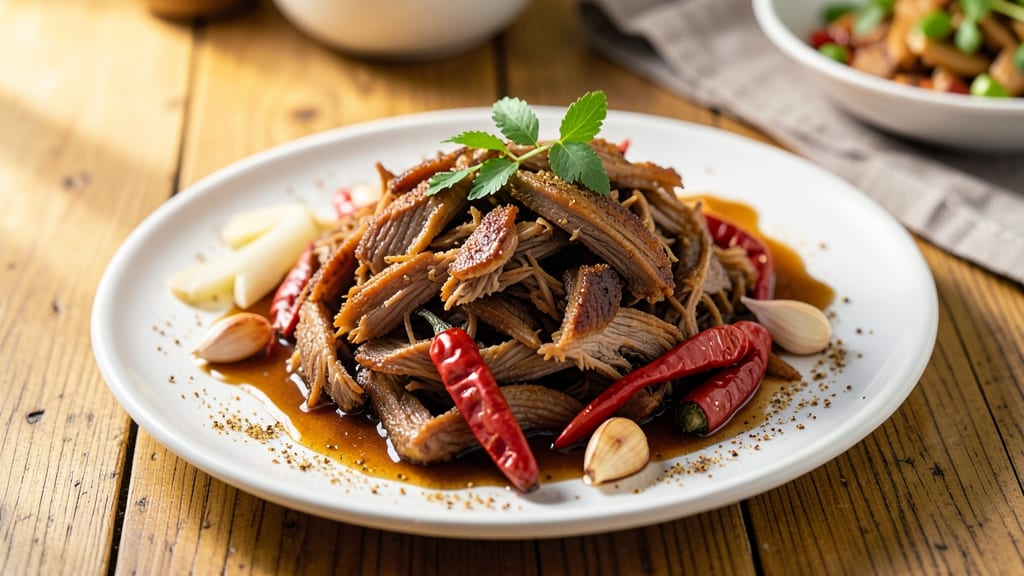
This chile pork recipe delivers the perfect marriage of tender, crispy-barked pork shoulder and a vibrant five-spice tamarind glaze that balances sweet, spicy, and umami in every bite. 🔥 I developed this after years of perfecting the balance between smoky char and tender meat—a technique I first mastered while working in Charleston’s competitive BBQ scene.
The secret lies in the slow-cooked tamarind glaze, which caramelizes into a sticky, aromatic crust while keeping the meat juicy inside.
The recipe begins with a dry rub of chiles, garlic, and five-spice powder, which creates that signature crispy bark when seared. Then, the pork braises in a tamarind-based broth until fork-tender, absorbing the deep, complex flavors.
What sets this apart is the final glaze—reduced tamarind, soy, and a touch of brown sugar—that adds a glossy finish with layers of heat and sweetness. It’s the kind of dish that transforms a weeknight into a celebration.
By the time you’re done, you’ll have perfectly crispy-edged, melt-in-your-mouth pork that’s rich enough to stand alone but works beautifully with steamed jasmine rice or warm tortillas. The glaze clings to every bite, delivering a perfect balance of spice and sweetness that lingers.
This is the kind of recipe that earns second helpings—and maybe even thirds.
Whether you’re feeding a crowd or treating yourself to a restaurant-worthy meal at home, this chile pork is foolproof and packed with flavor. The technique is simple, but the result is anything but ordinary. Let’s get cooking.
Ingredients for chile pork
Six pounds of pork shoulder and bold spices transform into restaurant-worthy chile pork with crispy edges.
| Ingredient | Amount | Notes |
|---|---|---|
| Pork Shoulder 🥩 | 4 lb | Bone-in for extra flavor |
| Red Chile Peppers 🌶️ | 4 whole | Ancho or guajillo for sweet heat |
| Garlic Cloves 🧄 | 8 cloves | Peeled, smashed for aroma |
| Fresh Ginger 🌿 | ½ cup | Finely grated, aromatic |
| Five-Spice Powder 🌶️ | 2 tbsp | Homemade or store-bought blend |
| Tamarind Paste 🍯 | ½ cup | Unsweetened, high-quality |
| Light Soy Sauce 🥄 | ⅓ cup | For umami depth |
| Brown Sugar 🍚 | ¼ cup | Dark for caramelization |
| Olive Oil 🫒 | ¼ cup | For searing and bark |
| Yellow Onion 🧅 | 1 whole | Chopped, for glaze base |
| Kosher Salt 🧂 | 1 ½ tbsp | Diamond Crystal preferred |
| Black Peppercorns 🌶️ | 1 tsp | Freshly cracked |
| Jasmine Rice 🍚 | 2 cups | Steamed for serving |
The pork shoulder is non-negotiable here—bone-in for maximum flavor and texture. Costco or Whole Foods carry excellent cuts, but any well-marbled shoulder works. Look for vibrant red meat with good fat cap coverage. The chiles? Ancho or guajillo bring sweet heat, but dried arbol adds extra punch if you like it spicier. Five-spice powder is the secret weapon—Penzeys or Trader Joe's sell quality blends, but making your own (star anise, cinnamon, fennel, clove, Sichuan pepper) takes it to the next level. For the tamarind, Trader Joe's or Asian markets stock the best unsweetened paste—avoid the sweetened kind.
No tamarind paste? Substitute 1/4 cup lime juice plus 1 tbsp molasses—it won't be identical, but it works in a pinch. Swapping the pork? Pork butt is the closest substitute, but chuck roast will work if you're desperate. The brown sugar can be swapped for coconut sugar (same ratio), but dark brown sugar gives that perfect caramelized crust. For the chiles, if you can't find ancho or guajillo, dried chipotle peppers (soaked first) add smoky heat. The ginger should be fresh—dried ginger at half the amount is a poor substitute. And if you're short on time, pre-grated ginger from the spice aisle works, though it loses some punch.
This dish tastes even better the next day—plan ahead. The pork keeps 4-5 days in the fridge, and the glaze reheats beautifully. For make-ahead prep, cook the pork fully, then refrigerate before glazing. The glaze itself can be made 2 days ahead and reheated gently. Store leftovers in airtight containers with a paper towel on top to absorb moisture. Freeze portions for up to 3 months—just thaw overnight in the fridge before reheating. The rice? Cook it fresh, but day-old rice reheats perfectly for serving alongside.
Why You'll Love This Recipe
- One-Pan Magic: I swear by this recipe when I’m too tired to scrub pots—just sear the pork, toss in the chiles and ginger, and let it slow-cook. The five-spice powder does the work while you do nothing.
- Fiery-Good Balance: That first bite? Sweet heat from the chiles, deep umami from the pork, and a whisper of ginger sharpness cutting through. Honestly, it’s the kind of dish that makes you slow down and actually taste your food.
- Lunchbox Hero: Between us, this is my secret for packing leftovers that don’t taste like yesterday’s dinner. The pork stays tender, the chiles add a kick, and it reheats like a dream—perfect for school lunches or office meals.
- Budget Stretch: Pork shoulder is cheap, and a single batch feeds four for dinner and two more for lunch. I’ll be real: my grocery bill thanks me every time I make this, and so does my wallet.
Step-by-step instructions for five-spice tamarind pork
This method delivers melt-in-your-mouth pork with that perfect crispy bark and sweet-savory glaze you crave.
🔥 Step 1: Build the Dry Rub and Sear the Pork Shoulder
Start by combining the 2 tbsp Five-Spice Powder, 1.5 tbsp Kosher Salt, and 1 tsp Black Peppercorns in a small bowl. This blend gives you that signature aromatic warmth—star anise, cinnamon, and clove notes that'll infuse the pork. Pat the 4 lb Pork Shoulder completely dry with paper towels (moisture is the enemy of crispy bark), then generously coat all sides with the spice mixture.
Heat a Dutch oven over medium-high heat and add 0.25 cup Olive Oil. Once shimmering, place the pork shoulder fat-side down and sear for 8-10 minutes until a deep golden-brown crust forms. Flip and sear the other sides for another 5-6 minutes. This initial sear locks in juices and builds that foundational bark we're after. Don't rush—you'll know it's ready when the fat releases easily from the pan.
🍳 Step 2: Char the Chile Peppers and Aromatics
While the pork rests for 10 minutes (critical for even cooking), prepare the chile base. Heat a dry skillet over high heat and char the 4 whole Red Chile Peppers directly over the flame, turning occasionally, until the skins blacken in spots (2-3 minutes total). This step develops their natural sweetness and deepens their smoky flavor.
Transfer the charred peppers to a bowl, cover with plastic wrap, and let steam for 10 minutes. Meanwhile, pulse the 8 cloves Garlic Cloves in a food processor until finely minced, then add the 0.5 cup Fresh Ginger and pulse again until combined. This creates a smooth paste that'll stick to the pork beautifully. Also finely chop the 1 whole Yellow Onion—you want it almost paste-like for the glaze.
🥘 Step 3: Braise with Tamarind-Soy Glaze
Return the pork to the Dutch oven and add the charred peppers (peeled and seeded), garlic-ginger paste, and chopped onion. Pour in the 0.5 cup Tamarind Paste, 0.33 cup Light Soy Sauce, and 0.25 cup Brown Sugar, stirring to combine. The tamarind will give that signature tangy-sweet balance that cuts through the richness of the pork.
Bring to a simmer over medium heat, then reduce to low heat and cover. Braise for 1.5 hours, turning the pork occasionally. Here's where the magic happens—the pork will develop that beautiful mahogany glaze while staying fork-tender. After 1.5 hours, check for doneness by inserting a meat thermometer into the thickest part—it should read 195-200°F. If not quite there, continue braising for another 30-45 minutes until tender.
⏰ Step 4: Rest and Serve with Jasmine Rice
Once the pork reaches the perfect tenderness, transfer it to a cutting board and tent loosely with foil. Let it rest for 20-30 minutes—this crucial step allows the juices to redistribute throughout the meat, ensuring each bite is moist and flavorful. The external temperature will rise about 10°F during resting, so don't worry if it's not quite at your target temperature yet.
While the pork rests, prepare the 2 cups Jasmine Rice according to package instructions. The fragrant rice will complement the rich, complex flavors of the pork beautifully. To serve, slice the pork against the grain into ½-inch thick slices. The exterior should be crispy with that glossy tamarind glaze, while the interior remains wonderfully tender with just a hint of pink in the center.
Pro Tips For Making Chile Pork
- Render the Fat First: Sear the pork shoulder skin-side down in a cold pan—yes, cold—and let it render its own fat over medium-low heat. I learned this the hard way after burning two batches trying to rush it; the fat needs 10-15 minutes to turn golden and crispy without smoking. Once it’s rendered, you’ll have enough fat to self-baste the pork later, and the chile sauce won’t stick to the pan like glue.
- Blister the Chilies Whole: Toss the red chile peppers in the hot pan with their skins on for 30 seconds before slicing—just until they blister and soften slightly. My grandmother swore by this, and she was right: it mellows the raw heat while concentrating their flavor. Skip this, and you’ll end up with a sauce that tastes like you microwaved raw peppers.
- Mince Ginger Like Snow: Use a microplane or knife to turn ginger into a fine paste—no, a food processor won’t cut it here. The texture should look like wet snow, not chunks. I was skeptical until I tried it; it dissolves into the sauce smoothly instead of sitting like rubbery specks. (Pro tip: Zest the outside first for extra punch.)
- Deglaze with Soy, Not Water: After browning the pork, splash in 2 tablespoons of soy sauce (dark or light) instead of water to scrape up the fond. The salt and umami cut through the fat and deepen the chile’s flavor. I used to use water—big mistake. The sauce tasted flat until I switched.
Dietary considerations for this chile pork
Gluten-Free Adaptation
This recipe is naturally gluten-free, but I always double-check the ingredients to ensure no hidden gluten sources sneak in. The tamarind paste and soy sauce are the only potential concerns—opt for certified gluten-free tamarind paste and a gluten-free tamari like San-J Tamari instead of regular soy sauce.
The rest of the ingredients are inherently gluten-free, so you can enjoy this dish worry-free. 🌱
Dairy-Free Considerations
This pork dish is already dairy-free, making it perfect for those avoiding lactose or following vegan diets. The tamarind glaze and spice rub contain no dairy components, so no substitutions are needed.
I often serve this with coconut milk rice instead of jasmine rice for an extra creamy, dairy-free touch that complements the rich pork flavors beautifully.
Low-Sodium Options
For those watching their sodium intake, reduce the 1.5 tbsp kosher salt to just 1 tsp and use a low-sodium soy sauce like Kikkoman Low Sodium. The tamarind and spices will still deliver plenty of flavor without overwhelming saltiness.
If you want to boost umami without sodium, add 1 tbsp fish sauce or 1 tsp mushroom powder to the braising liquid.
Spice Level Control
This recipe uses ancho or guajillo chiles, which provide mild to medium heat. For a milder version, remove the seeds and membranes before charring the peppers. If you prefer more heat, swap in dried arbol chiles or add ½ tsp cayenne pepper to the dry rub.
I often let guests customize their spice level by serving extra chile powder on the side for those who want to kick it up a notch. 🌶️
Vegetarian Substitutions
While this dish is pork-centric, you can create a vegetarian version by using extra-firm tofu or mushrooms as the base. For tofu, press and marinate 2 blocks (14 oz each) firm tofu in the tamarind-soy mixture for 30 minutes before baking at 375°F for 25 minutes.
For mushrooms, use 8 oz portobello caps marinated in the same sauce and roasted until tender. The glaze works beautifully on both alternatives!
Allergen-Friendly Adjustments
For nut allergies, ensure your five-spice powder doesn't contain any nut fillers—some blends include whole star anise or cinnamon sticks that could be cross-contaminated. If you're avoiding garlic or ginger, substitute with 1 tbsp onion powder and 1 tbsp lemon juice respectively.
Always check labels on tamarind paste and soy sauce for potential allergens like sesame or shellfish (used in some soy sauces).
Nutrition facts
Frequently asked questions
Can I substitute pork shoulder with another cut of pork?
Pork butt is your best alternative—it has similar fat distribution and tenderness. For a quicker cook, use 2-inch thick pork chops (adjust braising time to 45-60 minutes), but expect less crispy bark. Avoid lean cuts like tenderloin—they lack the fat needed for that signature glaze and texture.
How do I adjust the spice level for kids or sensitive eaters?
Remove seeds and membranes from the chiles before charring for milder heat. For extra mild, use ½ the amount of five-spice powder (1 tbsp) and add 1 tsp honey to the glaze. Serve with plain rice and a side of fruit to balance any remaining spice.
What's the best way to reheat leftovers?
Slice the pork and reheat in a skillet over medium-low heat with 1 tbsp water or broth for 3-4 minutes per side until warmed through. For the glaze, warm it separately and brush on fresh. Microwaving works in a pinch, but the bark turns soggy—always reheat gently!
Can I make this in an Instant Pot instead of a Dutch oven?
Yes! Sear the pork first in a skillet, then transfer to the Instant Pot with all braising ingredients. Cook on High Pressure for 60 minutes, then quick-release. Finish with the glaze on the stovetop for 5-10 minutes to caramelize. The texture will be slightly different but still delicious.
Why did my pork turn out dry?
Most likely, you didn't rest the meat long enough after cooking or overcooked it. Always rest for 20-30 minutes—this redistributes juices. Check internal temp with a meat thermometer (195-200°F is perfect). If it's overcooked, shred and use in tacos or sandwiches where moisture isn't as critical.