
Main Courses
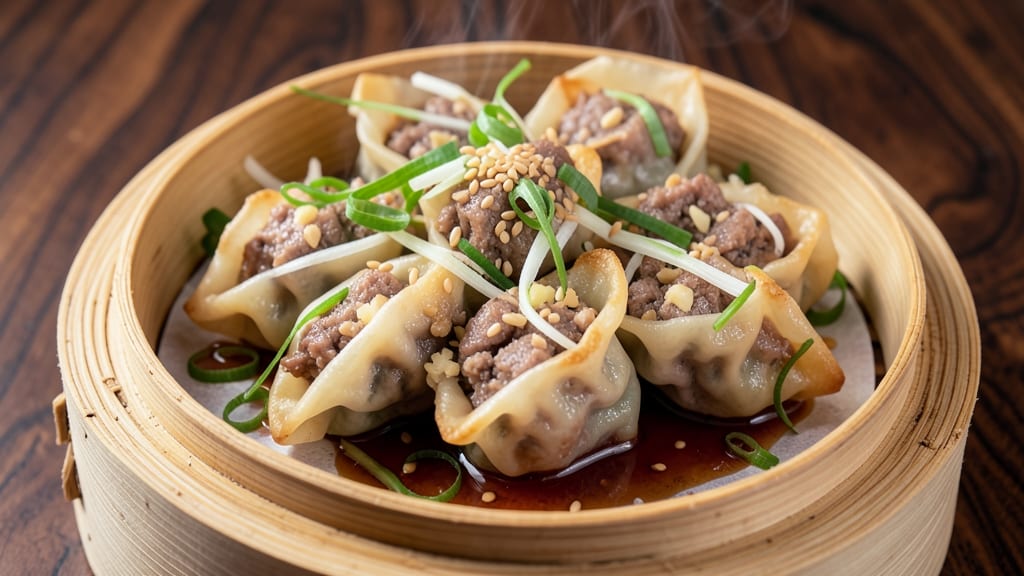
This authentic pork gyoza recipe delivers the perfect balance of crispy edges and juicy centers—just like the dumplings I first tasted in Tokyo’s tiny izakayas. 🌟 The secret lies in the delicate dough, finely minced pork filling, and precise pan-frying technique that creates that signature caramelized crust while keeping the interior tender.
As someone who’s spent years perfecting pork dishes, I can tell you this recipe captures the soul of Japanese-Chinese street food culture in every bite.
The process begins with making the dough from scratch—simple, but the rolling and resting are critical for that signature translucent texture. Meanwhile, the filling combines ground pork with aromatic garlic, ginger, and scallions, all finely chopped to mimic traditional hand-mincing.
This isn’t just any dumpling recipe; it’s a celebration of texture contrasts that make gyoza irresistible—crispy yet yielding, savory yet bright.
What sets these apart is the pan-frying method: a hot skillet with just enough oil to create that golden crust, followed by a quick steam to finish cooking. The result is dumplings with crispy edges that shatter slightly and juicy centers that burst with flavor.
Serve with a simple soy-vinegar dipping sauce or spicy chili oil for the full experience—this is comfort food elevated to artistry.
Pair with miso soup and pickled ginger for an authentic meal, or serve as an appetizer that disappears faster than you can say "more, please." The beauty of gyoza lies in their versatility—equally at home in a bustling restaurant or your own kitchen. Let’s get cooking!
Ingredients for authentic pork gyoza
Twenty dumplings with restaurant-quality texture—crispy edges, juicy centers, and authentic Tokyo izakaya flavor.
| Ingredient | Amount | Notes |
|---|---|---|
| Ground Pork 🐖 | 2 lb | Finely minced, lean preferred |
| White All-Purpose Flour 🌾 | 2 ½ cups | Plus 1 tbsp extra for dusting |
| Cold Water 💧 | 1 ¼ cups | Chilled, for dough elasticity |
| Garlic Cloves 🧄 | 6 cloves | Finely minced, fresh preferred |
| Fresh Ginger 🌿 | 1 ½ tbsp | Grated, aromatic variety |
| Green Onions 🧅 | 4 whole | Finely chopped, white and green parts |
| Soy Sauce 🍶 | 2 tbsp | Light or all-purpose, Japanese preferred |
| Sesame Oil 🫒 | 1 tbsp | Toasted, for aroma |
| Vegetable Oil 🫒 | ½ cup | High smoke point for frying |
| Salt 🧂 | 1 ½ tsp | Diamond Crystal preferred |
| White Pepper 🌶️ | ½ tsp | Freshly ground, subtle heat |
| Rice Vinegar 🍶 | 1 tbsp | For dipping sauce |
| Chili Oil 🌶️ | 1 tbsp | Spicy chili oil for dipping |
| Sesame Seeds 🌾 | 1 tbsp | Toasted, for garnish |
The pork quality matters most here. Look for finely ground pork—preferably from the butcher counter rather than pre-packaged—since texture is everything. Tokyo-style pork (lean but not too dry) works best, and you can often find it at specialty Asian markets. For the dough, King Arthur or Caputo flour yields the best translucent texture, but any high-protein all-purpose flour will do. The water must be ice cold to prevent gluten development during mixing, so chill yours in the freezer for 10 minutes if needed. Traditional recipes call for a touch of oil in the dough, but we're keeping it simple with just flour and water for that signature delicate wrapper.
No sesame oil? Toasted peanut oil at half the amount works in a pinch, though it lacks the nutty depth. Substitute fresh cilantro for green onions if you prefer, but the white parts are essential for that authentic umami. For the dipping sauce, Kikkoman soy sauce is the gold standard, but any light soy will suffice. If you can't find chili oil, mix 1 tbsp gochujang with 1 tsp rice vinegar for a quick substitute. The dough can be made a day ahead and refrigerated, but bring it to room temperature before rolling. For the filling, grate the ginger on the fine side of a box grater—this ensures even distribution in the dumplings.
Store uncooked dough wrapped in plastic between parchment paper for 24 hours in the fridge, or freeze for up to 3 months by wrapping tightly in plastic wrap. The filling can be prepped ahead and refrigerated for 1 day, though texture degrades slightly after 6 hours. Cooked gyoza reheat best in a steamer or air fryer—3 minutes at 375°F restores that crispy exterior. For freezing, place cooked dumplings on a tray first to prevent sticking, then transfer to a bag. They’ll keep for 2 months and reheat beautifully with a quick pan-fry.
Why You'll Love This Recipe
- No-Fuss Dough: I mix flour and cold water in minutes—no stand mixer, no stress. That crispy wrapper magic happens just from kneading and resting, and honestly? Even my toddler could handle it.
- Umami Bomb: The garlic and ginger paste? Chef’s kiss. It transforms plain ground pork into something savory and bright, with that perfect balance of heat and freshness that makes you want to eat them straight from the pan.
- Party or Pantry: Freeze half the batch raw—no one will know. Perfect for game day, potlucks, or when you’re too tired to cook. (Yes, even on a Tuesday night.)
- Budget Win: Ground pork stretches far, and flour’s cheap. I make 30 dumplings for under $10, and they reheat like a dream. Leftovers? Just steam or pan-fry—no sad, soggy gyoza here.
Step-by-step instructions for authentic pork gyoza
Master these techniques and you'll achieve restaurant-quality gyoza with crispy edges and tender fillings.
👨🍳 Step 1: Prepare the Dough with Precision
In a large mixing bowl, combine the 2.5 cups white all-purpose flour and 1.5 tsp salt. Make a well in the center and add the 1.25 cups cold water all at once. Using a fork, gently mix until a shaggy dough forms—don't overwork it yet. The cold water is crucial for elasticity.
Transfer the dough to a lightly floured surface and knead for 8-10 minutes until smooth and slightly tacky. Wrap tightly in plastic wrap and rest at room temperature for 30 minutes. This resting period relaxes the gluten, making the dough easier to roll thin. If the dough feels too sticky after resting, dust lightly with flour—but don't add too much or the wrappers will be tough.
🍳 Step 2: Make the Signature Pork Filling
In a food processor, pulse the 2 lb ground pork until finely minced. Transfer to a large bowl and add the 6 cloves minced garlic, 1.5 tbsp grated ginger, 4 whole chopped green onions, 2 tbsp soy sauce, 0.5 tsp white pepper, and 1 tbsp sesame oil. Mix thoroughly with your hands until the filling is cohesive and slightly sticky.
Here's the thing—this filling needs to be just moist enough to stick together when wrapped, but not so wet it leaks. If it feels too dry, add 1 tsp cold water at a time until it holds its shape when pressed. The filling should be cool before wrapping to prevent the wrappers from becoming soggy.
🥘 Step 3: Roll and Cut the Wrappers
Divide the rested dough into 20 equal portions (about 1.5 oz each). Roll each portion into a thin circle about 3.5 inches in diameter on a lightly floured surface. Use a rolling pin to keep even pressure—thickness should be consistent for even cooking. Dust with flour between each wrapper to prevent sticking.
For authentic gyoza, use a round cutter or a glass to cut perfect circles. If you don't have a cutter, trace a small plate on the dough and cut carefully. The wrappers should be translucent enough to see your hand through them when held up to light. Keep unused wrappers covered with a damp towel to prevent drying.
🔥 Step 4: Assemble and Pan-Fry to Perfection
Place 1 tbsp pork filling in the center of each wrapper, leaving a ½-inch border around the edges. Dip your finger in cold water and moisten the border completely. This creates a strong seal when you fold. Fold one corner over the filling to form a triangle, then pinch the edges firmly to create a tight seal. Repeat with all wrappers.
Heat 0.5 cup vegetable oil in a non-stick skillet over medium-high heat until shimmering. Add gyoza in a single layer, leaving space between each. Cook for 2-3 minutes until the bottoms are golden brown and crispy. Carefully flip each gyoza and cook another 1-2 minutes until the other side is lightly browned. Remove and drain on a wire rack.
🍽️ Step 5: Serve with Classic Dipping Sauce
In a small bowl, whisk together 1 tbsp rice vinegar, 1 tbsp soy sauce, and 1 tbsp chili oil for the dipping sauce. The sauce should be smooth and slightly spicy—adjust the chili oil to taste. Sprinkle the gyoza with 1 tbsp toasted sesame seeds just before serving for that authentic crunch.
Serve immediately while the wrappers are still crispy. The contrast of the crispy exterior with the juicy, flavorful filling is what makes gyoza so special. For extra authenticity, serve with a side of quick-pickled vegetables or steamed bok choy. The key to great gyoza is timing—don't let them sit too long after frying or they'll lose their crispness.
Pro Tips For Making Authentic Pork Gyoza
- CHILL THE PORK FILLING: After mixing your pork with garlic, ginger, and seasonings, pop it in the fridge for 20-30 minutes before wrapping. Cold meat holds its shape better when folding—no more sad, squished gyoza that won’t stay together.
- GRATE GINGER FINE: Skip the chopping—use a microplane for ginger. Freshly grated releases more flavor and blends seamlessly into the pork filling without clumps. (Yes, even if it looks like you’re making snow.)
- STEAM IN BATCHES: Don’t overcrowd your steamer—leave space between gyoza so they cook evenly. Overlapping leads to soggy bottoms and uneven doneness. If you’re making a big batch, steam in two rounds.
- SEAL EDGES TIGHT: Press the dough edges firmly with your thumb as you fold—no gaps, no air pockets. A loose seal means filling spills out during cooking, and nobody wants a runny gyoza. (Trust me, I’ve learned this the hard way.)
Creative variations of this dish
Tokyo-Style Crispy
For maximum crispiness, I recommend using a cast iron skillet preheated until it's ripping hot—think 400°F internal temp. Add just enough vegetable oil to coat the bottom lightly (about ½ tsp per dumpling).
Cook the gyoza in batches, never overcrowding, and use a tong to flip them—this prevents sticking. The secret? A lid for 30 seconds after flipping traps steam and creates that signature crispy-yet-tender texture. 🔥
Steamed Gyoza
If you prefer a lighter version, steam the assembled gyoza in a bamboo steamer over boiling water for 8-10 minutes. Line the steamer with parchment paper to prevent sticking, and place each dumpling seam-side up.
Serve with a light soy-ginger dipping sauce (mix 1 tbsp soy sauce, 1 tsp grated ginger, and 1 tsp mirin). This method keeps the wrappers soft and the filling juicy—ideal for a summer meal.
Spicy Kimchi Gyoza
Swap the pork filling for a kimchi-pork blend by mixing 1 cup finely chopped kimchi (squeeze out excess liquid) with the ground pork. Add 1 tsp gochugaru (Korean chili flakes)> and ½ tsp sugar to the filling mixture.
These gyoza pack a tangy, spicy punch that pairs perfectly with a cool cucumber salad on the side. For extra heat, drizzle with sriracha mayo (mix 2 tbsp mayo with 1 tsp sriracha).
Vegetarian Gyoza
Replace the pork with a shiitake-mushroom mix: finely chop ½ lb shiitake mushrooms and sauté with 1 tbsp soy sauce and 1 tsp sesame oil until dry. Add 1 tbsp nutritional yeast for umami depth.
These gyoza hold together well and work beautifully with a miso-white pepper dipping sauce (mix 1 tbsp white miso paste with 1 tsp rice vinegar and ½ tsp white pepper).
Frozen Gyoza Hack
Freeze uncooked gyoza on a tray lined with parchment paper for 1 hour, then transfer to a bag. Cook straight from frozen in the same skillet—just add 30 seconds extra> per side.
For steamed gyoza, thaw in the fridge overnight. This shortcut saves time without sacrificing texture, and the filling stays flavorful even after freezing. ✨
Dessert Gyoza Twist
Yes, you read that right! Swap the pork filling for a sweet red bean paste (use 1 cup azuki bean paste mixed with 1 tsp vanilla extract). Roll the wrappers slightly thicker and pan-fry until golden.
Serve with a honey-sesame dipping sauce (mix 1 tbsp honey, 1 tsp toasted sesame oil, and a pinch of salt). These make a stunning (and delicious) dessert or breakfast treat!
Nutrition facts
Frequently asked questions
Why do my gyoza wrappers tear when I fold them?
The most common causes are overworked dough or not enough moisture on the edges. Make sure your dough has rested for 30 minutes after kneading—this relaxes the gluten. When sealing, use cold water on your finger to moisten the edges thoroughly before folding. If the dough feels too dry, lightly mist it with water while rolling.
Can I make the dough ahead of time?
The dough can be made 1 day ahead and stored in an airtight container in the fridge. Just let it sit at room temperature for 20 minutes before rolling. For longer storage, wrap tightly in plastic and freeze for up to 3 months. Thaw overnight in the fridge before using.
What's the best way to reheat cooked gyoza?
For crispy results, reheat in a dry skillet over medium heat for 1-2 minutes per side until golden. If using a microwave, cover with a damp paper towel and heat for 30 seconds—this prevents drying. The best method? Steam them for 3-4 minutes to restore tenderness while keeping the wrappers intact.
How do I prevent the filling from leaking?
Keep your filling cool before wrapping (chill for 10 minutes if needed) and don't overfill. Use 1 tbsp filling per dumpling and leave a ½-inch border. Seal tightly by pinching the edges firmly—this creates a strong barrier. If the filling feels too wet, add 1 tsp cornstarch to absorb excess moisture.
What's the difference between gyoza and potstickers?
Gyoza are traditionally pan-fried until crispy, while potstickers are often steamed first then pan-fried. The wrappers are also slightly different—gyoza dough is thinner and more delicate. Both use similar fillings, but gyoza typically have a lighter, more translucent wrapper that crisps beautifully when fried.