
Main Courses
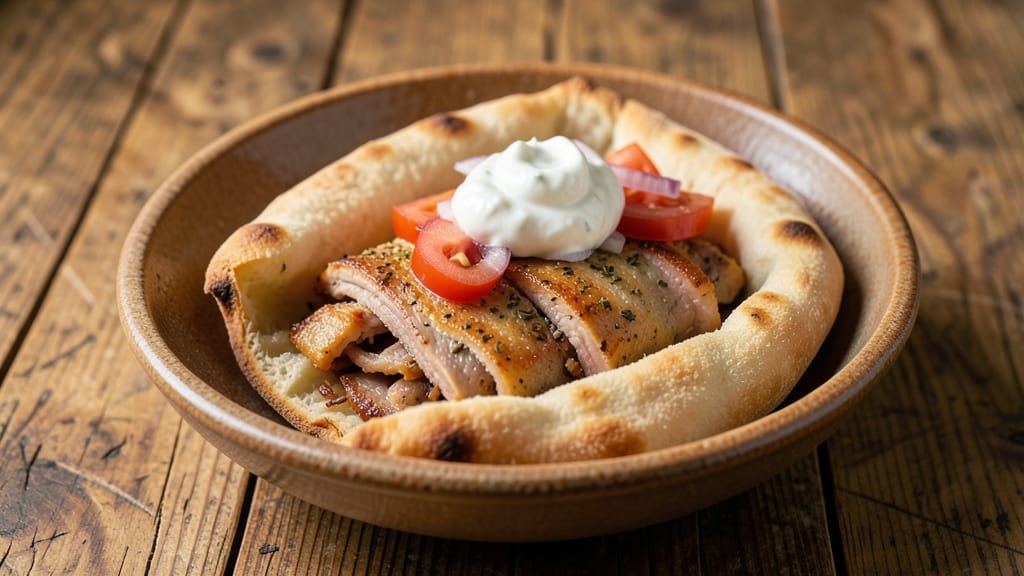
This authentic pork gyros recipe brings the smoky, spiced flavors of a Greek taverna straight to your kitchen.
After years of perfecting the technique—from the vertical spit rotation to the charred spice crust—I’ve developed a method that delivers tender meat with that signature crispy exterior, all wrapped in warm pita with classic toppings.
The secret lies in marinating the pork overnight with a blend of oregano, garlic, and lemon, then cooking it low and slow on a rotisserie until it’s fall-apart tender.
The key to authenticity is the cooking method: traditional vertical spit rotation ensures even cooking and that coveted charred crust. I’ve simplified the process for home cooks by using a rotisserie attachment, but the flavor remains true to what you’d find in Athens.
The marinade is where the magic happens—bright lemon, aromatic oregano, and a touch of cinnamon create layers of flavor that penetrate every bite.
Once the meat is cooked, it’s all about assembly: warm pita, tangy tzatziki, crisp tomatoes, and red onions come together in a way that’s both comforting and restaurant-quality.
What you’ll end up with is a dish that’s hearty enough for a family dinner but elegant enough for a special occasion. The meat stays juicy and flavorful, the crust is perfectly charred, and the toppings add freshness with every bite.
This isn’t just a recipe—it’s a taste of Greece, brought to life in your own kitchen. The best part? Leftovers reheat beautifully, making it perfect for meal prep or feeding a crowd.
Serve with a side of crispy fries or a fresh Greek salad to complete the experience. Whether you’re hosting a dinner party or just craving a taste of the Mediterranean, this recipe delivers every time. Let’s get cooking!
Ingredients for authentic pork gyros
Six ingredients for the marinade, plus a few more for the perfect Greek feast.
| Ingredient | Amount | Notes |
|---|---|---|
| Boneless Pork Shoulder 🐖 | 3 lb | Cut into 1-inch cubes |
| Extra-Virgin Olive Oil 🫒 | ½ cup | For marinade and basting |
| Fresh Lemon Juice 🍋 | ½ cup | Freshly squeezed |
| Garlic Cloves 🧄 | 8 cloves | Minced for marinade |
| Dried Oregano 🌿 | 2 tbsp | Greek oregano preferred |
| Ground Cinnamon 🌶️ | 1 tsp | For warmth |
| Ground Coriander 🌿 | 1 tsp | Adds earthy depth |
| Salt 🧂 | 1 ½ tsp | Diamond Crystal preferred |
| Black Pepper 🌶️ | 1 tsp | Freshly ground |
| Pita Bread 🥙 | 6 whole | Warm for serving |
| Red Onions 🧅 | 1 whole | Thinly sliced |
| Roma Tomatoes 🍅 | 4 whole | Diced for topping |
| Tzatziki Sauce 🥛 | 1 ½ cups | Store-bought or homemade |
| Fresh Parsley 🌿 | ¼ cup | Chopped for garnish |
The pork shoulder is the star here—look for well-marbled cuts at your butcher or grocery store's meat counter. Costco or Whole Foods often have great options, but any reputable butcher will do. Greek oregano is a game-changer if you can find it—Mediterranean markets usually carry it. If not, regular dried oregano works in a pinch. The lemon juice should be freshly squeezed—bottled won't cut it for that bright, authentic flavor. And don't skip the cinnamon—it's what gives gyros that signature warmth.
No Greek oregano? Dried marjoram at half the amount works as a substitute. Running low on lemon? Lime juice in a 1:1 ratio gives a similar tang. The pork cubes should be consistent in size—1 inch is ideal—so they cook evenly. For the pita, warm it in a dry skillet for 30 seconds per side to keep it soft. The tzatziki can be store-bought (I won't judge), but if you're feeling fancy, Greek yogurt, cucumber, garlic, and dill make it worth it. The tomatoes should be ripe but firm—Roma tomatoes are perfect for dicing.
Marinate the pork overnight for maximum flavor—cover and refrigerate. The marinade keeps for 3 days in the fridge, so make extra if you're feeding a crowd. The cooked pork reheats beautifully—wrap in foil and warm in a 300°F oven for 15 minutes. Pita stays fresh for 2 days if stored in a paper bag, and the tzatziki will last 5 days in an airtight container. Prep toppings ahead of time—slice onions and dice tomatoes—so assembly is a breeze when it's time to serve.
Why You'll Love This Recipe
- One-Pan Magic: I swear by this recipe because it’s all about minimal cleanup. Slice that pork shoulder, toss it in a pan with olive oil and garlic, and let it slow-cook until it’s fall-apart tender. No pots, no pans, no stress—just that rich, herby aroma filling your kitchen by the end.
- Garlic-Oregano Bomb: Between us, the flavor combo here is chef’s kiss. The garlic cloves get crushed right into the olive oil, then mingle with the oregano and lemon juice while the pork cooks—bright, savory, and just a little tangy. It’s the kind of taste that makes you want to eat it straight from the pan (don’t judge me).
- Weeknight Workhorse: This isn’t just for Tuesdays—it’s my go-to for game days, lazy Sundays, or when friends drop by unannounced. Serve it in pita with tzatziki, pile it on salads, or even toss it into wraps. Honestly, I’ve made it for breakfast once, and I’m not apologizing.
- Budget-Friendly Feast: Pork shoulder is the unsung hero of affordable protein, and this recipe stretches it far. A single cut feeds four, and leftovers reheat beautifully—whether you’re prepping for the week or saving money for something splurge-worthy. Plus, the ingredients? Most are already in my pantry.
Step-by-step instructions for authentic pork gyros
Here's how to make restaurant-quality gyros with that signature charred spice crust and melt-in-your-mouth meat.
Make the Spice Marinade and Coat the Pork
In a large bowl, combine the 0.5 cup extra-virgin olive oil, 0.5 cup fresh lemon juice, 8 cloves minced garlic, 2 tablespoons dried oregano, 1 teaspoon ground cinnamon, 1 teaspoon ground coriander, 1.5 teaspoons salt, and 1 teaspoon black pepper. Mix well until the spices are fully dissolved and the oil takes on a vibrant golden hue.
Add the 3 lb boneless pork shoulder cut into 1-inch cubes to the marinade and toss gently to coat every piece completely. Let the pork marinate at room temperature for 30 minutes—this ensures the spices adhere and start breaking down the meat fibers for maximum tenderness. I like to use my hands for this, working the marinade into the meat like you're giving it a massage.
Char the Pork for Maximum Flavor
Heat a large skillet over medium-high heat until it's very hot. Add the marinated pork in a single layer, leaving space between pieces so they don't steam. Let them sear undisturbed for 3-4 minutes until they develop a deep golden-brown crust on all sides. This charring step is what gives gyros their signature smoky flavor—don't rush it.
Once the first side is deeply browned, flip the pork and repeat on the second side. You'll notice the meat releases easily from the pan when it's ready—this is your cue to flip. Transfer the charred pork to a plate and let it rest for 5 minutes before proceeding. This resting period allows the juices to redistribute, ensuring tender meat when you slice it later.
Slow-Cook the Pork Until Fork-Tender
Transfer the charred pork to a slow cooker and cook on low heat for 6-8 hours. The slow cooking breaks down the connective tissue, resulting in meat that practically falls apart when sliced. I've found that this method is foolproof—no need to monitor it closely, just let it do its thing while you prepare the rest of your meal.
Alternatively, you can cook the pork in a 325°F oven for 3-4 hours or on the grill over indirect heat for 2-3 hours. Whichever method you choose, the key is patience—rushing this step will leave you with tough meat. The pork is done when it reaches an internal temperature of 195°F and can be easily shredded with two forks.
Assemble the Gyros with Fresh Toppings
Preheat your oven to 350°F and warm the 6 whole pita bread for 5 minutes—this makes them soft and pliable. While the pita warms, slice the 1 whole red onion thinly and dice the 4 whole Roma tomatoes. Chop the 0.25 cup fresh parsley finely for garnish.
To assemble, spread ¼ cup tzatziki sauce on each pita, then add ½ cup shredded pork, ¼ of the sliced onions, and ¼ of the diced tomatoes. Fold the pita in half and serve immediately. The combination of warm pita, creamy tzatziki, tender pork, and fresh vegetables makes every bite a flavor explosion. Garnish with the chopped parsley just before serving for that restaurant-quality finish.
Keep Warm and Serve Family-Style
If you're serving a crowd, keep the assembled gyros warm in a 200°F oven for up to 20 minutes. The residual heat from the oven will keep everything warm without drying out the pita or overcooking the pork. I like to serve gyros family-style with extra tzatziki sauce on the side and a sprinkle of sesame seeds for garnish.
Here's the thing—authentic gyros are all about balance. The charred spice crust from the marinade, the tender slow-cooked meat, the cool tzatziki, and the fresh crunch of onions and tomatoes all come together in perfect harmony. Don't be afraid to adjust the seasoning to your taste, but trust the process—I promise you'll end up with gyros that taste like they came straight from a Greek taverna.
Pro Tips For Making Authentic Pork Gyros
- Slice Thin, Slice Even: Cut the pork shoulder against the grain into strips no thicker than ¼-inch—this keeps it tender and cooks fast. I used to eyeball it, but now I measure with a ruler (yes, really) to avoid chewy bits.
- Marinate Overnight, Covered: Toss the pork with olive oil, lemon juice, minced garlic, and oregano, then refrigerate for at least 12 hours. The acid tenderizes the meat, but uncovered? It dries out—always use a sealed container.
- Sear Before Grilling: Pat the marinated pork dry and sear it in a screaming-hot skillet for 2 minutes per side. This locks in juices and builds flavor—skipping it means bland, underwhelming gyros.
- Rest Before Serving: Let the cooked pork rest for 5 minutes under foil before assembling. This keeps it juicy, and honestly, it’s the difference between a good gyro and one that falls apart when wrapped. (Your future self will thank you.)
Essential equipment for great authentic pork gyros
Vertical Spit Setup
For that signature charred crust and even cooking, a vertical rotisserie spit is ideal. I use a West Bend 56020—it’s affordable and holds up to 6 lbs of meat. The key is a stainless steel skewer (about 18 inches long) to keep the meat stable.
If you don’t have a rotisserie, a heavy-duty meat thermometer like the ThermoWorks Smoke ensures you hit 195°F internal temp without overcooking. 🌡️
Cast Iron Skillet
A 12-inch Lodge cast iron skillet is non-negotiable for the charring step. Its thick base retains heat perfectly, giving you that deep golden-brown crust in 3-4 minutes per side. Season it well before use—I like to rub it with flaxseed oil and heat it until smoking hot.
Cast iron also doubles as a makeshift warming tray for the pita bread later.
Slow Cooker or Oven
For the slow-cooking phase, a 6-quart slow cooker (like the Hamilton Beach) works perfectly on low for 6-8 hours. If you prefer oven cooking, a rimmed baking sheet lined with foil catches drippings—just prop the pork on a wire rack to ensure even air circulation.
I’ve also used a pellet grill at 225°F for 4-5 hours, which adds a subtle smoky depth.
Pita Warmer
Warming pita is an art—never microwave it (it turns rubbery). Instead, use a lightweight skillet (like a Mauviel M’Cook) over medium heat for 30 seconds per side. For larger batches, a pizza stone in a 350°F oven keeps them soft for up to 10 minutes.
Pro tip: Brush with garlic-infused olive oil before warming for extra flavor.
Knife Kit Essentials
Sharp tools make all the difference. A Wüsthof 8-inch chef’s knife slices onions paper-thin, while a Victorinox 10-inch slicer shreds the pork effortlessly. For garnish, a small pairing knife chops parsley in seconds.
I keep a cutting board (like the Teakhaus bamboo) handy—it’s gentle on knives and absorbs odors better than plastic.
Thermometer Must-Haves
Never guess temperatures—accuracy is key. My go-to is a Thermoworks Smoke for the rotisserie, but a Meater+ (with Bluetooth) tracks multiple probes at once. For the slow cooker, a Thermapen ONE gives instant reads. All should hit 195°F for fork-tender pork. 💡
Nutrition facts
Frequently asked questions
Can I use chicken or lamb instead of pork for gyros?
Chicken thighs work beautifully for a lighter option—just marinate them for 2 hours instead of overnight and cook until they reach 175°F internal temp. For lamb, use shoulder or leg cuts and increase the marinating time to 4-6 hours to tenderize the meat. The cooking method remains the same, but lamb benefits from an extra 15 minutes of slow cooking to break down its tougher fibers.
How do I keep the pita from getting soggy?
Warm the pita in a 350°F oven for 5 minutes or on a dry skillet for 30 seconds per side right before assembling. For extra insurance, brush the inside with garlic-infused olive oil before adding fillings. If you're making these ahead, assemble only the meat and sauce, then wrap each gyro tightly in foil and warm for 10 minutes at 300°F before adding fresh toppings.
What's the best way to make homemade tzatziki?
Mix 1 cup Greek yogurt with ½ cup grated cucumber (squeeze out excess water), 1 clove minced garlic, 1 tablespoon lemon juice, 1 tablespoon chopped dill, and ½ teaspoon salt. Chill for 1 hour before using—this lets the flavors meld perfectly. For extra richness, add 1 tablespoon olive oil and a pinch of oregano. The yogurt should be thick but not sour!
Can I make gyros ahead of time?
Yes, but with a few tricks! Cook the pork completely and let it cool, then store it in the fridge for up to 3 days or freeze for 3 months. Reheat in a 300°F oven for 15 minutes wrapped in foil. Assemble the gyros just before serving—this keeps the pita crisp and toppings fresh. The marinade can be prepped 3 days ahead, and the tzatziki lasts 5 days refrigerated.
Why does my gyro meat turn out dry?
This usually happens from overcooking or not resting the meat. Always cook pork to 195°F internal temp—no higher! Let it rest 10 minutes after cooking to redistribute juices. If using chicken, cook to 175°F and rest 5 minutes. For extra moisture, baste the meat with marinade during cooking. And never skip the slow cooking phase—rushing leads to tough, dry results.