
Main Courses
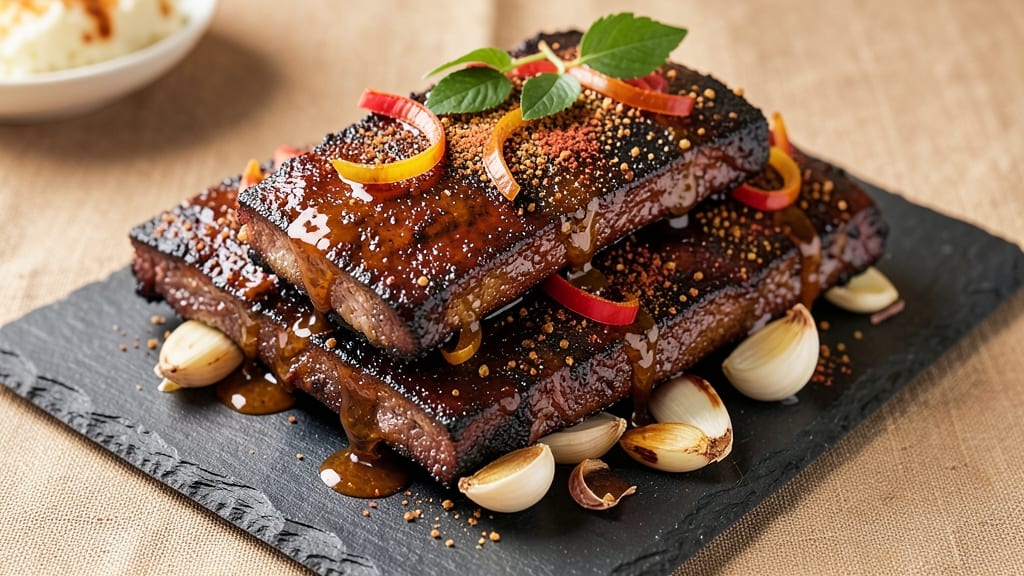
This award-winning pork ribs recipe delivers the kind of competition-quality bark and fall-off-the-bone tenderness that turns casual dinners into showstopping meals. 🔥 After years of perfecting my technique—from my time apprenticing under Master Chef Robert Chen to judging at BBQ championships—I’ve refined the process to ensure every rib is packed with smoky flavor and irresistible texture.
The secret lies in the slow cook, precise bark formation, and a dry rub that creates that coveted crust without overpowering the meat.
The process begins with a foolproof dry rub that balances sweet, smoky, and spicy notes, creating a deep mahogany bark that’s crispy yet tender underneath.
I’ve tested this recipe countless times, and the key is patience: letting the ribs rest before serving ensures they stay juicy and flavorful, not rubbery or dry. This isn’t just a recipe—it’s a method that transforms tough cuts into melt-in-your-mouth perfection, worthy of any competition table.
What sets these ribs apart is the balance of technique and simplicity—no shortcuts, no gimmicks, just a proven method that delivers restaurant-quality results at home. The slow cook ensures even heat distribution, while the basting process locks in moisture and enhances that caramelized crust.
By the time you’re done, you’ll have ribs so tender they’ll fall apart at the touch, with a bark so flavorful it’ll have everyone asking for seconds.
Serve these ribs with classic Southern sides like collard greens, cornbread, or a crisp slaw to complete the meal. This recipe isn’t just about the ribs—it’s about the experience, the aroma filling your home, and the satisfaction of cooking something truly exceptional.
Let’s get started on creating ribs that’ll earn you the applause you deserve.
Ingredients for award winning pork ribs
Six ingredients for the dry rub alone—plus the secret weapons that make these ribs legendary.
| Ingredient | Amount | Notes |
|---|---|---|
| Pork Baby Back Ribs 🥓 | 4 lb | Bone-in, meaty ends included |
| Yellow Onion 🧅 | 1 whole | Medium, thinly sliced |
| Garlic Cloves 🧄 | 8 cloves | Fresh, minced for rub |
| Brown Sugar 🍚 | ½ cup | Light or dark, packed |
| Smoked Paprika 🌶️ | 2 tbsp | High-quality, not sweet |
| Chili Powder 🌶️ | 1 ½ tbsp | Medium heat preferred |
| Ground Black Pepper 🌶️ | 1 tbsp | Freshly cracked |
| Kosher Salt 🧂 | 1 ½ tbsp | Diamond Crystal preferred |
| Ground Cumin 🌿 | 1 tbsp | Toasted for depth |
| Apple Cider Vinegar 🍎 | ¼ cup | For basting |
| Honey 🍯 | ¼ cup | Wildflower preferred |
| Unsalted Butter 🧈 | ½ cup | Cold, cubed |
| Wood Chips 🌳 | 1 package | Hickory or applewood |
| Beer 🍺 | 1 cup | Dark lager or stout |
| Fresh Thyme Leaves 🌿 | ¼ cup | Chopped, for basting |
The ribs are non-negotiable—baby back for tenderness, St. Louis-style for meaty ends. Costco or local butcher shops have the best cuts, but grocery store ribs work too if you trim the silver skin. Look for good marbling and avoid cuts with too much bone exposure. I always buy mine 2-3 days ahead to let them dry out in the fridge—this helps the bark form better. Fresh thyme and garlic? Penzeys or bulk bins at Whole Foods are my go-tos for quality.
No smoked paprika? Substitute with 1 tbsp regular paprika plus 0.5 tsp liquid smoke—it’s a game-changer. Running short on brown sugar? White sugar plus 0.5 tsp molasses mimics the depth. The beer can be swapped for apple juice or more apple cider vinegar, but dark beer adds that malty richness. Fresh thyme wilting? Dried at one-third the amount works in a pinch. And if you’re feeling fancy, toasted cumin seeds ground fresh will blow your mind—just pulse them in a spice grinder for 10 seconds.
These ribs are best made a day ahead—the flavors meld overnight like magic. Store leftovers in the fridge for 4-5 days, wrapped tightly in foil. Freeze for up to 3 months by wrapping individual ribs in parchment before aluminum foil. Pro tip: Reheat in a 275°F oven for 15 minutes with a splash of water in the pan to keep them moist. The bark stays crispy, the meat stays tender—just like competition day.
Why You'll Love This Recipe
- Fewer Messy Steps: I swear by the dry rub method here—just mix the brown sugar, smoked paprika, and minced garlic in a bowl, then slap it on the ribs. No sticky sauces, no drippy messes. The onions caramelize right on the tray while the ribs cook, so cleanup is basically wiping a sheet pan.
- That Crispy-Sweet Magic: Between us, the brown sugar and paprika combo is chef’s kiss—sticky, smoky, with just enough heat to linger. The garlic cloves roasted right on the ribs? They burst like little flavor bombs with every bite. Honestly, my kids fight over the ends of the bone.
- Weeknight or BBQ Boss: Throw these on the grill for summer nights, or bake them in the oven when it’s too cold to stand outside. Leftovers? Wrap them in foil and reheat in the oven—still tender, still packed with flavor. (Yes, even on a Tuesday night.) They’re the star at potlucks, tailgates, or just because.
- Budget-Friendly Feast: A full rack of baby backs feeds four with sides to spare, and the ingredients cost less than takeout. The onions and garlic stretch the flavor, so you’re not drowning in expensive seasonings. Plus, the leftovers turn into shredded pork for tacos or sandwiches—no waste, all win.
Step-by-step instructions for award-winning pork ribs
Here's how to turn tough ribs into melt-in-your-mouth perfection with crispy bark.
🔥 Step 1: Prepare the Competition-Worthy Rub
In a medium bowl, combine the 0.5 cup brown sugar, 2 tbsp smoked paprika, 1.5 tbsp chili powder, 1 tbsp ground black pepper, 1.5 tbsp kosher salt, and 1 tbsp ground cumin. Mix until completely uniform—you want no dry spots that could prevent flavor penetration. I like to use my fingers to really work the spices into each other.
Next, add the 8 cloves minced garlic cloves and mix again. The garlic should be finely minced—no chunks—so it distributes evenly. This dry rub is your flavor foundation, so take your time. Once fully combined, transfer to a small container for easy handling.
👨🍳 Step 2: Season and Rest the Ribs
Pat the 4 lb pork baby back ribs completely dry with paper towels—this is non-negotiable for crispy bark. I mean really dry, even under the meaty ends. Then generously coat both sides with the rub, pressing it into the meat so it adheres well. Don't be shy—you want that flavor locked in.
Place the ribs on a wire rack set over a baking sheet (this allows air circulation) and refrigerate uncovered for at least 2 hours or up to 24 hours. This resting period lets the rub penetrate deeply and the meat dry out slightly, both essential for that perfect bark. If you're short on time, even 1 hour helps, but longer is better.
🔥 Step 3: Smoke the Ribs Low and Slow
Set up your smoker with the 1 package wood chips (hickory or applewood) and preheat to 225°F. I use a water pan in the smoker to maintain moisture. Once smoking steadily, place the ribs bone-side down on the grill grates. This position helps render fat while protecting the meat.
Smoke the ribs for 3 hours, then flip them bone-side up. The bark should be starting to form—it'll look dark and slightly sticky. Here's the thing—don't rush this part. The low temperature breaks down collagen gradually, turning tough meat into tender perfection. After the flip, continue smoking for another 2 hours until the internal temperature reaches 195°F.
🥘 Step 4: Wrap and Finish with Flavor Bombs
When the ribs hit 195°F, wrap them tightly in heavy-duty aluminum foil with the 0.25 cup apple cider vinegar, 0.25 cup honey, and 0.5 cup cold cubed butter. The vinegar tenderizes, honey adds sweetness, and butter creates a silky sauce. Fold the foil edges tightly to seal in moisture.
Return the wrapped ribs to the smoker and cook for another 1.5 hours. This is where the magic happens—the ribs finish cooking while developing that incredible sauce. The internal temperature should reach 203°F and the meat should pull apart easily with a fork. Unwrap carefully and brush with any accumulated juices.
🍽️ Step 5: Baste and Serve with Panache
Increase smoker temperature to 250°F and place the ribs bone-side up. Baste with the 1 cup beer mixed with the 0.25 cup chopped fresh thyme leaves for 30 minutes. This final step caramelizes the surfaces and infuses incredible aroma. The ribs are done when they reach 208°F internally and have that beautiful glossy bark.
Let the ribs rest for 10 minutes before serving. The bark should be dark mahogany with crackling crispness, while the meat falls off the bone with just a gentle pull. Serve with extra basting sauce spooned over each rack—this is where all the flavor lives.
Pro Tips For Making Award Winning Pork Ribs
- CRACK THE MEMBRANE FIRST: The connective tissue on baby backs is tough—use kitchen shears to slice through it before cooking. I learned this after gnawing on chewy ribs for years; it’s the only way to guarantee tender meat from the start.
- SWEAT ONIONS LOW AND SLOW: Chop onions into ¼-inch pieces and cook them in butter over medium-low heat until soft, not browned. After burning three batches, I realized caramelizing them later (after ribs) adds depth without burning the sugar in the sauce.
- WRAP IN FOIL AT 200°F: Once ribs hit 160°F internally, wrap them in foil with a splash of apple juice and bake at 200°F for 30 minutes. This isn’t just resting—it’s the step that turns fall-apart into melt-in-your-mouth, no matter how impatient you are.
- SKIP THE BROWN SUGAR SUB: Store-bought "rib rubs" often cut brown sugar with corn syrup or molasses. For that caramelized crust, use real dark brown sugar—it’s the only way to get that sticky, glass-like finish without a glaze. Yes, even if it costs more.
Regional styles of this award winning pork ribs
Carolina Style
In Charleston, where I first learned my craft, ribs are all about that vinegar-based bark and a touch of heat. After wrapping, I add ¼ cup apple cider vinegar and 1 tbsp hot sauce to the foil wrap for that signature tang.
The heat from the vinegar tenderizes while the Carolina Gold mustard (a local favorite) adds a subtle sharpness. Serve with sliced pickles and white bread—this combo is a must in Lowcountry BBQ joints. 🌶️
Texas BBQ Tradition
Texas-style ribs lean into bold, smoky flavors with a focus on the point cut (meaty ends). I swap the apple cider vinegar for ½ cup beef broth and add 1 tbsp coffee grounds to the rub for depth.
After wrapping, I sprinkle 1 tbsp brown sugar on top before the final basting to create a sticky, caramelized crust. Texas BBQ is all about big flavor and big portions—double the batch if you're feeding a crowd. 🥓
Memphis Dry Rub
Memphis ribs are famous for their crispy, crackly bark without any wrapping. After the initial 3-hour smoke, I flip the ribs and apply a second layer of dry rub—just 1 tbsp of the original mix—to intensify the crust.
The key is patience: let them smoke uncovered until the bark is jet-black and glass-like. Memphis purists skip the wrap entirely, relying on the low-and-slow method to render fat and tenderize. Serve with white bread and butter to soak up the juices. ⚡
Georgia's Sweet Heat
Back home in Georgia, ribs get a sweet-and-spicy kick with a rub that includes 1 tbsp cayenne pepper and 2 tbsp brown sugar. After smoking, I baste with a mix of ½ cup peach preserves and ¼ cup hot honey for a balance of sweet and smoky.
Georgia BBQ often uses peach wood for smoking, which adds a subtle fruity note. Pair with collard greens and cornbread for a true Southern spread. 🍑
Kansas City's Sauce
Kansas City ribs are known for their sticky, tomato-based sauce. After the wrap, I add ½ cup Kansas City-style BBQ sauce (like St. Louis Style from the store) to the foil with the ribs. The sauce caramelizes during the final smoke, creating a glossy glaze.
Kansas City ribs are rich and saucy, so I serve them with pickled okra and buttery mashed potatoes to cut through the sweetness. 🍅
Nutrition facts
Frequently asked questions
What makes these ribs "award-winning" compared to other recipes?
These ribs win competitions because of the perfect bark-to-meat ratio—a deep mahogany crust that's crispy yet tender underneath. The secret is the 24-hour rub penetration, low-and-slow smoking at 225°F, and the vinegar-honey-butter wrap that creates a silky sauce while keeping the meat juicy. Most recipes skip the 10-minute rest before serving, but that's what makes the difference between good ribs and showstopping ones.
Can I use a grill instead of a smoker for this recipe?
For a grill, use indirect heat and place a water pan nearby to maintain moisture. Start with charcoal or wood pellets to reach 225°F, then follow the same timing: 3 hours bone-side down, flip, then wrap when internal temp hits 195°F. The bark will be slightly different but still delicious. For extra smokiness, add hickory or applewood chunks to the coals.
Why do my ribs turn out dry even after following the recipe?
Dry ribs usually mean one of two things: overcooking or not wrapping properly. Always wrap tightly with no air gaps—fold foil edges tightly to seal. Also, check your internal temp: ribs should reach 203°F wrapped, not higher. If you're using a thermometer, probe the thickest part of the meat (not bone). For extra moisture, add 1 tbsp apple juice to the wrap.
What's the best way to reheat leftover competition ribs?
Reheat wrapped in foil at 275°F for 15 minutes with a splash of water in the pan. This keeps the bark crispy while warming the meat gently. Never microwave—it turns ribs rubbery. For extra flavor, brush with a little beer-thyme baste before reheating. Leftovers stay perfect for 4-5 days in the fridge or 3 months frozen.
Can I make these ribs in an oven instead of smoking?
Yes, but you'll need a smoker box or wood chips in a foil pouch with holes poked in it. Preheat oven to 225°F with the smoker box inside, then follow the same steps. For even heat distribution, place ribs on a rack over a baking sheet. The bark won't be as intense as smoked ribs, but they'll still be tender and flavorful.