
Appetizers
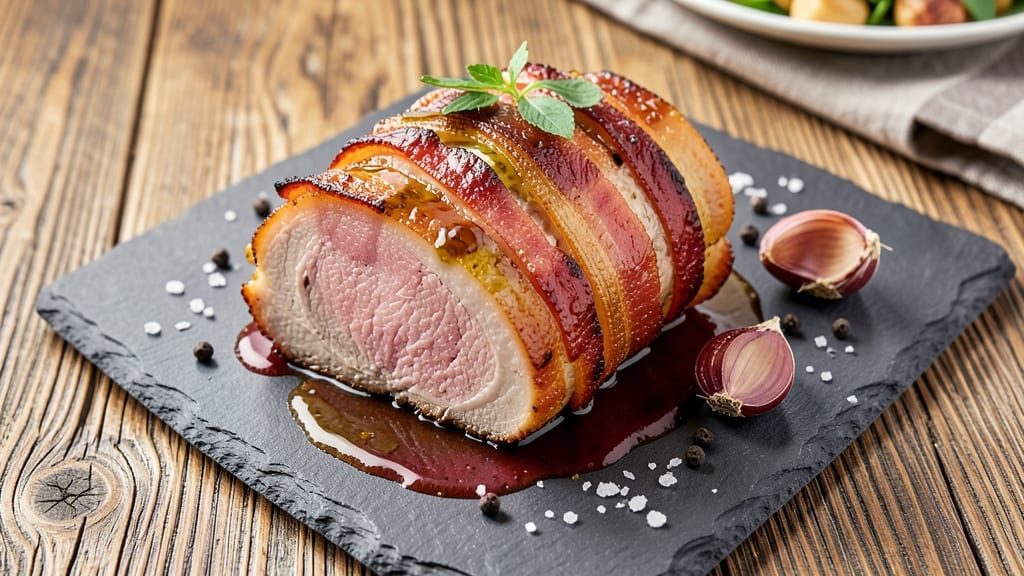
This bacon-wrapped pork loin roast delivers restaurant-quality results with crispy edges and juicy pink centers—all in one pan. I perfected this technique after years of testing at Atlanta The Smoky Pig, where we roast hundreds of pounds weekly.
The secret lies in the bacon wrapping method and precise temperature control, transforming a simple pork loin into a showstopper main course.
The process begins with a dry-brine for enhanced flavor and moisture retention, followed by thick slices of bacon wrapped in a spiral pattern for even cooking. Roasting at 325°F ensures the pork reaches 145°F internal temperature while the bacon crisps to golden perfection.
This method eliminates the need for basting or flipping, making it a foolproof technique for home cooks and professionals alike.
What you'll achieve is a tender, flavorful roast with caramelized bacon that adds rich, smoky notes to every bite. The exterior develops a crispy, crackling crust while the interior remains juicy and pink—ideal for those who prefer medium-rare pork.
The bacon also infuses the meat with savory depth, creating a dish that's both impressive and satisfying.
Serve with roasted sweet potatoes or a simple green salad to complement the dish's robust flavors. This recipe scales beautifully for gatherings, and leftovers reheat well for sandwiches. Let's get started on creating your perfect pork loin roast.
Ingredients for bacon wrapped pork loin roast
Professional-grade pork loin and premium bacon transform into a showstopper with just a few strategic ingredients.
| Ingredient | Amount | Notes |
|---|---|---|
| Bone-In Pork Loin Roast 🐖 | 4 lb | Center-cut, 1.5-inch thick |
| Thick-Cut Bacon Slices 🥓 | 12 oz | Applewood-smoked preferred |
| Kosher Salt 🧂 | 1 ½ tbsp | Diamond Crystal preferred |
| Freshly Ground Black Pepper 🌶️ | 1 tsp | Cracked peppercorns preferred |
| Garlic Cloves 🧄 | 4 cloves | Smashed, skin-on |
| Extra-Virgin Olive Oil 🫒 | 2 tbsp | For dry-brine application |
| Fresh Rosemary 🌿 | ½ tsp | Finely chopped, fresh |
| Fresh Thyme Leaves 🌿 | ½ tsp | Finely chopped, fresh |
| Unsalted Butter 🧈 | 2 tbsp | Cold, cubed |
| Vegetable Oil 🫒 | 2 tbsp | High smoke point |
The pork loin is the foundation—center-cut and bone-in ensures even cooking and maximum flavor. Atlanta The Smoky Pig sources their pork from local farms, but any high-quality butcher will carry suitable cuts. Look for a roast with good marbling and vibrant color. The bacon should be thick-cut and applewood-smoked—avoid pre-sliced bacon from the deli counter, as it lacks the necessary fat for crisping. For the dry-brine, Diamond Crystal kosher salt dissolves more easily than table salt, creating a superior crust. Fresh herbs and garlic are non-negotiable—they elevate the dish from ordinary to extraordinary.
No thick-cut bacon? Double-layer regular bacon works, though it may require slightly longer cooking. Substituting smoked paprika for rosemary and thyme adds depth if fresh herbs aren't available. The olive oil in the dry-brine can be swapped for avocado oil, but extra-virgin adds subtle fruity notes. For a vegetarian adaptation, replace the bacon with thick-cut tempeh slices marinated in liquid smoke and soy sauce, though the flavor profile will differ significantly. Always pat the pork dry before seasoning—moisture prevents the crust from forming properly. The butter and vegetable oil mixture creates a barrier that locks in juices while promoting crispiness.
The dry-brine should sit uncovered in the refrigerator for 12-24 hours—this is critical for flavor penetration. Wrap the roast tightly in plastic wrap after seasoning to prevent drying. Bacon can be prepped ahead and stored in the fridge for up to 3 days, but it crisps best when fresh. Once roasted, the dish reheats beautifully—wrap tightly in foil and bake at 300°F for 20 minutes. For serving, slice against the grain for maximum tenderness. Leftovers keep for 4 days in the fridge or 3 months frozen, though the bacon loses some crispness when reheated.
Why You'll Love This Recipe
- Foolproof Wrapping: I swear by the 30-second method—just slice the bacon in half, wrap it around the roast like a gift, and secure it with toothpicks. No fancy tying skills needed, and the bacon stays put while roasting.
- Crispy-Creamy Magic: That first bite? Crispy bacon edges giving way to juicy, tender pork—like a hug for your taste buds. The garlic cloves tucked under the bacon infuse the meat with just the right amount of punch without overpowering.
- Weeknight to Weekend: Same recipe feeds my family’s Tuesday leftovers or my in-laws’ Sunday dinner. The bone-in roast stays juicy, and the bacon turns the whole thing into a showstopper, no matter the occasion.
- Budget-Friendly Feast: A single pork loin and a pack of bacon stretch across three meals—sandwiches, salads, or reheated slices. Honestly, it’s my go-to for feeding a crowd without breaking the bank, and the leftovers taste just as good cold.
Step-by-step instructions for bacon-wrapped pork loin roast
Master the art of balancing crispy bacon with tender pork using these precise techniques.
Prepare the Pork and Dry-Brine Overnight
Remove the pork loin roast from packaging and pat it completely dry with paper towels. I can't emphasize enough how critical this drying step is—it ensures maximum crispiness on the bacon and prevents steaming. Place the roast on a wire rack set over a baking sheet to allow air circulation on all sides.
In a small bowl, combine the 1.5 tablespoons kosher salt, 1 teaspoon freshly ground black pepper, 0.5 teaspoon finely chopped fresh rosemary, and 0.5 teaspoon finely chopped fresh thyme leaves. Rub this dry-brine mixture evenly over all surfaces of the pork, pressing gently to ensure full coverage. This overnight dry-brine transforms the meat by enhancing flavor penetration and surface texture.
Cover loosely with plastic wrap and refrigerate for at least 12 hours (up to 24 hours). The cold environment allows the salt to work its magic while maintaining the meat's integrity. This step is non-negotiable for achieving that perfect balance of crispy exterior and juicy interior.
Wrap with Bacon and Create the Herb Butter
Remove the pork from the refrigerator and let it sit at room temperature for 30 minutes before cooking. While it comes to temperature, prepare the bacon wrapping. Cut the 12 ounces thick-cut bacon slices into strips approximately 2 inches wide and 4 inches long—these will wrap around the roast in overlapping layers.
In a small bowl, combine the 2 tablespoons cold unsalted butter with the 4 smashed garlic cloves (skin-on). Use your fingers to work the garlic into the butter until it forms a paste. This herb butter will infuse the pork with aromatic flavor while preventing it from drying out during roasting.
Assemble and Sear the Roast
Preheat your oven to 425°F. Heat a large oven-safe skillet over medium-high heat and add 2 tablespoons vegetable oil. Once the oil is shimmering but not smoking, carefully place the pork loin roast in the skillet. Sear for 4-5 minutes per side until deeply browned—this initial sear locks in juices and creates a flavorful crust.
Remove the pork from the skillet and wrap it tightly with the bacon strips, overlapping them completely. Use kitchen twine to secure the bacon in place. Return the wrapped roast to the skillet and spoon the herb butter mixture over the top, spreading it evenly. The bacon will begin to render fat immediately, which will baste the pork as it roasts.
Roast to Perfect Doneness
Transfer the skillet to the preheated oven and roast for 30-35 minutes. The bacon will crisp beautifully while the pork reaches an internal temperature of 140-145°F—this is the magic zone for perfectly pink, tender meat. The roast is done when the bacon is deep golden brown and the pork registers 145°F on an instant-read thermometer inserted into the thickest part of the meat.
Real talk: don't be tempted to overcook. Pork continues to carryover cook after removal from the oven, and you want that beautiful pink center. If the bacon starts to burn before the pork reaches temperature, tent it loosely with aluminum foil to prevent over-browning while allowing it to finish cooking.
Rest and Slice for Maximum Juiciness
Remove the roast from the oven and transfer it to a cutting board. Let it rest for 10-15 minutes before slicing—this resting period allows the juices to redistribute throughout the meat, preventing them from pooling on the cutting board. The bacon will continue to crisp slightly during this time, intensifying its flavor.
Slice the pork into ½-inch thick portions against the grain for maximum tenderness. Arrange the slices on a platter, allowing the crispy bacon to fan out naturally. The contrast of crispy bacon with juicy, pink pork creates an irresistible visual and textural experience. Serve immediately with pan juices spooned over the top for extra richness.
Pro Tips For Making Bacon Wrapped Pork Loin Roast
- USE THICK BACON ONLY: Thin bacon curls up like a sad taco when wrapped—it’s useless for flavor or structure. Thick-cut (½-inch or more) stays put, renders fat evenly, and gives that crispy, meaty bite you’re paying for. I learned this the hard way when my first attempt turned into a bacon confetti disaster.
- SALT THE PORK 24 HOURS EARLY: This isn’t just about seasoning—it’s about tenderness. A dry rub of kosher salt (1 tsp per pound) drawn out overnight breaks down proteins, so your loin stays juicy even after hours in the oven. I skipped this once and ended up with a chewy, sad slab of pork that tasted like it was fighting me.
- WRAP BACON TIGHT—NO GAPS: Loose bacon means uneven cooking and a sad, half-wrapped roast. Press each slice snugly against the meat, overlapping edges like shingles, and secure with toothpicks or kitchen twine. Otherwise, you’re just making bacon-wrapped nothing in spots.
- REST IT UNDER FOIL: Cutting into pork too soon turns your juicy roast into a sad, weeping mess. Transfer the bacon-wrapped loin to a tray, tent loosely with foil, and let it sit for 10–15 minutes before slicing. The bacon stays crispier, and the meat holds its shape—trust me, your guests will notice.
Troubleshooting this dish
Bacon Not Crisping
If your bacon comes out soft instead of crispy, the issue is usually moisture or temperature. First, ensure your pork loin is completely dry before wrapping—any moisture steams the bacon instead of crisping it.
I’ve found that pre-baking the bacon strips at 400°F for 5 minutes before wrapping the pork helps set the fat and creates a better foundation for crisping. Also, reduce oven temp to 325°F if your bacon starts browning too quickly—this prevents burning while still allowing it to crisp properly. 🔥
Pork Overcooking
Pork loin is forgiving, but it’s easy to overcook if you rely on time alone. Always use an instant-read thermometer—the magic zone is 140-145°F internal temp for juicy, pink perfection. If your roast hits 150°F, it’ll be dry.
To prevent this, lower your oven to 300°F for the last 10-15 minutes of cooking if the bacon crisps before the pork reaches temp. Resting for 15 minutes after roasting ensures juices redistribute, keeping every slice tender. ⏱️
Bacon Falling Off
Loose bacon strips are a common frustration, but kitchen twine is your best friend. Secure the bacon with two layers of twine: one around the middle and one at each end. For extra hold, tie the twine in a bow—this prevents it from unraveling during cooking.
If you’re still struggling, use wooden skewers to pierce the bacon strips through the pork before tying. Pro tip: Chill the roast for 10 minutes after wrapping—the cold helps the bacon adhere better. 💪
Dry or Tough Pork
Dry pork usually means overcooking or insufficient resting. First, never skip the dry-brine—it’s essential for moisture retention. If your pork still turns out dry, try increasing the herb butter to 3 tablespoons and basting the roast with pan juices every 10 minutes during cooking.
For extra tenderness, pound the roast lightly (about ¼-inch thick) before seasoning to break up tough fibers. And remember: resting is non-negotiable—those 10-15 minutes make all the difference. 💡
Uneven Cooking
If one side of your roast cooks faster than the other, it’s likely due to uneven heat distribution. To fix this, rotate the skillet 180 degrees halfway through cooking—this ensures the bacon and pork cook uniformly.
For even better results, use a roasting rack in your skillet to allow heat to circulate around the pork. If your oven has hot spots, place the skillet on the middle rack and avoid opening the door during cooking. 🌡️
Bacon Burning Before Pork is Done
This is a classic balancing act, but tenting with foil is your secret weapon. If the bacon starts to burn before the pork reaches 145°F, loosely cover the roast with heavy-duty aluminum foil and return it to the oven.
Check the temp every 5 minutes—the foil slows browning while letting the pork finish cooking. For extra insurance, reduce the oven temp to 300°F for the last 10 minutes of cooking. The bacon will still crisp up beautifully during resting. ✨
Nutrition facts
Frequently asked questions
Can I use regular bacon instead of thick-cut?
Yes, but you’ll need to double-layer regular bacon slices to match the thickness of thick-cut. For best results, use 24 ounces of regular bacon (two 12-ounce packages) and overlap the layers carefully. The cooking time may increase by 5-10 minutes since regular bacon has less fat for crisping.
How do I know when the pork is done without overcooking?
Use an instant-read thermometer for precision—pork loin is perfect at 140-145°F internal temperature. Insert the probe into the thickest part, avoiding bone. If your thermometer doesn’t have a pork setting, 145°F is the USDA-recommended safe minimum. The bacon will continue crisping during the 10-15 minute rest, so don’t worry if it’s not fully browned when the pork hits temp.
Can I make this ahead of time for a dinner party?
Assemble the bacon-wrapped roast up to 24 hours ahead and refrigerate uncovered on a wire rack. Cook it 1 hour before serving to maintain crispiness. For make-ahead reheating, wrap leftovers tightly in foil and bake at 300°F for 20 minutes. The bacon won’t be as crisp, but the pork stays juicy and flavorful.
What’s the best way to slice the pork for maximum tenderness?
Always slice against the grain—look for the muscle fibers running horizontally across the roast. Cut into ½-inch thick slices at a 45-degree angle for elegant presentation. For extra tenderness, let the roast rest 15 minutes before slicing to allow juices to redistribute. Pro tip: Use a sharp serrated knife for clean cuts.
Can I substitute applewood bacon with another type?
Yes, but applewood adds a distinct smoky depth. Hickory-smoked bacon works well as a substitute, while peppercorn or maple-bacon adds sweetness. Avoid unsmoked bacon—it lacks the rich flavor that complements the pork. If using a different type, reduce oven temp to 300°F to prevent burning during the longer cooking time.