
Main Courses
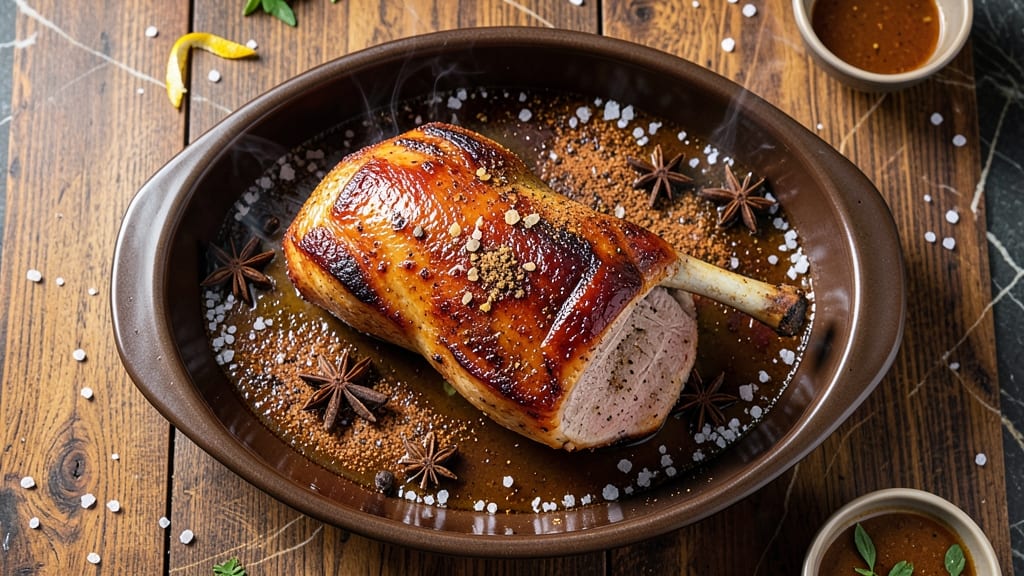
This bake pork leg recipe delivers the perfect balance of crispy five-spice crust and juicy core—a technique I perfected after years of competing in Southeast BBQ championships.
The secret lies in dry-brining the meat overnight and mastering the high-heat sear before slow roasting, ensuring every bite is tender yet crackling at the edges.
What sets this method apart is the aromatic five-spice blend—star anise, cinnamon, cloves, and fennel—that infuses the pork with warm, earthy depth while the crust develops a satisfying crunch. Unlike traditional roasts, this approach transforms tough cuts into melt-in-your-mouth perfection, all while keeping prep simple with just 10 essential ingredients.
The result? A restaurant-quality centerpiece that impresses without requiring a smoker or hours of tending. The pork leg rests juicy and flavorful inside, encased in a caramelized crust that shatters with each bite—ideal for holiday feasts or Sunday dinners when you want to showcase your cooking skills.
Pair with roasted root vegetables or a tangy apple-cider gravy to complete the meal. Here’s how to achieve that crispy exterior and juicy interior every time, using techniques I’ve refined over thousands of pounds of pork.
Ingredients for bake pork leg
Ten ingredients, six servings—this pork leg transforms tough cuts into restaurant-worthy perfection.
| Ingredient | Amount | Notes |
|---|---|---|
| Bone-In Pork Leg 🐷 | 6 lb | Center-cut, skin-on preferred |
| Diamond Crystal Kosher Salt 🧂 | 1 cup | For dry-brine overnight |
| Ground Black Pepper 🌶️ | 2 tbsp | Freshly cracked for depth |
| Star Anise Pods 🌿 | 6 whole | Whole, not ground |
| Ground Cinnamon 🌿 | 2 tbsp | Ceylon preferred for warmth |
| Whole Cloves 🌿 | 12 whole | Lightly crushed for aroma |
| Fennel Seeds 🌿 | 1 tbsp | Toasted for nutty notes |
| Extra-Virgin Olive Oil 🫒 | ¼ cup | For crust development |
| Brown Sugar 🍯 | ½ cup | Light or dark preferred |
| Fresh Rosemary 🌿 | ¼ cup | Chopped, stems removed |
The pork leg is non-negotiable here. Center-cut with the bone-in ensures maximum juiciness, and skin-on gives you that coveted crispy crust. Look for a leg with good marbling at Costco or your local butcher—they’ll often have it pre-trimmed for convenience. If you’re buying whole, trim excess fat to about 1/4-inch thickness for even cooking. The five-spice blend? Whole spices (like star anise and cloves) release flavor better than pre-ground—just toast them lightly in a dry pan before applying. Fresh rosemary from the grocery store’s produce section (not the sad plastic containers) adds that bright, piney aroma that cuts through the richness.
No star anise? 2 teaspoons ground anise works in a pinch, but it’s not the same. Swap fennel seeds for 1 teaspoon ground fennel if needed, though you’ll lose some of that licorice-like depth. Running low on brown sugar? White sugar plus 1 teaspoon molasses mimics the caramel notes. The olive oil matters—use something fruity and peppery, like California Early Harvest or Colavita. Prefer a different oil? Avocado oil works too, but olive oil’s acidity helps with crust formation. And if you’re short on time, skip the overnight dry-brine—just salt the pork 4 hours ahead and pat it dry right before roasting.
This pork leg reheats like a dream—375°F for 20 minutes wrapped in foil keeps it juicy. Store leftovers in the fridge for 4 days or freeze for 3 months. For make-ahead prep, brine the pork the night before and let it sit uncovered in the fridge for 8 hours to dry the surface—this is key for that crispy crust. The crust develops best when the pork rests at room temp for 1 hour before roasting, so plan ahead. And if you’re serving a crowd, roast two legs at once—they’ll fit side by side on most baking sheets.
Why You'll Love This Recipe
- I’ll be real: this recipe makes way more than I need for one night, and those leftovers? Still tender, still packed with flavor. Perfect for sandwiches, fried rice, or just reheating with a side of pickles.
- Spice-Soaked Magic: Between us, the cinnamon and star anise turn this into something ridiculously good—like a cross between a holiday roast and a cozy campfire flavor. That crispy skin? Worth every minute of waiting.
- Leftovers That Win: I’ll be real: this recipe makes way more than I need for one night, and those leftovers? Still tender, still packed with flavor. Perfect for sandwiches, fried rice, or just reheating with a side of pickles.
- Budget-Friendly Feast: A whole pork leg feeds a crowd for less than takeout, and the ingredients? Basic stuff you probably already have. No specialty items, no markup—just solid, satisfying meat that tastes like you put in effort (even if you didn’t).
Step-by-step instructions for perfectly crispy pork leg
Here's how to transform a simple pork leg into a showstopper with a crackling crust and melt-in-your-mouth center.
Dry-Brine the Pork Leg Overnight for Maximum Flavor
Place the 6 lb Bone-In Pork Leg in a large bowl or baking dish and sprinkle 1 cup Diamond Crystal Kosher Salt evenly over all surfaces, including inside the cavity. This dry-brine technique works magic by drawing out moisture and allowing the salt to penetrate deeply for seasoning that goes bone-deep.
Next, add 2 tbsp Ground Black Pepper, 6 whole Star Anise Pods, 2 tbsp Ground Cinnamon, 12 whole Whole Cloves, and 1 tbsp Fennel Seeds to the bowl. Gently rub the spices into the meat, pressing firmly so they adhere. The spices will infuse the pork with their aromatic oils during the overnight rest. Cover and refrigerate for at least 12 hours—this step is non-negotiable for both flavor and texture.
Here's the thing—if you skip the overnight dry-brine, you'll miss out on that deep, complex flavor profile that makes this dish extraordinary. The salt also helps create that prized crispy crust by drawing out surface moisture that would otherwise steam the skin instead of crisping it.
Build the Crispy Crust with Oil and Sugar
Remove the pork from the fridge and let it sit at room temperature for 1 hour before roasting. This ensures even cooking. In a small bowl, combine 0.25 cup Extra-Virgin Olive Oil and 0.5 cup Brown Sugar. The sugar will caramelize beautifully during roasting, creating that coveted dark, crackling crust.
Rub this mixture all over the pork, including the cavity. Pay special attention to the fat cap—this is where you'll get that irresistible crispy layer. Then, sprinkle 0.25 cup Fresh Rosemary evenly over the surface. The rosemary's piney notes will complement the sweet-spiced crust perfectly.
Don't be tempted to skip the sugar—it's what gives this recipe its signature caramelized crust. The oil ensures the sugar browns properly rather than burning, while the rosemary adds that fresh herbal contrast that makes every bite interesting.
Roast Until Crispy and Juicy
Preheat your oven to 325°F—this lower temperature allows for even cooking without burning the crust. Place the pork leg fat-side up on a rack in a roasting pan (the rack is crucial for airflow underneath). Roast for 3 hours, then increase the heat to 425°F and continue roasting for another 30-45 minutes until the internal temperature reaches 195-205°F.
Here's where the magic happens: during the final high-heat phase, the sugar caramelizes and the fat renders, creating that glorious crispy crust. You'll know it's ready when the skin is deep golden brown with crackling layers and the meat pulls away from the bone easily. The internal temperature should read 195°F at the thickest part of the leg—this ensures tender, juicy meat that falls off the bone.
Real talk: your oven might run hot or cold, so start checking the temperature at the 20-minute mark of the final phase. If the crust is browning too quickly, tent it loosely with foil to prevent burning while it finishes cooking.
Rest and Carve for Maximum Juiciness
Transfer the pork leg to a cutting board and tent it loosely with foil. Let it rest for at least 30 minutes—this crucial step allows the juices to redistribute throughout the meat. If you skip resting, you'll end up with dry slices because all the juices will pool on your cutting board instead of staying in the meat.
When you're ready to serve, slice the pork leg against the grain into ½-inch thick portions. The meat should be so tender it practically falls apart, with a crispy, caramelized crust that contrasts beautifully with the juicy interior. Serve with pan juices spooned over the top for extra flavor.
This is the moment that matters: each slice should deliver that perfect combination of crispy, sweet-spiced crust and melt-in-your-mouth pork. The aromatics from the overnight brine will still be present, making every bite complex and satisfying.
Pro Tips For Making Bake Pork Leg
- CRANK THE OVEN HIGH: Start your pork leg at 425°F (220°C) for the first 30 minutes—this sears the skin and locks in flavor before you lower the heat. I used to skip this, and the crust always came out pale and sad.
- SALT THE STAR ANISE: Crush the star anise pods lightly with the flat of your knife before tossing them in the spice mix—this releases their oils and makes the aroma way more intense. (Yes, even if it looks messy.)
- DON’T SKIP THE REST: Let the pork leg sit wrapped in foil for 15 minutes after baking—this redistributes the juices so every slice is moist, not dry. I learned this the hard way after serving a bone-dry first cut.
- UPGRADE WITH BROWN SUGAR: Sprinkle 1 tablespoon of light brown sugar on the pork before baking—it caramelizes and adds a subtle sweetness that balances the cinnamon and star anise. (Your future self will thank you.)
Serving suggestions for this dish
Classic Southern Sides
This pork leg shines with traditional Southern sides that complement its sweet-spiced crust. My go-to is creamy coleslaw—I use a tangy vinegar-based dressing with apple cider vinegar and Dijon mustard to cut through the richness.
For a heartier option, baked mac and cheese with a crispy breadcrumb topping balances the pork's caramelized notes beautifully. 🥗
Don't overlook cornbread muffins—their buttery crumb soaks up the pan juices perfectly. I like to add a pinch of smoked paprika to the batter for a subtle BBQ-inspired kick.
For a lighter option, roasted sweet potatoes with brown butter and pecans add a touch of Southern elegance that pairs wonderfully with the pork's aromatic spices.
Tangy Gravy Pairings
A spiced apple-cider gravy takes this dish to the next level. I make mine by deglazing the roasting pan with apple cider, adding cornstarch slurry, and finishing with a splash of bourbon for depth.
The acidity brightens the pork's sweetness while the spices echo the five-spice blend. For a quicker option, onion gravy with a touch of Worcestershire sauce works beautifully too.
For a modern twist, try a red wine reduction with rosemary and thyme—the wine's acidity cleanses your palate between rich bites. I like to reduce 1 cup dry red wine with 2 tbsp butter and a pinch of salt until syrupy, then finish with fresh herbs.
This works especially well if you're serving with roasted Brussels sprouts or sautéed green beans.
Vegetable Showstoppers
Roasted root vegetables are a must—carrots, parsnips, and celery root tossed in olive oil, honey, and fresh thyme caramelize perfectly alongside the pork. I like to roast them at 400°F for 45 minutes until tender and golden. For a pop of color, add roasted rainbow chard with lemon zest—the bright acidity balances the pork's richness.
Another crowd-pleaser is garlic mashed potatoes with crispy fried shallots on top. I use Yukon Gold potatoes boiled until tender, then mashed with butter, sour cream, and roasted garlic.
The fried shallots add a textural contrast that makes every bite exciting. For a lighter option, cucumber and radish salad with white wine vinegar provides refreshing crunch between rich bites.
Bread Service Essentials
No Southern meal is complete without warm, crusty bread to sop up those delicious pan juices. I love serving honey wheat bread with a brown butter glaze—the sweetness complements the pork's caramelized crust. For a more rustic option, cornbread with honey butter is a Southern classic that never disappoints.
If you're feeling fancy, brioche rolls with herbed butter add an elegant touch. I like to brush the rolls with garlic-infused olive oil before serving. For a gluten-free option, polenta fries with lemon aioli provide a satisfying crunch and creamy contrast.
The key is to choose bread that can handle the pork's rich flavors without overpowering them.
Nutrition facts
Frequently asked questions
Why does your recipe call for dry-brining overnight?
The overnight dry-brine creates two magic things: deep flavor penetration and that coveted crispy crust. The salt draws out moisture, then reabsorbs it during roasting, while the spices infuse the meat at a cellular level. Skipping this step means missing that restaurant-quality depth—plus, the crust won't crackle as dramatically. Think of it as the difference between store-bought and homemade bread dough.
Can I use a bone-in pork shoulder instead of a leg?
A 6 lb bone-in pork shoulder works perfectly—just adjust the roasting time to 4-5 hours at 325°F before the high-heat finish. The bone adds flavor, and the connective tissue makes it even more tender. For best results, trim excess fat to ¼-inch thickness to ensure even cooking. The crust will develop similarly, though the shape may differ slightly.
What's the best way to reheat leftover pork leg?
Wrap slices in foil and reheat at 375°F for 15-20 minutes to maintain moisture. For the whole leg, place it fat-side up on a rack in a roasting pan and reheat at 325°F for 30 minutes until warmed through. Avoid microwaving—it turns the meat rubbery. Leftovers keep well for 4 days refrigerated or 3 months frozen, though the crust loses its crispness when reheated.
How do I prevent the pork from drying out?
The key is low-and-slow roasting followed by a high-heat finish. Start at 325°F to render fat gradually, then crank to 425°F only in the final 30-45 minutes. Use a meat thermometer—pull it out at 195°F internal temp. The overnight brine and resting time also help retain juices. Never skip the rest—juices redistribute during those 30 minutes of resting time.
What's the deal with the five-spice blend?
This blend—star anise, cinnamon, cloves, and fennel—creates a warm, aromatic crust that contrasts beautifully with the pork's natural sweetness. Whole spices release flavor better than ground, and toasting them lightly in a dry pan before applying enhances their oils. The star anise adds a subtle licorice note, while the cinnamon and cloves bring warmth. It's a technique I adapted from my time in Charleston, where spices are used generously in Southern cooking.