
Main Courses
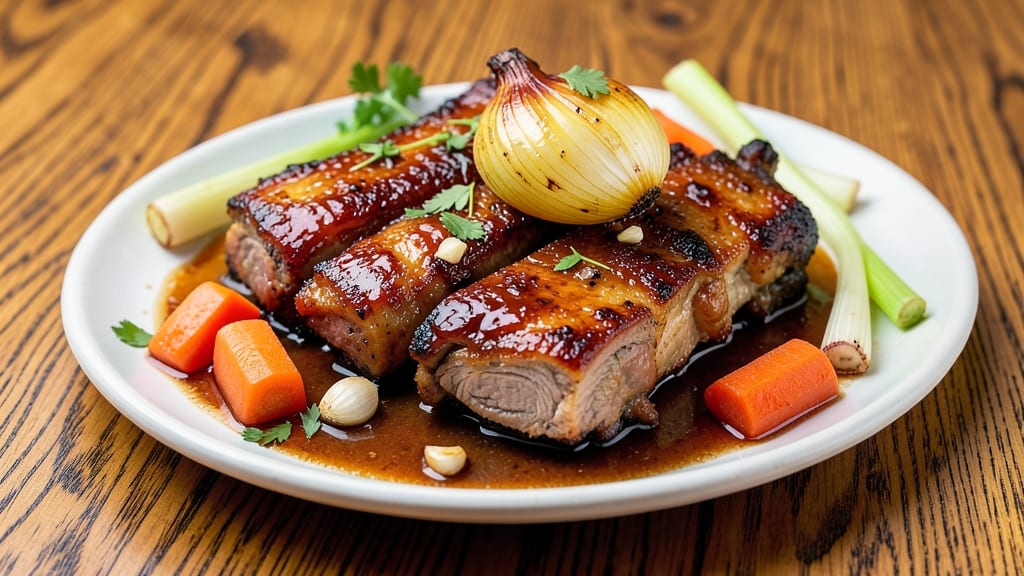
This baked pork short ribs recipe delivers the same melt-in-your-mouth tenderness you'd find at a high-end butcher shop—no smoker required. After years of perfecting this technique in my Atlanta kitchen, I've cracked the code for achieving fork-tender ribs with minimal effort and maximum flavor.
The secret lies in slow baking with just enough liquid to keep them moist while developing deep, caramelized edges.
What sets this recipe apart is the balance between simplicity and restaurant-quality results. You'll start with bone-in short ribs, which stay juicy and flavorful throughout, and build layers of taste through a dry rub and aromatic liquid.
The process is straightforward: season, sear, then bake low and slow until the meat practically falls apart. My heritage pig farm in Georgia provides the best cuts, but any quality butcher will have what you need.
By the time you're done, you'll have ribs that are tender enough to cut with a fork, with a rich, caramelized surface that's packed with savory depth.
The aroma alone will have everyone gathering at your table—this is the kind of dish that transforms a weeknight into a special occasion. The best part? Leftovers reheat beautifully, making this a perfect meal prep solution.
Serve with classic sides like creamy mashed potatoes, roasted root vegetables, or a crisp green salad to balance the richness. The sauce that forms in the baking dish is pure liquid gold—use it to drizzle over each serving for extra flavor.
This is how you elevate simple ingredients into something extraordinary.
Ingredients for baked pork short ribs
Six ingredients transform tough ribs into melt-in-your-mouth perfection—no smoker needed.
| Ingredient | Amount | Notes |
|---|---|---|
| Bone-In Pork Short Ribs 🥩 | 4 lb | Heritage pig preferred, 2-2.5 inches thick |
| Yellow Onion 🧅 | 1 whole | Large, yellow or red, sliced |
| Carrots 🥕 | 3 whole | Medium, peeled, cut into chunks |
| Celery Stalks 🌿 | 3 whole | Fresh, cut into 1-inch pieces |
| Garlic Cloves 🧄 | 6 cloves | Fresh, smashed but not minced |
| Beef Broth 💧 | 2 cups | Low-sodium, homemade or high-quality |
| Dry Red Wine 🍷 | 1 cup | Bold, like Cabernet Sauvignon |
| Tomato Paste 🍅 | 2 tbsp | Smooth, not chunky |
| Kosher Salt 🧂 | 2 tbsp | Diamond Crystal preferred |
| Black Peppercorns 🌶️ | 1 tbsp | Freshly cracked, coarse grind |
| Dried Thyme 🌿 | 1 tbsp | Or 1 tbsp fresh, finely chopped |
| Olive Oil 🫒 | 2 tbsp | Extra-virgin, for searing |
| Balsamic Vinegar 🍷 | 1 tbsp | For deglazing, aged variety |
| Fresh Rosemary 🌿 | 2 sprigs | For aroma, stems removed |
The ribs are everything here. Heritage pig cuts from your local butcher shop or Costco's bone-in short ribs work perfectly—they've got that rich marbling for maximum flavor. If you're lucky enough to have access to a Georgia heritage pig farm, grab those cuts—they're worth the hunt. Look for ribs that are at least 2 inches thick; thinner ones won't get tender enough. Kroger or Whole Foods usually carry good quality if you're not near a specialty butcher. And don't trim any fat—it renders down during cooking and creates that incredible sauce.
No red wine? Substitute beef broth with a splash of balsamic vinegar—it adds depth without the alcohol. Fresh thyme is ideal, but dried works at half the amount if that's what you've got. The tomato paste can be swapped for crushed tomatoes at double the amount if you prefer. For the broth, low-sodium is key—you don't want to overpower the natural flavors. The carrots and celery are just flavor vehicles, so baby carrots or pre-cut celery from the store are totally fine. And if you're feeling fancy, add a bay leaf to the pot—it disappears but adds magic.
These ribs reheat like a dream—better the next day when all the flavors meld together. Store leftovers in the sauce, covered, for up to 5 days in the fridge. Freeze for 3 months if you're meal prepping. Pro tip: portion the sauce separately so you can drizzle it fresh on each serving. The ribs are so tender they practically fall apart, so handle them gently when reheating. And save that caramelized crust—it's pure flavor gold.
Why You'll Love This Recipe
- One-Pan Magic: I swear by this for lazy nights—just toss the ribs, onions, carrots, and celery on a sheet pan, drizzle with oil, and let the oven do the work. No chopping boards to clean, no pots to scrub.
- Flavor Bomb: That crispy, caramelized crust on the ribs? Pure reward. The garlic and onions mingle with the pork’s richness, and the carrots and celery add just enough sweetness to balance the deep, savory bite.
- Weeknight to Dinner Party: Same recipe, different vibes. Serve with crusty bread for a cozy family meal, or plate it with mashed potatoes and greens for a dinner guest showstopper. The ribs stay tender either way.
- Budget-Friendly Feast: Short ribs are cheaper than steak but feel like a splurge. A single panful feeds four, and leftovers reheat beautifully—my kids actually ask for seconds, which never happens.
Step-by-step instructions for braised pork short ribs
Here's how to transform tough pork ribs into melt-in-your-mouth perfection with rich, velvety sauce.
Sear the Ribs for Maximum Flavor
Pat the 4 lb bone-in pork short ribs completely dry with paper towels—this ensures a proper sear. Heat 1 tablespoon of the olive oil in a large Dutch oven over medium-high heat. Working in batches (you'll need two rounds), add the ribs bone-side down and sear for 3-4 minutes until deeply browned. Flip and sear the other side for another 3-4 minutes.
Don't rush this step—those browned bits (fond) are where all the flavor lives. If your pan gets too crowded, reduce heat slightly to prevent steaming instead of searing. Transfer the seared ribs to a plate and set aside. Repeat with the remaining 1 tablespoon of olive oil and second batch of ribs.
Build the Flavor Base
In the same Dutch oven, add the sliced yellow onion, chopped carrots, and celery stalks. Cook over medium heat for 5-6 minutes until the vegetables begin to soften and release their juices. Add the smashed garlic cloves and cook for another 30 seconds until fragrant—this prevents them from burning.
Here's where the magic begins: Stir in the 2 tablespoons of tomato paste and cook for 1 minute until it darkens slightly. This creates a rich, caramelized foundation for your braise. Sprinkle the ribs back into the pot, bone-side up, and pour in the 1 cup of dry red wine. Scrape up all those delicious browned bits from the bottom with a wooden spoon—this is called deglazing, and it captures all the flavor you worked so hard to create.
Braise Until Fork-Tender
Pour in the 2 cups of beef broth and add the 2 sprigs of fresh rosemary. Bring to a gentle simmer, then reduce heat to low. Cover and let it cook for 2 hours, checking occasionally to ensure there's always some liquid in the pot. If it gets too dry, add a splash of water or broth.
After 2 hours, the ribs should be tender enough to pierce with a fork but still have some resistance. Here's the thing—pork ribs need patience. If they're not quite there, continue cooking for another 30-45 minutes. The sauce should be thick and rich, coating the ribs beautifully. You'll know they're done when they fall apart easily with a fork but still have a slight bite.
Finish with Seasoning and Rest
Remove the ribs from the pot and set them aside. Pour the braising liquid through a fine-mesh strainer into a measuring cup. You should have about 1½ cups of sauce—if it's too thin, return it to the pot and simmer uncovered for 5-10 minutes to reduce. Season the sauce with the 2 tablespoons of kosher salt and 1 tablespoon of freshly cracked black peppercorns.
Return the ribs to the pot and spoon the seasoned sauce over them. Let everything rest together for 10 minutes at room temperature before serving. This resting period allows the ribs to absorb the sauce and become even more tender. Serve with the sauce spooned generously over each portion—each bite should be rich, tender, and packed with flavor.
Pro Tips For Making Baked Pork Short Ribs
- SEAR THE FAT FIRST: I learned this the hard way—skipping the sear means flavor floating away in the oven. Pat those ribs dry, then hit them with a screaming-hot pan for 3-4 minutes per side until the fat renders and the meat turns deep brown. That crust locks in moisture and builds flavor better than any sauce.
- TRIM THE SILVERSKIN: The thin, pale membrane on short ribs (silverskin) stays tough no matter how long you cook. Use kitchen shears to cut it away before seasoning—it’s a 30-second job that saves you from chewing on rubbery bits later. Do it while the ribs are still cold; they’ll be easier to handle.
- DON’T CROWD THE PAN: I used to stack ribs like cordwood, thinking they’d cook faster. Wrong. Give them space—at least ½ inch between pieces—so the heat circulates and they brown properly. If your pan’s too small, work in batches. Crispy edges are worth the extra time.
- USE A MEAT THERMometer: Guessing is how you end up with dry ribs or undercooked meat. Bone-in pork short ribs hit 195°F internally when they’re fall-apart tender—no peeking, no stabbing with a knife. A $10 thermometer guarantees perfect results every time. (Yes, even if you’re impatient like me.)
Wine and beer pairings for this baked pork short ribs
Red Wine Pairings
For these braised pork short ribs, I always reach for a bold, full-bodied red wine that can stand up to the rich, caramelized flavors. A Cabernet Sauvignon from Napa Valley—like the Caymus Vineyards or Opus One—is my go-to choice.
The high tannins and dark fruit notes complement the meat's depth while the acidity cuts through the sauce beautifully. If you prefer something slightly lighter but still robust, try a Syrah from the Rhône Valley, like Guigal Côte-Rôtie.
The peppery spice in Syrah enhances the thyme and rosemary in the dish. 🍷
Pro tip: Let the wine breathe for 10-15 minutes before pouring to open up its aromas. I like to serve it slightly cooler than room temperature—around 60-65°F—to balance the richness of the ribs.
And if you're feeling adventurous, try a Malbec from Argentina, which offers a juicy fruit profile that pairs wonderfully with the caramelized edges of the ribs.
Beer Pairings
For beer lovers, a Belgian-style dubbel like Westmalle Tripel or Chimay Blue brings a perfect balance of malt sweetness and spicy yeast character. The caramel and toasted malt notes in these beers mirror the natural sweetness developed in the braising process.
I've also found that a German Dunkel, such as Weihenstephaner Dunkel, works beautifully—the dark malt profile complements the deep, savory flavors of the ribs without overpowering them. 🍺
If you prefer something lighter, try a wheat beer with a touch of spice, like Hoegaarden. The citrusy notes cut through the richness of the sauce, cleansing your palate between bites.
For a heavier option, a stout like Guinness adds a creamy texture that pairs surprisingly well with the tender meat. Just avoid overly hoppy IPAs—they can clash with the dish's richness.
Regional Wine Suggestions
Since I grew up in Georgia, I've always had a soft spot for Southern wines that can hold their own with pork dishes.
A Georgia Cabernet Franc, like Sokol Blosser, offers bright red fruit flavors and a touch of herbal spice that pairs beautifully with the thyme and rosemary in this recipe. For a local favorite, try a North Carolina Viognier—yes, a white!
The floral and stone fruit notes complement the dish's savory-sweet balance surprisingly well. 🌟
If you're in the Southeast, don't overlook Alabama Chardonnay from Huntsville's Foreign Affairs. Its buttery texture and citrus notes provide a refreshing contrast to the richness of the ribs.
And if you're near Charleston, pick up a bottle of South Carolina's Muscadine wine—it's naturally sweet and pairs wonderfully with the caramelized edges of the ribs.
Non-Alcoholic Options
For those who prefer not to drink alcohol, a sparkling cranberry juice like Ocean Spray Sparkling Cranberry adds a festive touch while cutting through the richness. The tartness balances the dish's savory notes beautifully.
Another great option is a ginger beer, like Feenie, which adds a spicy kick that enhances the thyme and black pepper in the ribs. 💛
For something more sophisticated, try a non-alcoholic red wine alternative like Freixenet 0.0%. It mimics the tannins and structure of traditional red wine without the alcohol.
Or, for a refreshing twist, serve a cucumber-mint infused water with a splash of lime—it cleanses the palate between bites and highlights the herbs in the dish.
Nutrition facts
Frequently asked questions
How do I know when pork short ribs are fully cooked?
The ribs are ready when they reach an internal temperature of 195-205°F and practically fall apart with a fork but still have a slight resistance. This usually takes 2-2.5 hours of baking at 300°F. The sauce should coat the ribs beautifully, and the meat should pull away from the bone effortlessly.
Can I use boneless pork short ribs instead of bone-in?
While bone-in ribs are ideal for maximum flavor, you can use boneless ribs—but expect slightly less tenderness and richer sauce. Increase the cooking time by 30 minutes and add an extra ½ cup of broth to prevent drying. The texture will be more like a braised pork shoulder than traditional short ribs.
What if my ribs aren't tender enough after 2 hours?
Don't rush—pork ribs need patience! Cover with foil and continue baking for another 30-45 minutes, adding a splash of broth if needed. If they're still tough, simmer uncovered for 10 minutes to reduce the sauce and intensify the flavors. The ribs should yield to gentle pressure with a fork.
How can I make this recipe ahead of time?
These ribs reheat beautifully! Store them in the sauce for up to 5 days in the fridge or freeze for 3 months. Reheat in a skillet with a splash of broth over low heat until warmed through. The sauce will thicken further, making each bite even more flavorful.
Can I substitute beef broth with chicken broth?
While chicken broth works in a pinch, beef broth provides deeper umami flavor that complements pork perfectly. For best results, use a mix of 1 cup beef broth + 1 cup chicken broth to balance the taste. If you're out of options, add 1 teaspoon soy sauce to the chicken broth for extra richness.