
Main Courses
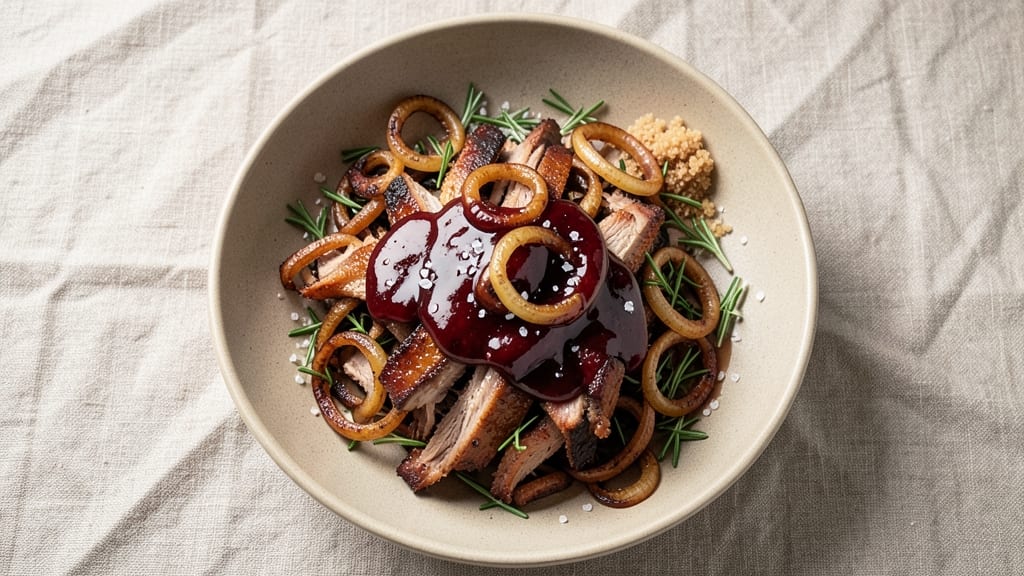
This balsamic pulled pork recipe transforms tough pork shoulder into melt-in-your-mouth sweetness with a tangy kick—exactly what you need for weekend gatherings or meal prep.
I developed this method after years of perfecting slow-cooked pork, balancing rich sweetness with the bright acidity of balsamic vinegar for a flavor profile that's both familiar and exciting. The secret lies in the long, low cook that renders fat and tenderizes the meat while building complex layers of flavor.
What makes this recipe stand out is the balsamic glaze—not just a finishing touch, but a key player in the cooking process. I incorporate it during the final hour, letting the vinegar's acidity cut through the pork's richness while caramelizing into a glossy, sticky coating.
This technique ensures every bite delivers that perfect balance of sweet, tangy, and smoky notes that keep people coming back for seconds.
By the time you're done, you'll have restaurant-quality pulled pork that shreds effortlessly and clings to buns or tacos with irresistible pull. The texture is tender yet substantial, with just enough bite from the balsamic to keep it interesting.
This isn't your average pulled pork—it's a dish that transforms a simple weeknight meal into something special without requiring fancy ingredients or techniques.
Serve it on toasted buns with coleslaw for classic sandwiches, or use it as a filling for tacos and nachos. The leftovers reheat beautifully, making this an ideal recipe for feeding a crowd or prepping meals ahead. Let's get cooking—your taste buds will thank you.
Ingredients for balsamic pulled pork
Twelve ingredients for restaurant-quality pulled pork that's sweet, tangy, and effortlessly tender.
| Ingredient | Amount | Notes |
|---|---|---|
| Pork Shoulder (Boston Butt) 🥩 | 6 lb | Bone-in preferred for flavor |
| Balsamic Vinegar 🍷 | 1 cup | High-quality aged balsamic |
| Brown Sugar 🍚 | ½ cup | Packed, light brown preferred |
| Yellow Onion 🧅 | 2 whole | Medium, chopped into chunks |
| Garlic Cloves 🧄 | 8 cloves | Fresh, peeled and smashed |
| Apple Cider Vinegar 🍏 | ¼ cup | For depth of flavor |
| Smoked Paprika 🌶️ | 2 tbsp | For smoky richness |
| Ground Black Pepper 🌶️ | 1 tbsp | Freshly cracked preferred |
| Kosher Salt 🧂 | 2 tbsp | Diamond Crystal preferred |
| Fresh Thyme 🌿 | 2 sprigs | Or 1 tbsp dried thyme |
| Fresh Rosemary 🌿 | 1 sprig | Woody stems removed |
| Beef Broth 💧 | 2 cups | Low-sodium preferred |
| Olive Oil 🫒 | ¼ cup | Extra-virgin for richness |
| Honey 🍯 | ¼ cup | Wildflower preferred |
The pork shoulder is where it all begins—bone-in is ideal since the marrow adds rich flavor as it cooks. You'll find the best cuts at Whole Foods or your local butcher shop, where they can trim excess fat if needed. I always buy mine from Costco when I'm feeding a crowd, but a good grocery store like Kroger carries quality pork shoulders too. Look for a piece with good marbling—this fat renders beautifully during the slow cook and keeps the meat moist. If you're unsure about the cut, ask the butcher for a 'Boston butt' roast, which is essentially the same thing. For this recipe, you'll want a shoulder that's about 6-8 pounds total, but you can adjust the other ingredients proportionally if you're scaling up or down.
No aged balsamic vinegar? Substitute with 3/4 cup regular balsamic plus 1 tbsp red wine vinegar—it won't be as complex, but it'll still add that tangy punch. The brown sugar can be swapped for white sugar plus 1/2 tsp cinnamon if that's what you've got, though the molasses notes in brown sugar really complement the pork. Fresh thyme and rosemary are ideal, but dried works at one-third the amount. If you're missing either herb, oregano or marjoram can step in, though the flavor will be slightly different. The beef broth is non-negotiable for depth—chicken broth in a pinch, but it'll lack that meaty richness. For the olive oil, avocado oil works just as well if you prefer a higher smoke point.
This pork keeps beautifully—3-4 days in the fridge if stored properly, or up to 3 months in the freezer. The magic happens when you reheat it: a splash of beef broth or apple cider vinegar while warming revives the glaze and keeps it moist. I like to portion it into meal-prep containers so I can grab it for sandwiches all week. The balsamic glaze thickens as it cools, so if you're serving it immediately, give it a quick stir and add a splash of water if it's too stiff. For leftovers, store the pork and sauce separately—the sauce thickens further when reheated, so you can thin it with a bit of broth if needed.
Why You'll Love This Recipe
- One-Pan Magic: I swear by this—just toss the pork shoulder, onions, and garlic on a sheet pan, add the balsamic and brown sugar, and let the oven do the work. No chopping boards, no pots, no stress. (Yes, even on a Tuesday night.)
- Sweet-Tangy Obsession: That balsamic glaze? It’s the star—thick, glossy, and packed with just enough sweetness to balance the deep savoriness of the pork. The brown sugar caramelizes into a sticky, irresistible crust that makes every bite worth it.
- Leftovers That Shine: This recipe begs for seconds, and the best part? The pulled pork only gets better the next day. Toss it into sandwiches, stir it into pasta, or just reheat it straight from the fridge—it’s my secret weapon for lazy lunches.
- Budget Stretch: A pork shoulder costs a fraction of other cuts, and this recipe feeds a crowd without breaking the bank. Honestly, I’ve made it for game nights, potlucks, and even a last-minute dinner—it’s unfussy, hearty, and always a hit.
Step-by-step instructions for balsamic pulled pork
Here's where the magic happens—slow-cooked tenderness meets bold balsamic tang.
Prepare the Pork Shoulder for Maximum Flavor
Pat the 6 lb Pork Shoulder (Boston Butt) completely dry with paper towels—this step is non-negotiable for crispy bark later. In a large bowl, combine 2 tbsp Kosher Salt, 1 tbsp Ground Black Pepper, 2 tbsp Smoked Paprika, 2 sprigs Fresh Thyme (leaves only), and 1 sprig Fresh Rosemary (leaves only). Rub this mixture all over the pork, pressing firmly so the spices adhere. Let it sit at room temperature for 30 minutes while you prep the rest.
Here's the thing—bone-in pork develops more flavor during cooking, so if yours isn't bone-in, don't worry. The slow cook will handle it just fine. I like to make a small slit in the thickest part of the fat cap to help it render more evenly during cooking. This isn't mandatory, but it ensures every bite gets that perfect balance of meat and fat.
Sear the Pork for Deep Flavor
Heat 0.25 cup Olive Oil in a large Dutch oven over medium-high heat until shimmering. Add the pork shoulder fat-side down and sear for 5 minutes without moving it—this builds that beautiful crust. Flip and sear the other sides for another 3 minutes until golden brown. Remove the pork and set it aside on a plate.
Don't skip this searing step. The Maillard reaction happening here creates complex flavors that will carry through the entire cook. If your pan gets too crowded, work in batches, but try to keep the oil hot enough to maintain that sear. The pork will continue cooking in the liquid, so don't worry about overcooking it at this stage.
Build the Flavor-Packed Base
In the same Dutch oven, add 2 whole Yellow Onion (chopped into chunks) and cook for 5 minutes until softened. Add 8 cloves Garlic Cloves (smashed) and cook for another 30 seconds until fragrant. Pour in 1 cup Balsamic Vinegar and 0.25 cup Apple Cider Vinegar, scraping up any browned bits from the bottom—this is where all the flavor lives.
Let the vinegar mixture simmer for 3 minutes until slightly reduced. This step develops the tangy foundation of your sauce. Here's where it gets interesting—add 0.5 cup Brown Sugar and 0.25 cup Honey, stirring until dissolved. The sugar will caramelize slightly, adding depth to the final sauce. I like to taste at this point—you should get a balance of sweet, tangy, and just a hint of smokiness from the paprika.
Slow Cook Until Fork-Tender
Return the pork shoulder to the Dutch oven, fat-side up. Pour in 2 cups Beef Broth, making sure the pork is mostly submerged. Bring to a gentle simmer over medium-low heat, then reduce to the lowest possible heat to maintain a barely-there bubble—this is your sweet spot for even cooking. Cover and cook for 3 hours.
After 3 hours, check the internal temperature using a meat thermometer. It should read around 180°F—this is when the pork becomes fork-tender. If it's not there yet, continue cooking. I know it seems like forever, but patience pays off here. The pork will continue cooking slightly even after you remove it from the heat, so don't rush it. Real talk: this is the moment that matters—properly cooked pulled pork is all about that tender, melt-in-your-mouth texture.
Shred and Finish with Balsamic Glaze
Once the pork reaches 180°F, remove it from the pot and let it rest for 15 minutes. Using two forks, shred the pork directly in the cooking liquid, breaking it down into 2-inch strands. Discard any large fat chunks if desired. Return the shredded pork to the pot and stir to combine with the cooking liquid.
For the finishing touch, increase heat to medium and simmer uncovered for 5 minutes to thicken the sauce slightly. The pork should be coated in a glossy, tangy-sweet glaze. If the sauce is too thin, simmer for another 2-3 minutes to reduce it. Taste and adjust seasoning with additional Kosher Salt or Ground Black Pepper if needed. The result should be a perfect balance of sweet, tangy, and savory—each bite should practically fall apart in your mouth.
Pro Tips For Making Balsamic Pulled Pork
- USE A MEAT THERMOMETER: I learned this the hard way—guessing pork shoulder doneness leads to either dry meat or hours of waiting. Aim for 195–203°F internal temp (probe the thickest part, avoid fat). The stall at 160°F is real, so don’t rush the low-and-slow phase—patience here keeps the texture tender.
- SIMMER THE BALSAMIC FIRST: Reduce that vinegar until it’s syrupy—half the original volume—before tossing it with the pork. Cold balsamic just sits on top; heating it deepens the flavor and caramelizes the sugar faster. Do this in a small saucepan while the pork cooks, and you’ll save time later.
- SKIP THE CROWDED PAN: When searing the pork, don’t overfill the skillet—fat pools and steams instead of browning. Cut the shoulder into chunks before searing, and work in batches if needed. That golden crust? It’s worth the extra 10 minutes of careful cooking.
- SWEAT ONIONS LOW AND SLOW: Chop onions into ¼-inch pieces and cook them on medium-low heat until translucent, not browned. Rushed onions burn and turn bitter, stealing from the balsamic’s sweetness. Add a splash of water if they stick—this keeps them soft and flavorful for the final pull.
Wine and beer pairings for this balsamic pulled pork
Red Wine Pairings
For this balsamic pulled pork, I reach for a bold red wine that can stand up to the dish's rich sweetness while complementing its tangy depth.
A Chianti Classico from Tuscany is my go-to—its bright acidity and cherry notes cut through the pork's richness while the earthy undertones harmonize with the smoky paprika. The 13-14% alcohol content helps cleanse the palate between bites, making it perfect for family-style meals. 🍷
If you prefer something smoother, a Cabernet Sauvignon from Napa Valley works beautifully. Look for one with 14-15% alcohol and notes of blackberry and vanilla—these flavors mirror the balsamic glaze's complexity.
I always keep a bottle of Louis M. Martini Cabernet on hand for these occasions, as it's consistently reliable and approachable for most palates.
White Wine Options
Don't overlook white wine—it can be a surprising match for this dish, especially if you prefer something lighter. A dry Riesling from Germany, like Dr. Loosen Blue Slate, brings crisp acidity and hints of peach that balance the pork's sweetness.
The mineral notes in the wine also complement the balsamic's tang. Serve it slightly chilled (50-55°F) to enhance its refreshing qualities. 🍷
For a more aromatic option, try a Viognier with its floral and stone fruit notes. The 2022 Domaine Zind-Humbrecht from Alsace is a favorite—its richness pairs surprisingly well with the pork's caramelized edges.
The wine's 13.5% alcohol ensures it won't be overwhelmed by the dish's sweetness, while its texture adds another layer of enjoyment.
Beer Pairings
When it comes to beer, I always recommend a Belgian-style witbier like Hoegaarden or Stella Artois. The citrusy coriander and orange peel notes in these beers mirror the apple cider vinegar in the recipe, creating a refreshing contrast to the rich pork.
The light body and 4.5-5% ABV make them easy-drinking companions that won't overpower the meal. 🍺
For something heartier, a German Helles Lager like Weihenstephaner Original works wonders. Its malty sweetness and subtle caramel notes complement the brown sugar in the recipe, while the 5.4% ABV provides enough body to stand up to the pork.
I often serve this at my farm gatherings—it's a crowd-pleaser that pairs beautifully with the smoky, tangy flavors.
Cocktail Pairings
If you're serving this at a more casual gathering, consider a balsamic-infused cocktail to complement the dish. A Negroni Sbagliato (Prosecco instead of gin) with a splash of balsamic reduction on the rim echoes the flavors of the pork while keeping things refreshing.
The bitter-sweet balance mirrors the dish's profile perfectly. 🍸
For a non-alcoholic option, try a sparkling balsamic lemonade—mix 2 cups sparkling water, 1 cup balsamic vinegar reduction (simmered with 1 tbsp honey), and fresh lemon juice.
Serve over ice with a rosemary sprig for garnish. This drink's tangy-sweet profile makes it a perfect palate cleanser between bites of pork.
Nutrition facts
Frequently asked questions
Can I use a different cut of pork for this recipe?
While pork shoulder (Boston butt) is ideal, you can use pork butt or even a boneless pork loin in a pinch. For best results, stick with a cut that has good fat marbling—this ensures tenderness. If using loin, reduce cooking time to 2-2.5 hours at 275°F since it's leaner. Never substitute with ground pork or tenderloin, as they won't achieve the same texture.
How do I make this recipe in a slow cooker?
Transfer the seared pork and all ingredients to your slow cooker (use the "low" setting). Cook for 6-8 hours until fork-tender. The key difference is the longer cook time—slow cookers can't control heat as precisely as stovetop. For extra richness, add 1/2 cup beef broth halfway through cooking. The balsamic glaze should still develop well during the final hour.
What's the best way to store and reheat leftovers?
Store in an airtight container with the sauce for 3-4 days in the fridge or 3 months in the freezer. To reheat, add 1-2 tbsp beef broth or apple cider vinegar per cup of pork and warm on low heat until heated through. Never microwave—it makes the sauce watery. For sandwiches, assemble fresh and toast the buns to keep them crispy.
Can I make this recipe without balsamic vinegar?
Yes, but you'll lose that signature tangy depth. Substitute with 1/2 cup red wine vinegar + 1 tbsp honey for acidity and sweetness. For a smokier profile, add 1 tbsp liquid smoke during the final hour. The texture will be slightly different, but still delicious—just expect more pronounced sweetness without the balsamic's complexity.
How do I adjust this for a larger crowd?
Double all ingredients proportionally, including the pork (use 12 lb shoulder). Cook in a larger Dutch oven or divide between two. For even cooking, use two separate slow cookers (6 hours each). The key is maintaining the same liquid-to-meat ratio—add 1 extra cup broth for every 4 lb pork to prevent drying out. Serve with extra buns and sides like baked beans or cornbread.