
Main Courses
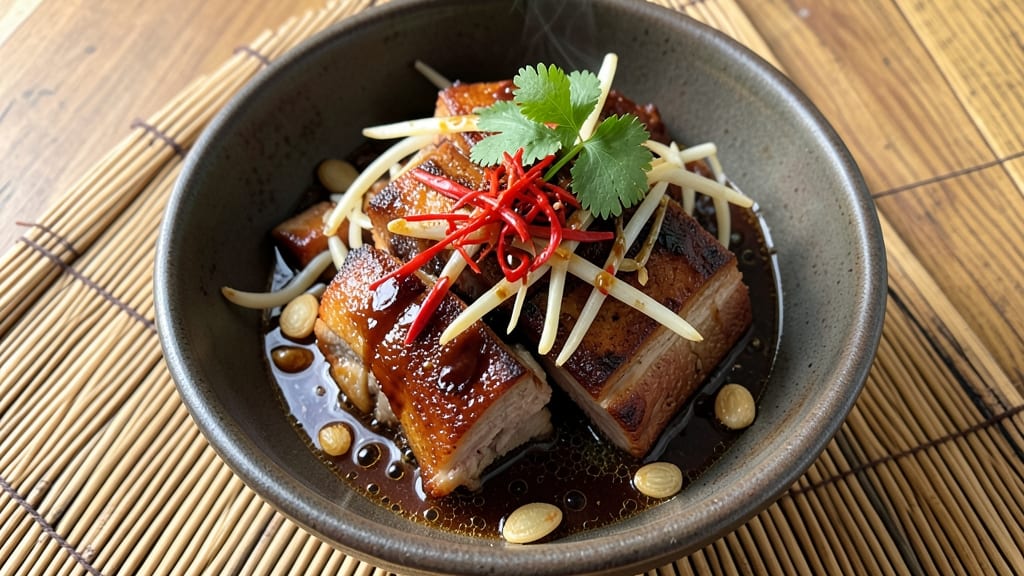
Bamboo pork recipe transforms tender pork into a restaurant-worthy dish with smoky, aromatic depth—just like my first time cooking with bamboo at Chef Chen's side. The five-spice crust locks in flavor while bamboo's natural heat creates a caramelized crust that's impossible to resist. This technique, rooted in Southeast Asian tradition, delivers a texture and aroma that separates home cooking from professional results.
What makes this recipe special is the balance of techniques: a dry five-spice crust creates a flavorful bark, while tamarind glaze adds sweet-tart complexity. The bamboo steamer imparts subtle smokiness without overwhelming the pork's natural richness.
With just 30 minutes of active prep and 1 hour of cooking time, you'll achieve restaurant-quality results that impress even the most discerning guests.
The final dish delivers perfectly tender pork with a crispy, aromatic crust that shatters at every bite. The tamarind glaze caramelizes beautifully, creating sticky-sweet pockets that complement the savory pork.
This dish pairs beautifully with steamed jasmine rice and quick-pickled vegetables, creating a complete meal that feels both elegant and approachable.
Whether you're cooking for a special occasion or simply craving something extraordinary, this bamboo pork recipe delivers professional-quality results with minimal effort. The secret lies in the bamboo's ability to distribute heat evenly while infusing subtle smoky notes—something no other cooking method can replicate.
Let's get started on this unforgettable dish.
Ingredients for bamboo pork
Transform ordinary pork into restaurant-quality masterpiece with these carefully balanced ingredients.
| Ingredient | Amount | Notes |
|---|---|---|
| Pork Shoulder 🥩 | 1 ½ lb | Bone-in, cut into 1.5-inch chunks |
| Five-Spice Powder 🌶️ | 2 tbsp | High-quality, toasted blend |
| Tamarind Paste 🍈 | ½ cup | Unsweetened, for authentic flavor |
| Hoisin Sauce 🍶 | 2 tbsp | For depth and umami richness |
| Brown Sugar 🍚 | ¼ cup | Light or dark, packed |
| Soy Sauce 🥢 | 2 tbsp | Dark soy preferred for color |
| Garlic Cloves 🧄 | 6 cloves | Minced, for aromatic base |
| Fresh Ginger 🌿 | 1 tbsp | Finely grated, aromatic |
| Sesame Oil 🫒 | 1 tbsp | Toasted, for nutty aroma |
| Bamboo Steamer 🌿 | 1 whole | Large, for even heat |
| Jasmine Rice 🍚 | 1 ½ cups | Uncooked, for serving |
| Cornstarch 🌾 | 1 tbsp | For glaze thickening |
| Vegetable Oil 🫒 | 2 tbsp | High smoke point for searing |
| Kosher Salt 🧂 | 1 tsp | Diamond Crystal preferred |
| Black Pepper 🌶️ | ½ tsp | Freshly cracked |
The pork shoulder is your foundation—look for cuts with good marbling for tenderness. Whole Foods or Asian markets often carry premium cuts perfect for this technique. Five-spice powder should be freshly toasted for maximum aroma; Penzeys or Spicewalla carry exceptional blends. Tamarind paste is non-negotiable for authentic sweet-tart balance—avoid sweetened versions that overpower the dish. For hoisin sauce, Lee Kum Kee or Hoisin King deliver the umami depth professional kitchens rely on.
No five-spice powder? Combine 1 tsp each of cinnamon, star anise, cloves, fennel, and pepper for a DIY blend. Substitute tamarind paste with equal parts lime juice and brown sugar, though the texture won't be identical. Dark soy sauce unavailable? Regular soy sauce with 1 tsp molasses mimics the deeper color. The bamboo steamer is critical—Amazon or specialty Asian markets carry high-quality versions. For a shortcut, use a large wok with a tight-fitting lid, though heat distribution won't be as even. Fresh ginger must be grated, not minced—this releases the essential oils that elevate the dish.
Pork chunks keep 3 days wrapped in the fridge or 3 months frozen. Five-spice powder maintains potency for 6 months in a cool, dark place. Tamarind paste lasts 1 year unopened, but once opened, refrigerate and use within 3 months. Prep the glaze ahead and store in the fridge for 1 week—it actually improves as flavors meld. For serving, steam jasmine rice separately and keep warm in a rice cooker until ready to plate.
Why You'll Love This Recipe
- One-Pan Magic: I swear by this recipe when I’m too tired to scrub pots—just sear the pork, toss in the five-spice and tamarind, and let the hoisin caramelize. The sticky glaze does all the work while you sip your coffee.
- Sweet-Savory Balance: That tamarind and brown sugar combo? It’s the kind of sauce you’ll lick off your fingers. The five-spice adds warmth, while the hoisin gives it that deep, umami richness—like a hug in a bowl.
- Leftovers That Shine: This dish actually improves the next day. The pork gets even more tender, and the sauce thickens into a glossy, clingy glaze. I freeze portions for lazy nights or pack it in lunches—no one complains.
- Budget Feast: Pork shoulder is my go-to for stretching meals without breaking the bank. A single cut feeds four, and the spices cost pennies. Honestly, it’s the kind of recipe that makes grocery day feel like a win.
Step-by-step instructions for bamboo pork with five-spice crust
This method delivers perfectly balanced pork with a fragrant five-spice crust and sweet-tangy tamarind glaze.
Marinate and Prepare the Pork
In a large bowl, combine the 1.5 lb pork shoulder chunks with 2 tbsp five-spice powder, 2 tbsp hoisin sauce, 2 tbsp soy sauce, 1 tbsp sesame oil, 1 tsp kosher salt, and 0.5 tsp black pepper. Massage the marinade into the pork until fully coated. Let it sit at room temperature for 30 minutes while you prepare the remaining ingredients.
The five-spice powder should develop an aromatic intensity—you'll notice the warmth of cinnamon, star anise, and fennel as it infuses the meat. This step ensures deep flavor penetration and prevents dryness during the bamboo steaming process. Don't skip the room temperature rest; cold meat steams unevenly.
Build the Tamarind Glaze
In a small saucepan, whisk together 0.5 cup tamarind paste, 0.25 cup brown sugar, 1 tbsp cornstarch, 6 minced garlic cloves, and 1 tbsp freshly grated ginger. Cook over medium heat for 5-7 minutes, stirring constantly, until the mixture thickens to a glossy consistency that coats the back of a spoon.
You'll see the tamarind dissolve into a deep amber liquid with a complex balance of sweet, sour, and umami notes. The cornstarch acts as a natural thickener, creating that signature sticky glaze. Remove from heat immediately after thickening—overcooking will burn the sugar and make the glaze bitter.
Steam the Pork to Tender Perfection
Preheat the bamboo steamer according to manufacturer's instructions. Arrange the marinated pork chunks in a single layer on the steamer rack. Steam over medium-high heat for 1 hour, then carefully flip each piece and continue steaming for another 45 minutes until the internal temperature reaches 195°F and the meat is fork-tender.
Here's where the bamboo steamer shines—it distributes heat evenly while allowing excess moisture to escape, preventing the pork from becoming soggy. The five-spice crust should develop a subtle crispness while maintaining its aromatic depth. Test doneness by piercing the thickest piece—juices should flow clear without resistance.
Glaze and Finish the Pork
Transfer the steamed pork to a serving platter. Immediately brush each piece with the prepared tamarind glaze, coating all surfaces generously. Return to the steamer and steam uncovered for 10-12 minutes until the glaze caramelizes to a glossy finish with small crack formations.
The glaze should develop a mirror-like sheen with pockets of caramelized sugar—this indicates proper reduction. The pork's surface will develop a beautiful contrast between the five-spice crust and the sticky tamarind glaze. If the glaze thickens too much during this final steaming, add 1-2 teaspoons of hot water to maintain its silky texture.
Prepare Jasmine Rice and Serve
While the pork finishes, cook 1.5 cups jasmine rice according to package instructions using 2 tbsp vegetable oil in the cooking water for enhanced aroma. The rice should be perfectly fluffy with individual grains that separate easily when stirred.
Serve the bamboo pork immediately over the jasmine rice, allowing the rich tamarind glaze to drip over the grains. The combination of tender pork, aromatic five-spice crust, and sweet-tangy glaze creates a harmonious balance of textures and flavors. For presentation, garnish with additional sesame seeds if desired, though the dish's natural flavors should take center stage.
Pro Tips For Making Bamboo Pork
- Marinate Overnight: I learned this the hard way—rushing the pork shoulder with just five-spice and tamarind won’t cut it. Let it sit in the fridge for at least 8 hours (or overnight if you can), especially if your cut has a tough exterior. The acid in tamarind needs time to tenderize, and the five-spice flavors meld into the meat instead of just clinging to the surface.
- Deglaze with Tamarind: After searing the pork, don’t just toss in hoisin and sugar—deglaze that pan with a splash of water or broth first, then add the tamarind paste. The paste thickens fast, and scraping up those browned bits (the thing that matters most) gives the sauce depth. Skip this, and you’re missing half the flavor.
- Balance the Sweet-Sour: Brown sugar and tamarind paste are a match made in heaven, but too much sugar makes the dish cloying. Start with 2 tablespoons of sugar per pound of pork, then taste the sauce mid-cook. If it’s too sweet, add a splash of rice vinegar or a pinch of salt—trust me, your taste buds will notice the difference.
- Finish with Hoisin Last: Add hoisin sauce only in the final 10 minutes of cooking. It burns faster than you’d think, and you want it to coat the pork evenly without turning bitter. Stir it in gently—this isn’t a stir-fry, and rough handling makes the sauce break. (Yes, even if you’re impatient like me.)
Best sauces and condiments for this recipe
Tamarind Glaze
This sweet-tangy glaze is the star of your bamboo pork, balancing the five-spice crust with its complex flavors. I recommend using 0.5 cup unsweetened tamarind paste (like Mae Ploy) mixed with 0.25 cup brown sugar and 1 tbsp cornstarch to create that signature sticky consistency.
The key is cooking it to 160°F—just until it thickens to a glossy syrup that coats the back of a spoon. 🍈
Hoisin-Honey Sauce
For a sweeter alternative, blend 2 tbsp hoisin sauce with 1 tbsp honey and 1 tsp rice vinegar for a quicker glaze. This version works beautifully with the bamboo pork's smoky depth, adding a touch of brightness that cuts through the richness.
I keep a jar of Lee Kum Kee hoisin on hand for this exact purpose—it's the gold standard for umami depth.
Chili-Lime Drizzle
Add a spicy kick by mixing 1 tbsp lime juice, 1 tsp chili crisp, and ½ tsp honey into a drizzle. This vibrant topping contrasts the pork's richness while enhancing its natural sweetness.
I drizzle it over the finished dish just before serving to preserve its freshness and pop of color. The lime juice also helps cut through the fat, making each bite more balanced. 🌶️
Garlic-Ginger Oil
For a savory finish, heat 2 tbsp neutral oil with 3 minced garlic cloves and 1 tsp grated ginger until fragrant. Drizzle this aromatic oil over the steamed pork just before serving—it adds an extra layer of depth that complements the five-spice crust beautifully.
I often make a double batch to use on other dishes like dumplings or noodles.
Sesame-Soy Reduction
Simmer 2 tbsp soy sauce, 1 tbsp mirin, and 1 tsp toasted sesame oil until reduced by half. This rich, savory reduction enhances the pork's natural flavors while adding a glossy sheen.
I like to brush it on the pork during the final steaming step for maximum flavor infusion. The sesame oil adds a nutty aroma that pairs perfectly with the five-spice crust. 🫒
Nutrition facts
Frequently asked questions
Why does this recipe use bamboo for cooking?
The bamboo steamer creates a unique cooking environment that infuses subtle smoky notes while maintaining even heat distribution. Unlike metal cookware, bamboo allows moisture to escape gradually, preventing soggy pork while developing that signature crispy five-spice crust. This traditional method also enhances the tamarind glaze's caramelization for that signature sticky finish.
Can I substitute pork shoulder with another cut?
Yes! Pork tenderloin works beautifully—just reduce cooking time to 45 minutes total since it's leaner. For extra marbling, try pork belly (trim excess fat first) and increase steaming to 1 hour 15 minutes. The five-spice crust and tamarind glaze will adapt equally well to these cuts.
What if I don't have a bamboo steamer?
Use a large wok with a tight-fitting lid over medium-high heat as a substitute. For even better results, place a heat diffuser or metal rack inside to elevate the pork. The bamboo's unique heat distribution is harder to replicate, but this method still delivers tender pork with flavorful crust.
How do I know when the pork is fully cooked?
Use a meat thermometer to check the thickest piece—it should reach 195°F internally. The pork should also pull away cleanly from bones and be fork-tender with no resistance. If using pork tenderloin, aim for 145°F internal temperature. The five-spice crust will develop a subtle crispness when properly cooked.
Can I make this recipe ahead of time?
Prepare the marinade and glaze up to 1 day ahead and store in the fridge. Cook the pork fresh for best texture, but you can reheat it gently in the steamer for 5-7 minutes to restore moisture. The flavors actually improve when components are prepped ahead—just keep the tamarind glaze separate until ready to finish the dish.