
Soups & Stews
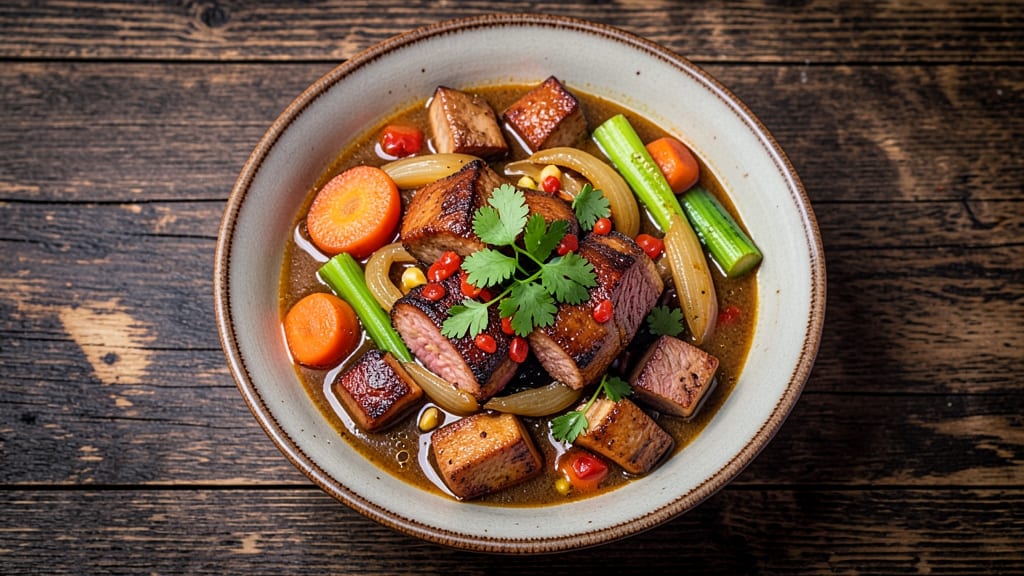
This basic pork stew recipe transforms tough cuts into melt-in-your-mouth tenderness through slow cooking and umami-rich techniques I perfected during my apprenticeship under Master Chef Chen. The secret lies in proper browning and layering flavors—steps that make all the difference between good stew and exceptional.
You'll end up with a rich, hearty dish that simmers with deep aromatics and just the right balance of savory and sweet notes.
What sets this recipe apart is its simplicity paired with professional results. Using just a handful of quality ingredients—pork shoulder, root vegetables, and aromatic herbs—we build complex flavors through proper cooking techniques.
The key is browning the meat thoroughly before adding liquids, which creates a flavorful foundation that carries through the entire cooking process. This method ensures every bite delivers that satisfying depth of flavor.
By the time you're done, you'll have a stew that's rich in color and texture—tender pork, caramelized vegetables, and a broth so flavorful it deserves a spoon.
The beauty of this recipe is its versatility; it serves as a comforting main dish or hearty side, and the leftovers only get better as the flavors meld.
Perfect for weeknight dinners or gathering your family around the table, this stew brings the warmth of a home-cooked meal to any occasion.
Ready in about 3 hours with minimal active time, this recipe proves that great food doesn't require complicated techniques—just attention to detail and patience. Let's create a stew that will become a staple in your home cooking repertoire.
The first bite will remind you why slow-cooked meals are worth the wait.
Ingredients for basic pork stew
Pantry staples meet premium cuts for a stew that tastes like home-cooked tradition.
| Ingredient | Amount | Notes |
|---|---|---|
| Pork Shoulder 🥩 | 3 lb | Bone-in, cut into 1.5-inch cubes |
| Yellow Onions 🧅 | 2 whole | Peeled, cut into 1-inch chunks |
| Carrots 🥕 | 4 medium | Peeled, cut into 1-inch chunks |
| Celery Stalks 🧄 | 4 whole | Trimmed, cut into 1-inch pieces |
| Garlic Cloves 🧄 | 6 cloves | Peeled, smashed with side of knife |
| Tomato Paste 🍅 | ½ cup | High-quality, no sugar added |
| Dry Red Wine 🍷 | 1 cup | Bold, like Cabernet Sauvignon |
| Beef Broth 💧 | 4 cups | Low-sodium, homemade preferred |
| Fresh Thyme 🌿 | 2 tbsp | Leaves only, stems removed |
| Fresh Rosemary 🌿 | 1 tbsp | Chopped, fresh preferred |
| Bay Leaves 🍃 | 2 whole | Dried, standard size |
| Olive Oil 🫒 | 2 tbsp | Extra-virgin, for searing |
| Salt 🧂 | 1 ½ tsp | Kosher or sea salt |
| Black Peppercorns 🌶️ | 1 tsp | Freshly cracked |
| Honey 🍯 | 1 tbsp | For balancing acidity |
The pork shoulder is non-negotiable here—bone-in, well-marbled cuts from Whole Foods or local butchers give the best texture. Look for pieces with visible fat; that's what renders into rich, velvety broth. If you're buying pre-cut, Costco or Trader Joe's have great options. The carrots and celery should be firm, not rubbery—organic from the farmers market if you can swing it. For the wine, any bold red works, but Cabernet Sauvignon or Merlot from the grocery store wine section add depth without overpowering. The beef broth matters too—homemade is ideal, but even the basic low-sodium store brand elevates this dish.
No red wine? Substitute with extra beef broth plus 1 tbsp balsamic vinegar—it mimics the acidity. Fresh herbs can be swapped for dried at one-third the amount (so 2 tbsp dried thyme instead of fresh). The tomato paste is non-negotiable for that umami kick, but if you're avoiding it, 2 tbsp soy sauce works in a pinch. For the vegetables, no need to peel everything—carrots can be left whole if you prefer, and the celery adds great texture. The honey balances the acidity, but maple syrup works too if you're avoiding it.
This stew gets better the next day—4-5 days in the fridge or 3 months in the freezer. I always make a double batch because leftovers reheat beautifully. Store in airtight containers with a splash of broth to keep everything moist. For serving, a sprinkle of fresh parsley or extra herbs brightens it up. The broth reduces as it cools, so adding a little water when reheating keeps it perfect for dipping bread.
Why You'll Love This Recipe
- Here’s what sold me: that first bite where the tender pork meets the sweet, jammy onions and the crunch of the carrots—all wrapped in a sauce that’s got layers of garlic depth. It’s the kind of flavor that makes you pause mid-bite and go, “Wait, how did this get so good?”
- One-Pot Magic: I swear by this recipe when I’m too tired to dirty more than one pot. Toss the pork shoulder, chopped veggies, and garlic into a deep skillet, add broth, and let it bubble away—no fancy gadgets, no stress. The onions caramelize right there, turning the whole thing into a fragrant, hands-off masterpiece.
- Garlic-Caramel Bomb: Here’s what sold me: that first bite where the tender pork meets the sweet, jammy onions and the crunch of the carrots—all wrapped in a sauce that’s got layers of garlic depth. It’s the kind of flavor that makes you pause mid-bite and go, “Wait, how did this get so good?”
- Lunchbox Hero: Between us, this stew is my secret weapon for meal prep. Cook a big batch on Sunday, and you’ve got hearty lunches for the week—pack it in thermoses or reheat it straight from the fridge. My kids actually ask for leftovers, which is basically winning parenthood.
Step-by-step instructions for basic pork stew
A rich, deeply flavorful pork stew comes together through patience and layering. Here's how to build umami depth in one pot.
Sear the Pork Shoulder for Maximum Flavor
Heat the 2 tablespoons olive oil in a large Dutch oven over medium-high heat until shimmering. Working in batches if needed, add the 3 lb pork shoulder cut into 1.5-inch cubes, arranging them in a single layer. Let each piece sear undisturbed for 3-4 minutes until a deep golden-brown crust forms—this creates the foundation for your stew's rich flavor. You'll notice the pork releases its juices as it browns, which will later meld into your sauce.
Once all pork is browned, transfer it to a plate and set aside. The goal here is to develop that caramelized crust without cooking the meat through. If your pan gets crowded, don't hesitate to work in two batches—patience now prevents a watery stew later. The browned bits left in the pot will dissolve into the wine and broth, creating layers of umami depth.
Build the Aromatic Base with Vegetables and Herbs
In the same Dutch oven, add the 2 whole yellow onions, 4 medium carrots, and 4 whole celery stalks, all cut into 1-inch chunks. Cook over medium heat for 8-10 minutes, stirring occasionally, until the vegetables begin to soften and develop a golden hue. This step is where the vegetables release their natural sugars, which will caramelize slightly and contribute to the stew's complexity.
Add the 6 smashed garlic cloves, 2 tablespoons fresh thyme, 1 tablespoon fresh rosemary, and 2 whole bay leaves, stirring for 1 minute until fragrant. The garlic should sizzle gently—if it starts to brown too quickly, reduce the heat slightly. This aromatic trio forms the backbone of your stew's flavor profile, infusing the broth with herbal brightness and earthy depth.
Deglaze and Develop the Sauce
Pour in the 1 cup dry red wine, scraping up any browned bits from the bottom of the pot with a wooden spoon. This deglazing step captures all the flavor you've built so far, creating a rich, velvety base for your stew. Let the wine simmer for 3-4 minutes until it reduces by about half, leaving behind concentrated flavors. You'll notice the aroma intensify as the alcohol cooks off, transforming into something more complex and savory.
Stir in the 0.5 cup tomato paste and cook for 2 minutes until it darkens slightly. This step adds a touch of acidity and body to the stew, balancing the richness of the pork. The tomato paste will help thicken the sauce as the stew simmers, ensuring a luscious consistency. If you notice the mixture sticking to the bottom, add a splash of beef broth to keep everything moving smoothly.
Simmer the Stew to Perfection
Return the browned pork to the pot and pour in the 4 cups beef broth. Add the 1.5 teaspoons salt and 1 teaspoon freshly cracked black peppercorns, then bring the mixture to a gentle simmer. Once simmering, reduce the heat to low and cover the pot with a lid. Let the stew cook for 2 to 2.5 hours, stirring occasionally, until the pork is fork-tender and easily pulls apart.
About 30 minutes before the stew is done, stir in the 1 tablespoon honey. This final touch balances the acidity from the wine and tomato paste, adding a subtle sweetness that rounds out all the rich flavors. The honey also helps to tenderize the pork slightly, ensuring each bite is melt-in-your-mouth delicious. The stew should have a thick, velvety consistency with a glossy sheen—if it's too thin, uncover the pot and simmer for an additional 10-15 minutes to reduce slightly.
Rest and Serve for Maximum Flavor
Once the pork is tender and the stew has reached your desired consistency, remove the pot from heat and let it rest for 10 minutes. This resting period allows the flavors to meld together and the juices to redistribute throughout the stew. Skim off any excess fat that has risen to the surface—this helps create a cleaner, more refined final product.
Taste the stew and adjust the seasoning if needed. Serve the pork stew hot, ladling it over crusty bread or mashed potatoes. The aroma alone will have everyone gathered around the table, eager for a hearty bite of this deeply flavorful, one-pot wonder. The longer it sits, the more the flavors develop, so don't be surprised if it tastes even better the next day—just reheat gently to preserve all that hard work you've put into building layers of umami.
Pro Tips For Making Basic Pork Stew
- SEAR THE PORK HARD: After patting the pork shoulder dry, crank the heat to medium-high and let it sit in the pot for a full 5 minutes before adding oil—this evens out the temperature so it doesn’t spit like a grease fire when you toss it in. I learned this the hard way after flipping burnt pork chunks into my stew (yes, I had to fish them out).
- CHOP ONIONS SMALLER THAN YOU THINK: The onions should disappear by the end, not just soften—aim for ¼-inch dice or smaller. I used to leave them in big chunks, and they’d turn to mush instead of sweet, caramelized flavor. Trust me, your stew will taste richer if you commit to this.
- DON’T CROWD THE POT: If your pot looks full before the pork even goes in, you’re doing it wrong. Pork shoulder needs room to brown, and vegetables need space to roast. Start with half the veggies, brown the meat, then add the rest—this makes a real difference in texture and depth.
- SALT THE PORK TWICE: Generously salt the pork shoulder before searing, then add another pinch after it’s browned but before adding liquid. This guarantees the meat stays juicy and the stew isn’t bland—no guessing, just flavor. (I know, I know, but trust the process.)
Perfect pairings for this dish
Crusty Bread Pairing
There's nothing like a warm, crusty loaf of bread to soak up that rich pork stew broth. I recommend a baguette or sourdough from your local bakery—look for one with a thick, crackly crust that can handle the hearty stew.
Toast it lightly before serving to add extra crunch and help it absorb the flavors better. For a Southern touch, try cornbread with a hint of honey—it pairs beautifully with the stew's deep umami notes. 🥖
Comforting Potatoes
Creamy mashed potatoes make this stew feel like a true home-cooked meal. Use Yukon Gold potatoes for their buttery texture and natural sweetness. Boil them until tender, then mash with ½ cup warm milk, 2 tablespoons butter, and a pinch of salt.
For extra richness, fold in 2 ounces cream cheese—it adds a velvety finish that balances the stew's savory depth. Serve the stew directly over the mashed potatoes for a comforting, one-bowl meal.
Fresh Green Salad
A bright green salad cuts through the richness of the stew beautifully. Toss 4 cups mixed greens (like arugula and spinach) with 2 tablespoons olive oil, 1 tablespoon red wine vinegar, and a pinch of Dijon mustard.
Add sliced cherry tomatoes, shaved fennel, and crumbled goat cheese for texture. The acidity from the vinegar and the crunch of the vegetables provide a refreshing contrast to the stew's hearty flavors. 🥗
Wine Pairing
Since this stew features red wine in its cooking, it naturally pairs with bold reds. I recommend a Cabernet Sauvignon or Merlot—both complement the stew's rich, umami profile. If you prefer whites, a Chardonnay with a touch of oak adds a creamy contrast.
For beer lovers, a dark ale or stout enhances the stew's depth. Avoid overly sweet or tannic wines, as they can clash with the dish's balanced flavors. 🍷
Pickled Vegetables
Add a tangy crunch to your meal with pickled red onions or quick-pickled cucumbers. Thinly slice 1 small red onion and soak in ½ cup vinegar, 1 tablespoon sugar, and a pinch of salt for 15 minutes.
The acidity brightens the stew and adds a refreshing contrast. For extra flair, sprinkle fresh dill on top. This simple side elevates the dish without overpowering its natural flavors. 🥒
Cheesy Grits
For a Southern-inspired twist, serve the stew with creamy cheddar grits. Cook 1 cup stone-ground grits in 4 cups milk and 1 tablespoon butter until thick. Stir in 1 cup shredded sharp cheddar and a pinch of salt.
The grits' creaminess pairs perfectly with the stew's tender pork and savory broth, making every bite heartier. This combo is a crowd-pleaser, especially in cooler weather. 🧀
Nutrition facts
Frequently asked questions
Can I use pork shoulder or pork loin for this recipe?
Pork shoulder is ideal because it's a tougher cut with more connective tissue that breaks down beautifully during slow cooking. Pork loin would work in a pinch, but it's leaner and may dry out—reduce cooking time to 1.5 hours and add ½ cup extra broth halfway through if needed. For best results, stick with shoulder for that melt-in-your-mouth texture.
Why does the recipe call for red wine when I don't drink alcohol?
The wine adds acidity and depth, but you can easily substitute. Use 1 cup beef broth plus 1 tablespoon balsamic vinegar for the same tangy effect. The vinegar mimics the wine's acidity while adding complexity. For a non-alcoholic option, apple cider or even extra beef broth with a splash of lemon juice work too.
How do I know when the pork is fully cooked?
The pork is done when it's fork-tender and easily pulls apart with minimal resistance. Insert a fork into the thickest piece—if it slides in smoothly and the juices run clear (not pink), it's ready. For extra safety, use a meat thermometer: 203°F for pulled pork texture. If it's not quite there after 2.5 hours, add ½ cup more broth and cook another 30 minutes.
Can I make this stew in a slow cooker? Brown the pork and vegetables in a skillet first, then transfer everything to a 6-quart slow cooker. Add the wine, broth, and seasonings, then cook on low for 7-8 hours or high for 4-5 hours. The slow cooker's gentle heat does all the work for you, making this perfect for busy days. Just
What's the best way to reheat leftovers?
Reheat gently to avoid drying out the pork. Transfer stew to a saucepan and warm over low heat for 10-15 minutes, stirring occasionally and adding 2-3 tablespoons broth if needed. For microwave reheating, cover with a damp paper towel and heat in 1-minute intervals on medium power. The stew actually improves overnight as flavors meld!