
Main Courses
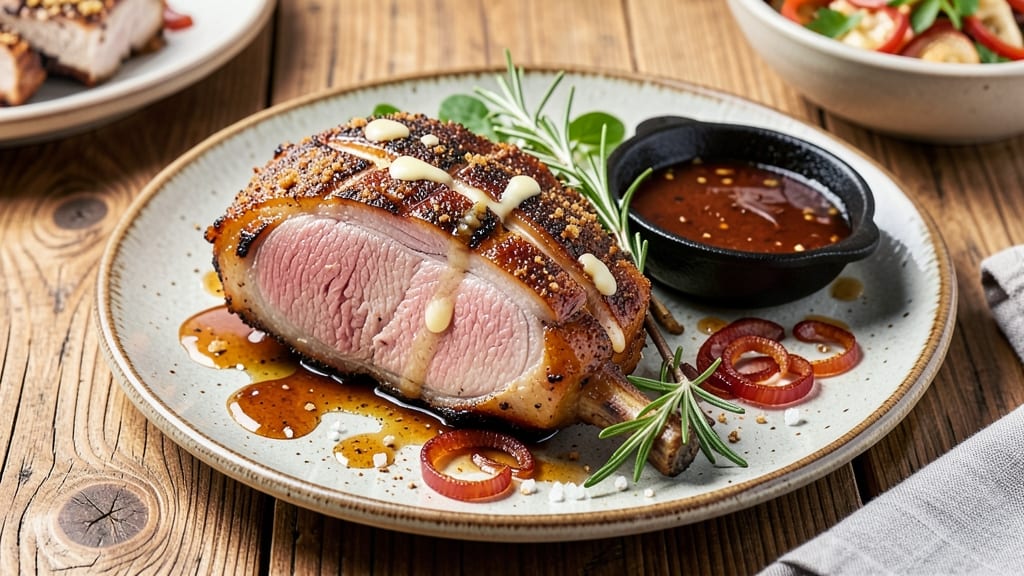
This BBQ pork leg recipe transforms a simple cut into melt-in-your-mouth perfection with slow-braising and a caramelized crust. 🔥 As a pitmaster trained in French techniques, I've perfected the balance between tender meat and rich, smoky bark that makes every bite worth the wait.
The secret lies in patience—letting the collagen render slowly while building layers of flavor through careful seasoning and controlled heat.
The process begins with a dry rub that penetrates the meat while developing a flavorful crust, then moves to low-and-slow cooking that transforms tough connective tissue into silky, juicy goodness.
What makes this recipe special is the ability to achieve restaurant-quality results at home without specialized equipment—just time and attention to temperature. The magic happens when the internal temperature reaches 195°F, where the pork becomes so tender it practically falls apart.
By the time you're done, you'll have a pork leg with crispy, caramelized edges that give way to juicy, flavorful meat inside.
The aroma alone will have your whole neighborhood asking what's cooking, and the first bite delivers that perfect combination of smoky, sweet, and savory flavors that define great BBQ. This is the kind of dish that turns ordinary weeknights into memorable feasts.
Serve with classic sides like coleslaw, cornbread, or roasted vegetables to complete the meal. The leftovers reheat beautifully too, making this an economical choice for feeding a crowd or meal prepping for the week. Let's get started on creating your showstopping centerpiece.
Ingredients for bbq pork leg
Sixteen ingredients for a pork leg that falls apart with juicy perfection and smoky caramelized crust.
| Ingredient | Amount | Notes |
|---|---|---|
| Pork Leg (Bone-In) 🐖 | 8 lb | Center-cut for even cooking |
| Brown Sugar 🍯 | ½ cup | Light or dark, packed |
| Smoked Paprika 🌶️ | 2 tbsp | High-quality for smoky depth |
| Ground Black Pepper 🌶️ | 1 ½ tbsp | Freshly cracked preferred |
| Kosher Salt 🧂 | 2 tbsp | Diamond Crystal preferred |
| Garlic Powder 🧄 | 1 tbsp | Freshly ground for best flavor |
| Onion Powder 🧅 | 1 tbsp | For balanced sweetness |
| Mustard Powder 🍯 | 1 tsp | Adds subtle tanginess |
| Apple Cider Vinegar 🍎 | ¼ cup | For tenderizing and tang |
| Olive Oil 🫒 | ¼ cup | Extra-virgin for richness |
| Yellow Onion 🧅 | 1 whole | Sliced for aromatics |
| Fresh Rosemary 🌿 | ¼ cup | Chopped sprigs for aroma |
| Fresh Thyme 🌿 | ¼ cup | Leaves only, finely chopped |
| Beer (Optional) 🍺 | 1 cup | Dark lager or stout preferred |
| Water 💧 | 1 cup | For braising liquid |
The pork leg is the star here—center-cut for even cooking and maximum tenderness. Look for a bone-in cut at your butcher or grocery store's meat department, ideally around 8 pounds for a crowd. Costco or Whole Foods often have excellent quality, but any reputable butcher will do. The bone helps retain moisture during the long cook, while the center-cut ensures even doneness. If your cut has a thick fat cap, trim it to about 1/4-inch to help the bark develop. For extra insurance, ask for a leg with good marbling—those little fat flecks translate to juiciness.
No smoked paprika? Substitute 1 tbsp regular paprika plus 1/2 tsp liquid smoke—just don't overdo the smoke. Fresh rosemary and thyme are ideal, but dried works at one-third the amount if you're in a pinch. The beer is optional but adds depth—Guinness or a dark lager works best, but any beer (or even more apple cider vinegar) will do. For the vinegar, Bragg's is my go-to, but any good-quality apple cider vinegar will work. The brown sugar can be swapped for turbinado sugar for a deeper caramel flavor, or even maple syrup for extra richness. Just remember: the sugar helps create that coveted crust, so don't skip it.
This dish is all about patience—plan for 3-4 hours of cooking time. The pork leg reheats beautifully, so make extra. Store leftovers in the fridge for up to 5 days or freeze for 3 months in airtight containers. For serving, let it rest for 15 minutes before carving—this helps the juices redistribute. The bark is delicate, so slice carefully. Serve with classic BBQ sides like coleslaw or cornbread, and save the juices for gravy. Pro tip: Save the fat from the pan—it's pure liquid gold for future dishes.
Why You'll Love This Recipe
- Foolproof Rub: Between us, that smoked paprika and brown sugar combo sticks like glue—no measuring cups, no guesswork. Just slather the mix on the bone-in pork leg, slap it on the grill or oven, and walk away. (Yes, even if you’re the kind who burns toast.)
- Sweet-Savory Magic: The caramelized crust from the brown sugar meets that deep, smoky paprika heat—it’s the kind of flavor that makes you close your eyes mid-bite. The bone-in keeps it juicy, so every slice is pure satisfaction.
- Leftovers Galore: This recipe feeds a crowd but also reheats like a dream—shred it for tacos, sandwiches, or just straight from the fridge. Honestly, I’ve had it cold the next day and still craved more.
- Budget Hero: A single pork leg stretches for days, and the rub costs pennies. No fancy ingredients, no last-minute grocery runs—just solid, reliable meat that won’t break the bank. My wallet thanks me every time.
Step-by-step instructions for slow-braised pork leg
Transform that pork leg into fall-off-the-bone perfection with this foolproof slow-braising method.
👨🍳 Step 1: Prepare the Pork and Seasoning
Start by patting the 8 lb pork leg (bone-in) completely dry with paper towels—this is crucial for that caramelized crust later. Place it fat-side up in a roasting pan and let it sit at room temperature for 30 minutes while you prep the seasoning.
In a small bowl, whisk together the 0.5 cup brown sugar, 2 tbsp smoked paprika, 1.5 tbsp ground black pepper, 2 tbsp kosher salt, 1 tbsp garlic powder, 1 tbsp onion powder, and 1 tsp mustard powder. Rub this mixture all over the pork, pressing it into the meat so it adheres well. The sugar will help create that beautiful caramelized crust while the spices penetrate deeply.
🍳 Step 2: Sear for Color and Depth
Preheat your oven to 300°F. Heat a large oven-safe skillet over medium-high heat and add 0.25 cup olive oil. Once the oil shimmers, carefully place the pork leg fat-side down and sear for 8-10 minutes until the fat renders and the skin develops a deep golden-brown crust. Flip the pork and sear the other side for another 5-7 minutes until golden.
Transfer the skillet to the preheated oven. This initial sear locks in juices and builds flavor—don't skip it! The pork will continue cooking slowly in the oven, but this step ensures maximum tenderness and that coveted caramelized exterior.
🥘 Step 3: Build the Braising Liquid
While the pork roasts, prepare the braising liquid. In a saucepan, combine 1 whole yellow onion (sliced), 0.25 cup chopped fresh rosemary, 0.25 cup chopped fresh thyme, 0.25 cup apple cider vinegar, 1 cup beer (optional), and 1 cup water. Bring to a simmer over medium heat for 10 minutes until the onions soften and the liquid reduces slightly.
Strain the liquid through a fine-mesh sieve to remove any herb bits, then carefully pour it over the pork in the skillet. The acidity from the vinegar and beer (if using) helps tenderize the meat while the aromatics infuse the braising liquid with deep flavor.
⏰ Step 4: Slow-Braise to Perfection
Cover the skillet tightly with foil and transfer it to the oven. Braise the pork leg for 3-4 hours until the internal temperature reaches 195-200°F and the meat is fork-tender. Here's the thing—patience is key. The slow cooking breaks down collagen and connective tissue, transforming tough meat into something melt-in-your-mouth delicious.
About 1 hour into cooking, check the liquid level. If it's reduced too much, add ½ cup water to maintain moisture. The pork should be swimming in flavorful liquid, ensuring every bite stays juicy. Real talk: if you peek too early, you'll extend the cook time—resist the temptation!
🔥 Step 5: Finish with a Crispy Crust
Once the pork reaches the target temperature, remove it from the oven and increase the heat to 425°F. Uncover the skillet and broil the pork for 5-7 minutes until the surface develops a deep caramelized crust. Watch it closely—you want that crust to be dark and sticky, but not burned.
Let the pork rest for 20-30 minutes before carving. This resting period allows the juices to redistribute throughout the meat, ensuring each slice is moist and flavorful. Serve with the braising liquid spooned over the top—every drop is packed with flavor!
Pro Tips For Making Bbq Pork Leg
- CRANK THE SMOKER TO 275°F: I learned this the hard way—starting too low (like 225°F) means hours of waiting for that crispy bark. Hit 275°F first to render fat and get the crust locked in within the first hour, then drop to 225°F for low-and-slow. The first hour makes or breaks the texture.
- SALT THE PORK TWICE: Dry the leg thoroughly first, then hit it hard with salt—about 1.5 teaspoons per pound—before the smoke hits. After 30 minutes in the smoker, flip and salt again. The second layer sticks better and keeps the meat juicy. (Yes, it’ll look like you’re overdoing it, but trust me.)
- SKIP THE BROWN SUGAR RUSH: Brown sugar burns faster than you’d think, especially on a hot smoker. Mix it with a splash of apple cider vinegar or water to make a sticky paste—this keeps it from clumping and burning into bitter bits. Brush it on after the first 2 hours, not at the start.
- REST IT UNDER FOIL: The moment it hits 195°F internal temp, wrap the pork leg in heavy-duty foil and let it sit for 20-30 minutes. This isn’t just resting—it’s letting the collagen melt into gelatin, turning tough meat into fork-tender perfection. (I know, I know, but skip this and you’ll regret every chewy bite.)
Serving suggestions for this dish
Classic BBQ Sides
Nothing beats this pork leg like a classic creamy coleslaw with a tangy vinegar-based dressing. I make mine with 1 small head of cabbage (shredded), 2 carrots (julienned), ½ cup mayonnaise, 2 tbsp apple cider vinegar, 1 tbsp Dijon mustard, and a pinch of cayenne pepper.
The acidity cuts through the richness of the pork beautifully. 🥬
Crusty Bread Pairings
For soaking up those flavorful juices, nothing works better than homemade cornbread with a hint of honey. I love baking a batch with 1 cup cornmeal, 1 cup all-purpose flour, 1 tbsp sugar, 1 tbsp baking powder, and a splash of buttermilk.
Serve warm with a drizzle of honey—it's the perfect sweet contrast to the smoky pork. Alternatively, crusty sourdough or brioche rolls add a buttery, hearty element.
Fresh Vegetable Contrasts
Lighten up the plate with roasted seasonal vegetables—try sweet potatoes (tossed in olive oil and smoked paprika), asparagus (charred with lemon zest), or grilled corn (slathered with chili-lime butter).
The natural sweetness of these veggies complements the pork's smoky depth. For a fresh twist, add a cucumber and avocado salad with a lime dressing—it's refreshing after a rich meal.
Sauce Serving Options
While the pork's bark and juices are the stars, a light drizzle of BBQ sauce (like Sticky Fingers or Bull's-Eye) can elevate the dish further. I recommend brushing on 2-3 tbsp just before serving to add a glossy finish.
For something more sophisticated, try a red wine reduction—simmer 1 cup red wine with 2 tbsp butter and 1 tsp thyme until syrupy. The acidity and depth pair perfectly with the pork's caramelized crust.
Dessert Pairings
End the meal on a high note with a peach cobbler or bourbon pecan pie—both complement the smoky, sweet-savory flavors of the pork. For something lighter, vanilla bean ice cream with a drizzle of honey balances the richness.
Pro tip: Save a few slices of pork for breakfast the next day—pork leg hash with fried eggs and potatoes is a game-changer! 🍑
Nutrition facts
Frequently asked questions
How long can I keep cooked pork leg in the fridge?
Store your cooked pork leg in an airtight container in the fridge for up to 5 days—it reheats beautifully! For longer storage, freeze portions for 3 months in vacuum-sealed bags. The slow-cooked collagen actually improves with brief refrigeration, making flavors more concentrated. Always reheat to 165°F before serving.
Can I use a different cut of pork for this recipe?
This recipe works best with a bone-in pork leg (like picnic shoulder) because the bone helps retain moisture during long cooking. For a smaller portion, try a bone-in pork shoulder (3-4 lbs) and reduce cooking time to 2-2.5 hours. Avoid tender cuts like tenderloin—they'll dry out with this method.
What if my pork leg isn't tender after 4 hours?
Check your internal temperature—it should reach 195-200°F. If it's lower, continue cooking uncovered at 300°F until tender. The meat should pull apart easily with two forks. If you're in a hurry, increase oven temp to 325°F for the last hour, but monitor closely to avoid drying.
How do I make this recipe on a grill instead of oven?
Preheat your grill to 250°F for indirect heat. Sear the pork leg first, then move it to the cooler side of the grill. Cover with a lid and cook for 3-4 hours until tender. Spritz with apple cider vinegar every 30 minutes to keep it moist. Finish with a high-heat sear to develop the crust.
Is the beer really necessary in the braising liquid?
Not at all! The beer adds depth, but you can substitute with 1 cup apple cider vinegar or even broth for a non-alcoholic version. The key is maintaining the 1:1 ratio of liquid to aromatics. The acidity from vinegar or beer helps tenderize the meat while balancing the sweetness of the brown sugar.