
Main Courses
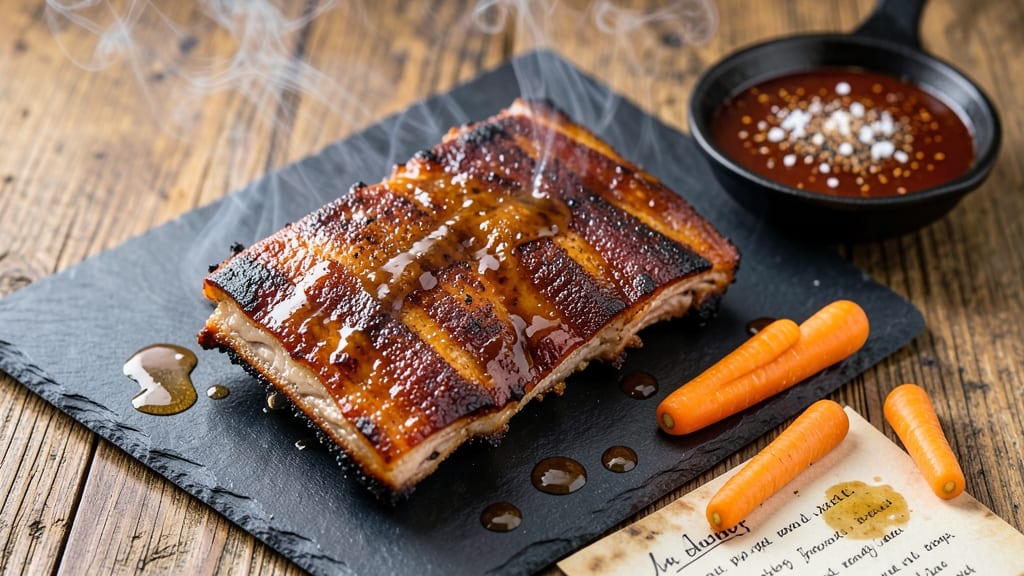
This smoker BBQ pork ribs recipe transforms tough cuts into melt-in-your-mouth perfection through low-and-slow magic. 🔥 The 2-2-1 method—18 hours of patient smoking—builds that coveted bark while keeping meat tender enough to fall apart.
I've been perfecting this technique since my first backyard cookout, where the smell of hickory smoke first hooked me for life.
The secret lies in three phases: a dry rub that clings like armor, a 2-hour smoke at 225°F to render fat, then a 2-hour wrap with foil and apple juice to lock in moisture.
No brining needed—just quality meat and time. I use a mix of brown sugar, smoked paprika, and garlic powder for depth, then let the smoker work its alchemy.
By the final hour unwrapped, your ribs will have developed a deep mahogany crust and internal temperature of 203°F. The meat should separate at the slightest touch, releasing juices that'll make your kitchen smell like a BBQ competition.
This is restaurant-quality tenderness with a smoky crust that'll have your guests begging for seconds.
Serve with classic sides like tangy coleslaw and buttery cornbread to soak up every drop. The leftovers? Even better the next day. This recipe delivers on the promise of smoker-cooked ribs—no shortcuts, just pure, smoky satisfaction that comes from hours spent perfecting every detail.
Ingredients for bbq pork ribs recipe smoker
The backbone of smoky ribs—quality meat, bold flavors, and patience for perfect bark.
| Ingredient | Amount | Notes |
|---|---|---|
| Pork Ribs (Baby Back or St. Louis Style) 🥓 | 4 lb | Bone-in, skin-on preferred |
| Brown Sugar 🍚 | ½ cup | Light or dark variety |
| Smoked Paprika 🌶️ | 2 tbsp | For deep smoky flavor |
| Garlic Powder 🧄 | 1 tbsp | Freshly ground preferred |
| Kosher Salt 🧂 | 1 tbsp | Diamond Crystal preferred |
| Black Pepper 🌶️ | 1 tbsp | Freshly cracked for best flavor |
| Onion Powder 🧅 | 1 tbsp | For subtle depth |
| Hickory Wood Chips 🌲 | 1 package | Or your preferred wood |
| Apple Juice 🍎 | 1 cup | For wrapping phase |
| Butter 🧈 | 2 tbsp | Unsalted, for final baste |
| Yellow Mustard 🍯 | 1 tbsp | For final glaze |
| Aluminum Foil 📄 | 1 sheet | Heavy-duty preferred |
| BBQ Sauce 🍅 | ½ cup | For finishing (optional) |
The ribs are non-negotiable. Baby back or St. Louis style both work, but bone-in, skin-on cuts give that coveted bark. I always grab mine from Costco when they're on sale—look for good marbling and avoid anything too lean. The wood chips? Hickory is classic, but cherry or pecan adds sweetness. If you're using a smoker box, soak them for 30 minutes first. Pro tip: buy extra ribs—you'll want leftovers.
No smoked paprika? Regular paprika plus a pinch of liquid smoke works in a pinch. The brown sugar can be swapped for white sugar plus 1 tbsp molasses for deeper color. Apple juice for wrapping? Orange juice or even beef broth keeps the ribs moist. For the final baste, butter and mustard
Store cooked ribs in the fridge for 3-4 days wrapped tightly in foil. They actually taste better the next day as the flavors meld. Freeze for up to 3 months by wrapping individual ribs in foil, then in a freezer bag. Reheat gently in the oven at 300°F until warmed through. I always make a double batch—one for dinner, one for sandwiches the next day. The leftovers are just as tender, if not more so.
Why You'll Love This Recipe
- I’ll be real: the second day is almost as good. The meat stays juicy, and you can toss them into tacos, nachos, or even a quick fried rice. Not to mention, ribs are cheaper than takeout for a crowd.
- Smoke in 30 Minutes: I swear, the ribs hit the smoker wet with just salt and garlic powder—no fancy pre-marinating. That brown sugar crust? Forms fast, locks in flavor, and you’re not stuck babysitting a dry run.
- Sweet-Smoky Magic: Between us, the smoked paprika and brown sugar combo is ridiculously addictive. The ribs get this perfect balance—caramelized edges with tender meat that falls off the bone, like a hug from your grandma’s kitchen.
- Tailgate or Tuesday: Honestly, these ribs work everywhere. Pack them for a game day, pull them out for a lazy Sunday, or freeze half for when you’re too tired to cook. Even my picky teen’s friends ask for seconds.
Step-by-step instructions for smoked pork ribs
Here's how to turn tough ribs into melt-in-your-mouth perfection with that perfect smoky bark.
🔥 Step 1: Prep and Season the Ribs for Maximum Flavor
Start by removing the membrane from the bone side of the ribs—this is crucial for tender meat. Slide a butter knife under the membrane and lift it away from the bone, then pull it off with your fingers. Pat the ribs dry with paper towels; moisture is the enemy of that beautiful bark we're after.
In a small bowl, mix together the 0.5 cup brown sugar, 2 tbsp smoked paprika, 1 tbsp garlic powder, 1 tbsp kosher salt, 1 tbsp black pepper, and 1 tbsp onion powder. Rub this mixture all over the ribs, pressing it into the meat so it sticks. Let them sit at room temperature for 30 minutes while you set up your smoker—this helps the seasoning penetrate and creates better bark.
🔥 Step 2: Smoke the Ribs Low and Slow for Deep Flavor
Set your smoker to 225°F using the hickory wood chips. Place a water pan in the smoker to maintain moisture. Once the temperature stabilizes and you see thin blue smoke (not thick white steam), add the ribs bone-side down. This position allows the meat to cook evenly and the fat to render slowly.
Smoke the ribs for 3 hours without opening the lid—every time you peek, you lose heat and add time. After 3 hours, check the internal temperature near the bone. It should be around 160-165°F, and the ribs should be fork-tender but not falling apart. If they're not quite there yet, add another 30-60 minutes of smoke time.
🥘 Step 3: Wrap and Rest for Fall-Apart Tenderness
When the ribs reach 160-165°F, it's time for the wrap. In a large bowl, mix 1 cup apple juice with 2 tbsp butter and 1 tbsp yellow mustard. Line a large sheet of aluminum foil with plastic wrap (optional but recommended), then place the ribs in the center. Pour the apple juice mixture over the ribs, then tightly wrap the foil, sealing it completely to trap steam.
Return the wrapped ribs to the smoker and cook for another 1.5 to 2 hours. The internal temperature should rise to 195-203°F—this is when the collagen breaks down and the ribs become fork-tender. Once done, remove the ribs from the smoker and let them rest in the foil for 10 minutes before unwrapping. This resting period ensures the juices redistribute, making every bite juicy and flavorful.
🍽️ Step 4: Finish with BBQ Sauce (Optional) and Serve
Unwrap the ribs and brush them lightly with 0.5 cup BBQ sauce if using. Return them to the smoker for 5-10 minutes to let the sauce caramelize slightly and create a glossy finish. Alternatively, you can brush the sauce on after removing the ribs from the smoker and let them sit for a few minutes to absorb the flavors.
Slice the ribs between the bones and serve immediately. The meat should be so tender it falls apart with just a gentle pull, and the exterior should have a dark, smoky bark. Serve with extra BBQ sauce on the side for dipping, and enjoy the incredible smoky-sweet flavor of these fall-apart ribs!
Pro Tips For Making Bbq Pork Ribs Recipe Smoker
- Trim the Fat First: Before you even think about seasoning, run a sharp knife along the bone side of the ribs to remove the thick silver skin—it’s that tough layer that never tenderizes. I used to skip this, and those ribs always felt chewy no matter how long I smoked them.
- Start Hot, Finish Slow: Hit 275°F for the first hour to render fat and build a crust, then drop to 225°F for the rest—this two-stage approach keeps the meat from drying out. After burning ribs at 250°F all day, I finally realized: patience pays off.
- Skip the Sugar Rush: Brown sugar burns faster than you’d think, so mix it last into the dry rub and apply it lightly—just enough to stick to the ribs. Trust me, a thin layer of caramelized sugar is better than a sticky, bitter mess.
- Wrap at 160°F: Once the ribs hit 160°F internally, wrap them in butcher paper (not foil) with a splash of apple cider vinegar—this locks in moisture without steaming the bark. I learned this after foil-wrapped ribs turned soggy and sad.
Essential equipment for bbq pork ribs recipe smoker
Smoker Essentials
First, you need a reliable smoker—I swear by my Traeger Pro 780 for its consistent temperature control, but a Weber Smokey Mountain works perfectly too. Both handle the 225°F low-and-slow magic needed for ribs.
For beginners, a charcoal offset smoker like the Traeger Pellet Grill is forgiving and easy to manage. 🌲
Temperature Control Tools
Never guess your smoker's temperature—get a Meater Plus or ThermoWorks Smoke probe thermometer. These bad boys track both smoker temp AND internal meat temp simultaneously.
I've ruined ribs by opening the lid too often, so I also recommend a smoker box for wood chips if your model doesn't have a built-in system. A digital meat probe with alerts saves me from overcooking every time.
Wood Selection
Hickory is my go-to for ribs because it delivers that classic, bold smoky flavor. For something sweeter, try apple or cherry wood chips. I buy mine pre-soaked from Traeger or Pit Boss to save time.
Pro tip: Soak your own chips in water for 30 minutes before using them—they'll burn slower and produce more smoke. A smoke tube is another great option for consistent smoke production.
Foil and Wrapping Supplies
Heavy-duty Reynolds Wrap is my secret weapon for the wrap phase. I also keep a roll of plastic wrap handy to line the foil—this prevents sticking and makes cleanup easier.
For the apple juice mixture, I use a small mixing bowl and a pastry brush to coat the ribs evenly before wrapping. Don't skimp on the foil—double-layered foil traps steam better and keeps the ribs moist during the final cook.
Resting and Serving Gear
After smoking, I let ribs rest on a wire cooling rack placed over a baking sheet to catch drippings. This keeps them warm while preventing soggy bottoms. For serving, I use a large cutting board and a sharp boning knife to slice between the bones cleanly.
A serving platter with BBQ sauce for dipping completes the presentation. I also keep tongs nearby to handle the hot ribs safely.
Optional Upgrades
For the ultimate setup, add a meat thermometer with wireless alerts to your phone—no more hovering over the smoker. A spray bottle filled with apple juice becomes my go-to for basting during the final hour.
And if you're feeling fancy, a smoke gun can help develop that bark faster if you're short on time. Trust me, these little upgrades make a world of difference in your final product. 🔥
Nutrition facts
Frequently asked questions
What's the best wood for smoking pork ribs?
Hickory is my top choice for classic, bold smoky flavor, but apple or cherry wood adds sweetness that pairs beautifully with pork. Avoid fruit woods like peach or mesquite—they can overpower the delicate sweetness of the meat. For a balanced profile, try a 50/50 mix of hickory and apple chips in your smoker box.
Can I cook ribs on a grill instead of a smoker?
Use the 3-2-1 method on your grill: 3 hours indirect heat (coals on one side), 2 hours wrapped with foil, then 1 hour unwrapped for bark. Maintain 225°F by adjusting the vents. A spray bottle with apple juice works great for keeping the ribs moist during the indirect cook.
Why do my ribs turn out tough instead of tender?
Most likely, they didn't cook long enough to break down collagen. Aim for 203°F internal temp—use a meat probe in the thickest part near the bone. Another common mistake is opening the smoker too often—keep the lid closed for at least 3 hours initially. The wrap phase is also critical: 1.5-2 hours wrapped with apple juice/butter ensures moisture retention.
How do I store leftover ribs?
Wrap ribs tightly in foil and store in the fridge for 3-4 days or freeze for up to 3 months. For reheating, bake at 300°F for 15 minutes wrapped, then 5 minutes unwrapped to crisp the bark. Leftovers actually improve as flavors meld—perfect for sandwiches or tacos the next day!
What's the difference between baby back and St. Louis ribs?
Baby back ribs come from the top of the ribcage (7 bones) and have more fat for flavor, while St. Louis style are trimmed down to 6-8 bones with less fat but tighter meat. Both work for this recipe, but baby backs develop slightly better bark. For extra tenderness, trim excess fat from St. Louis ribs before seasoning.