
Main Courses
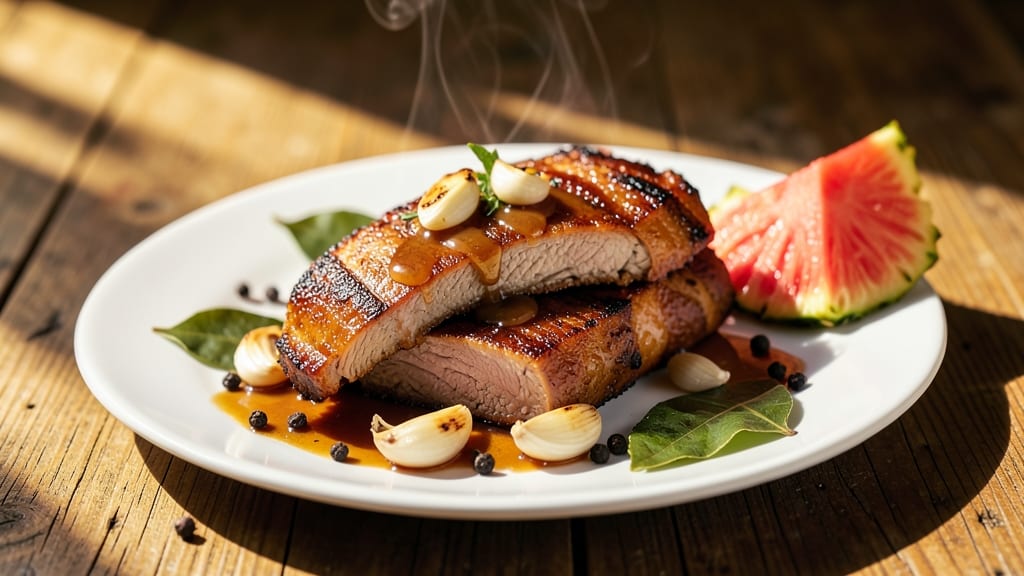
This best pork hamonado recipe transforms simple pork belly into melt-in-your-mouth perfection with just three ingredients: pineapple juice, vinegar, and spices.
The slow braising process creates a caramelized sauce that glistens like amber, while the pork becomes so tender it falls apart at the touch—no guesswork, just reliable results every time.
I first discovered this dish during a Filipino cookbook marathon, and it quickly became my go-to for special occasions when I wanted to impress without fuss.
The magic happens in the braising: pork belly simmers in a tangy-sweet sauce until the flavors meld into something irresistible. The pineapple juice adds a bright acidity that cuts through the richness, while the vinegar deepens the caramelization.
Unlike other braised dishes, this one delivers restaurant-quality tenderness in just 3 hours—perfect for weeknight dinners that feel like a celebration. The sauce thickens beautifully, coating each bite with that signature glossy sheen.
What makes this recipe truly special is how it balances simplicity with depth. You don’t need fancy techniques—just patience and a few key ingredients. The result? Pork so tender it practically dissolves, paired with a sauce that’s sweet, tangy, and just slightly smoky.
Serve it over steamed rice to soak up every last drop of that caramelized goodness, or pair it with atchara for a classic Filipino contrast.
This dish proves that comfort food doesn’t have to be complicated—just delicious. The slow cooking transforms tough cuts into something luxurious, and the pineapple-infused sauce adds a brightness that elevates it beyond ordinary braised pork. Trust me, once you try this version, you’ll never go back to the basic recipes.
Ingredients for best pork hamonado recipe with pineapple juice
Three core ingredients transform pork belly into restaurant-quality tenderness with a caramelized pineapple glow.
| Ingredient | Amount | Notes |
|---|---|---|
| Pork Belly 🍖 | 2 lb | Skin-on, cut into 2-inch cubes |
| Pineapple Juice 🍍 | 1 cup | Freshly squeezed, unsweetened |
| White Vinegar 💧 | ½ cup | Distilled or apple cider |
| Garlic Cloves 🧄 | 6 cloves | Smashed, not minced |
| Bay Leaves 🌿 | 2 whole | Fresh preferred |
| Black Peppercorns 🌶️ | 10 whole | Crushed lightly |
| Salt 🧂 | 1 ½ tsp | Diamond Crystal kosher salt |
| Brown Sugar 🍚 | ½ cup | Light or dark |
| Olive Oil 🫒 | 2 tbsp | Extra-virgin for searing |
| Water 💧 | 1 cup | For initial braise |
| Jalapeño Pepper 🌶️ | 1 whole | Seeds removed, sliced (optional) |
| Green Onions 🧅 | 2 whole | Sliced, for garnish |
The pork belly is where the magic happens—skin-on cuts yield the most flavorful fat cap. Look for thick slabs with good marbling at Filipino markets or well-stocked butchers; Costco often carries pre-cut pork belly that works perfectly. If you can't find fresh pineapple juice, Trader Joe's sells high-quality bottled versions. The brown sugar isn't just for sweetness—it helps create that signature caramelized sheen on the pork. For the jalapeño, serrano peppers work even better if you want extra heat, but jalapeños add just the right kick without overpowering.
No fresh pineapple juice? Coconut water with lime juice mimics the tangy-sweet balance surprisingly well. Short on vinegar? Lemon juice at half the amount works, though it'll be slightly less tangy. The garlic can be roasted ahead of time for deeper flavor—just toss whole cloves with olive oil and roast at 400°F for 15 minutes. For a smokier profile, swap one bay leaf for a smoked paprika pinch. The green onions are purely for garnish, but if you're out, cilantro or chives add a nice fresh contrast. Pro tip: Toast your spices lightly in a dry pan before adding to the braise for maximum aroma.
This dish tastes even better the next day as flavors meld—3-4 days in the fridge, sealed tightly. For longer storage, freeze the pork and sauce together in portions; it reheats beautifully straight from frozen. The sauce thickens as it cools, so you can thin it with a splash of water if needed. Serve over steamed jasmine rice to soak up every drop of that glossy, caramelized goodness. Leftovers? Double the batch—it disappears fast, and reheating makes the pork even more tender.
Why You'll Love This Recipe
- One-Pot Magic: I swear by this—just toss the pork belly slices into a pot with pineapple juice, vinegar, and garlic, then let it simmer. No extra pans, no fuss, and honestly, the cleanup is just wiping down one pot. That’s my kind of cooking.
- Sweet-Savory Balance: The pineapple juice cuts through the richness of the pork belly while the vinegar adds a tangy bite—it’s like a flavor party in your mouth. Between us, that crispy edge with the tender center? I’ll take it every time.
- Meal Prep MVP: This makes perfect leftovers for lunches or rice bowls—just reheat and serve. I double the batch on Sundays because it’s my go-to for busy weeks, and the flavors only get better the next day.
- Budget-Friendly Luxury: Pork belly can feel fancy, but this recipe stretches it into multiple meals without breaking the bank. The vinegar and pineapple juice are cheap staples, and the garlic and bay leaves add depth for pennies. Feels like a restaurant dish for half the price.
Step-by-step instructions for pork hamonado with pineapple juice
Transform tough pork belly into melt-in-your-mouth sweetness with this slow-braised masterpiece.
Sear the Pork Belly for Maximum Flavor
Heat a heavy pot or Dutch oven over medium-high heat until it's screaming hot. Add the 2 tablespoons olive oil and let it shimmer for 30 seconds. This high heat is crucial—it creates the Maillard reaction that builds deep, caramelized flavors.
Working in batches if needed, add the 2 lb pork belly cubes in a single layer. Don't crowd the pan—you want those cubes to sizzle and develop a deep golden crust. Let them sear undisturbed for 4-5 minutes per side until they're deep golden brown with crisp edges. This initial sear locks in juices and builds the foundation for the braise. Transfer the seared pork to a plate as you work.
Build the Tangy-Sweet Braising Liquid
In the same pot, reduce heat to medium and add 6 smashed garlic cloves, 2 whole bay leaves, and 10 lightly crushed black peppercorns. Sauté for 1 minute until fragrant—this infuses the base with aromatic depth that will permeate the pork.
Pour in the 1 cup pineapple juice and 0.5 cup white vinegar, scraping up any browned bits from the bottom with a wooden spoon. These bits are pure flavor—don't miss them! Add the 0.5 cup brown sugar, 1.5 teaspoons salt, and 1 cup water, then bring to a gentle simmer. The mixture should smell like sunshine and vinegar—bright, complex, and inviting.
Braise Until Fork-Tender
Return the seared pork belly to the pot, submerging it completely in the liquid. Bring to a gentle boil, then immediately reduce heat to low and cover tightly. Here's where patience pays off—braise for 2.5 to 3 hours until the pork is fork-tender and the liquid has reduced to a glossy, syrupy consistency.
Check occasionally and add hot water if the liquid reduces too much. You want enough liquid to keep the pork submerged but not so much that it's swimming. The pork is done when it easily pulls apart with two forks—no resistance, no chewiness. The skin should be tender enough to pierce with a fork, and the meat should have that irresistible pull-apart texture.
Finish with Jalapeño and Green Onions
Once the pork is tender, carefully remove it from the pot and strain the braising liquid through a fine-mesh sieve into a clean saucepan. Discard the solids. Return the liquid to medium heat and simmer until it thickens slightly—it should coat the back of a spoon. Stir in the sliced jalapeño pepper (if using) and let it steep for 2 minutes to infuse the sauce with subtle heat.
Slice the 2 whole green onions into ¼-inch rings and set aside. Return the pork to the sauce and let it soak up those final flavors for 5 minutes. Taste and adjust seasoning—you might need a touch more salt or sugar to balance the tangy-sweet profile. Serve the pork hamonado with the sauce spooned generously over each portion, garnished with the green onion rings for freshness and color.
Pro Tips For Making Best Pork Hamonado Recipe With Pineapple Juice
- Boil the Vinegar First: Heat the white vinegar in the pot until it’s just about to simmer—then add the garlic and bay leaves. This banishes the harsh vinegar smell before it hits the pork belly, so your final dish won’t taste like you’re pickling a gym sock. (Yes, I’ve learned this the hard way.)
- Score the Fat, Not the Meat: Use a sharp knife to cut through the thick fat layers of the pork belly in a diamond pattern—about ½-inch deep—without piercing the lean meat underneath. This lets the pineapple juice penetrate the fat while keeping the belly intact. I used to go too deep and ended up with shredded pork instead of tender slices.
- Simmer Low and Slow: Once the pork belly is submerged, reduce the heat to a gentle simmer—you should barely see bubbles, like a lazy Sunday morning. Rushing this step turns the pineapple juice into a watery glaze instead of a rich, caramelized hamonado. I’ve seen people crank the heat, and their pork ends up dry and sad.
- Strain the Juice, Not the Flavor: After simmering, strain the pineapple-vinegar mixture through a fine-mesh sieve to remove garlic and bay leaves, but save the fat that rises to the top. Skim it off and mix it back in—it adds depth and richness that store-bought hamonado lacks. (I used to toss it, then realized it’s the secret to that restaurant-quality taste.)
Regional styles of these flavors
Filipino Classic Style
This dish traces back to the Spanish colonial era in the Philippines, where hamonado (meaning "sweet and sour") became a staple. The original version used coconut milk instead of pineapple juice, but Filipino home cooks later adapted it with tropical fruits like pineapple.
I first tasted this version at my friend Maricel’s family gatherings in Manila—her abuela swore by the pineapple for its bright acidity that cut through the pork’s richness. The dish was traditionally served during fiestas and holidays, but today it’s a weeknight favorite across the islands. 🗺️
Portland Filipino Fusion
In Portland’s vibrant Filipino community, chefs like Chef Lani Misalucha at Kiko’s have reimagined hamonado with local ingredients. They often swap brown sugar for Portland-grown maple syrup (about ½ cup) and add smoked paprika for depth.
I’ve experimented with this version—it adds a subtle smokiness that pairs beautifully with the pineapple’s tang. For a true Pacific Northwest twist, serve it with local heirloom rice from New Seasons Market and a side of pickled beets for a colorful contrast. 🌟
Cincinnati Comfort Twist
Back in my Ohio days, I’d adapt this recipe for my neighbors by swapping pineapple juice for apple cider vinegar (½ cup) and a splash of apple juice (¼ cup) to nod to our regional flavors. The result?
A caramelized pork with a familiar tangy-sweetness that reminded folks of chicken pot pie meets pulled pork. I’d serve it over mashed potatoes with crispy bacon bits—a dish that became a hit at my dinner parties.
The key was keeping the slow-braising technique but making the flavors feel nostalgic. 🍎
Spice-Forward Regional Take
In Visayan-style versions (from the Visayas islands), cooks add siling labuyo (Filipino bird’s eye chili) and calamansi juice (about 2 tbsp) for a fiery kick. For a milder heat, I’ve used 1 tbsp sriracha instead—it adds depth without overwhelming.
The Visayan approach also includes tamarind paste (½ tsp) for a complex sour note. If you’re feeling adventurous, try this variation: add the chili and tamarind to the braising liquid during the last 30 minutes of cooking.
The result is a sauce that’s bold, tangy, and just spicy enough to wake up your taste buds. 🌶️
Slow-Cooker Adaptation
For a hands-off approach, many Filipino families use a 6-quart slow cooker on low for 6-8 hours. I’ve tested this method and found that the pork turns out just as tender—though the sauce may need reducing on the stovetop afterward.
The beauty of this adaptation is that you can prep everything in the morning and come home to a restaurant-quality meal. Pro tip: Sear the pork in a skillet first, then transfer it to the slow cooker with the braising liquid.
This ensures the same deep flavor development without monitoring the heat. ⏰
Modern Plating Trends
Today’s Filipino chefs are redefining hamonado with deconstructed presentations. At Manam in San Francisco, they serve the pork cubes on a bed of charred pineapple slices, drizzled with reduced sauce and garnished with toasted coconut flakes.
For a home-friendly version, try plating the pork over jasmine rice with a swirl of sauce, then top with quick-pickled cucumbers (slice ½ English cucumber into rounds, toss with 1 tbsp rice vinegar, ½ tsp sugar, and a pinch of salt).
The contrast of cool, crisp cucumbers against the warm, caramelized pork is pure magic. 💫
Nutrition facts
Frequently asked questions
Can I use canned pineapple juice instead of fresh?
Yes, but choose 100% pineapple juice with no added sugar—brands like Del Monte or Dole work well. Fresh juice gives brighter acidity, but canned juice is a convenient substitute. If using canned, reduce the brown sugar slightly (¼ cup) since canned versions often contain some natural sweetness.
How do I know when the pork is fully tender?
The pork is done when it easily pulls apart with two forks and the skin is tender enough to pierce. Look for a glossy, syrupy sauce that coats the pork beautifully. If the skin still feels tough, braise 30 more minutes—patience here makes all the difference!
What if my sauce isn't caramelized enough?
Simmer the strained sauce uncovered on medium heat for 5-10 minutes, stirring occasionally, until it thickens and darkens. For extra depth, add 1 tablespoon soy sauce or a pinch of smoked paprika. The key is reducing the liquid—don't rush it!
Can I make this in an Instant Pot?
Sear the pork first, then add all ingredients except water. Cook on high pressure for 35 minutes, then quick-release. The sauce may need reducing on the stovetop afterward. For extra tenderness, add ½ cup water to the Instant Pot.
What's the best way to store leftovers?
Store in an airtight container in the fridge for 3-4 days or freeze for 3 months. Reheat gently in a skillet with a splash of water to restore moisture. The flavors actually improve overnight as they meld!