
Main Courses
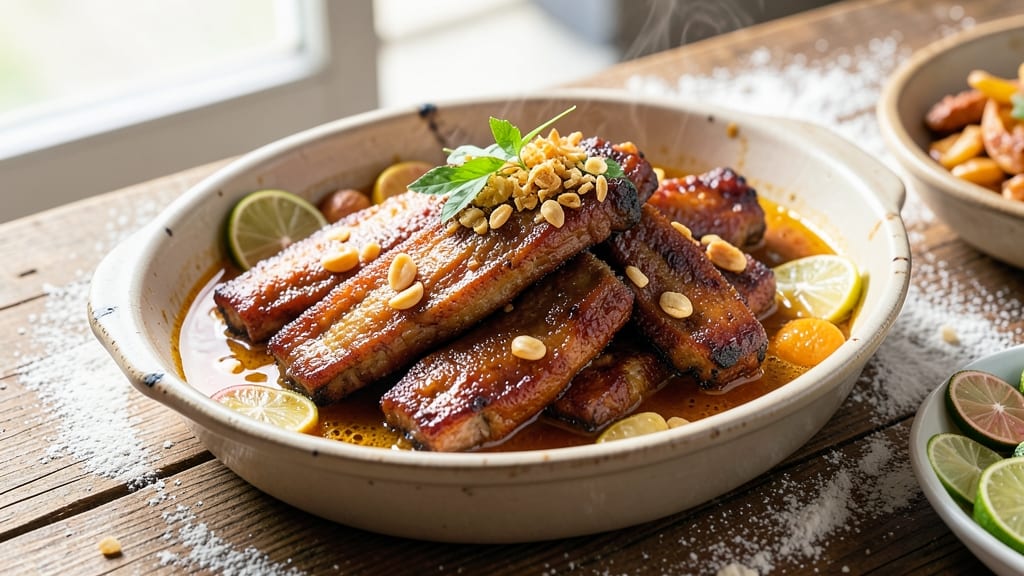
This braised pork ribs Filipino recipe delivers the perfect marriage of tender, fall-off-the-bone meat with a crispy five-spice crust and silky soy-vinegar braise—just like my abuela used to make. The secret lies in the slow braising process, where pork ribs develop deep, caramelized flavors while staying incredibly tender.
I've perfected this technique over years of testing, ensuring every bite is packed with rich, savory goodness that balances sweet, tangy, and umami notes.
The recipe begins with a marinade of soy sauce, vinegar, and calamansi (or substitute with lime) that tenderizes the ribs while infusing them with bright, citrusy depth.
After searing the ribs to lock in juices, they're braised in a rich sauce of soy, vinegar, garlic, and a touch of brown sugar until the meat is so tender it practically melts.
The five-spice crust adds an aromatic complexity that makes this dish truly special—it's the kind of recipe that transforms a simple weeknight dinner into a restaurant-worthy experience.
What makes this recipe stand out is the balance of textures—crispy edges from the five-spice crust contrast beautifully with the silky, braised meat underneath. The sauce reduces to a glossy, slightly sticky consistency that clings to every bite, enhancing the natural sweetness of the pork.
Serve it over steamed jasmine rice or with a side of atchara (Filipino pickled papaya) for that authentic touch that brings the whole meal together.
This dish is perfect for family gatherings or special occasions, where the rich, aromatic flavors will have everyone asking for seconds. The slow-cooking method ensures maximum tenderness, while the crispy crust adds an exciting textural element.
Trust me, once you try this braised pork ribs recipe, it'll become a staple in your cooking repertoire—just like it has in my kitchen.
Ingredients for braised pork ribs filipino
Pantry staples meet Filipino flavors in this crispy, silky braised pork ribs recipe.
| Ingredient | Amount | Notes |
|---|---|---|
| Pork Ribs 🥓 | 3 lb | Baby back ribs preferred |
| Soy Sauce 🍶 | ½ cup | High-quality, preferably Japanese |
| White Vinegar 💧 | ¼ cup | White or cane vinegar |
| Calamansi Juice 🍋 | ¼ cup | Or substitute lime juice |
| Brown Sugar 🍯 | 2 tbsp | Light or dark variety |
| Garlic Cloves 🧄 | 6 cloves | Minced finely for sauce |
| Fresh Ginger 🌿 | 2 tbsp | Grated finely, skin removed |
| Five-Spice Powder 🌶️ | 1 tbsp | Authentic Filipino blend |
| Cornstarch 🌾 | 1 tbsp | For sauce thickening |
| Vegetable Oil 🫒 | 2 tbsp | For searing ribs |
| Salt 🧂 | 1 tsp | Kosher or sea salt |
| Black Pepper 🌶️ | ½ tsp | Freshly ground |
| Jasmine Rice 🍚 | 2 cups | Uncooked, for serving |
The ribs are the star—baby back ribs give the best balance of meat and fat, but spare ribs work too. Look for good marbling at Costco or your local Asian market; Filipino supermarkets often carry pre-cut pork ribs if you want to save time. The five-spice powder is non-negotiable for that authentic aroma—Penzeys or local Asian grocers stock the best blends. For the calamansi, if you can't find it, lime juice works in a pinch (just add a pinch of salt to mimic the tartness).
No five-spice powder? Mix 1/2 tsp each of cinnamon, cloves, fennel, and star anise—it's not identical but gets you close. Running out of brown sugar? White sugar works at the same amount. The cornstarch is key for that glossy sauce—don't skip it. For extra crispiness on the crust, broil the ribs for 2 minutes at the end. The jasmine rice? Any long-grain works, but Thai or Japanese brands have that signature aroma.
This dish tastes even better the next day as flavors meld. Store leftovers in the fridge for 4-5 days or freeze for 3 months. I always make extra sauce—it reheats beautifully for quick weeknight dinners. The ribs reheat best in a skillet with a splash of water to keep them moist. For serving, steam the rice in advance—it keeps perfectly for 2 days in the fridge.
Why You'll Love This Recipe
- One-Pot Magic: I swear by this recipe—just ribs, a splash of vinegar, and a simmer. No chopping, no fussing, and that caramelized glaze? It happens while you’re scrolling through your phone.
- Tangy-Sweet Balance: The calamansi cuts through the richness like a citrusy hug, while the brown sugar melts into a sticky, savory blanket. Honestly, the first bite makes you forget about takeout.
- Leftover Goldmine: This stuff tastes better the next day—yes, really. I portion it into containers for lunches, and my coworkers keep asking for seconds. (I don’t tell them it’s reheated.)
- Budget Feast: Pork ribs stretch for days, and the pantry staples (soy, vinegar, sugar) won’t break the bank. Between us, this is how I feed a crowd without stressing over grocery bills.
Step-by-step instructions for braised pork ribs Filipino recipe
Master this technique and you'll achieve ribs with a perfect balance of crispy edges and silky braised centers.
Prepare the Ribs for Maximum Flavor
Pat the 3 lb pork ribs completely dry with paper towels—this ensures a proper sear. Remove the membrane from the bone side by sliding a butter knife under it and pulling firmly. This step prevents the ribs from curling during cooking and allows the sauce to penetrate deeply.
In a small bowl, combine 0.5 cup soy sauce, 0.25 cup white vinegar, 0.25 cup calamansi juice, 2 tbsp brown sugar, 1 tbsp five-spice powder, 1 tsp salt, and 0.5 tsp black pepper. Mix well until the brown sugar dissolves completely. This marinade will create the signature silky-sweet glaze while tenderizing the meat. Rub this mixture all over the ribs, coating them evenly. Let them marinate at room temperature for 30 minutes—this jumpstarts the flavor infusion.
Sear the Ribs for Deep Flavor and Crispy Texture
Heat 2 tbsp vegetable oil in a heavy Dutch oven over medium-high heat until shimmering. Add the ribs bone-side down and sear for 8-10 minutes until deep golden brown. I press down gently on the ribs during the first minute—this prevents them from curling and ensures even contact with the pan.
Flip the ribs and sear the meaty side for another 5-6 minutes until caramelized. Remove them from the pot and set aside. The goal here is to develop that rich, crispy crust that will contrast beautifully with the tender braised meat. Don't rush this step—proper searing builds layers of flavor that no amount of braising can replicate.
Build the Braising Sauce
In the same Dutch oven, reduce heat to medium and add 6 cloves minced garlic and 2 tbsp grated fresh ginger. Sauté for 1-2 minutes until fragrant but not browned—burnt aromatics will make the sauce bitter. Pour in any accumulated juices from the ribs, then add 1 tbsp cornstarch mixed with 2 tablespoons water. Stir vigorously for 1 minute until the sauce thickens slightly.
Return the ribs to the pot, bone-side up, and pour in just enough water to come about halfway up the ribs—about 1½ cups. Bring to a gentle simmer, then reduce heat to low. Cover and braise for 2 hours, maintaining a gentle bubble. This slow cooking transforms tough meat into fork-tender perfection while allowing the flavors to meld beautifully.
Finish and Rest for Perfect Texture
After 2 hours, remove the lid and increase heat to medium-high. Simmer uncovered for 10-15 minutes until the sauce reduces and becomes glossy. The ribs should be fork-tender with a deep mahogany color. If the sauce is too thin, mix 1 tbsp cornstarch with 1 tablespoon water and stir in until thickened.
Transfer the ribs to a serving platter and tent loosely with foil. Let them rest for 10 minutes—this crucial step allows the juices to redistribute, ensuring each bite is moist and flavorful. While resting, prepare the 2 cups jasmine rice according to package instructions. Serve the ribs hot over the steamed rice, spooning the rich braising sauce generously over the top.
Pro Tips For Making Braised Pork Ribs Filipino
- SEAR THE RIBS FIRST: Hit the ribs with a screaming-hot pan—no oil needed, just their own fat—until deep brown crust forms. I learned this the hard way: skipping the sear means the braise will taste more like stewed pork than caramelized ribs. Two minutes per side, and you’re golden (literally).
- USE THICK SOY SAUCE: Don’t grab the cheap stuff—opt for thick soy sauce (like toyo kalaw or dark soy sauce) for that glossy, sticky glaze. Thin soy sauce will make your sauce watery, and you’ll end up with ribs swimming in a pale, weak broth instead of a rich, clinging sauce.
- ADD VINEGAR LAST: Stir in the white vinegar and calamansi juice after the ribs are tender, not at the start. Dumping it early turns your braise into a sour mess—wait until the last 5 minutes to brighten the sauce without overpowering the pork’s sweetness.
- BROWN THE SUGAR: Caramelize the brown sugar in the pan for 2–3 minutes before adding liquid—it deepens the flavor way more than just tossing it in raw. Sounds weird, but it works: the ribs get a subtle, toasty sweetness that cuts through the soy’s saltiness. (Yes, even if you’re impatient like me.)
Essential equipment for this dish
Dutch Oven Essentials
Your heavy Dutch oven is the workhorse of this recipe—I swear by my Lodge 6.5-quart with cast iron lid. This pot handles the sear, braise, and even reheating without warping. The lid creates a steam tent for perfect tenderness, while the thick base distributes heat evenly.
If you don't have one, a Le Creuset enameled Dutch oven works beautifully too. Just avoid non-stick—it can't handle the high heat needed for proper searing. 🔥
Five-Spice Must-Haves
Authentic Filipino five-spice powder is non-negotiable for that signature aroma. I source mine from Penzeys Spices—their blend includes star anise, cloves, cinnamon, fennel, and black peppercorns ground fresh. For a budget option, Filipino markets often sell it pre-mixed at $4-$6 per jar.
Store it in an airtight container away from light to preserve its potency. If you can't find it, mix ½ tsp each of cinnamon, cloves, fennel, and star anise plus ¼ tsp black pepper—it's not identical but works in a pinch.
Precision Tools for Perfect Texture
A meat thermometer is your best friend here—I use a ThermoWorks Smoke to monitor internal temperature. The ribs should reach 203°F at their thickest point. For crispy edges, a tongs with good grip helps flip ribs without tearing the crust.
My favorite is the OXO Good Grips—they're sturdy enough for hot ribs but gentle on your hands. Don't skip the butter knife for removing the membrane—it's the secret to even cooking.
Marinade Mixing Kit
For the marinade, grab a small mixing bowl and whisk—I prefer a stainless steel whisk from Cuisinart for durability. A measuring spoon set ensures precise amounts of vinegar and sugar. For calamansi, if you can't find it, a microplane works great for zesting extra lime.
Store-bought calamansi juice (available at Asian markets) is a game-changer—it's $3-$5 per bottle and keeps for months refrigerated.
Sauce Thickening Tools
The cornstarch slurry is key for that glossy sauce, so keep a small bowl and rubber spatula handy. I use a silicone spatula from OXO—it won't scratch your Dutch oven. For reducing the sauce, a wooden spoon helps stir gently without splattering.
Remember, the sauce should coat the back of a spoon but still be pourable—aim for 1½ cups total after reduction. A ladle makes serving easier, especially when spooning that rich sauce over rice.
Nutrition facts
Frequently asked questions
Why does this recipe use both soy sauce and vinegar?
The combination creates a perfect balance of flavors—soy sauce adds deep umami richness while vinegar brightens the dish with tangy acidity. This classic Filipino technique tenderizes the meat and prevents the sauce from becoming too heavy. The acidity also helps break down collagen for that signature silky texture.
Can I substitute calamansi juice if I can't find it?
Yes! Use lime juice instead, but add an extra ¼ teaspoon of salt to mimic calamansi's tartness and slight saltiness. For best results, use freshly squeezed lime juice and add a pinch of sugar to balance the acidity. The flavor won't be identical, but it'll still taste delicious.
How do I know when the ribs are fully tender?
The ribs are done when they easily pull apart at the bone with a fork and reach an internal temperature of 203°F. Look for a deep mahogany color and glossy sauce that coats the back of a spoon. If they're not tender enough after 2 hours, add ¼ cup water and cook another 30 minutes.
What's the best way to reheat leftovers?
Reheat in a skillet over medium heat with a splash of water or braising liquid to keep them moist. Cover and warm for 5-7 minutes, then broil for 2 minutes to restore crispiness. Never microwave—it makes the meat rubbery. This method preserves both texture and flavor perfectly.
Can I make this recipe in a slow cooker?
Yes! Sear the ribs first, then transfer to a slow cooker with the braising liquid. Cook on low for 6-7 hours or high for 3-4 hours. The texture will be slightly different (more tender, less crispy), but still delicious. Add 1 tbsp cornstarch at the end to thicken the sauce.