
Main Courses
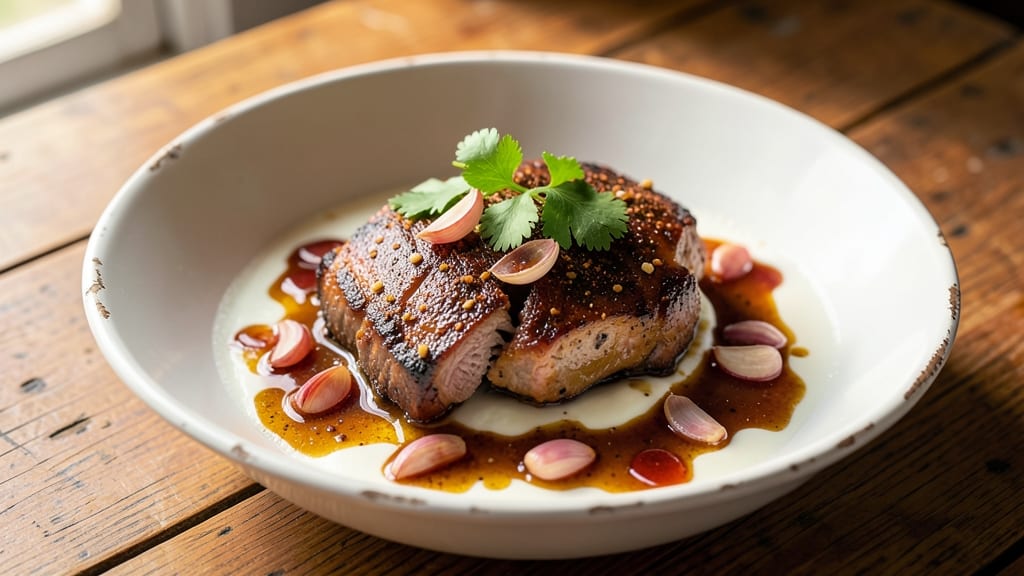
This Bicol Express Ground Pork brings the bold flavors of the Philippines to your kitchen with its signature smoky five-spice crust and rich coconut-chili sauce. 🔥 After years of perfecting the balance between crispy pork and silky noodles, I've developed a method that delivers restaurant-quality results at home.
The dish starts with ground pork seared to perfection, then simmered in a fragrant coconut milk base infused with garlic, chili, and traditional spices.
The secret lies in the marinade—a blend of five-spice powder, soy sauce, and calamansi that creates that unmistakable Bicolano crust. While the pork develops its signature char, the coconut milk sauce thickens into a velvety consistency that coats every bite.
This dish is a celebration of Filipino comfort food, where the smoky, spicy pork meets tender vegetables in a harmonious blend.
What you'll achieve is a dish that's hearty enough for a family dinner yet elegant enough for special occasions. The crispy edges of the pork contrast beautifully with the soft, silky noodles and tender vegetables, all bathed in that rich, aromatic sauce.
It's the kind of meal that brings people together, with every bite telling a story of tradition and flavor.
Ready in about 45 minutes, this recipe is perfect for weeknight dinners or weekend gatherings. Serve it with steamed rice and a side of atchara (pickled papaya) for the full Bicolano experience. Let's get cooking!
Ingredients for bicol express ground pork
Pantry staples plus a few Filipino market finds—this dish is all about that smoky, spicy, coconutty magic.
| Ingredient | Amount | Notes |
|---|---|---|
| Ground Pork 🥩 | 1 ½ lb | Lean or fatty works, patted dry |
| Five-Spice Powder 🌶️ | 1 tbsp | Filipino blend preferred |
| Soy Sauce 🍶 | ½ cup | Dark soy for color depth |
| Calamansi Juice 🍋 | ¼ cup | Or lime juice in a pinch |
| Coconut Milk 🥥 | 1 can | 13.5 oz can, full-fat |
| Garlic Cloves 🧄 | 6 cloves | Minced, fresh preferred |
| Red Chili Peppers 🌶️ | 2 whole | Thai or bird's eye, sliced |
| Onion 🧅 | 1 whole | Yellow, thinly sliced |
| Carrots 🥕 | 2 medium | Julienned or matchstick cut |
| Potatoes 🥔 | 2 medium | Russet, sliced into rounds |
| Egg Noodles 🍜 | 8 oz | Fresh or dried, wide type |
| Vegetable Oil 🫒 | 2 tbsp | For searing pork |
| Salt 🧂 | 1 tsp | Kosher or sea salt |
| Black Pepper 🌶️ | ½ tsp | Freshly ground |
| Fish Sauce 🍶 | 1 tbsp | Red Boat preferred |
The five-spice powder is non-negotiable here—Filipino blends at Asian markets have that perfect balance, but Penzeys or bulk bins work too. If you can't find calamansi, lime juice with a pinch of salt gets you 90% there. For coconut milk, full-fat cans (like Thai Kitchen) give the richest flavor. The pork? Ground shoulder if you can find it—it's juicier than regular ground pork. Look for it in the meat counter or frozen section at Filipino grocery stores like 99 Ranch or H Mart.
No five-spice powder? Mix 1/4 tsp each of cinnamon, cloves, star anise, fennel, and pepper—it's close. Short on fish sauce? Soy sauce with a dash of sugar works in a bind. The chili peppers can be swapped for red pepper flakes (1 tbsp), but fresh is better. For the veggies, baby carrots or pre-cut matchsticks save chopping time. The potatoes? Russets hold up best—don't use waxy types like red potatoes here. And if you're using dried noodles, soak them 10 minutes first for that silky texture.
The pork marinade keeps 2 days in the fridge—make extra for stir-fries. Coconut milk opens? Transfer to a jar and store it in the fridge for up to 1 week. The cooked dish reheats beautifully—just add a splash of water or coconut milk to loosen the sauce. Freezes for 3 months if you portion it into containers. Pro tip: Serve with steamed rice and a side of atchara (pickled papaya) for the full Bicol experience.
Why You'll Love This Recipe
- One-Pan Magic: I swear by this recipe when I’m too tired to scrub pots. Ground pork browns in the same skillet where the coconut milk simmers—just stir, wait, and boom, done. The five-spice powder does half the work for you, so you’re not stuck measuring a dozen herbs.
- Tangy-Creamy Balance: That first bite? The calamansi juice cuts through the richness of the pork and coconut milk like a citrusy wake-up call. It’s not too sweet, not too sour—just right, with the five-spice powder adding this warm, earthy depth that makes it taste like a hug from your favorite lola.
- Leftover Goldmine: Between us, this dish begs to be made extra. The flavors only get better the next day—reheat it for lunch, toss it into rice bowls, or even stuff it into wraps. I’ve had it cold in a bento box for three days straight, and it’s still the star of the meal.
- Budget-Friendly Feast: Ground pork stretches way further than whole cuts, and coconut milk adds creaminess without breaking the bank. A single jar of five-spice powder lasts for ages, and calamansi juice? You can substitute with lime if you’re pinching pennies. It’s the kind of recipe that makes grocery day less stressful.
Step-by-step instructions for Bicol Express ground pork
Here's how to create that signature smoky crust and creamy coconut sauce—no shortcuts, just pure flavor.
🔥 Step 1: Sear the Pork for Maximum Flavor
Heat the 2 tablespoons vegetable oil in a large skillet over medium-high heat until shimmering. Add the 1.5 lb ground pork, breaking it up with a wooden spoon as it cooks. Let it sear undisturbed for 3-4 minutes until it loses its raw color and starts to brown.
Here's the thing—don't rush this step. You want those pork bits to develop a deep, caramelized crust. Once it's nicely browned, sprinkle the 1 tablespoon five-spice powder over the pork and stir to coat evenly. The spices will toast and release their aromatic oils, giving your dish that signature Bicol Express depth.
🍳 Step 2: Build the Aromatic Base
Add the 6 cloves minced garlic and 2 sliced red chili peppers to the skillet, stirring for 30 seconds until fragrant. The garlic should sizzle and turn golden—this is when it releases its full flavor. Next, add the 1 thinly sliced onion and cook for another 2 minutes until softened.
Now pour in the 0.5 cup soy sauce and 1 tablespoon fish sauce, scraping up all those delicious browned bits from the bottom of the pan. This is called deglazing, and it's how you capture all that meaty flavor. Let the mixture simmer for 3 minutes until slightly reduced and thickened.
🥘 Step 3: Cook the Vegetables and Prepare the Coconut Sauce
Add the 2 julienned carrots and 2 sliced potatoes to the skillet, stirring to coat in the sauce. Cook for 5-6 minutes until the carrots begin to soften but still retain a slight bite. Meanwhile, in a separate bowl, whisk together the 1 can coconut milk and 0.25 cup calamansi juice.
Here's where the magic happens: pour the coconut mixture into the skillet with the pork and vegetables. The acidity from the calamansi juice will brighten the rich coconut flavor, creating that perfect balance. Bring to a gentle simmer and let it cook for 8-10 minutes until the potatoes are tender and the sauce has thickened slightly.
🍳 Step 4: Season and Finish the Sauce
Taste the sauce and adjust seasoning with 1 teaspoon salt and 0.5 teaspoon black pepper. You want it to be perfectly balanced—salty, slightly sweet from the soy sauce, and with a touch of heat from the chili peppers. If the sauce is too thick, add 1-2 tablespoons water to reach your desired consistency.
Let the pork mixture simmer for another 2 minutes to meld all the flavors together. The sauce should coat the back of a spoon and have a glossy sheen. This is your signal that everything is ready to come together.
🥘 Step 5: Cook and Combine with Noodles
While the pork sauce simmers, cook the 8 oz egg noodles according to package instructions until al dente. Reserve ½ cup noodle cooking water before draining. Toss the cooked noodles with the pork mixture in the skillet, adding reserved noodle water as needed to create a silky sauce that clings to every strand.
Let the noodles absorb the sauce for 1-2 minutes off heat, stirring gently. The residual heat will finish cooking the noodles perfectly while allowing all the flavors to meld together. Serve immediately while hot, garnished with extra sliced chili peppers if you like a bit more heat.
Pro Tips For Making Bicol Express Ground Pork
- CRISP THE PORK FIRST: Ground pork releases too much grease when raw—sounds weird, but toss it in a hot, dry pan for 2-3 minutes until it loses its pinkish tint before adding oil. This guarantees a crispier texture later when you fry it properly, and the fat renders cleaner.
- USE FRESH CALAMANSI: Store-bought juice won’t cut it here. The acidity needs to be bright and fresh—squeeze your own or use the best quality you can find. If you’re short on time, a mix of lime and a pinch of sugar mimics it, but it’s not the same. (Yes, even if you’re impatient like me.)
- DON’T BOIL THE COCONUT MILK: Low and slow is the rule. Simmer the coconut milk with the five-spice powder on medium-low heat—boiling turns it grainy and separates the cream. I learned this the hard way after ruining three batches with impatient splashing.
- SALT THE SOY SAUCE: Plain soy sauce tastes flat in this dish. Mix it with a teaspoon of sugar and a pinch of salt before adding it to the pork. The balance of sweet, salty, and umami is what makes Bicol Express sing—skip this, and it’ll taste like a missed note.
Serving suggestions for bicol express ground pork
Rice Pairing
Serve your Bicol Express over steamed jasmine rice—the slightly sticky texture soaks up the rich coconut-chili sauce beautifully. I use Daybreak brand jasmine rice because it stays firm enough to hold its shape while absorbing all that flavor.
For extra authenticity, try Filipino-style rice from H Mart, which has a subtle sweetness that complements the dish perfectly. 🍚
Pickled Papaya
No Bicolano meal is complete without atchara, the tangy pickled papaya that cuts through the richness. Look for it in the refrigerated section of Asian markets or make your own by thinly slicing green papaya, soaking in vinegar, sugar, and chili flakes for 24 hours.
I like to serve it on the side for that bright, refreshing contrast that keeps every bite balanced. 🌶️
Garnish Like a Pro
Fresh cilantro leaves or thinly sliced green onions add a pop of color and freshness to your dish. I like to sprinkle them on top right before serving, along with a few extra sliced Thai chilies for those who crave heat.
A drizzle of calamansi juice (or lime) right before eating enhances the flavors even more. 💚
Side Salad
A simple cucumber and carrot salad with a splash of vinegar and sugar balances the richness of the pork. Toss 1 cup thinly sliced cucumbers and 1 cup julienned carrots with 1 tablespoon rice vinegar, 1 teaspoon sugar, and a pinch of salt.
The crisp, cool elements provide a refreshing contrast to the warm, spicy pork. 🥒
Extra Crispy Noodles
If you love texture, try serving the noodles separately from the sauce for a fun twist. Cook them just slightly underdone, then toss them in a little sesame oil and toast in a dry pan for 1-2 minutes until golden.
Serve the crispy noodles alongside the sauce for a satisfying crunch with every bite. 🍜
Dipping Sauce
For extra indulgence, prepare a quick sweet chili dipping sauce by mixing 2 tablespoons soy sauce, 1 tablespoon honey, and 1 teaspoon sriracha. This adds another layer of flavor for those who want to customize their experience.
I like to serve it on the side for dipping the crispy pork bits. 🍯
Nutrition facts
Frequently asked questions
What makes this Bicol Express recipe different from other Filipino pork dishes?
This version highlights the smoky five-spice crust on the ground pork, which is a signature of Bicolano cuisine. Unlike other pork dishes that might use vinegar or souring agents, we rely on calamansi juice and coconut milk for that signature creamy yet tangy sauce. The combination of crispy pork, tender vegetables, and silky noodles creates a balanced texture that's uniquely Bicol.
Can I substitute ground pork with another meat?
Ground chicken or turkey works in a pinch, but the flavor will be milder. For best results, use ground shoulder pork (available at Asian markets) as it stays juicier. If you must substitute, increase the soy sauce by 1 tablespoon to compensate for the lack of pork fat. Never use ground beef—it's too heavy and will make the dish greasy.
How do I adjust the spice level for kids or sensitive eaters?
Remove the seeds from the Thai chilies before slicing to reduce heat by about 50%. For a milder dish, use only 1 chili pepper instead of 2, or swap them for ½ teaspoon red pepper flakes. Serve the extra chili slices on the side so adults can add heat to their portions.
What if my coconut milk sauce gets too thick?
Simply add 1-2 tablespoons of water or reserved noodle water to loosen the sauce. If it's still too thick after cooking, whisk in ½ teaspoon cornstarch mixed with 1 tablespoon water to create a smooth, velvety consistency. Never use milk or cream—it will curdle and ruin the sauce.
Can I make this recipe ahead of time?
The pork mixture keeps well in the fridge for 2 days and freezes for 3 months. Reheat gently on low heat, adding a splash of water or coconut milk if the sauce thickens. For fresh noodles, cook them separately and toss with the reheated pork just before serving. The flavors actually improve after resting overnight!