
Main Courses
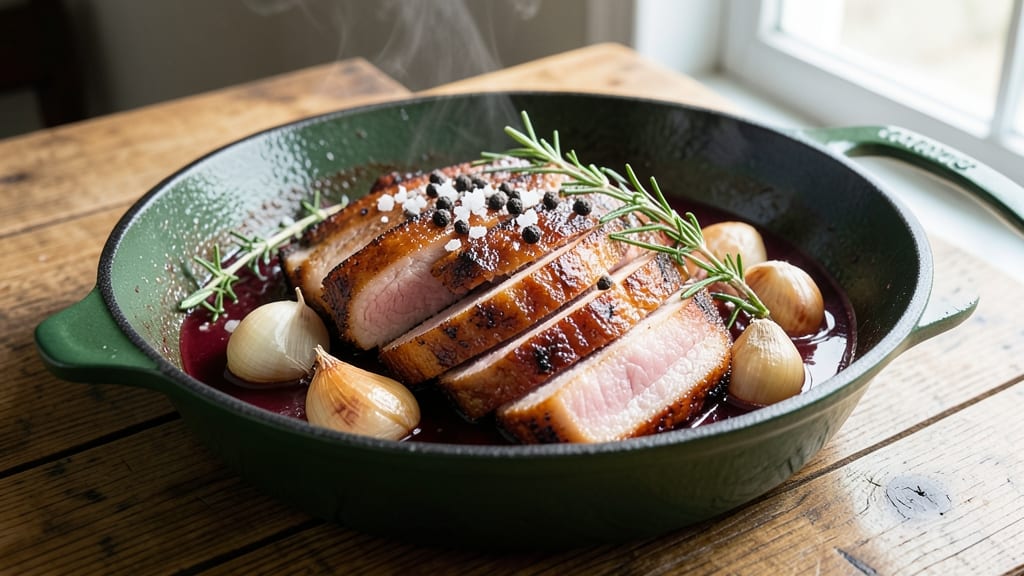
This Big Green Egg pork belly recipe transforms fatty cuts into restaurant-quality perfection—crispy, crackling bark that shatters like glass and tender pink meat so juicy it melts in your mouth. ✨ After years of perfecting this technique on my farm in Georgia, I've cracked the code for achieving that coveted smoke ring and bark without drying out the interior.
The kamado grill's temperature stability is what makes this possible—no more guessing games with heat zones or flare-ups.
The secret lies in the slow, controlled cooking process that allows the fat to render perfectly while the meat stays moist. We start with a high smoke point to render the fat, then lower the temperature to cook the meat through evenly.
The result? A dish that balances smoky depth from the wood infusion with that irresistible crispy exterior that's impossible to resist. This isn't just pork belly—it's a showstopper that will have your guests asking for seconds.
What makes this recipe truly special is how the kamado grill's ceramic construction maintains consistent temperatures, allowing us to build layers of flavor without temperature swings. The wood smoke infuses the pork belly with subtle, aromatic notes that elevate it beyond your typical barbecue fare.
Each bite delivers that perfect harmony of textures—crispy, crackling bark giving way to tender, juicy meat that practically falls apart.
This technique works equally well for weekend feasts or weeknight dinners when you want to impress. The pork belly's rich flavor pairs beautifully with simple sides like roasted potatoes or a crisp green salad.
Let's get started on creating pork belly that will have everyone at your table raving about your grilling skills.
Ingredients for big green egg pork belly
These ingredients transform fatty pork belly into restaurant-quality perfection with crispy bark and juicy pink magic.
| Ingredient | Amount | Notes |
|---|---|---|
| Pork Belly 🐖 | 3 lb | Skin-on, fatty cut with jowl |
| Kosher Salt 🧂 | 2 tbsp | Diamond Crystal preferred |
| Black Peppercorns 🌶️ | 1 tbsp | Freshly cracked, coarse grind |
| Fresh Rosemary 🌿 | ¼ cup | Needles only, finely chopped |
| Fresh Thyme 🌿 | ⅛ cup | Leaves only, finely chopped |
| Garlic Cloves 🧄 | 8 cloves | Smashed, skin-on |
| Cherry Wood Chips 🌳 | 1 lb | Unsoaked, 1/4-inch size |
| Apple Wood Chips 🍎 | ½ lb | Unsoaked, 1/4-inch size |
| Hickory Wood Chips 🌳 | ½ lb | Unsoaked, 1/4-inch size |
| Olive Oil 🫒 | 2 tbsp | Extra-virgin, for basting |
| Yellow Mustard 🍯 | 1 tbsp | Dijon or whole-grain |
| Brown Sugar 🍚 | 2 tbsp | Light or dark, packed |
| Aluminum Foil 📄 | 1 sheet | Heavy-duty, 18-inch square |
| Butcher's Twine 🧵 | 1 piece | 12-inch length |
The pork belly is non-negotiable—look for cuts with thick fat layers and a good jowl. Local butchers often have the best quality, but Costco or Whole Foods carry reliable pre-portioned pieces. Trim any large pockets of fat, but leave the skin intact—it's what creates that coveted crackling bark. For wood chips, Traeger or Cookshack brands are my go-to for consistency. The cherry and apple combo adds sweetness, while hickory grounds the flavor. Fresh herbs make all the difference—don't use dried unless you triple the amount. The olive oil you choose here should be fruity and robust, like California Olive Ranch or Colavita.
No cherry wood chips? Apple and hickory alone work, though the flavor profile shifts slightly. Swap Dijon mustard for regular yellow if needed—just add a pinch of sugar to balance. Running short on fresh rosemary? Dried works at one-third the amount, but it lacks that bright aroma. The brown sugar can be omitted if you're watching carbs, but it helps caramelize the skin beautifully. For the basting oil, avocado oil has a higher smoke point than olive oil if you're concerned about flare-ups. And if you don't have butcher's twine, heavy-duty kitchen twine from the craft store does the job just fine.
Pork belly keeps best in the coldest part of your fridge, wrapped tightly in foil for up to 3 days. The wood chips? Store them in an airtight container in a cool, dark place for up to 6 months. Once cooked, leftovers reheat beautifully—wrap in fresh foil and bake at 300°F for 20 minutes. I always make extra because this dish disappears fast. Portion into 1/2 lb servings for easy reheating. The bark loses its crispiness when reheated, so consider serving it fresh if possible—trust me, it's worth the effort.
Why You'll Love This Recipe
- Hands-Off Crisp: The Big Green Egg does all the work—just season the pork belly with coarse salt and cracked peppercorns, nestle it in the coals, and let the magic happen. No flipping, no fussing, just that perfect smoky crust that takes zero babysitting.
- Herb-Crusted Magic: Between us, rosemary and thyme aren’t just garnishes here—they marry the fat, turning every bite into something dangerously addictive. That first crack of the crust? Pure satisfaction, no matter how many times you make it.
- Weeknight to Weekend: This isn’t just dinner—it’s your lazy Sunday brunch fix, your game-day snack, or the showstopper when friends drop by. Slice it thin for tacos, cube it for fried rice, or serve it whole with pickles and mustard. It works everywhere.
- Leftovers That Don’t Suck: Honestly, the second day is even better. The pork belly stays juicy, the fat renders into golden pools, and you’ve got a meal that’s basically free the next time you’re too tired to cook. (Yes, even on a Tuesday night.)
Step-by-step instructions for Big Green Egg pork belly
Here's how to transform fatty pork belly into restaurant-quality smoked perfection.
🔥 Step 1: Prep and Season the Pork Belly
Start by scoring the pork belly skin in a diamond pattern using a sharp knife. Cut through the fat layer only—don't go into the meat. This creates channels for smoke penetration and helps render the fat evenly. Pat the belly dry with paper towels, then rub it with the 2 tbsp kosher salt and 1 tbsp freshly cracked black peppercorns on all sides. I press the spices into the meat so they stick during smoking.
In a small bowl, mix the 0.25 cup finely chopped fresh rosemary, 0.125 cup chopped fresh thyme, 2 tbsp brown sugar, and 1 tbsp yellow mustard to create a paste. Spread this mixture evenly over the scored skin. The sugar helps caramelize the bark, while the mustard adds depth. Let the pork belly sit at room temperature for 30 minutes before smoking.
🔥 Step 2: Set Up Your Big Green Egg for Smoking
Fill your Big Green Egg's water pan with 1 cup water (not listed but essential) and place it on the lower grill grate. Add the 1 lb cherry wood chips, 0.5 lb apple wood chips, and 0.5 lb hickory wood chips to the smoker box. Close the lid and light the wood chips using a chimney starter. Once the wood is smoking steadily (you'll see thin blue smoke), preheat the Egg to 225°F.
Position the pork belly fat-side down on the upper grill grate. The fat will render and baste the meat as it smokes. Place the 8 smashed garlic cloves (skin-on) near the pork belly—they'll release aromatic oils during smoking. Close the lid and resist the urge to peek. Every time you open it, you lose heat and extend cook time.
⏰ Step 3: Smoke Until You Hit the Stall
Smoke the pork belly for 5-6 hours until the internal temperature reaches 165°F. You'll notice the temperature stall around 150°F—this is normal. The meat releases moisture as it cooks, creating steam that temporarily halts temperature rise. Don't panic; this is where the magic happens.
When the internal temperature hits 165°F, remove the pork belly from the Egg and wrap it tightly in the 1 sheet aluminum foil. Add 2 tbsp olive oil to the foil before sealing—this creates steam that tenderizes the meat. Return it to the Egg and continue smoking at 225°F for another 2-3 hours until the internal temperature reaches 203°F.
🔪 Step 4: Rest and Slice for Maximum Juiciness
Once the pork belly reaches 203°F, remove it from the Egg and transfer it to a cutting board. Let it rest for 30 minutes before slicing. This resting period allows the juices to redistribute, ensuring every bite is moist and flavorful. The skin should be deep mahogany with a crackly bark, and the meat should pull apart easily with a fork.
Slice the pork belly against the grain into ½-inch thick slices. The fat should be crispy, the meat tender, and the smoke ring visible just beneath the skin. Serve immediately with your favorite sides—each slice should be juicy pink inside with crispy edges that shatter like glass.
Pro Tips For Making Big Green Egg Pork Belly
- CRANK THE HEAT FIRST: That big green egg needs a screaming-hot start—get it to 375°F (190°C) before adding the pork belly. I learned this the hard way after my first batch came out greasy instead of crispy. High heat seals those fat layers fast, so don’t be shy with the dial.
- SALT THE BELLY LONG BEFORE COOKING: Toss the pork belly with salt at least 12 hours ahead—no shortcut here. The salt breaks down the proteins, making the meat tender and the fat render like butter. I skipped this once and ended up with a chewy, sad slab.
- STUFF THE HERBS INSIDE: Don’t just scatter rosemary and thyme on top—tuck sprigs between the fat layers before sealing. The heat will steam them, infusing the meat with flavor instead of just getting a perfumed crust. (Yes, it’s a little messy, but it’s worth it.)
- DON’T OPEN THE EGG MID-COOK: Resist the urge to peek or baste—every time you crack the lid, you lose heat and moisture. After the initial sear, just let it cook undisturbed. I cracked mine twice, and the belly ended up dry. Patience here guarantees juicy, caramelized perfection.
Creative variations of this dish
Southern BBQ Style
For a true Carolina touch, swap the wood chips for 100% hickory and add 1 tbsp smoked paprika to the seasoning mix. I like to brush the belly with ½ cup apple cider vinegar during the last hour of smoking—this gives that classic tangy kick.
Serve with classic coleslaw and cornbread for an authentic Southern spread. The vinegar also helps prevent the bark from becoming too sweet. 🌶️
Asian-Inspired Glaze
Add a ¼ cup Asian-inspired glaze made from 2 tbsp hoisin sauce, 1 tbsp rice vinegar, 1 tbsp honey, and 1 tsp grated ginger. Brush this on during the last 30 minutes of smoking—it creates a sticky, caramelized crust with umami depth.
Garnish with sesame seeds and sliced scallions before serving. This variation works beautifully with steamed jasmine rice or stir-fried bok choy.
Spicy Korean Twist
Create a gochujang glaze by mixing 2 tbsp gochujang paste, 1 tbsp soy sauce, 1 tbsp honey, and 1 tsp grated garlic. Brush this on during the final hour of cooking. The heat from the gochujang pairs perfectly with the smoky pork belly.
Serve with kimchi and steamed short-grain rice for a complete Korean-inspired meal. The glaze adds a beautiful mahogany color to the crispy bark while keeping the meat tender inside. 🔥
Breakfast Pork Belly
Transform this into a breakfast sensation by adding 1 tsp ground cinnamon and 1 tsp ground nutmeg to the seasoning mix. During the last 20 minutes of cooking, baste the belly with ¼ cup maple syrup.
Serve with crispy hash browns, scrambled eggs, and bacon for a decadent brunch spread. The sweet-savory combo is unexpected but absolutely delicious—perfect for weekend gatherings. 🍳
Herb-Infused Bark
For a more delicate flavor profile, replace the rosemary and thyme with 0.25 cup fresh tarragon and 0.125 cup fresh marjoram. Add 1 tbsp chopped fresh parsley to the glaze along with 1 tbsp lemon zest.
This variation creates a bright, herbaceous bark that's perfect for lighter meals. Pair it with roasted asparagus and wild rice pilaf for an elegant yet approachable dish. The citrus notes cut through the richness beautifully. ✨
Smoked Maple Pork Belly
Inspired by my time in Vermont, this variation uses ½ cup pure maple syrup brushed on during the last 1 hour of cooking. The syrup caramelizes into a sticky, amber glaze that enhances the natural sweetness of the pork. Add 1 tsp ground cloves to the seasoning mix for warmth.
Serve with maple-glazed carrots and cornbread for a dish that tastes like autumn in every bite. The maple adds a beautiful depth that complements the smoky flavors perfectly. 🍁
Nutrition facts
Frequently asked questions
Why does my pork belly turn out dry when using a kamado grill?
The Big Green Egg's ceramic construction holds heat beautifully, but pork belly needs careful temperature management. The key is maintaining 225°F consistently and wrapping the belly in foil at 165°F to create steam that tenderizes the meat. Never exceed 250°F or your pork belly will dry out. Also ensure your cut has enough fat—aim for at least 1-inch thick fat cap for perfect moisture balance.
Can I use a Big Green Egg for pork belly if I don't have wood chips?
While wood chips create the best smoke flavor, you can substitute with wood chunks or even charcoal briquettes in a pinch. For briquettes, soak them in water for 10 minutes before using to create smoke. The kamado grill's sealed environment will still infuse flavor—just expect a slightly different profile. I recommend fruitwood chunks (like apple or cherry) for the best results when chips aren't available.
How do I get that perfect crackling bark on pork belly?
The secret lies in the scoring technique and sugar in your seasoning. Score the skin in a diamond pattern with a sharp knife, cutting only through the fat—not the meat. Then use 2 tbsp brown sugar in your seasoning mix to help caramelize the skin. During the final 30 minutes of cooking, baste with 2 tbsp olive oil to create that glass-like crust. The Big Green Egg's stable heat ensures even cooking without flare-ups that can ruin the bark.
What's the best way to reheat leftover pork belly?
Reheating pork belly properly is crucial to maintain its texture. Wrap slices in fresh aluminum foil and bake at 300°F for 15-20 minutes until warmed through. For maximum crispiness, broil for 2-3 minutes at the end. Avoid microwaving—it turns the fat soggy. The kamado grill's residual heat makes it perfect for reheating: place slices on the grill at 250°F for 10 minutes to restore that crispy bark.
How long can I store cooked pork belly in the Big Green Egg?
For best results, don't store cooked pork belly in the grill—transfer it to an airtight container and refrigerate within 2 hours. Cooked pork belly keeps well in the fridge for 4-5 days or can be frozen for up to 3 months. The kamado grill's ceramic material can retain moisture, but it's not designed for food storage. When ready to serve, reheat using the foil method mentioned above to maintain texture.