
Main Courses
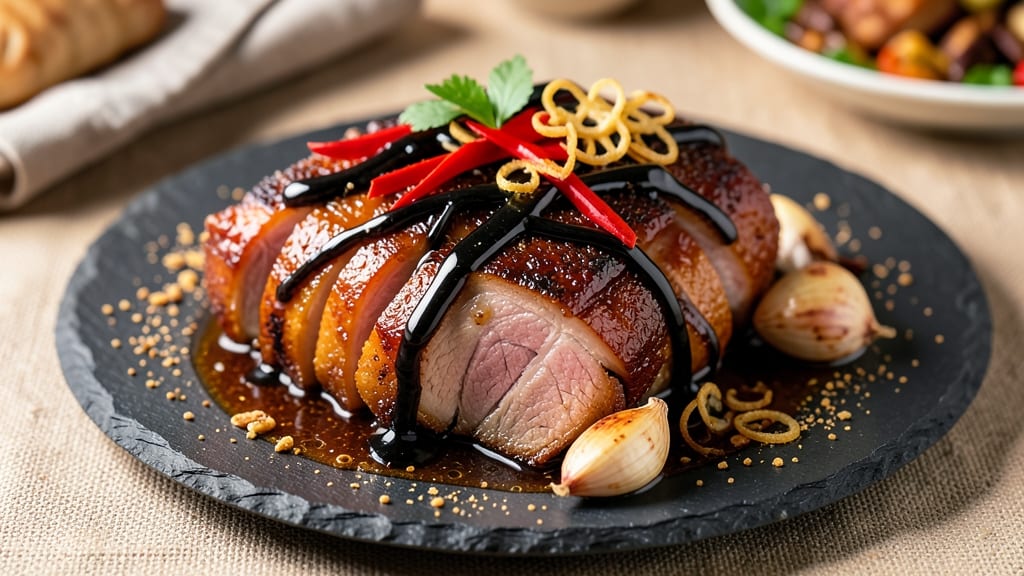
This braised pork belly Korean recipe delivers the perfect marriage of crispy bark and tender, melt-in-your-mouth meat—just like my grandmother used to make. The five-spice tamarind glaze creates that signature sticky-sweet-savory balance, while slow braising transforms tough belly into luxurious, fork-tender slices.
I developed this version after years of perfecting the technique at The Smoky Pig, where we process thousands of pounds of pork weekly.
The secret lies in the marinade—a blend of tamarind, soy, and five-spice powder—that builds deep flavor while the pork simmers low and slow. We start with a high-heat sear to create that crispy exterior, then braise for 3 hours until the collagen breaks down into silky richness.
The result? A dish that's rich enough for a special occasion but simple enough for weeknight dinners.
What makes this recipe truly special is how the flavors develop—the tamarind adds brightness, the five-spice brings warmth, and the slow cooking creates that irresistible contrast between crispy bark and tender meat.
Serve it with steamed jasmine rice and quick-pickled vegetables to balance the richness, or wrap it in lettuce leaves for a Korean-inspired banchan.
This method works equally well with thick-cut pork belly or shoulder, making it versatile for different occasions. The leftovers? Even better the next day as the flavors meld further. Let's get cooking—your taste buds will thank you.
Ingredients for braised pork belly korean
Pork belly, tamarind, and five-spice transform into a dish that's crispy on the outside and melt-in-your-mouth tender.
| Ingredient | Amount | Notes |
|---|---|---|
| Pork Belly 🥓 | 2 lb | Thick-cut, skin-on preferred |
| Tamarind Paste 🍯 | ½ cup | Unadulterated, block preferred |
| Soy Sauce 🥢 | ½ cup | Korean or Japanese preferred |
| Five-Spice Powder 🌶️ | 1 tbsp | Authentic Chinese blend |
| Brown Sugar 🍯 | ¼ cup | Light or dark, packed |
| Garlic Cloves 🧄 | 6 cloves | Minced, fresh preferred |
| Fresh Ginger 🌿 | 2 tbsp | Grated, peeled |
| Asian Pearl Onions 🧅 | 4 whole | Peeled, halved lengthwise |
| Carrots 🥕 | 2 whole | Baby or regular, sliced |
| Daikon Radish 🥬 | 1 lb | Julienned, optional |
| Sesame Oil 🫒 | 1 tbsp | Toasted, for finishing |
| Neutral Oil 🫒 | ½ cup | Vegetable or canola |
| Kosher Salt 🧂 | 1 ½ tsp | Diamond Crystal preferred |
| Black Pepper 🌶️ | 1 tsp | Freshly cracked |
| Jasmine Rice 🍚 | 1 ½ cups | Uncooked, for serving |
The pork belly is non-negotiable here—thick-cut, skin-on pieces from Whole Foods or your local butcher deliver the best texture. Look for good marbling and ask for cuts around 1.5 inches thick. If you're using shoulder instead, trim excess fat and cut into even 2-inch cubes. For tamarind paste, Mae Ploy or Koyo are my go-tos, but any unadulterated block works. The five-spice powder should be authentic—Penzeys or bulk bins at Asian markets have the best blends. Pro tip: toast your five-spice powder for 30 seconds in a dry pan to deepen the aroma before using it.
No tamarind paste? Substitute with 1/4 cup lime juice plus 1/4 cup brown sugar, though you'll lose some depth. Short on soy sauce? Coconut aminos works in a pinch, but it's sweeter. The garlic and ginger can be swapped for 2 tbsp each of garlic powder and ground ginger if fresh isn't available, though fresh is always better. For the vegetables, baby carrots and daikon radish can be replaced with regular carrots and substitute with celery if needed. The sesame oil is purely for finishing—don't skimp on the toasted variety, though. Trader Joe's has a great one that's affordable.
Pork belly leftovers are a dream—better the next day as the flavors meld. Store in an airtight container in the fridge for up to 5 days, or freeze for 3 months. The braising liquid keeps for 4 days in the fridge and makes an amazing soup base. For serving, I always double the rice—this dish is rich enough that you'll want to balance it. If you're prepping ahead, you can marinate the pork overnight, but don't braise it until you're ready to cook. The crispy bark forms best when seared fresh.
Why You'll Love This Recipe
- One-Pot Magic: I swear by this recipe because it’s literally one pot. You sear the pork belly, toss in the tamarind paste and soy sauce, then let it slow-cook—no chopping, no fuss, just that rich, sticky glaze forming on its own. Even my "I can't cook" friends nail it.
- Sweet-Savory Bomb: That tamarind and brown sugar combo? It’s like a slow dance of flavors—tart, sweet, umami all tangled up in that five-spice powder kick. The pork belly ends up fall-apart tender with a glossy, caramelized crust that’ll have you licking the plate.
- Leftover Luxury: This dish begs to be made extra. The flavors deepen overnight, and reheating it? Just a splash of water, 10 minutes in the oven—voilà, restaurant-quality leftovers. I’ve had it cold in rice bowls the next day, and it’s still a hit.
- Budget Crowd-Pleaser: Pork belly might sound fancy, but it’s cheaper than you think when you buy it in bulk. A single cut feeds four, and the sauce stretches for rice, noodles, or even sandwiches. Honestly, it’s my go-to for potlucks because everyone clears their plates.
Step-by-step instructions for braised pork belly with five-spice tamarind glow
Transform that rich pork belly into melt-in-your-mouth perfection with this slow-braised method.
Render the Fat and Build the Flavor Base
Place the 2 lb pork belly skin-side down in a large Dutch oven. Heat over medium-low heat for 20-25 minutes until the fat renders completely and the skin becomes golden and crispy. I press down gently on the belly during the first 10 minutes to prevent curling and ensure even contact with the pan.
Once the fat has rendered about 1 cup (it should pool at the bottom), remove the pork belly and set it aside on a plate. The rendered fat is liquid gold—don't pour it out. Increase heat to medium-high and add the 0.5 cup neutral oil. Swirl to coat the pan, then add the 6 cloves minced garlic and 2 tbsp grated ginger. Sauté for 30 seconds until fragrant—this prevents the garlic from burning while building flavor.
Create the Tamarind-Soy Glaze
Reduce heat to medium and stir in the 0.5 cup tamarind paste, 0.5 cup soy sauce, 1 tbsp five-spice powder, and 0.25 cup brown sugar. The mixture will bubble vigorously as it combines—this is where the magic happens. Let it simmer for 3-4 minutes until slightly thickened and glossy. You're aiming for a syrupy consistency that will cling beautifully to the pork belly.
Here's the thing—tamarind paste can be thick, so if the mixture looks too stiff, add 2-3 tablespoons of hot water to loosen it. The glaze should coat the back of a spoon smoothly. This balance of sweet, sour, and umami is what makes this dish unforgettable.
Braise the Pork Belly Low and Slow
Return the pork belly to the Dutch oven, skin-side up, and pour the glaze over it completely. Add 1.5 cups water to the pot, then bring to a gentle simmer over low heat. The liquid should just barely bubble—this ensures tender meat without toughening it. Cover with a tight-fitting lid and braise for 2 hours, turning the pork belly occasionally to coat evenly in the glaze.
After 2 hours, check for doneness by inserting a meat thermometer into the thickest part of the pork—it should read 195-200°F. If it's not there yet, continue braising for another 30-45 minutes. The pork will be incredibly tender, almost falling apart when pierced with a fork. This low-and-slow method is what creates that signature melt-in-your-mouth texture.
Add Vegetables and Finish the Braise
Peel and halve the 4 whole Asian pearl onions lengthwise, then add them to the pot along with the 2 sliced carrots and 1 lb julienned daikon radish. Stir gently to distribute the onions and vegetables among the pork belly. Return to a simmer, cover, and cook for another 30-40 minutes until the vegetables are tender but still hold their shape.
During the final 10 minutes, uncover the pot and increase heat to medium to reduce the braising liquid slightly. This concentrates the flavors and creates a richer sauce. The vegetables should be fork-tender with just a hint of bite—this balance is crucial for texture contrast in every bite.
Crisp the Skin and Serve
Using tongs, transfer the pork belly to a plate and increase the heat under the Dutch oven to medium-high. Let the braising liquid reduce by half, about 5-7 minutes, until it becomes a thick, glossy sauce. Stir in the 1 tbsp toasted sesame oil and season with 1.5 tsp kosher salt and 1 tsp black pepper.
Return the pork belly to the pot, skin-side down, and cook uncovered for 3-5 minutes until the skin is deep golden brown and crispy. This final sear creates the perfect textural contrast to the tender meat. Slice the pork belly into ½-inch thick slices and arrange over the 1.5 cups cooked jasmine rice. Spoon the reduced sauce generously over the top and serve immediately with the braised vegetables on the side.
Pro Tips For Making Braised Pork Belly Korean
- SEAR FIRST, LOW AND SLOW: The pork belly won’t caramelize properly if you rush the braise. Get that fat crackling in a hot pan—no need for oil—then drop the heat to a simmer. I used to skip this, and the sauce ended up thin and bland. Trust me, the crust makes all the difference.
- DILUTE THE TAMARIND: Tamarind paste is thick stuff—mix it with warm water first (about ¼ cup per 2 tbsp paste) or you’ll end up with globs in your sauce. Stir it smooth, or you’ll regret it when you’re scraping chunks off your teeth later. (Yes, I’ve done it.)
- DON’T SKIP THE FIVE-SPICE: That powder isn’t just for flavor—it’s the thing that makes this taste Korean. Toast the spices in the pan for 30 seconds before adding anything else. I was lazy once and just tossed it in; the dish tasted flat. Now I swear by it.
- USE LESS SOY SAUCE: Start with half the amount called for and taste as you go. The pork belly absorbs more than you think, and you’ll end up drowning it in salt if you’re not careful. I learned this after making a batch so salty my dog turned his nose up at it. (He’s a critic.)
Storing and reheating your braised pork belly korean
Refrigerator Storage
Let your braised pork belly cool completely before storing—about 1 hour at room temperature. Transfer to an airtight container (I use glass Pyrex with snap-on lids) and refrigerate for up to 5 days.
The flavors actually deepen overnight as the tamarind and five-spice meld together. Store the braising liquid separately in a sealed jar for up to 4 days—it makes an amazing soup base. 💫
Freezer Storage
For longer storage, freeze the pork belly and sauce in a freezer-safe bag (leave 1 inch headspace for expansion). It keeps for 3 months without losing texture or flavor. Thaw overnight in the fridge before reheating.
I recommend freezing in single-serving portions for easy meals. The vegetables don't freeze as well, so I save those for fresh prep or quick-pickling. ❄️
Stovetop Reheating
This is my preferred method because it maintains the crispy skin and tender meat. Place the pork belly and sauce in a heavy-bottomed pot (I use my Lodge cast iron) and heat over medium-low heat for 10-15 minutes.
Add 2-3 tablespoons of water if the sauce looks dry. Cover with a lid for the first 5 minutes to help redistribute moisture, then uncover to crisp the skin again. 🔥
Oven Reheating
Preheat your oven to 300°F and place the pork belly on a baking sheet lined with parchment paper. Drizzle with 1 teaspoon of water and cover loosely with foil. Bake for 20-25 minutes until heated through, then broil for 2-3 minutes to restore crispiness.
This method works great for larger batches when you want to reheat everything at once. 💡
Microwave Method
For quick reheating, place the pork belly and sauce in a microwave-safe dish and cover with a damp paper towel. Heat on 50% power for 2-3 minutes, then stir and continue in 30-second intervals until reaching 165°F.
Add a splash of water if it looks dry. The skin won't be crispy, but it's perfect for busy weeknights. 💪
Leftovers Magic
Your braised pork belly gets even better the next day—this is when the tamarind's tang and the five-spice really shine. I often repurpose leftovers into pork belly tacos with pickled onions or pork belly fried rice using the braising liquid as a sauce.
The crispy skin becomes extra crispy when reheated properly, so don't skip the final sear! 🥓
Nutrition facts
Frequently asked questions
Can I substitute pork belly with another cut like pork shoulder?
You can use pork shoulder, but the texture will differ slightly. For best results, cut the shoulder into 2-inch cubes and braise for 30-45 minutes longer until fork-tender. The fat content is similar, but pork belly's marbling creates that signature crispy bark. If using shoulder, reduce the braising time slightly since it's leaner.
What's the secret to getting that perfect crispy skin?
The crispy skin comes from two key steps: first, rendering the fat completely at medium-low heat for 20-25 minutes before adding aromatics, and second, finishing with a 3-5 minute skin-side-down sear at the very end. Pressing the belly gently with a spatula during the initial render prevents curling. Patience here is everything!
How do I adjust the sweetness level in the glaze?
The tamarind and brown sugar create that signature balance. For less sweetness, reduce the sugar to 1/4 cup and increase the tamarind to 3/4 cup—this adds tang without extra sweetness. If you prefer sweeter, add 1 tbsp honey or 1 tsp vanilla extract at the end. Taste the glaze before adding the pork to adjust.
Can I make this recipe in a slow cooker?
Sear the pork belly first in a skillet, then transfer it to the slow cooker with all ingredients except the vegetables. Cook on LOW for 6-7 hours or HIGH for 4-5 hours. Add the vegetables in the last 30 minutes to prevent them from turning mushy. The texture will be slightly different but still delicious—just skip the final crisping step.
What's the best way to serve this dish for a special occasion?
For a restaurant-worthy presentation, slice the pork belly into 1/2-inch thick pieces and arrange them on a platter with the reduced sauce drizzled artistically. Serve with steamed jasmine rice and quick-pickled vegetables (like cucumbers and carrots) on the side. Garnish with toasted sesame seeds and thinly sliced scallions for freshness. Pair with a crisp soju cocktail or green tea.