
Main Courses
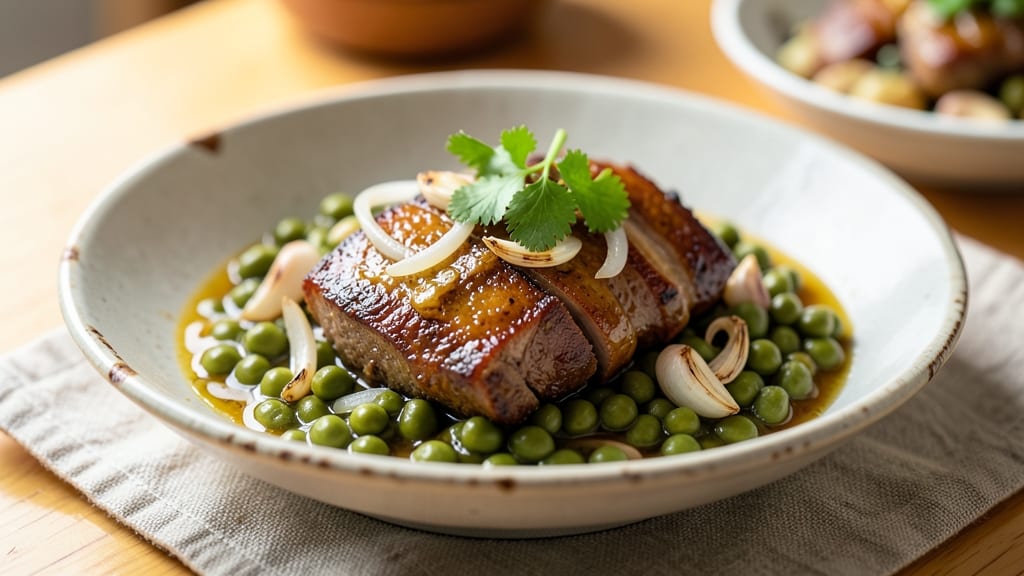
This Filipino black-eyed peas with pork recipe brings the soul of Filipino home cooking to your table—where tender pork and spiced beans create a harmony of garlic, soy, and subtle sweetness. 💛 As someone who's spent years perfecting pork dishes at The Smoky Pig, I can tell you this stew is more than just a meal; it's a celebration of Filipino flavors that taste like home.
The secret lies in the layered cooking process, where pork is first seared to lock in juices before simmering with black-eyed peas in a rich, aromatic broth.
The magic happens in the balance of flavors—garlicky pork that's been stir-fried until caramelized meets the earthy, slightly sweet black-eyed peas. Filipino cooking thrives on this contrast, and this recipe delivers it perfectly.
We'll use patis (Filipino fish sauce) for that signature umami depth, while a touch of sugar rounds out the savory notes. The dish is traditionally served with steamed rice, but I've found it pairs beautifully with atchara (Filipino pickled papaya) for a tangy contrast that cuts through the richness.
What makes this recipe special is its versatility—it's hearty enough for family gatherings yet simple enough for weeknight dinners. The pork develops a tender, melt-in-your-mouth texture while the beans absorb all the aromatic flavors, creating a stew that's both comforting and sophisticated.
This is the kind of dish that improves with time, as the flavors meld together to create something truly memorable.
Whether you're serving it at a holiday feast or just craving a taste of the Philippines, this recipe delivers restaurant-quality results with minimal fuss. The key is patience—letting the pork and beans simmer until they're perfectly tender ensures every bite is packed with flavor.
Let's bring this classic Filipino dish to life in your kitchen.
Ingredients for black eyed peas with pork filipino
Tender pork cubes, aromatic beans, and Filipino pantry staples create this soulful stew.
| Ingredient | Amount | Notes |
|---|---|---|
| Pork Shoulder 🥩 | 1 ½ lb | Cut into 1-inch cubes |
| Black-Eyed Peas 🌱 | 1 ½ cups | Dried, soaked overnight |
| Garlic Cloves 🧄 | 8 cloves | Minced for depth of flavor |
| Patis (Filipino Fish Sauce) 🍶 | 2 tbsp | For that signature umami |
| Soy Sauce 🥄 | ½ cup | Kikkoman preferred |
| White Vinegar 🍋 | ¼ cup | For tangy brightness |
| Brown Sugar 🍯 | 2 tbsp | Light or dark variety |
| Bay Leaves 🌿 | 2 whole | For aromatic depth |
| Onion 🧅 | 1 whole | Chopped, medium size |
| Olive Oil 🫒 | 2 tbsp | Extra-virgin for richness |
| Salt 🧂 | 1 ½ tsp | Kosher or sea salt |
| Black Pepper 🌶️ | ½ tsp | Freshly ground preferred |
| Water 💧 | 4 cups | For simmering broth |
| Green Onions 🧅 | 2 whole | Chopped for garnish |
The pork shoulder is your secret weapon here—it stays juicy and tender even after hours of simmering. Look for well-marbled cuts at the butcher counter or the meat department, and ask for it cut into 1-inch cubes (they'll often do it for you). Filipino markets or Asian grocery stores carry the best-quality patis—it's the heart of this dish. If you can't find it, Red Boat fish sauce is a solid substitute. For the black-eyed peas, dried is traditional, but canned works in a pinch (use 2 cans, drained). Just make sure to rinse them well if using canned. The garlic? Freshly minced makes all the difference—don't use pre-minced from jars.
No patis? Soy sauce plus a pinch of sugar gets you close, though you'll lose that authentic depth. Short on brown sugar? White sugar plus a splash of vinegar mimics the caramel notes. The bay leaves are non-negotiable—they infuse that earthy aroma that's pure Filipino comfort food. If you can't find them fresh, dried works too, but add them at the very end so they don't turn bitter. The green onions? Save half for garnish—those bright green tops add freshness that cuts through the richness. For a quicker version, pressure cook the beans for 20 minutes instead of simmering, but traditionalists will insist on the long cook for maximum flavor.
This stew tastes even better the next day—plan ahead. Store in an airtight container in the fridge for up to 5 days, or freeze portions for 3 months. The flavors meld beautifully overnight, so don't skip the overnight soak for the dried peas (or at least 1 hour if you're in a rush). To reheat, add a splash of water and simmer gently. Serve with steamed jasmine rice and those pickled papaya slices if you've got them—trust me, it's worth the extra bowl.
Why You'll Love This Recipe
- One-Pot Magic: I swear by this recipe—just toss everything into a single pot, and the pork shoulder practically melts into tender perfection while the black-eyed peas soak up all that savory goodness. No fancy steps, no extra pans, and honestly? It’s the kind of dish that makes me feel like I’ve earned my dinner.
- Umami Bomb: That patis and soy sauce combo? Chef’s kiss. The pork gets this deep, caramelized flavor that clings to every bite, while the black-eyed peas stay creamy but still hold their shape. It’s the kind of taste that lingers—like a hug from my lola’s kitchen, but with way less cleanup.
- Weeknight Hero: Between us, this is my go-to when I need something hearty but doesn’t scream “I spent all day cooking.” Serve it over rice for a full meal, or let the leftovers stretch into lunches—my kids don’t even question it when I reheat it. (Yes, even on a Tuesday night.)
- Budget Stretch: Pork shoulder is cheap, black-eyed peas are a pantry staple, and a few cloves of garlic make this dish feel luxurious without breaking the bank. I’ve fed six people for under $15, and the leftovers? They’re the reason I don’t stress about grocery bills.
Step-by-step instructions for black eyed peas with pork Filipino stew
Here's how to make this hearty Filipino classic with tender pork and flavorful beans.
🔥 Step 1: Brown the Pork Shoulder Cubes
Heat the 2 tablespoons olive oil in a large pot over medium-high heat until shimmering. Add the 1.5 lb pork shoulder cut into 1-inch cubes and brown on all sides, about 5-7 minutes. You're looking for golden-brown color and crisp edges—this builds deep flavor in the stew.
Once browned, remove the pork with a slotted spoon and set aside. If the oil starts smoking, reduce heat slightly—you want to cook, not burn. This step is crucial because those browned bits (fond) will dissolve into the sauce later, adding richness.
👨🍳 Step 2: Sauté Aromatics and Build the Base
In the same pot, add the 1 chopped whole onion and cook for 3-4 minutes until softened and translucent. Add the 8 cloves minced garlic cloves and stir for 30 seconds until fragrant—you should smell that garlicky punch developing.
Next, add the 2 whole bay leaves, 1.5 teaspoons salt, and 0.5 teaspoon black pepper. Stir everything together for 30 seconds to toast the spices lightly. This aromatic base forms the flavor foundation of your stew, so don't rush this step.
🍳 Step 3: Simmer the Pork and Seasonings
Return the browned pork to the pot. Pour in the 4 cups water, 0.5 cup soy sauce, 2 tablespoons patis (Filipino fish sauce), 0.25 cup white vinegar, and 2 tablespoons brown sugar. Stir well to combine all ingredients.
Bring the mixture to a boil, then reduce heat to medium-low and let it simmer uncovered for 45 minutes. You'll see the pork release juices and the liquid reduce slightly. Skim off any foam that rises to the surface—this ensures a clean, flavorful broth.
🥘 Step 4: Add the Black-Eyed Peas and Finish Cooking
After 45 minutes, add the 1.5 cups soaked black-eyed peas (drained if you soaked them). Stir gently to distribute them evenly. The peas should be submerged in the liquid—if not, add a little water.
Continue simmering for another 45-60 minutes until both the pork and beans are tender. The pork should pull apart easily with a fork, and the beans should be soft but still hold their shape. Taste the broth and adjust seasoning if needed—you might need a little more patis for that signature Filipino umami.
🍽️ Step 5: Garnish and Serve
Once everything is tender, remove the 2 whole bay leaves from the pot. Ladle the stew into bowls and garnish with the 2 chopped whole green onions. The green onions add a fresh contrast to the rich, savory flavors of the stew.
Serve immediately with steamed rice—this dish is even better the next day as flavors meld, but it's delicious fresh too. The combination of tender pork, hearty beans, and aromatic broth makes this a comforting meal perfect for any occasion.
Pro Tips For Making Black Eyed Peas With Pork Filipino
- CRANK THE HEAT FIRST: Don’t simmer the pork shoulder right away—sear it hard in a dry pan for 5-6 minutes until it’s deep brown in spots. I learned this the hard way: skipping the sear means the patis and soy sauce won’t cling to the meat like they should, and the flavor stays flat. (Yes, even if you’re impatient like me.)
- SOAK THE PEAS 30 MINUTES: Drain the black-eyed peas and soak them in warm water for at least 30 minutes before cooking. This cuts down on cooking time by 15-20 minutes and prevents them from turning mushy. I used to skip this, and the peas always ended up like overcooked porridge—no one wants that.
- ADD PATIS IN STAGES: Don’t dump all the patis at once—add half when searing the pork, then the rest after the garlic. This builds layers of umami without overpowering the dish. I was skeptical until I tried it: the pork stays rich, and the peas don’t taste like fish sauce went rogue.
- USE COLD SOY SAUCE: Chill the soy sauce in the fridge for 10 minutes before adding it to the pot. Cold soy sauce blends more evenly and doesn’t cook off too quickly, keeping the dish balanced. Sounds weird, but it works—your future self will notice the difference.
Make-ahead tips for black eyed peas with pork filipino
Overnight Prep Advantage
Start by soaking the 1.5 cups dried black-eyed peas overnight in plenty of water (at least 8 cups)—this cuts cooking time by 30-45 minutes and ensures they're tender. I use a large bowl with a lid on my counter, which keeps them fresh until morning.
For extra flavor, add 1 bay leaf and 1 tsp salt to the soaking water. This method mimics traditional Filipino cooking where beans are prepped ahead for special occasions. 💛
Pork Prep Shortcut
Save time by having your butcher cube the 1.5 lb pork shoulder into 1-inch pieces—they'll often do this for free if you ask. For even faster prep, marinate the pork cubes overnight in 1 tbsp soy sauce, 1 tsp patis, and ½ tsp black pepper.
Store in a ziplock bag in the fridge. This jumpstarts the flavor and keeps the meat juicy during cooking. I do this when hosting—it's a game-changer for busy days.
Double Batch Strategy
This stew tastes even better the next day, so I always make double the recipe when feeding a crowd. Use a 6-8 quart slow cooker for easy hands-off cooking—just brown the pork and aromatics first, then transfer everything to the slow cooker and cook on low for 6-8 hours.
The slow cooker maintains consistent heat, which is perfect for tenderizing both pork and beans. Store leftovers in glass jars with tight lids for up to 5 days in the fridge.
Freezer-Friendly Packaging
For long-term storage, portion the stew into quart-sized freezer bags or glass containers, leaving 1-inch headspace for expansion. Label with the date—this stew freezes beautifully for up to 3 months without losing flavor.
When reheating from frozen, thaw overnight in the fridge, then simmer gently on the stove with ¼ cup water to restore moisture. I keep a stash of this in my freezer for lazy Sundays—just add rice and you've got a complete meal. ❄️
Reheating Like a Pro
Never microwave this stew—it turns mushy. Instead, reheat on the stove over medium-low heat for 10-15 minutes, stirring occasionally. If it's too thick, add 2-3 tablespoons water or broth to loosen it. For extra richness, stir in 1 tsp butter or 1 tbsp olive oil at the end.
I always reheat just until piping hot, then let it sit for 2-3 minutes before serving—this lets the flavors meld perfectly. Garnish with fresh green onions right before eating for that restaurant-quality touch.
Meal Prep Timeline
Here's my foolproof schedule: Day 1 (Evening): Soak beans and marinate pork. Day 2 (Morning): Brown pork and build the base (this takes 20 minutes). Day 2 (Evening): Add beans and simmer until tender (1.5 hours).
Serve immediately or store for later. This timeline ensures you're not stuck in the kitchen when guests arrive. Pro tip: Set out bowls, spoons, and rice before cooking—having everything ready makes meal prep feel effortless. 💡
Nutrition facts
Frequently asked questions
Can I substitute canned black-eyed peas for dried in this recipe?
Yes, you can use 2 cans (15 oz each) of canned black-eyed peas instead of dried. Just drain and rinse them thoroughly before adding to the pot. For best results, use low-sodium varieties and add a pinch of salt after cooking. The texture will be slightly softer than dried peas, but the flavor remains delicious.
What makes patis (Filipino fish sauce) different from regular soy sauce?
Patis is a fermented fish sauce with a distinct umami depth and slightly sweet, funky aroma that's essential in Filipino cooking. While soy sauce provides saltiness, patis adds complexity—like a cross between fish sauce and soy. If unavailable, mix 1 tbsp soy sauce + ½ tsp sugar + ½ tsp white vinegar as a substitute. For authentic flavor, seek out Red Boat fish sauce or Squid brand patis from Asian markets.
How do I know when the pork is fully cooked and tender?
The pork is done when it's fork-tender and pulls apart easily (around 145°F internal temp). Look for these signs: meat should separate cleanly, juices run clear when pierced, and the beans are soft but not mushy. For extra tenderness, add 1 cup broth if the stew seems dry during simmering. The longer it cooks (up to 2 hours total for pork), the more flavorful it becomes.
Can I make this dish in a slow cooker for hands-off cooking?
Brown the pork and aromatics first, then transfer everything to a 6-quart slow cooker. Cook on low for 6-8 hours or high for 3-4 hours. The slow cooker's gentle heat tenderizes the pork and beans perfectly. Add ½ cup water if needed to prevent drying out. This method is ideal for busy days—just press "start" and let it do the work!
What are the best sides to serve with this Filipino pork and bean stew?
This hearty stew pairs perfectly with steamed jasmine rice (the traditional choice) or garlic fried rice. For extra brightness, serve with atchara (pickled papaya) or sliced cucumbers with vinegar. In the Philippines, it's often accompanied by lumpia (spring rolls) or ensaladang talong (grilled eggplant salad). The acidity cuts through the richness, balancing the dish beautifully.