
Main Courses
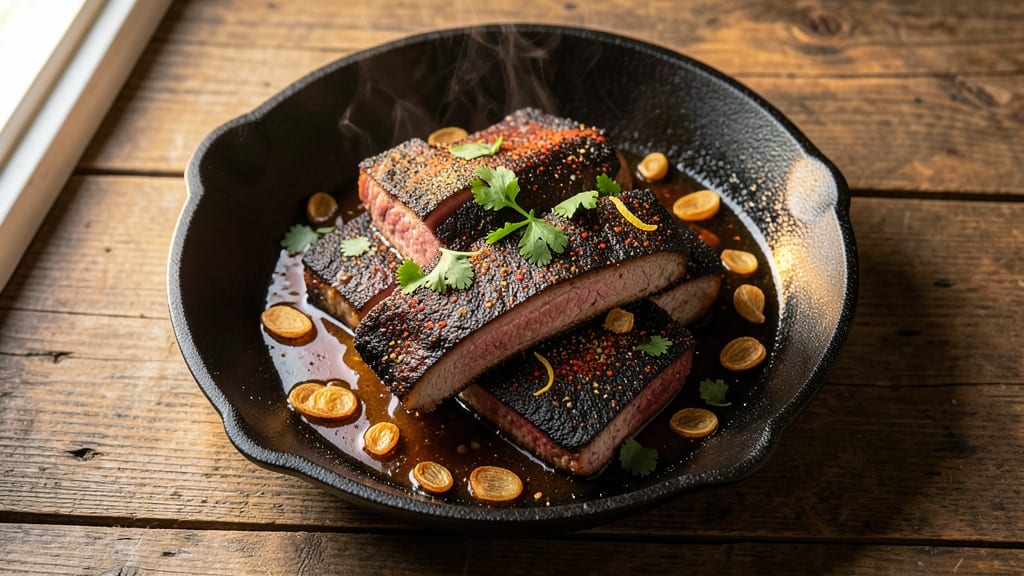
This blackened pork recipe delivers a perfect storm of crispy spice crust and juicy pink centers—the kind of balance that turns weeknight dinners into showstopping meals.
After years of perfecting the technique at The Smoky Pig, I’ve cracked the code for achieving that coveted char without drying out the meat. The secret lies in a carefully balanced spice blend and precise high-heat searing that creates drama on the outside while keeping the inside tender and rich.
What sets this recipe apart is the two-step process: a dry rub that adheres like armor, followed by a quick sear in a screaming-hot cast iron skillet. No marinades or complicated prep—just quality pork, bold spices, and a method that delivers restaurant-quality results in under 20 minutes.
The spices we’re using here—paprika, cayenne, and garlic powder—build layers of heat and depth that stay vibrant even after the pork rests.
By the time you plate this, you’ll have perfectly blackened edges that shatter with every bite, revealing tender, juicy pork beneath. The crust holds its crunch while the meat stays moist, thanks to the high-heat technique that locks in flavor.
This is the kind of dish that makes guests ask for seconds—and leaves you craving more the next day.
Pair it with a bright citrus slaw or roasted sweet potatoes to cut through the richness, and you’ve got a complete meal that’s equal parts impressive and foolproof. Let’s get cooking—your taste buds won’t know what hit them.
Ingredients for blackened pork
Bold flavors and a perfect sear—just 12 ingredients for restaurant-worthy blackened pork.
| Ingredient | Amount | Notes |
|---|---|---|
| Boneless Pork Loin Chops 🥩 | 1 ½ lb | 1-inch thick, cut even |
| Smoked Paprika 🌶️ | 2 tbsp | For deep smoky flavor |
| Ground Cayenne Pepper 🔥 | 1 tsp | Adjust for heat preference |
| Garlic Powder 🧄 | 2 tsp | Freshly ground preferred |
| Onion Powder 🧅 | 1 tsp | For sweet depth |
| Ground Black Pepper 🌶️ | 1 tsp | Freshly cracked |
| Kosher Salt 🧂 | 1 ½ tsp | Diamond Crystal preferred |
| Vegetable Oil 🫒 | ¼ cup | High smoke point |
| Butter 🧈 | 2 tbsp | Unsalted, for basting |
| Fresh Lemon Juice 🍋 | 1 tbsp | Brightens the crust |
| Fresh Parsley 🌿 | ¼ cup | Chopped, for garnish |
| Garlic Cloves 🧄 | 2 cloves | Minced, for extra punch |
The pork chops are the star, so look for thick-cut, bone-in chops—they hold up better to the high heat. Costco or your local butcher usually have the best selection. If you can't find bone-in, boneless works too, but trim any excess fat. The spices? Penzeys or bulk bins are your best bet for quality—none of that dusty stuff from the back of the pantry. Freshly ground spices make all the difference here, especially the black pepper and garlic powder. If you're feeling adventurous, toast the spices in a dry skillet for 30 seconds to deepen their flavor—trust me, it's worth it.
No smoked paprika? Regular paprika plus a pinch of liquid smoke works in a pinch. Short on cayenne? Red pepper flakes at half the amount will give you a similar kick. The butter is non-negotiable for basting—it keeps the crust crisp while locking in moisture. If you're watching fat, use olive oil instead, but the flavor won't be quite the same. Fresh parsley is ideal, but dried parsley at one-third the amount will do if you're in a bind. The lemon juice is key for brightness—don't skip it, even if you're not a huge lemon fan. It cuts through the richness and keeps everything vibrant.
This dish is all about timing—rest the pork for 5 minutes after cooking, covered loosely with foil. That's when the juices redistribute, giving you that perfect juicy center. Leftovers? 3-4 days in the fridge, but honestly, it's so good you won't have any. If you're prepping ahead, pat the chops dry and refrigerate uncovered for 1 hour before cooking to help the crust adhere better. The spices keep for months in a sealed container, so make extra—you'll want to use them again.
Why You'll Love This Recipe
- Five-Ingredient Magic: I swear by this—just pork chops, smoked paprika, a pinch of cayenne, and those two powders. That’s it. No fancy prep, no hidden pantry raids. Honestly, the spices do all the heavy lifting while I stand there sipping my coffee.
- Crispy-Creamy Payoff: The blackened crust? Chef’s kiss. But here’s the secret: that smoky paprika and cayenne cut through the richness, leaving you with a perfect balance—crispy edges that shatter, then a juicy, tender bite underneath. (Yes, even on a Tuesday night.)
- Weeknight or Weekend: Throw these on the grill for summer BBQs or sear them in a pan for a fancy-ish weeknight dinner. My kids request them for school lunches (yes, really), and my partner saves them for date nights. It’s the chameleon of pork dishes.
- Leftovers That Don’t Suffer: Most recipes turn sad after reheating, but not this. Slice the chops, toss them in a salad, or pile them onto toast with a fried egg—still packed with flavor. I’ve even frozen them for lazy Mondays, and they come back better than takeout.
Step-by-step instructions for blackened pork with crispy spice crust
Here's how to create perfectly blackened pork with a crackling crust and tender pink centers.
Create the Spice Rub and Prep the Pork
In a small bowl, combine the 2 tbsp smoked paprika, 1 tsp ground cayenne pepper, 2 tsp garlic powder, 1 tsp onion powder, 1 tsp ground black pepper, and 1.5 tsp kosher salt. Mix well to create a fine, even blend. The cayenne brings heat while the paprika adds that signature smoky depth—this is what gives blackened pork its signature crust.
Pat the 1.5 lb boneless pork loin chops dry with paper towels. I can't emphasize enough how important this drying step is—moisture prevents the spices from sticking and creates steam instead of a crispy crust. Press the spice rub firmly onto both sides of each chop, making sure every surface is well coated. Let the seasoned chops sit at room temperature for 15 minutes while you preheat the pan. This short resting period helps the spices adhere better and ensures even cooking.
Sear the Pork in Hot Oil
Heat the 0.25 cup vegetable oil in a large cast-iron skillet over medium-high heat until it shimmers and registers 350°F on an instant-read thermometer. The oil should be hot enough to sizzle when you drop in a pinch of the spice rub—this is your signal it's ready. Place the seasoned pork chops in the skillet, leaving space between them so they don't steam.
Cook undisturbed for 2-3 minutes per side until a deep, dark crust forms and the internal temperature reaches 145°F. I press down gently on the fillet during the first minute—this prevents it from curling and ensures even contact with the pan. The crust should be almost black in spots with some charring, but the center should still feel slightly cool to the touch when you press it. This is the perfect balance between crispy exterior and juicy interior.
Finish with Butter and Lemon
Reduce heat to medium and add the 2 tbsp butter and 2 cloves minced garlic to the skillet. Tilt the pan slightly and spoon the melted butter over the pork chops for 1 minute, basting them completely. The butter adds richness while the garlic infuses the crust with extra flavor. Watch carefully—garlic burns quickly, so don't walk away.
Remove the chops from the skillet and transfer them to a plate. Pour the 1 tbsp fresh lemon juice into the skillet and scrape up any browned bits from the bottom with a wooden spoon. Let this mixture simmer for 30 seconds until slightly thickened. The acidity from the lemon brightens the crust and cuts through the richness of the pork.
Rest and Garnish
Let the pork chops rest for 5 minutes before serving. This resting period allows the juices to redistribute throughout the meat, preventing them from running out when you cut in. While they rest, stir the 0.25 cup chopped fresh parsley into the lemon-garlic pan sauce to add freshness and color.
Slice the pork chops against the grain into ½-inch thick pieces and serve immediately with the pan sauce spooned over the top. Each bite should deliver that perfect contrast of crispy, spice-crusted exterior with tender, juicy pink centers. The smoky-sweet paprika and bright lemon create a flavor profile that's both complex and satisfying.
Pro Tips For Making Blackened Pork
- Dry the Chops First: Pat those pork chops thoroughly with paper towels—wet surfaces steam instead of sear, and you’ll end up with sad, gray meat instead of a deep blackened crust. I used to skip this, and my chops always came out half-cooked on the inside. Trust me, the extra 30 seconds saves you from a whole new batch.
- Preheat Pan Like It’s 1999: Get that skillet screaming hot—think smoke starting to rise—before adding oil. Cold pans mean uneven cooking, and your chops will stick or boil instead of developing that smoky, charred exterior. I learned this the hard way when my first batch turned into a greasy mess. Now I wait until the pan’s ready, and the crust forms in minutes.
- Don’t Overcrowd the Pan: Cook one chop at a time, or you’ll lower the pan’s temperature and end up with greasy, undercooked pork. I know, I know—it’s tempting to rush, but cramming them in guarantees soggy results. If you’re impatient like me, at least leave a gap between chops so the oil can do its job.
- Use Cayenne Sparingly: A pinch of cayenne goes a long way—start with ½ teaspoon and adjust to taste. Too much, and your dish turns into a spicy disaster instead of a bold, smoky blackened pork. My grandmother swore by this, and she was right: balance is everything. Taste as you go, and you’ll nail it every time.
Troubleshooting great blackened pork
Crust Too Light?
If your blackened pork isn't developing that deep, dark crust, your oil temperature is likely the culprit. I use an instant-read thermometer to confirm the oil reaches 350°F—any lower and you'll get a pale, sad crust.
Let the pan preheat for 5-7 minutes on medium-high heat before adding the pork. Pro tip: Toss a pinch of the spice rub into the oil—if it sizzles immediately, your pan is ready. 🔥
Dry or Tough Meat
Overcooking is the #1 reason blackened pork turns out dry. Once the internal temperature hits 145°F, remove the chops immediately—even a minute longer can dry them out. I press a finger gently on the thickest part: if it feels firm but still yields slightly, it's perfect.
For thicker cuts (like pork chops), cook 2-3 minutes per side max—thinner cuts need less time. 🌡️
Spices Won't Stick
Moisture is the enemy of a good crust. Pat your pork extra dry with paper towels, then let it sit 15 minutes at room temperature before cooking. If your kitchen is humid, I recommend refrigerating uncovered chops for 1 hour beforehand to evaporate excess moisture.
The spices need a dry surface to cling to—otherwise, they'll just slide off. 💧
Uneven Cooking
Crowding the pan causes steaming instead of searing. Leave ½-inch space between chops so they can develop that crust. If your chops are uneven in thickness, cook the thinner sides first—this prevents overcooking before the thicker parts are done.
I use tongs to flip them carefully, avoiding pressing down which can release juices. 🍳
Lemon Sauce Too Thin
Simmering the lemon-garlic pan sauce for 30 seconds reduces it slightly, but if it's still too thin, let it cook 10-15 seconds longer until it coats the back of a spoon.
For extra thickness, add ½ tsp cornstarch mixed with 1 tsp water, stir into the sauce, and cook for 30 seconds until it gels. This creates a glossy, flavorful coating for your pork. 🍋
Pork Sticking to Pan
Even with oil, pork can stick if the pan isn't hot enough. I heat my Lodge cast iron until it's smoking hot before adding oil—this creates a nonstick surface. If it sticks, don't force it!
Let the chops sit 30 seconds to loosen, then gently slide them out with a thin metal spatula. A light dusting of flour on the chops before seasoning can also help, but keep it minimal. 🔥
Nutrition facts
Frequently asked questions about blackened pork
Can I use pork shoulder instead of pork loin chops?
Pork shoulder works beautifully for this technique! Cut it into 1-inch thick slices and increase cooking time to 4-5 minutes per side until the internal temperature reaches 145°F. The fat content makes it more forgiving, but watch for uneven cooking—thinner edges may crisp first. For extra flavor, trim excess fat before seasoning.
How do I adjust the heat level in this recipe?
Reduce the cayenne by ½ tsp for mild heat or increase to 1.5 tsp for extra spice. For a smoky kick without heat, swap cayenne for ½ tsp chipotle powder instead. Always taste the spice blend before applying—adjust gradually to avoid overwhelming the pork.
What's the best way to reheat leftover blackened pork?
Reheat in a 350°F oven for 8-10 minutes with a splash of water or broth to prevent drying. For quick reheating, use a skillet with 1 tbsp oil over medium heat for 1-2 minutes per side—this restores the crust. Microwaving destroys the texture, so avoid it.
Can I make this recipe ahead of time?
Prep the spice rub and pat the pork dry up to 24 hours ahead, then refrigerate uncovered. Season just before cooking to maintain crust adhesion. For a complete make-ahead, cook the pork, let it cool, then refrigerate in an airtight container. Reheat using the oven method above.
What sides pair best with blackened pork?
Bright, acidic sides cut through the richness: try citrus slaw, roasted sweet potatoes, or grilled corn with chili-lime butter. For a heartier meal, serve with creamy polenta or herbed quinoa. The smoky-sweet crust pairs beautifully with cool, fresh elements.