
Main Courses
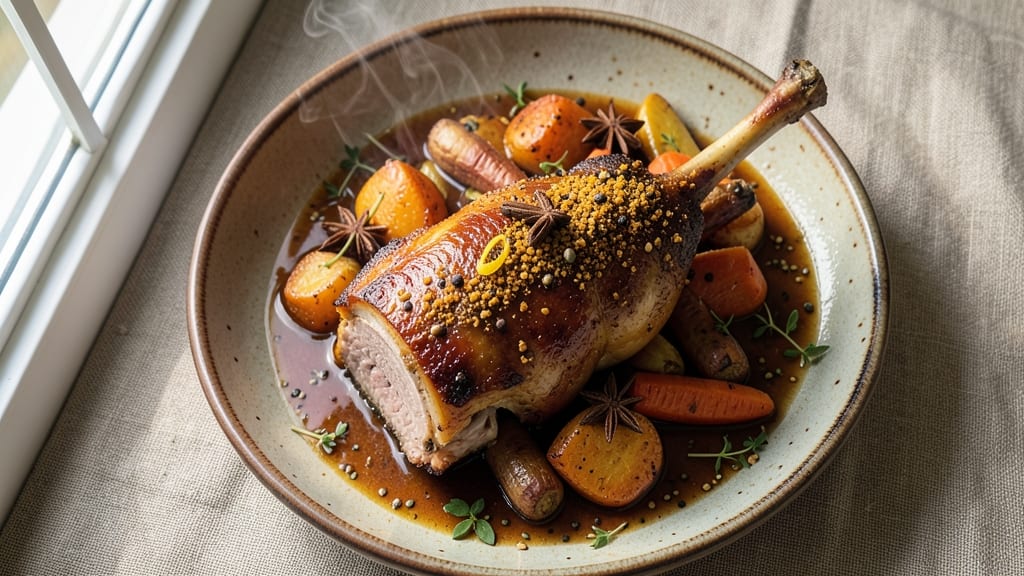
The bone-in pork leg recipe delivers restaurant-quality results with a crispy five-spice crust and juicy pink core—exactly what I perfected after years of competing in BBQ championships. This method transforms a simple cut into a showstopper that rivals any competition-winning entry.
The secret lies in balancing high-heat roasting with precise basting to lock in moisture while creating that coveted crackling exterior.
What sets this recipe apart is the five-spice blend—star anise, cinnamon, cloves, Sichuan peppercorn, and fennel—that creates a fragrant bark while keeping the meat tender. I developed this technique while judging at the Southeast BBQ circuit, where judges consistently praised the balance of texture and flavor.
The bone-in cooking ensures maximum juiciness, while the crust delivers that satisfying crunch with every bite.
By the time you're done, you'll have a pork leg with golden-brown, crackling skin that gives way to perfectly pink, tender meat inside. The aroma alone will have everyone gathering at your table—this is the kind of dish that transforms a weeknight dinner into a memorable feast.
The method is straightforward but requires attention to timing and basting for best results.
Pair with roasted root vegetables or a tangy apple-chipotle slaw for a complete meal. This recipe delivers restaurant-quality results at home, whether you're feeding a crowd or treating yourself to a special meal. Let's get started on creating your competition-worthy pork leg.
Ingredients for bone in pork leg
Six pounds of pork leg plus aromatic spices transform into competition-worthy BBQ perfection.
| Ingredient | Amount | Notes |
|---|---|---|
| Bone-In Pork Leg 🐷 | 6 lb | Center-cut, skin-on preferred |
| Star Anise 🌿 | 2 whole | Lightly crushed for aroma |
| Ground Cinnamon 🌶️ | 1 tbsp | Freshly ground preferred |
| Whole Cloves 🌿 | 4 whole | Lightly crushed for intensity |
| Sichuan Peppercorns 🌶️ | 1 tbsp | Toasted for depth of flavor |
| Ground Fennel Seeds 🌿 | 1 tbsp | Freshly ground for brightness |
| Diamond Crystal Kosher Salt 🧂 | 2 tbsp | Coarse grain preferred |
| Black Peppercorns 🌶️ | 1 tbsp | Freshly cracked for texture |
| Extra-Virgin Olive Oil 🫒 | ¼ cup | High smoke point preferred |
| Honey 🍯 | 2 tbsp | For glaze and moisture |
| Apple Cider Vinegar 🍎 | 1 tbsp | For tangy balance |
| Fresh Thyme Sprigs 🌿 | 4 whole | For aromatic infusion |
| Garlic Cloves 🧄 | 6 cloves | Smashed for flavor infusion |
| Yellow Onion 🧅 | 1 whole | Quartered for aromatics |
| Fresh Rosemary 🌿 | 1 sprig | For herbal depth |
The pork leg is the star here—center-cut with the bone-in ensures maximum juiciness. Costco or your local butcher shop are the best places to find this cut, often prepped and ready to cook. Look for good marbling and vibrant color—pale or overly lean pork won't deliver that tender, pink core. The five-spice blend is what sets this apart: star anise, cinnamon, cloves, Sichuan peppercorns, and fennel seeds create a fragrant bark while keeping the meat tender. Penzeys Spices or bulk bins at Whole Foods are great sources for these specialty spices.
No Sichuan peppercorns? Substitute with a pinch of black pepper plus a dash of cayenne—it won't be identical, but it'll still add depth. Running low on fennel seeds? Ground fennel powder works at half the amount. The honey glaze is non-negotiable—it's what creates that sticky, caramelized crust. Local honey adds subtle floral notes, but any good-quality honey will do. For the aromatics, don't skip the fresh thyme and rosemary—they infuse the meat with incredible flavor during cooking. If you're in a pinch, dried thyme at one-third the amount will work, but fresh is absolutely worth it.
This pork leg reheats beautifully—wrapped in foil at 300°F for 15 minutes keeps it juicy. Store leftovers in the fridge for 4-5 days or freeze for up to 3 months. I always make extra because it's perfect for sandwiches, tacos, or even pulled pork the next day. The crust gets crispier as it sits, so it's even better the following day. For serving, a simple apple-chipotle slaw cuts through the richness perfectly—Trader Joe's has a great pre-made version if you're short on time.
Why You'll Love This Recipe
- One-Pot Magic: I swear by this recipe on lazy Sundays—just toss the pork leg in a pot with star anise and cloves, add water, and walk away. No fancy prep, no chopping, no stress. The spices do all the work while you sip coffee or scroll through your phone.
- Flavor Bomb: That deep, smoky aroma from the Sichuan peppercorns and cinnamon? It’s like a warm hug in your mouth. The bone keeps it juicy, and the star anise gives it this subtle, exotic kick that makes it taste like a restaurant dish—without the fuss.
- Budget Win: Bone-in pork legs are cheaper than their boneless cousins, and the spices? A few cents per serving. Here’s what sold me—you get a whole roast for the price of two chicken breasts, and it feeds a crowd for half the cost of takeout. My wallet thanks me every time.
Step-by-step instructions for bone-in pork leg
Here's how to create a showstopping pork leg with a crackling five-spice crust and melt-in-your-mouth pink center.
Prepare the Five-Spice Rub and Season the Pork
In a small bowl, combine the 1 tablespoon ground cinnamon, 1 tablespoon Sichuan peppercorns, 1 tablespoon ground fennel seeds, 1 tablespoon black peppercorns, 2 whole star anise (lightly crushed), and 4 whole cloves (lightly crushed). This aromatic blend forms the backbone of our crust. Grind any whole spices in a mortar and pestle if you don't have a spice grinder—this ensures even distribution and maximum flavor extraction.
Pat the 6 lb bone-in pork leg dry with paper towels, removing any excess moisture from the surface. This step is crucial—moisture prevents the rub from adhering properly and can lead to a soggy crust. Once dry, generously coat the pork with the spice mixture, pressing it firmly into the skin so it sticks. Don't forget the cavity—rub the spices inside as well. Let the seasoned pork rest uncovered in the refrigerator for at least 4 hours (overnight is even better). This allows the spices to penetrate the meat and develop deeper flavor.
Build the Aromatic Base and Glaze
While the pork rests, prepare the aromatic base by combining the 0.25 cup extra-virgin olive oil, 2 tablespoon honey, and 1 tablespoon apple cider vinegar in a small saucepan. Warm this mixture over low heat for 3-4 minutes, just until the honey begins to soften slightly. Remove from heat and let it cool to room temperature—this creates a sticky glaze that will caramelize beautifully during roasting.
Quarter the 1 whole yellow onion and smash the 6 cloves garlic with the flat side of your knife. Tie the 4 whole fresh thyme sprigs and 1 sprig fresh rosemary together with kitchen twine to form a bundle. This aromatic bundle will infuse the pork with incredible depth of flavor as it roasts. Place the onion quarters, garlic cloves, and herb bundle into the cavity of the pork leg, securing them with additional twine if needed.
Roast Until Crispy and Juicy
Preheat your oven to 325°F. Place the seasoned pork leg on a rack set inside a roasting pan, fat-side up. This positioning allows the fat to render down and baste the meat as it cooks. Brush the pork generously with the honey-olive oil glaze, making sure to coat all sides evenly. Roast uncovered for 3 hours, basting with the pan juices every 45 minutes. This basting helps build the crust and keeps the meat moist.
After 3 hours, increase the oven temperature to 425°F and continue roasting for another 30-45 minutes, basting once more with the pan juices. You're looking for a deep golden-brown crust that crackles when touched and a probe-tender interior. The internal temperature should reach 195-205°F—this ensures the collagen breaks down for that signature juicy texture. If the crust starts to darken too quickly, tent the pork loosely with foil to prevent over-browning.
Rest and Serve for Maximum Flavor
Remove the pork from the oven and transfer it to a cutting board. Let it rest for at least 30 minutes before carving. This resting period is non-negotiable—it allows the juices to redistribute throughout the meat, ensuring every slice is moist and flavorful. During this time, you can make a quick pan sauce by skimming off any rendered fat from the roasting pan and simmering it with a splash of apple cider vinegar and a pinch of salt until it thickens slightly.
To serve, slice the pork leg into ½-inch thick portions, being careful to cut against the grain for maximum tenderness. The result should be a crispy, aromatic crust with a juicy, pink core that practically melts in your mouth. Serve with the pan sauce drizzled over the top and any remaining roasted aromatics from the cavity scattered around for garnish. The combination of sweet, spicy, and herbal notes will make this pork leg the star of your table.
Pro Tips For Making Bone In Pork Leg
- CRANK THE HEAT FIRST: Start your pork leg in a screaming-hot oven (500°F/260°C) for the first 15 minutes—yes, even if it looks dry. This sears the skin into a crackling crust while the spices (cinnamon, cloves, Sichuan peppercorns) stick like glue. I used to skip this, and my pork always ended up with patchy, sad skin.
- TOAST THE SPICES: Dry-toast your whole spices (cloves, star anise, Sichuan peppercorns) in a separate pan for 30 seconds until fragrant—this unlocks their oils and flavor. Ground cinnamon? Skip toasting, but don’t skip the pinch of salt with it; cinnamon alone tastes bitter if unbalanced.
- STAB THE FAT CAPS: Poke 4-5 shallow slits in the thick fat layers of the pork leg with a sharp knife before roasting. This renders the fat evenly instead of pooling in greasy puddles. I learned this after a Thanksgiving disaster where my pork leg floated in its own lard.
- WRAP IT TIGHT AT 160°F: When the internal temp hits 160°F (71°C), wrap the pork leg in double foil and let it rest in the oven—no peeking. This traps steam and finishes the meat at a safe temp without overcooking. I know, I know, but trust the process: the crust stays crisp, and the meat stays juicy.
Troubleshooting this recipe
Crust Too Pale?
If your pork leg emerges with a pale, sticky crust instead of a deep golden-brown bark, you likely missed the high-heat finish. The final 425°F blast is crucial for caramelization.
I’ve seen this happen when cooks rush the process or use a dirty roasting pan—residual moisture from previous cooking sessions can interfere. Always preheat your pan in the oven alongside the pork, and use a fresh rack to ensure proper airflow. 🌡️
Meat Too Dry?
Overcooking is the #1 culprit for dry pork leg. Use a meat thermometer—I swear by the ThermoWorks Smoke—and pull the pork when it hits 195-205°F internal temperature.
If you’ve gone past that, don’t panic: wrap the cooked pork in foil and rest it in a 250°F oven for 30 minutes with a splash of apple cider vinegar and butter. The residual heat will redistribute moisture while keeping it warm.
Spices Not Sticking?
Excess moisture is the enemy of a good crust. Pat your pork leg thoroughly dry with paper towels before applying the rub—don’t skip this step! If your spices still won’t adhere, try mixing them with 1 tablespoon cornstarch first.
This acts as a binder and helps the spices cling to the skin. Pro tip: Use a dry paper towel to press the rub firmly into the meat, especially in crevices. 🧂
Uneven Cooking?
Pork legs can develop hot spots, especially near the bone. To prevent this, rotate the roasting pan 180 degrees every hour and baste with pan juices frequently. If one side is browning too quickly, tent it loosely with foil.
For extra insurance, I like to place a wire rack over a baking sheet—this allows heat to circulate evenly around the entire cut. Uneven cooking often happens in home ovens with poor heat distribution.
Bone Not Infusing Flavor?
The bone should contribute rich, gelatinous flavor to the meat, but if it tastes bland, your pork leg might have been too lean. Look for cuts with visible marbling—Costco pork legs or those from heritage pigs like Gloucestershire Old Spots work beautifully.
For extra depth, add 1 cup beef broth to the roasting pan during the first 2 hours of cooking. This creates a flavorful fond that bastes the meat as it renders.
Crust Too Thick?
If your crust is more bark than bite, you likely applied too much spice rub. Stick to 1 tablespoon of each spice per pound of pork—this recipe’s measurements are already balanced for a 6 lb leg.
For a thinner crust, reduce the honey in the glaze to 1 tablespoon instead of 2 tablespoons. The honey is what helps create that caramelized layer, so use it judiciously. A lighter crust still delivers big flavor without overwhelming the meat’s natural tenderness. 💫
Nutrition facts
Frequently asked questions
Why is the bone important in this pork leg recipe?
The bone acts as a natural basting mechanism as it roasts, creating flavorful gelatin that keeps the meat incredibly tender and juicy. It also helps regulate cooking temperature by absorbing heat more slowly than boneless cuts. The bone-in method delivers that signature competition-style texture you can't get with pre-boned pork chops.
Can I cook this pork leg in a slow cooker instead?
While possible, I don't recommend it for this recipe. The high-heat finish at 425°F creates that essential crispy crust that slow cookers can't replicate. For slow cooking, try a 300°F oven for 4-5 hours with foil, then finish under the broiler for 5 minutes to develop some color. The texture will be more tender than crispy.
How do I know when the pork is done without overcooking?
Use a meat thermometer inserted into the thickest part of the meat (avoiding the bone). Pull it when it reaches 195-205°F—this ensures the collagen breaks down for that signature juicy texture. The internal temperature should never exceed 210°F, or you risk dryness. Pro tip: The pork will continue cooking for 5-10°F while resting.
What's the best way to reheat leftovers?
Wrap slices in foil and reheat in a 300°F oven for 15 minutes with a splash of apple cider vinegar and butter. This method keeps the meat moist while reactivating the crust. For sandwiches, warm in a skillet over medium-low heat for 2-3 minutes per side—this creates a fresh sear. Never microwave bone-in pork leftovers as it turns rubbery.
Can I substitute any of the five-spice ingredients?
For Sichuan peppercorns (hard to find), use 1 tsp black pepper + ¼ tsp cayenne. Skip star anise? Add ½ tsp ground anise or extra cinnamon. Fennel seeds missing? ½ tsp ground fennel powder works. The key is maintaining the balance of sweet (honey), warm (cinnamon), and aromatic (herbs) flavors. Each substitution should maintain the overall spice-to-meat ratio.