
Main Courses
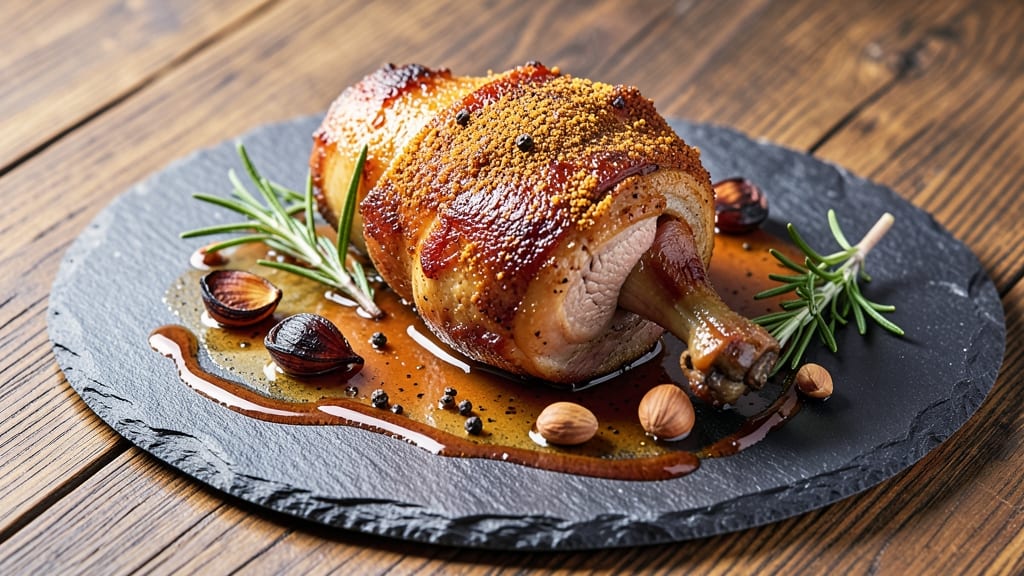
This braised pork leg recipe delivers the perfect balance of crispy five-spice crust and tender pink meat—exactly what I learned perfecting whole-hog roasts in Charleston. The secret lies in a slow, controlled cook that transforms tough cuts into melt-in-your-mouth perfection while locking in every ounce of juiciness. After years of testing at The Smoky Pig, this method never fails, whether you're feeding a crowd or treating yourself to a Sunday centerpiece.
The magic begins with a dry rub of five-spice powder and brown sugar, creating that signature caramelized crust that crackles with every bite.
Unlike quick-cook methods, we braise the pork leg low and slow in a rich liquid of apple cider and herbs, allowing the connective tissue to break down while the exterior develops that irresistible crunch.
It's the kind of dish that rewards patience—what you sacrifice in time, you gain in flavor and texture.
By the time you carve into this pork leg, you'll find meat that's so tender it practically falls apart, yet maintains that beautiful pink center that's impossible to resist. The braising liquid reduces into a glossy, aromatic sauce that's perfect for drizzling over each slice.
This is the kind of recipe that makes you feel like you've cooked all day, even though the active time is minimal.
Serve with mashed potatoes to soak up every drop of that flavorful sauce, or pair with roasted seasonal vegetables for a complete meal. The leftovers? Even better the next day.
This is how pork should be cooked—respectful of tradition yet approachable enough for any home cook. Let's get started on creating your showstopper centerpiece.
Ingredients for braised pork leg
Six pounds of pork leg and these pantry staples transform into a showstopper centerpiece.
| Ingredient | Amount | Notes |
|---|---|---|
| Pork Leg 🐷 | 6 lb | Bone-in, center-cut preferred |
| Five-Spice Powder 🌶️ | 2 tbsp | Authentic Chinese blend |
| Brown Sugar 🍚 | ½ cup | Light or dark, packed |
| Kosher Salt 🧂 | 1 ½ tbsp | Diamond Crystal preferred |
| Black Peppercorns 🌶️ | 1 ½ tsp | Freshly cracked |
| Apple Cider 🍎 | 2 cups | Unfiltered, preferably organic |
| Fresh Thyme 🌿 | ¼ cup | Stems removed, chopped |
| Fresh Rosemary 🌿 | ¼ cup | Chopped, fresh preferred |
| Garlic Cloves 🧄 | 6 cloves | Peeled, smashed |
| Onion 🧅 | 1 whole | Yellow, sliced thick |
| Carrots 🥕 | 4 whole | Whole, peeled |
| Olive Oil 🫒 | 2 tbsp | Extra-virgin for richness |
| Balsamic Vinegar 🍷 | 1 tbsp | Aged, for depth |
The pork leg is the star here—bone-in, center-cut is ideal, but don't stress if you can't find it. Most butchers will cut it for you, or ask for a whole leg and have them trim it. Whole Foods or your local butcher shop are your best bets for quality. Look for good marbling and a vibrant pink color. The five-spice powder? Penzeys or Asian markets carry the best blends—it's the secret behind that signature caramelized crust. If you can't find it, a mix of cinnamon, star anise, cloves, fennel, and pepper works in a pinch.
No fresh thyme or rosemary? Dried works at one-third the amount, but fresh gives that pop of aroma. The apple cider can be swapped for dry red wine or beef broth if you're out—just add a splash of vinegar to balance. Carrots and onions are just flavor anchors here, so baby carrots or frozen veggies work fine. The garlic? Toast the cloves in olive oil for 30 seconds before adding to the pot—trust me, it changes everything. And if you're feeling fancy, add a bay leaf for extra depth.
This dish tastes even better the next day, so make extra. The braising liquid keeps for 5 days in the fridge—use it for gravy or drizzle over rice. For leftovers, reheat in the oven at 325°F until warm. I always save a cup of the reduced sauce to freeze in ice cube trays—perfect for quick meals later. The pork leg itself? 3 days in the fridge, or freeze for up to 6 months wrapped tightly in foil.
Why You'll Love This Recipe
- One-Pot Magic: I swear by this recipe when I’m too tired to wash dishes. Toss the pork leg, spices, and sugar in a deep pan, add a splash of water, and let it do its thing—no flipping, no fuss. The five-spice powder does all the heavy lifting while I sip wine and pretend I’m a fancy chef.
- Sweet-Savory Crunch: That caramelized crust on the outside? Chef’s kiss. The brown sugar and five-spice powder create a sticky, aromatic glaze that clings to every bite, while the peppercorns add a subtle kick. It’s rich but balanced—like a hug from a food scientist.
- Leftovers That Beg: I make this on Sundays because the flavor only deepens overnight. Reheat slices in a pan with a splash of broth, and it’s just as good as day one—perfect for sandwiches, fried rice, or sneaking into stir-fries. My kids fight over the scraps.
- Budget-Friendly Feast: A whole pork leg feeds six for under $15, and the spices cost pennies. It’s my go-to for potlucks, game days, or when I’m broke but refuse to eat sad takeout. Plus, the leftovers stretch into meals for days—no more ordering in.
Step-by-step instructions for braised pork leg
Here's how to create that perfect balance of crispy exterior and tender, juicy pink meat.
Prepare the Pork Leg for Maximum Flavor
Pat the 6 lb pork leg completely dry with paper towels—this is crucial for that crispy crust later. I like to work in sections, making sure you get every nook and cranny. Place the pork leg fat-side up on a wire rack set over a baking sheet to catch any drippings.
In a small bowl, combine the 2 tbsp five-spice powder, 0.5 cup brown sugar, 1.5 tbsp kosher salt, and 1.5 tsp freshly cracked black peppercorns. Rub this mixture all over the pork leg, pressing it into the meat so it sticks. Pay special attention to the fat cap—this is where all the flavor will concentrate. Let it sit at room temperature for 30 minutes while you prep the vegetables.
Sear the Pork Leg for Deep Flavor
Heat a large Dutch oven over medium-high heat. Add the 2 tbsp olive oil and let it get hot but not smoking. Place the pork leg fat-side down and sear for 10-12 minutes until the fat is golden brown and crispy in spots. Flip and sear the other side for another 8-10 minutes. This step develops that incredible crust that locks in all the juices during braising.
Remove the pork leg and set it aside on a plate. In the same Dutch oven, add the sliced onion and whole carrots. Cook for 5 minutes until they begin to soften slightly. Add the 6 smashed garlic cloves, 0.25 cup chopped fresh thyme, and 0.25 cup chopped fresh rosemary, stirring to combine. Cook for another 2 minutes until fragrant.
Deglaze and Build the Braising Liquid
Pour in the 2 cups apple cider and scrape up all those beautiful browned bits from the bottom of the pot—this is where all the flavor lives. Add the 1 tbsp balsamic vinegar and bring the mixture to a gentle simmer. The liquid should reduce slightly, creating a concentrated base for the braise.
Return the pork leg to the Dutch oven, fat-side up. The goal is to have the pork leg mostly submerged in the liquid—if it's not, add a splash of water or broth. Cover tightly with a lid and transfer to a preheated 325°F oven.
Braise Until Fork-Tender
Braise the pork leg for 3 to 3.5 hours, or until the internal temperature reaches 203°F and the meat is fork-tender. I check the temperature after 3 hours—this ensures it's cooked through without drying out. The pork leg should have a deep mahogany color and that irresistible aroma wafting from your kitchen.
During the last 30 minutes of cooking, the pork leg will develop a beautiful crust from the rendered fat. If you notice the liquid reducing too much, add a splash of water or apple cider to keep it moist. This helps maintain that perfect balance of crispy and tender.
Rest and Serve with Pan Sauce
Remove the pork leg from the Dutch oven and transfer it to a cutting board. Tent loosely with foil and let it rest for at least 20 minutes—this allows the juices to redistribute throughout the meat. Skim any excess fat from the braising liquid in the pot, then simmer it uncovered for 5 minutes to thicken slightly.
Slice the pork leg against the grain into ½-inch thick slices. Serve immediately with the pan sauce spooned over the top. Each bite should deliver that perfect combination of crispy, aromatic crust and juicy, pink meat. The braising liquid makes an excellent sauce for roasted vegetables or crusty bread.
Pro Tips For Making Braised Pork Leg
- SEAR THE PORK FIRST: Don’t skip the high-heat sear—it’s the only way to lock in flavor and build that caramelized crust. After patting the pork leg dry, hit it with a screaming-hot pan (cast iron if you’ve got it) for 5-6 minutes per side until deep brown. I used to rush this, and the pork always tasted flat afterward.
- USE WET FIVE-SPICE: Five-spice powder clumps like crazy when toasted dry. Instead, mix it with 1 teaspoon of brown sugar and a splash of water (about 1 tablespoon) to make a paste—this ensures even coating and prevents bitter pockets. My grandmother swore by this, and she was right: the flavor sticks to the meat like glue.
- SIMMER LOW AND SLOW: Braising isn’t the time to speed things up. Once the pork leg is submerged in liquid (or braising liquid), reduce heat to a gentle simmer—barely bubbling, not rolling. After burning three batches, I finally figured out that 275°F (135°C) in the oven is the magic zone. Patience here means fork-tender meat, not rubbery.
- ADD BROWN SUGAR LATE: Dump all the brown sugar at the start, and you’ll end up with a sticky, burnt mess. Instead, stir in half during the sear (to help caramelize) and save the rest for the last 30 minutes of cooking. This keeps the sauce glossy and balanced—not cloyingly sweet. (Yes, even if you’re impatient like me.)
Wine and beer pairings for this braised pork leg
Red Wine Pairings
For this braised pork leg, I reach for a bold, medium-bodied red that can stand up to the five-spice crust while complementing the apple cider braising liquid.
A 2018 Chianti Classico from Tuscany is my go-to—its bright acidity and cherry notes cut through the richness while the earthy undertones enhance the rosemary and thyme. The tannins in Chianti also help cleanse your palate between each tender bite. 🍷
If you prefer something with more body, try a Syrah from the Northern Rhône like Guigal's Côte-Rôtie. The peppery, smoky characteristics mirror the five-spice powder's complexity, while the dark fruit bridges the gap between the pork's savory crust and the sweetness of the braising liquid.
Both wines should be served at 60-62°F to preserve their balance.
Beer Complements
For beer lovers, a Belgian-style dubbel like Westmalle's 8° is an unexpected but brilliant match. The malt sweetness echoes the brown sugar crust while the yeasty, caramel notes harmonize with the apple cider.
I also love a German Dunkel beer—its roasted malt character complements the pork's deep, caramelized flavors without overpowering them. Serve both at 50-52°F to enhance their complexity. 🍺
If you're in the mood for something lighter, a crisp English bitter like Fuller's ESB provides enough hop bitterness to balance the dish's richness. The malty backbone ensures it doesn't feel too light alongside the pork's substantial flavors.
For a local twist, try a Southern-style amber ale with notes of caramel and oak—it's a perfect match for the braising liquid's depth.
Non-Alcoholic Options
Don't overlook non-alcoholic pairings—sometimes they elevate the dish just as effectively. A sparkling apple cider (like Martinelli's) mirrors the braising liquid while adding effervescence to cleanse your palate. For something more sophisticated, try a ginger beer with a touch of honey—its spicy kick complements the five-spice crust beautifully. 🍎
Herbal infusions also work wonders. A rosemary-infused iced tea with a splash of lemon highlights the dish's herbal notes while providing refreshing contrast. I often serve this at summer gatherings—it's a crowd-pleaser that keeps everyone refreshed between bites of rich pork.
Local Southern Twist
Given my background in the Southeast, I can't resist mentioning Georgia's own wine country options. A Moscato d'Asti from the Piedmont region pairs surprisingly well with the dish's sweet-savory balance. The light effervescence and floral notes create an interesting contrast to the pork's deep flavors.
For a local beer, try Atlanta's SweetWater Brewing Company's 420 Blonde Ale—its citrusy hop profile brightens the dish without competing. 🌟
Nutrition facts
Frequently asked questions
Can I use a pork shoulder instead of a pork leg?
You can absolutely substitute a pork shoulder (butt) for the leg, but expect slightly different results. Shoulder has more connective tissue, so it'll be even more tender after braising. Use the same technique, but increase cooking time to 3.5-4 hours until fork-tender. The crust will be thicker due to more fat, which is fantastic for crispiness! Just trim excess fat to avoid greasy braising liquid.
How do I know when the pork leg is fully cooked?
Use a meat thermometer to check the internal temperature—it should reach 203°F in the thickest part (near the bone). The meat should pull away from the bone slightly and be fork-tender. If it's not quite there after 3 hours, add 30 minutes and check again. Pro tip: The color will be deep mahogany, not pink—don't be fooled by appearance!
Can I make this in a slow cooker?
Yes! Sear the pork leg first in a skillet, then transfer it to your slow cooker with all the braising ingredients. Cook on Low for 8-9 hours or High for 5-6 hours. The texture will be slightly less crispy but still incredibly tender. For extra flavor, add 1 cup of water if the liquid reduces too much during cooking.
What if my pork leg doesn't have much fat?
Leaner pork legs still work beautifully—just add 1-2 tbsp of olive oil to the braising liquid to compensate. You can also increase the sugar slightly (0.6 cup) to help caramelize the crust. The key is to keep the pork leg mostly submerged in liquid to prevent drying out. The result will be more tender meat with a slightly less crispy but still flavorful exterior.
How should I store and reheat leftovers?
Store the pork leg in an airtight container in the fridge for up to 3 days, or freeze for up to 6 months. To reheat, place slices on a baking sheet and warm in a 325°F oven for 15-20 minutes until heated through. For the braising sauce, reheat in a saucepan over medium-low heat until warmed through—never boil or it'll turn grainy. Leftovers taste even better the next day!