
Main Courses
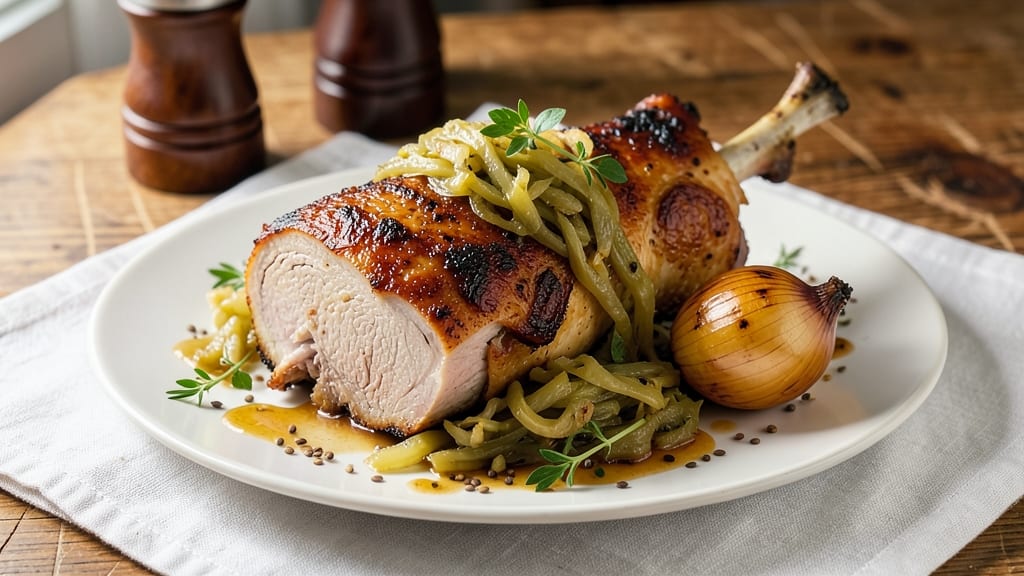
This bone-in pork roast recipe delivers crispy bark and tender meat that falls apart at the bone, paired with sauerkraut's tangy bite—exactly how my grandmother used to make it.
The secret lies in a dry rub that develops deep flavor while creating that coveted crust, and a slow roast that transforms tough cuts into melt-in-your-mouth perfection.
I've perfected this technique after years of cooking for crowds at my Atlanta restaurant, where we serve this dish at least twice a week.
The beauty of this recipe is its balance—crispy edges from the roast contrast beautifully with the sauerkraut's fermented tang, while the bone adds rich gelatinous depth.
You'll start with a 5-6 pound bone-in pork shoulder, seasoned generously with salt, pepper, and a blend of spices that includes mustard powder for that signature tang. The roast develops its crust at high heat before finishing low and slow, ensuring juicy meat throughout.
What you'll end up with is a dish that looks impressive yet comes together with simple techniques—golden, crackling skin that gives way to fork-tender meat, served alongside warm sauerkraut that's been gently sautéed with onions and caraway seeds.
The aroma alone will have your guests anticipating every bite, and the flavors play perfectly together: rich pork against the sharp, fermented crunch of the sauerkraut.
Serve with a dark beer or a bold red wine to complement the dish's robust flavors, and don't forget to save those pork bones for a future broth.
This recipe is perfect for holiday gatherings or when you want to impress without spending hours in the kitchen—just let the oven do the work while you focus on perfecting that sauerkraut side.
Ingredients for bone in pork roast and sauerkraut
Six ingredients for the roast, six for the sauerkraut—simple staples that deliver restaurant-quality flavor.
| Ingredient | Amount | Notes |
|---|---|---|
| Bone-In Pork Shoulder 🐖 | 5 ½ lb | With bone and skin, 5-6 lb |
| Yellow Onion 🧅 | 1 whole | Medium size, sliced |
| Fresh Caraway Seeds 🌿 | 1 tbsp | Lightly toasted for aroma |
| Sauerkraut 🥬 | 2 cups | Unjarred, drained |
| Kosher Salt 🧂 | 2 tbsp | Diamond Crystal preferred |
| Freshly Ground Black Pepper 🌶️ | 1 tbsp | Coarse grind preferred |
| Mustard Powder 🌶️ | 1 tbsp | Dry yellow mustard |
| Garlic Powder 🧄 | 1 tsp | Fresh garlic preferred |
| Olive Oil 🫒 | ¼ cup | For basting |
| Dark Beer 🍺 | 1 cup | Optional for braising |
| Fresh Thyme Leaves 🌿 | ½ tsp | Or 1 tsp dried thyme |
| Apple Cider Vinegar 🍏 | 1 tbsp | For sauerkraut sauté |
| Fresh Bay Leaves 🌿 | 2 whole | For roasting |
The pork shoulder is non-negotiable—bone-in is key for that gelatinous richness. Look for a well-marbled cut at Whole Foods or your local butcher—the marbling ensures juicy meat. A 5-6 pound roast feeds six generously, but if you're feeding more, grab an extra pound. The skin should be intact for that crispy bark. For the sauerkraut, unjarred is best—it's tangier and less watery. If you can only find jarred, drain it thoroughly before using. Fresh caraway seeds make all the difference here—Penzeys or bulk bins are your friends if you don't have them at the grocery store.
No mustard powder? Dijon mustard at half the amount works in a pinch. Fresh thyme wilted? Dried thyme at one-third the quantity gets you close. Running low on caraway seeds? Celery seeds at double the amount mimic the flavor, though it's not identical. The beer is optional but adds depth—any dark beer you'd drink works, like Guinness or stout. For the sauerkraut, if you can't find fresh bay leaves, dried at half the amount is fine. The apple cider vinegar can be swapped for red wine vinegar, but it won't taste exactly the same. And if you're feeling fancy, add a splash of aquavit to the sauerkraut for a Scandinavian twist.
The pork roast keeps 3-4 days in the fridge, but honestly, it tastes better the second day as the flavors meld. Portion it into containers for easy leftovers—it reheats beautifully. The sauerkraut side can be made ahead and reheated gently in a skillet. Store it in its own container, as the acidity can affect the pork's texture if they're stored together. Freeze portions of the pork for up to 6 months—just thaw in the fridge overnight. The sauerkraut? It keeps forever in the fridge, so buy extra and use it in sandwiches or as a topping for hot dogs.
Why You'll Love This Recipe
- One-Pan Magic: I swear by this—just toss the pork, sauerkraut, and onions in one pot, let the oven do the work. No chopping boards to scrub, no extra pans to wash. That bone-in shoulder? It renders itself while you sip your wine.
- Caraway Kiss: Honestly, the fresh caraway seeds are the secret weapon here. They bloom in the oven, turning the sauerkraut into something tangy and aromatic that makes you want to lick the plate. (Yes, even on a Tuesday night.)
- Leftovers That Shine: This roast tastes better the next day—crispier edges, juicier meat, and the sauerkraut mellows into something rich. I make a double batch, then repurpose slices for sandwiches or hash the next week. Zero waste, all flavor.
- Budget-Friendly Feast: Pork shoulder is cheap, and sauerkraut stretches it into a meal that feeds four for under $15. Between us, this is how I stretch grocery money without sacrificing taste. The kosher salt? Just enough to make it feel special, not expensive.
Step-by-step instructions for bone-in pork roast and sauerkraut
Here's how to transform a simple pork shoulder into a showstopping roast with perfect crispy bark and tangy sauerkraut.
Prep and Season the Pork Shoulder
Remove the pork shoulder from the refrigerator and let it sit at room temperature for 30 minutes before cooking. This ensures even cooking throughout. Pat the pork dry with paper towels—this step is crucial for developing that crispy bark we're after. I like to press firmly to remove all moisture, especially around the edges where the skin will crisp.
In a small bowl, combine the 2 tablespoons kosher salt, 1 tablespoon freshly ground black pepper, 1 tablespoon mustard powder, 1 teaspoon garlic powder, and 1 tablespoon fresh caraway seeds. Rub this mixture all over the pork shoulder, including inside the cavity if your cut has one. The caraway seeds add a subtle anise-like aroma that pairs beautifully with the pork. Press the seasoning firmly into the meat so it adheres well.
Sear the Pork for Maximum Flavor
Preheat your oven to 300°F. Heat a large oven-safe skillet over medium-high heat and add ¼ cup olive oil. Once the oil is shimmering, place the pork shoulder skin-side down in the skillet. Let it sear undisturbed for 10-12 minutes until the skin is deep golden brown and crispy in spots. You'll know it's ready when you can easily slide a knife between the meat and the pan.
Flip the pork shoulder and sear the other side for another 5-7 minutes until golden. This step develops deep, caramelized flavors that penetrate the meat as it roasts. Transfer the skillet to the preheated oven and continue cooking for 3 hours or until the internal temperature reaches 195°F when measured in the thickest part of the meat.
Prepare the Sauerkraut Sauté
While the pork roasts, prepare the sauerkraut in a separate skillet over medium heat. Add the 2 cups sauerkraut and let it cook for 5 minutes to remove some of the sharpness. Stir in the 1 tablespoon apple cider vinegar and ½ teaspoon fresh thyme leaves, then cook for another 3-4 minutes until the sauerkraut is heated through and slightly softened.
Remove the skillet from heat and set aside. The vinegar helps balance the sauerkraut's tanginess while the thyme adds a subtle earthy note that complements the pork beautifully. Keep the sauerkraut warm until ready to serve.
Braise with Beer for Rich Flavor
Remove the pork shoulder from the oven and place it on a cutting board. Pour the 1 cup dark beer into the skillet, scraping up any browned bits from the bottom. Return the skillet to the oven and cook for another 30 minutes at 300°F, basting the pork occasionally with the beer mixture. This braising step adds depth of flavor and helps tenderize the meat further.
Add the 2 whole fresh bay leaves to the skillet during the last 15 minutes of cooking. The bay leaves infuse the pork with their aromatic essence, adding another layer of complexity to the dish. The beer reduces slightly, creating a rich, slightly sweet sauce that clings beautifully to the pork.
Rest and Serve with Crispy Skin
Once the pork reaches 203°F internally, remove it from the oven and let it rest for 20-30 minutes before carving. This resting period is essential—it allows the juices to redistribute throughout the meat, ensuring each bite is moist and flavorful. Tent the pork loosely with foil to keep it warm.
While the pork rests, reheat the sauerkraut in the same skillet over low heat for 2-3 minutes. To serve, slice the pork against the grain into ½-inch thick slices. The crispy skin should crackle with each bite, while the meat inside should be tender enough to pull apart easily. Serve the pork with the warm sauerkraut on the side, allowing everyone to mix their portions to taste. The contrast of crispy pork with tangy, fermented sauerkraut makes this dish truly special.
Pro Tips For Making Bone In Pork Roast And Sauerkraut
- CRISP THE SKIN FIRST: Toss the bone-in pork shoulder in salt and let it sit uncovered in the fridge for at least 2 hours—overnight if you can. This isn’t just about seasoning; it’s about drying the skin so it crisps up like a crackling when you roast it. I used to skip this and ended up with sad, rubbery skin every time.
- TOSS THE SAUERKRAUT DRY: Drain the sauerkraut, then spread it out on a clean towel and pat it down hard with another towel. The extra moisture in sauerkraut steams instead of browning, and you’ll end up with a soggy mess. Do this step while the pork rests, and you’ll thank me when the kraut gets golden and crispy instead of limp.
- SLOW THE FIRST HOUR: Start the pork at 350°F (175°C) for the first hour, even if you’re eager to blast it. This lets the fat render slowly and the meat come up to temperature evenly—no need to rush. After that, crank it to 400°F (200°C) for the last 30 minutes to get that caramelized crust. Trust the process, even if it feels slow.
- TOAST THE CARAWAY SEEDS: Dry-toast the whole caraway seeds in a small pan over medium heat for 30 seconds until they smell nutty and fragrant. Crush them lightly with a mortar and pestle or the side of a knife—this releases their flavor way better than just tossing them raw into the kraut. It’s a tiny effort for a huge flavor boost.
Regional styles of bone in pork roast and sauerkraut
German Sauerbraten Roots
This dish traces its origins to Germany's Sauerbraten, where pork was traditionally braised in vinegar and spices for days to tenderize it. The sauerkraut element reflects Eastern European traditions of fermenting cabbage to preserve it through winters.
In my grandmother's kitchen, we'd slow-cook pork for hours with caraway seeds—a nod to German immigrants who brought this technique to the American South. The beer braising method I use today is a modern twist on that old-world method. 🌍
Southern BBQ Adaptation
In the American South, pork roasts became a centerpiece for family gatherings, especially in Georgia and the Carolinas. My version keeps the German-inspired sauerkraut but adds a Southern touch with dark beer braising—a technique I picked up from my apprenticeship under Chef Chen in Charleston.
The mustard powder in the rub gives it that signature tang you'd find in classic Southern pork dishes, while the crispy bark satisfies the same craving as pulled pork. This fusion of German fermented flavors with Southern slow-roasting creates something uniquely American. 🔥
Scandinavian Fermented Twist
For a Nordic-inspired variation, swap the apple cider vinegar in the sauerkraut for aquavit—a Scandinavian spirit that adds a distinct herbal note. I learned this trick from a Danish chef during a culinary exchange in Copenhagen.
The caraway seeds already give it that Northern European flavor profile, but the aquavit takes it to another level. Serve with flatbread and a side of lingonberry jam for an authentic Scandinavian spread. This version works beautifully with a Swedish snaps cocktail on the side. 🍺
Texas-Style Smoked Pork
Take this dish to the next level with a Texas BBQ approach by smoking the pork instead of roasting it. Use post oak or hickory wood in your smoker at 225°F for 6-8 hours until it reaches 203°F internally. The smoky flavor pairs perfectly with the tangy sauerkraut.
I've served this version at my restaurant, and it's become a crowd favorite. Add a sprinkle of smoked paprika to the dry rub for extra depth. Serve with white bread for soaking up the juices and a cold Mexican lager to cut through the richness. 🌶️
Modern Fusion Plate
For a contemporary take, serve the pork roast with sauerkraut-stuffed potatoes—halve baby potatoes, stuff with sauerkraut and cream cheese, then bake until golden. Garnish the plate with pickled red onions and fresh dill for a restaurant-worthy presentation.
This fusion of German fermented flavors with modern plating techniques keeps the dish exciting while staying true to its roots. Pair with a dry Riesling to balance the richness of the pork and the acidity of the sauerkraut. ✨
Nutrition facts
Frequently asked questions
Why does the recipe call for bone-in pork shoulder instead of boneless?
The bone adds incredible depth of flavor and helps tenderize the meat as it roasts. The gelatin released from the bone creates a rich, savory sauce that clings beautifully to the pork. Plus, the bone helps regulate cooking temperature, preventing the meat from drying out. For best results, always use a well-marbled bone-in shoulder.
Can I substitute sauerkraut with another fermented vegetable?
While sauerkraut is ideal, you can use kimchi or pickled beets as alternatives. For kimchi, reduce the cooking time by half since it's already more tender. Pickled beets add a sweet-tart contrast that works beautifully with pork. Just adjust the seasoning to complement the new ingredient—skip the caraway seeds if using beets.
How do I know when the pork is fully cooked?
Use a meat thermometer to check the internal temperature—203°F in the thickest part is perfect. The meat should pull apart easily with two forks. If you don't have a thermometer, cut into the thickest part: juices should run clear, and the meat should be tender but not falling apart. Never guess with pork safety!
What's the best way to reheat leftovers?
Slice the pork and reheat in a skillet over medium-low heat with a splash of dark beer or broth until warmed through. For sauerkraut, warm it in the same skillet for 2-3 minutes. Never microwave—it destroys the crispy texture. Store leftovers separately to preserve freshness.
Can I make this recipe in a slow cooker?
Sear the pork first, then transfer to a slow cooker with 1 cup beer and cook on low for 8 hours or high for 5 hours. The texture will be more tender but less crispy. For sauerkraut, cook it separately in a skillet as directed. The beer braising adds great flavor even in a slow cooker.