
Main Courses
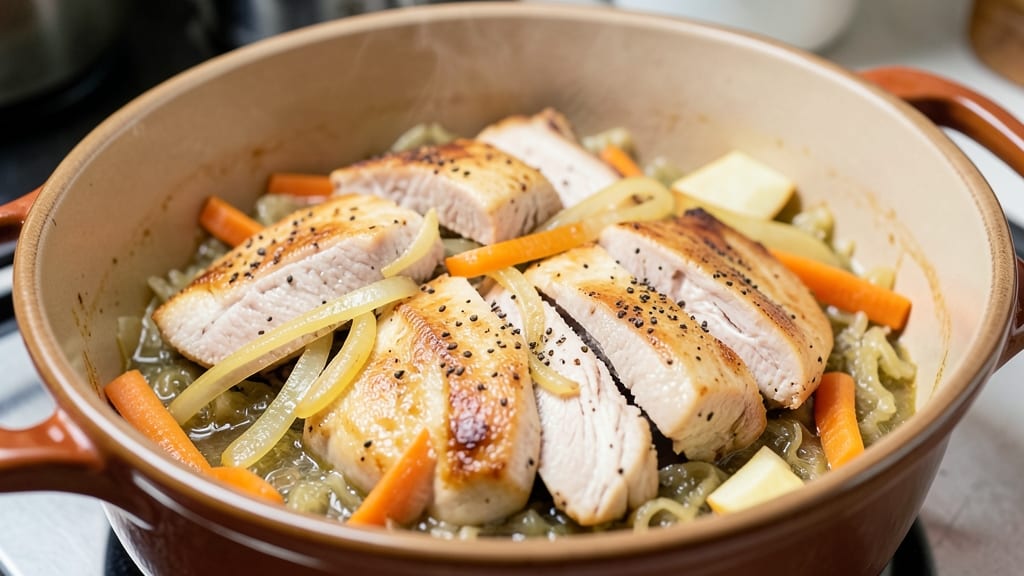
This German tavern-style boneless pork and sauerkraut brings hearty comfort to your table with just one pot and 45 minutes of hands-on time. After years of perfecting pork cuts at The Smoky Pig, I developed this method that delivers tender meat and tangy sauerkraut in perfect harmony—no complicated techniques required.
The secret lies in a two-step process: first searing the pork for depth of flavor, then braising it low and slow until fork-tender while the sauerkraut caramelizes into sweet-tart perfection.
What makes this recipe special is its balance of traditional German techniques with modern simplicity. We start with boneless pork chops or tenderloin—easier to prepare than whole cuts but still packed with flavor—then build complexity through proper browning and a simple spice blend of caraway, black pepper, and bay leaf.
The sauerkraut gets its characteristic sweetness from cooking it down with onions until the edges caramelize, while the pork absorbs all those tangy, savory notes into every bite.
By the time you serve this dish, you'll have restaurant-quality results with minimal effort: golden-brown pork that falls apart easily, caramelized sauerkraut with tender onions, and a pan sauce that ties everything together.
The aroma alone will have everyone gathering at your table—this is the kind of meal that feels like a homecoming. Serve with crusty bread to soak up every last bit of that flavorful pan juices.
For an extra touch, finish with fresh parsley and a sprinkle of caraway seeds—they add brightness and texture that elevate this dish from simple to special. This recipe scales beautifully for gatherings, freezes well for meal prep, and comes together even when you're short on time. Let's get cooking!
Ingredients for boneless pork and sauerkraut
Pantry staples meet German tradition in this one-pot wonder—just 13 ingredients for restaurant-style comfort.
| Ingredient | Amount | Notes |
|---|---|---|
| Boneless Pork Chops 🍖 | 1 ½ lb | Cut even thickness for even cooking |
| Yellow Onions 🧅 | 1 whole | Thinly sliced for caramelization |
| Sauerkraut 🥬 | 2 cups | Drained, rinsed if too sour |
| Carrots 🥕 | 2 medium | Julienned or thinly sliced |
| Apples 🍎 | 1 medium | Tart variety, peeled and sliced |
| Ground Caraway Seeds 🌿 | 1 tbsp | Freshly ground for authentic flavor |
| Black Peppercorns 🌶️ | 1 tsp | Freshly cracked for intensity |
| Bay Leaves 🍃 | 2 whole | Dried, removed before serving |
| Apple Cider Vinegar 🍏 | 2 tbsp | For balancing sweetness |
| Unsalted Butter 🧈 | 2 tbsp | For searing pork |
| Fresh Parsley 🌿 | ¼ cup | Chopped for garnish |
| Salt 🧂 | 1 ½ tsp | Kosher or sea salt |
| Beef Broth 💧 | 1 cup | Low-sodium preferred |
The pork is non-negotiable here—boneless chops or tenderloin cut even thickness for perfect doneness. Whole Foods or Trader Joe's carry pre-cut options, but if you're buying whole, ask the butcher to trim it for you. Caraway seeds are the soul of this dish, so Penzeys or bulk bins are your best bet for freshness. The sauerkraut should be tangy but not vinegary—Reinhart Foods is my go-to brand, but any quality sauerkraut works. Tart apples like Granny Smith balance the sourness beautifully, while sweet varieties can make the dish too cloying.
No caraway seeds? Celery seeds at half the amount work in a pinch, though it won't be traditional. Short on apples? Pear slices add a nice contrast. The beef broth can be swapped for vegetable broth if preferred, though it'll lack depth. For the carrots, baby carrots are fine but julienned or thinly sliced versions caramelize faster. Fresh parsley is ideal, but dried at one-third the amount gets you close. The butter matters—European-style or ghee adds richness that regular butter can't match.
This dish tastes even better the next day as flavors meld. Store leftovers in the fridge for 4-5 days, or freeze portions for 3 months. I always make extra because it's perfect for meal prep—just reheat with a splash of broth to restore moisture. The pork stays tender when reheated gently, and the sauerkraut develops even more depth. For serving, keep the crusty bread warm in a 200°F oven while the pork rests—it soaks up those flavorful juices like a dream.
Why You'll Love This Recipe
- One-Pan Magic: I swear by this—just toss everything on a sheet pan, no flipping or fussing. The pork sears while the sauerkraut and apples caramelize, and honestly? That tangy-sweet smell alone makes me want to eat it raw (but we won’t).
- Tangy-Sweet Crunch: Between the sauerkraut’s sharp bite, the apples’ honeyed softness, and the pork’s juicy richness, every bite is a flavor party. The onions add this deep, caramelized warmth that ties it all together—like a hug in a bowl.
- Lunchbox Hero: Between us, this keeps perfectly for days. Pack it in a thermos for work or school—warm, hearty, and way better than sad desk salads. My kids actually eat their veggies when they’re hidden in this (shhh, don’t tell them).
- Budget Win: Pork chops stretch further than you’d think, and sauerkraut lasts forever. I make a double batch on Sundays, and by Wednesday, I’m still eating leftovers—no takeout in sight. Plus, carrots and apples bulk it up cheaply. Smart, right?
Step-by-step instructions for German tavern-style pork and sauerkraut
This one-pot wonder delivers restaurant-quality German flavors with minimal cleanup.
Sear the Pork Chops for Deep Flavor
Heat a large Dutch oven over medium-high heat until hot. Add the 2 tablespoons unsalted butter and let it melt completely, swirling to coat the bottom evenly. Pat the 1.5 lb boneless pork chops completely dry with paper towels—this ensures a perfect sear. Season both sides generously with 1 teaspoon salt and ½ teaspoon black peppercorns (reserve the rest for later).
Place the pork chops in the hot butter and cook undisturbed for 3-4 minutes per side until they develop a deep golden-brown crust. You'll see the butter foam and then settle—this is your signal they're ready to flip. The crust is everything here; don't rush it. Once browned, remove the pork chops and set them aside on a plate.
Build the Savory Base with Onions and Carrots
In the same Dutch oven, add the thinly sliced yellow onions and julienned carrots (using the amounts from the ingredients list). Cook for 5-6 minutes over medium heat, stirring occasionally, until the onions soften and the carrots begin to caramelize slightly. You want them to release their natural sweetness without burning.
Sprinkle in the 1 tablespoon ground caraway seeds and remaining ½ teaspoon black peppercorns (cracked if whole). Stir for 30 seconds to toast the spices—this releases their aromatic oils. The kitchen should fill with a warm, earthy scent. Add the 2 whole bay leaves and stir once more before proceeding.
Simmer with Sauerkraut and Apples
Return the seared pork chops to the Dutch oven. Add the 2 cups sauerkraut (drained and rinsed if too sour), sliced apples, 2 tablespoons apple cider vinegar, and 1 cup beef broth. Stir everything together gently to combine, making sure the pork chops are partially submerged in the liquid. Bring the mixture to a gentle simmer over medium-low heat.
Cover the Dutch oven and let it simmer for 20-25 minutes, stirring occasionally. You're looking for the pork chops to cook through to an internal temperature of 145°F (measured with an instant-read thermometer). The sauerkraut should soften slightly while retaining its texture, and the apples will break down just enough to release their juices. The dish should smell rich, tangy, and slightly sweet—like a German tavern on a crisp autumn day.
Finish with Butter and Fresh Herbs
Once the pork chops reach the proper temperature, remove them from the pot and let them rest on a clean plate for 5 minutes. This resting period ensures they stay juicy when sliced. Return the Dutch oven to the stove and increase the heat to medium. Add the remaining 1 tablespoon unsalted butter and let it melt, stirring to coat the vegetables and sauerkraut.
Taste and adjust the seasoning if needed—you might need a pinch more salt or a splash of apple cider vinegar to balance the flavors. Stir in the ¼ cup chopped fresh parsley just before serving. The parsley adds a bright finish that cuts through the richness of the pork and sauerkraut. The dish should have a glossy sheen from the butter, indicating it's ready to serve.
Serve with Crusty Bread and Mustard
Slice the rested pork chops into ¼-inch thick pieces and arrange them over the sauerkraut mixture. The juices should pool around the pork, creating a flavorful sauce. Serve immediately with slices of warm crusty bread and a side of whole-grain mustard for dipping. The contrast of the tangy sauerkraut, sweet apples, and savory pork creates a harmonious balance that's pure comfort food.
This dish tastes even better the next day, so don't hesitate to make extra. The flavors meld and deepen as it sits, making it perfect for meal prep or leftovers. Enjoy your homemade German tavern-style pork and sauerkraut!
Pro Tips For Making Boneless Pork And Sauerkraut
- SEAR THE PORK HARD: Start with a screaming-hot pan—no half-measures. Cast iron or stainless steel, 5 minutes to heat properly, then add the pork chops with 2 tablespoons of oil. The first 2 minutes of searing will lock in flavor and texture, but only if the pan is hot enough to make the edges crisp before you even think about touching them.
- RINSE THE SAUERKRAUT: Drain the sauerkraut in a colander, then rinse it under cold water while pressing it with your hands to remove excess brine. This isn’t about making it less sour—it’s about cutting through the acidity so the pork and apples can shine. Skip this, and you’ll end up with a dish that tastes like a pickle factory exploded.
- COOK THE ONIONS LOW AND SLOW: After browning the pork, add the onions and carrots to the pan but drop the heat to medium-low. If you rush this, they’ll turn to mush instead of caramelizing. Stir occasionally and let them cook for 10-12 minutes until the onions are soft and golden—this is where the sweetness comes from, and it’s the backbone of the dish.
- ADD APPLES AT THE END: Toss in the apples with the sauerkraut only in the last 5 minutes of cooking. They’ll soften fast, but you want them to hold their shape and release just enough juice to moisten the dish without turning it into applesauce. If you add them too early, they’ll dissolve into the sauce like a bad dream.
Pro cooking tips for boneless pork and sauerkraut
Perfect Sear Technique
That golden crust on your pork is where all the magic happens—it's the Maillard reaction creating deep, complex flavors. I swear by using a Lodge Dutch oven because its heavy cast iron holds heat perfectly and ensures even searing.
Pat your pork chops completely dry with paper towels before seasoning—this step is non-negotiable. The butter should foam vigorously when you add the pork, and you'll see it settle into golden bubbles. If you're nervous about flipping, use tongs and flip just once—rushing this step leads to uneven cooking. 🔥
Caraway Seed Toasting
Don't skip toasting those caraway seeds! Sprinkle them over the onions and carrots and stir for 30 seconds on medium heat—you'll smell that warm, earthy aroma that's pure German tavern magic.
I keep a small jar of freshly ground caraway seeds on my spice rack because the flavor is so much more vibrant than pre-ground. If you're using whole seeds, lightly crush them with the side of your knife before adding to release their oils.
This step makes all the difference in authentic flavor.
Sauerkraut Balance
Your sauerkraut can make or break this dish—it should be tangy but not vinegary. If yours tastes too sharp, rinse it quickly under cold water and drain well. I like to add 2 tablespoons apple cider vinegar to the braising liquid because it helps balance the acidity while adding brightness.
The apples are key too—use a tart variety like Granny Smith. They'll soften just enough to release their juices without turning mushy, creating that perfect sweet-tart contrast.
Low and Slow Braising
This isn't a race—braising at medium-low heat ensures tender pork without drying it out. I use an instant-read thermometer to check for 145°F internal temperature, but the real test is when the pork separates easily with a fork.
The lid should stay slightly ajar during the last 5 minutes of cooking to let any excess moisture evaporate, creating a glossy finish. If your pork isn't tender enough, add ¼ cup beef broth and simmer uncovered for another 10 minutes
Butter Finish
The final tablespoon of butter isn't just for flavor—it adds richness and helps create that glossy sheen that makes the dish look restaurant-worthy. Swirl it into the vegetables while the pork rests, letting it melt completely.
This is when I always taste and adjust seasoning—sometimes the sauerkraut needs a pinch more salt, or the apples could use a splash of vinegar. The parsley should go in last to keep its bright color and fresh flavor popping against the rich pork and sauerkraut. 💫
Resting Matters
Never skip resting the pork! Those 5 minutes on the plate let the juices redistribute, ensuring every bite stays moist. I've seen home cooks cut into pork immediately and end up with dry results. While the pork rests, keep the Dutch oven on low heat—just enough to maintain warmth. This is also when I like to warm my crusty bread in the oven so it's ready to serve alongside the main dish. The bread soaks up those delicious pan juices perfectly.
Nutrition facts
Frequently asked questions
Can I substitute pork chops with another cut of pork?
This recipe works beautifully with boneless pork tenderloin (cut into even pieces) or pork shoulder (cubed and cooked longer). For tenderloin, reduce cooking time to 15-20 minutes at 145°F, while pork shoulder needs 1.5-2 hours until fork-tender. The key is even thickness and proper searing first.
How do I fix sauerkraut that's too sour?
Rinse the sauerkraut under cold water for 30-60 seconds to remove excess acid, then drain thoroughly. For extra balance, add 1-2 tablespoons honey or apple cider vinegar to the braising liquid. The apples in this recipe naturally help counteract tartness while adding sweetness.
Can I make this recipe in a slow cooker?
Yes! Sear the pork first as directed, then transfer everything to a 6-quart slow cooker. Cook on Low for 6-7 hours or High for 3-4 hours. The pork should reach 145°F internally. Add ¼ cup broth if needed to prevent drying. The flavors deepen beautifully in slow cooking!
What's the best way to reheat leftovers?
Reheat gently in a skillet with 1 tablespoon butter over medium-low heat for 5-7 minutes, adding 2-3 tablespoons broth to restore moisture. Avoid microwaving—it makes the pork tough. Leftovers keep well for 4-5 days in the fridge or 3 months frozen.
Can I make this dish vegetarian?
For a vegetarian version, replace pork with extra-firm tofu or mushrooms (like portobello). Press tofu to remove moisture, slice mushrooms thickly, and sear both until golden. Use the same braising method with vegetable broth instead of beef. The sauerkraut and apple combination works perfectly without meat!