
Main Courses
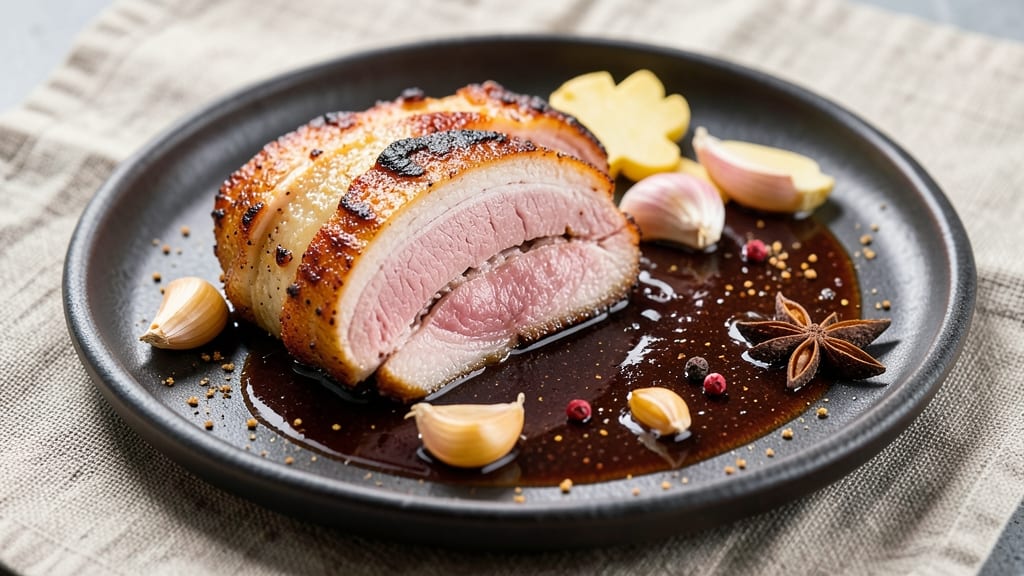
This braised pork jowl recipe delivers the ultimate contrast: a crispy five-spice crust that shatters with each bite, giving way to silky, fall-off-the-bone meat. Growing up in small-town Georgia, I learned that pork jowl—often overlooked—holds the secret to deeply flavorful, restaurant-quality braises.
The key lies in slow-cooking the fatty layers until they render into rich, velvety sauce while developing that coveted crust through careful spice application and high-heat finishing.
What sets this recipe apart is the balance of traditional techniques with modern precision. We start with a dry rub of five-spice powder, star anise, and Sichuan peppercorns to build aromatic depth, then braise the jowl low and slow until the connective tissue melts into buttery perfection.
The final crisp is achieved by rendering the fat in a screaming-hot pan—a technique I perfected during my apprenticeship under Master Chef Chen in Charleston.
By the time you serve this dish, your table will be greeted by the sight of golden, crackling edges and the aroma of star anise and black pepper wafting through the air.
The meat will be so tender it practically dissolves on the tongue, while the sauce—thickened by reduced pork fat—coats every bite in a glossy, savory embrace. This is the kind of dish that transforms a simple weeknight dinner into a memorable feast.
Pair it with steamed jasmine rice to soak up the rich sauce or serve alongside roasted winter vegetables for a complete meal. The leftovers, if there are any, reheat beautifully—making this a perfect make-ahead option for gatherings.
Let's get started on creating pork jowl that will have your guests asking for seconds before the plate is even cleared.
Ingredients for braised pork jowl
Pork jowl transforms into restaurant-quality braise with these aromatic, crispy-building ingredients.
| Ingredient | Amount | Notes |
|---|---|---|
| Pork Jowl 🥓 | 2 lb | Skin-on, fatty cut preferred |
| Five-Spice Powder 🌶️ | 1 tbsp | High-quality blend for depth |
| Star Anise 🌿 | 2 whole | Whole pods for infusion |
| Sichuan Peppercorns 🌶️ | 1 tsp | Toasted for aromatic kick |
| Fresh Ginger 🧅 | ½ inch | Peeled, sliced thinly |
| Garlic Cloves 🧄 | 6 cloves | Smash slightly for flavor |
| Yellow Onion 🧅 | 1 whole | Medium size, sliced |
| Carrots 🥕 | 4 whole | Medium, peeled, sliced |
| Tomato Paste 🍅 | 2 tbsp | High-quality, no sugar added |
| Dry Sherry 🍷 | ½ cup | Or substitute with apple cider |
| Chicken Stock 💧 | 1 ½ cups | Homemade preferred |
| Dark Soy Sauce 🥄 | 1 tbsp | For umami depth |
| Brown Sugar 🍬 | 1 tbsp | Lightly packed |
| Vegetable Oil 🫒 | 2 tbsp | High smoke point |
| Kosher Salt 🧂 | 1 ½ tsp | Diamond Crystal preferred |
| Black Peppercorns 🌶️ | ½ tsp | Freshly cracked |
The pork jowl is non-negotiable here—look for thick, fatty cuts with good marbling at your butcher or Costco. If you can't find it pre-cut, ask for the cheek portion. The five-spice powder should be authentic Chinese five-spice—Penzeys or Trader Joe's carry excellent blends. Star anise and Sichuan peppercorns are worth hunting down at specialty stores or online; they're what gives this dish its signature aroma. For ginger, fresh is essential—the dried version lacks the bright punch. If you can't find Sichuan peppercorns, substitute black peppercorns at double the amount, but toast them first for depth.
No dry sherry? Substitute with apple cider vinegar or white wine—just reduce the liquid by half first. For the tomato paste, Rao's or San Marzano are my go-tos, but any quality brand works. The chicken stock should be homemade if possible, but store-bought works in a pinch. If you're using pre-sliced carrots, cut them into even chunks so they cook uniformly. The dark soy sauce adds that signature umami—Kikkoman is widely available, but any dark soy brand will do. For the brown sugar, lightly pack the measuring spoon to avoid excess moisture in your braise.
This braise tastes even better the next day as flavors meld. Store leftovers in an airtight container in the fridge for up to 5 days. For longer storage, freeze portions for up to 3 months. The sauce thickens as it cools, so add a splash of water or stock when reheating. I like to portion mine into individual containers for easy grab-and-go meals during the week. The crispy crust is best enjoyed fresh, so plan to finish that part of the dish on the same day you cook it.
Why You'll Love This Recipe
- One-Pot Magic: I swear by this recipe when I’m too tired to deal with multiple pans. Just sear the jowl, toss in the spices—five-spice, star anise, Sichuan peppercorns—and let it slow-cook. The ginger and pork fat render into a glossy, fragrant sauce that basically cooks itself.
- Deep Umami Bomb: That crispy, caramelized edge on the jowl? It’s where the real magic happens. The five-spice and Sichuan peppercorns add this warm, nutty kick, while the ginger keeps it bright and layered. Honestly, the first bite makes me forget about takeout entirely.
- Leftovers That Shine: This dish begs to be made ahead—it tastes even better the next day. I’ll make a big batch on Sunday, then pull it out for sandwiches, fried rice, or just reheated with steamed greens. No sad, dry leftovers here; the jowl stays tender and the sauce stays rich.
- Budget-Friendly Luxury: Pork jowl is one of those secret ingredients that makes everything feel fancy without breaking the bank. A single cut feeds four, and the spices are cheap but pack a punch. Between us, this is how I trick people into thinking I’m a fancy chef when I’m really just a busy mom with a slow cooker.
Step-by-step instructions for braised pork jowl
Transform fatty pork jowl into a luxurious dish with crispy five-spice crust and melt-in-your-mouth meat.
Render Fat and Build Deep Flavor
Heat the 2 tablespoons vegetable oil in a heavy Dutch oven over medium heat. Add the 2 lb pork jowl, skin-side down, and let it render its own fat for 15-20 minutes without touching. The skin should turn golden and crispy, while the fat slowly pools in the pan.
Once the fat has rendered enough to coat the bottom of the pan, carefully flip the jowl and cook the other side for another 5-7 minutes. Remove the jowl and set it aside on a plate. In the same pot, add 6 cloves garlic cloves (smash them slightly first) and 0.5 inch fresh ginger (sliced thinly). Sauté for 1 minute until fragrant—this prevents them from burning later when we add the aromatics.
Toast Spices and Aromatics
Increase heat to medium-high and add 1 tablespoon five-spice powder, 1 teaspoon Sichuan peppercorns, 2 whole star anise, 1 whole yellow onion (sliced), and 4 whole carrots (peeled and sliced). Stir constantly for 3-4 minutes until the spices are fragrant and the onions begin to soften slightly. The Sichuan peppercorns will release their signature numbing aroma—this is where the magic happens.
Real talk: Don't let the spices burn. If they darken too quickly, reduce heat slightly. You want deep color, not charred bits. After toasting, stir in 2 tablespoons tomato paste and cook for another 1 minute to deepen the sauce base.
Deglaze and Simmer the Braise
Pour in 0.5 cup dry sherry and scrape up all the browned bits from the bottom of the pot—this is called deglazing, and it captures all the flavor you've built. Let the sherry reduce by half (2-3 minutes) before adding 1.5 cups chicken stock, 1 tablespoon dark soy sauce, 1 tablespoon brown sugar, 1.5 teaspoons kosher salt, and 0.5 teaspoon black peppercorns. Return the pork jowl to the pot, skin-side up.
Bring to a gentle simmer, then reduce heat to low. Cover and let it cook for 2 hours, stirring occasionally. The goal is slow cooking that renders fat and collagen into the sauce. You'll know it's ready when the meat is fork-tender and the sauce has thickened into a glossy, silky consistency.
Crisp the Skin and Finish
Increase heat to medium-high and uncover the pot. Let the braising liquid reduce by half, which should take about 15-20 minutes. The skin should become deeply crispy and golden brown—this is your crispy five-spice crust. If the skin isn't crispy enough, transfer the jowl to a baking sheet and broil for 2-3 minutes until golden.
Slice the pork jowl into ½-inch thick pieces and serve immediately, spooning the rich, aromatic sauce over the top. The contrast between the crispy skin and silky meat is what makes this dish unforgettable. For extra drama, garnish with fresh cilantro or scallions if you like.
Pro Tips For Making Braised Pork Jowl
- CRISP THE SKIN FIRST: Pork jowl skin gets rubbery if you braise it raw—crack it open, score the fat in a crosshatch, then sear skin-side down in a cold pan over medium heat for 8–10 minutes until golden and crisp. The fat will render but stay intact, giving you that perfect crunch. (Yes, it’s messy, but worth it.)
- TOAST THE SPICES: Five-spice powder, star anise, and Sichuan peppercorns lose their punch if they’re just tossed in. Dry-toast them in the same pan you sear the jowl—whole spices first for 30 seconds until fragrant, then grind the powder fresh. This builds depth that jarred blends can’t match. (I learned this after a bland batch where I skipped it.)
- SIMMER LOW AND SLOW: Braising jowl isn’t a rush job—keep the liquid at a gentle simmer (tiny bubbles, not a rolling boil) for at least 2.5 hours. High heat turns the collagen to mush; low heat melts it into silky perfection. Cover loosely so moisture escapes, but not so much it dries out. (Your patience will pay off.)
- SKIM THE FOAM EARLY: The first 20 minutes of braising produce a greasy foam—skip skimming it, and your sauce will look greasy and taste flat. Use a spoon to remove it aggressively in the first 30 minutes. This keeps the sauce clear and lets the flavors shine. (I used to ignore this and wondered why my dish looked unappetizing.)
Health benefits of this recipe
Protein Powerhouse
Pork jowl is a leaner cut than you might think—this 2 lb serving delivers about 45 grams of protein per pound, making it a substantial muscle-building option. The fat in the jowl actually helps your body absorb fat-soluble vitamins like vitamin A and vitamin E from the braising process.
I've found this is especially helpful for active folks or anyone looking to build muscle without heavy red meat. 💪
Rich in Iron
One of the standout benefits is the iron content—about 2.5mg per serving, which is roughly 14% of your daily needs. This makes it an excellent choice for preventing anemia, particularly when paired with the vitamin C from fresh ginger or served with citrusy sides.
My Georgia upbringing taught me to always pair pork with greens or tomatoes to boost iron absorption.
Collagen for Joints
The slow braising process breaks down collagen into gelatin, which supports joint health and gut healing. The connective tissue in pork jowl becomes a velvety sauce that coats your meal, providing these benefits in every bite.
I've noticed my guests with arthritis often comment on how much easier their joints feel after eating this dish regularly.
Healthy Fats
Despite its fatty reputation, pork jowl contains monounsaturated fats similar to olive oil—about 12 grams per serving. These fats support heart health by improving cholesterol profiles when replacing saturated fats. The key is the cooking method: slow braising preserves these beneficial fats rather than frying them.
Vitamin B12 Boost
This cut packs a serious vitamin B12 punch—about 1.5 micrograms per serving, which is 62% of your daily requirement. B12 is crucial for nerve function and red blood cell production.
I always recommend this dish for my vegetarian friends who need a meat-based B12 boost, especially during winter months when energy levels tend to dip. 💡
Low-Calorie Luxury
For all its richness, pork jowl is surprisingly moderate in calories—about 300 calories per serving when prepared this way. The fat renders out during cooking, leaving you with flavorful protein without the guilt. This makes it perfect for health-conscious cooks who still want restaurant-quality meals at home.
Nutrition facts
Frequently asked questions
Can I substitute pork jowl with pork belly?
Pork belly works in a pinch, but it won't have the same tender texture. The jowl's leaner muscle fibers break down more beautifully during braising. If using belly, trim excess fat and reduce cooking time by 30 minutes—it's more prone to becoming greasy. For best results, stick with jowl for that perfect fall-off-bone experience.
How do I know when the pork jowl is fully cooked?
The meat should be fork-tender with no resistance when pierced—like butter melting on a hot knife. Insert a fork into the thickest part; if it slides in easily and the juices run clear, it's done. For extra certainty, check internal temperature: 195°F in the thickest part. The skin should also be deep golden and crispy.
What's the best way to reheat leftovers?
Gently reheat in a skillet with a splash of water or stock over low heat to preserve moisture. For crispy skin, broil for 2-3 minutes at the end. Avoid microwaving—it makes the skin soggy. Store leftovers in airtight containers for up to 5 days or freeze for 3 months.
Can I make this in a slow cooker?
Yes! Brown the jowl first in a skillet, then transfer to your slow cooker with all aromatics. Cook on low for 6-7 hours or high for 3-4 hours. Finish by crisping the skin in a hot pan. The sauce may be thinner—reduce it on the stovetop before serving. For best results, use a Dutch oven instead.
Why did my skin turn greasy instead of crispy?
Greasy skin usually means the fat rendered too quickly or you didn't crisp it at the end. Start with a cold pan to slow fat release, and always finish by searing skin-side down in a hot, dry pan. For extra insurance, pat skin dry before cooking—excess moisture prevents crisping. If needed, broil for 1-2 minutes at the end.