
Main Courses
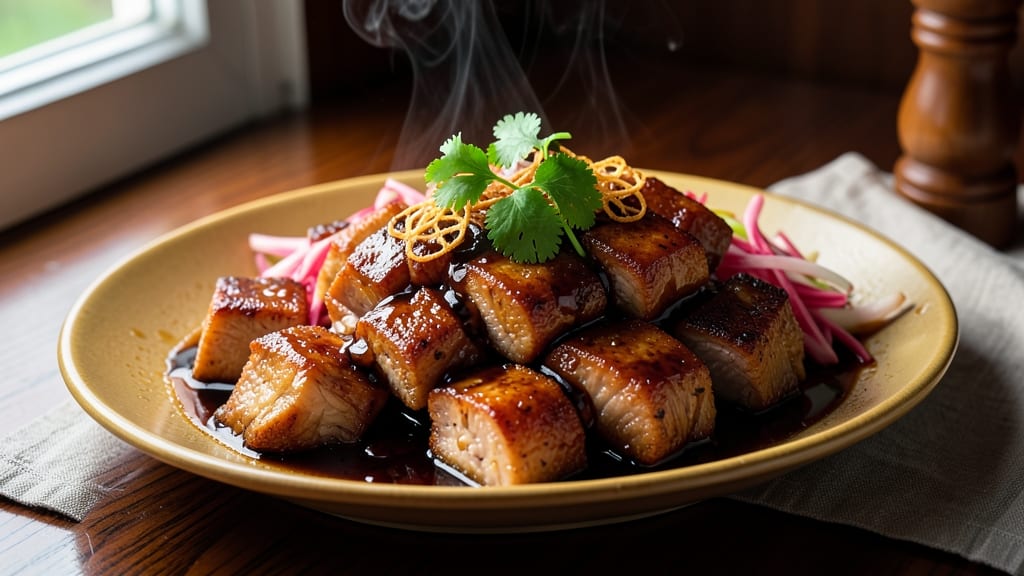
The five-spice glow of this Chinese ham choy and pork recipe transforms simple ingredients into a dish that tastes like a Cantonese banquet. I developed this recipe after years of perfecting braised pork techniques, balancing sweet, smoky, and aromatic notes in every bite.
The secret lies in marinating the pork with Chinese five-spice and hoisin, then slow-braising until the meat is silky and infused with deep flavor.
This dish marries char siu pork—tender, caramelized, and slightly sticky—with ham choy, a cured ham that adds salty depth and texture. The braising process ensures the pork stays moist while developing layers of flavor, while the ham choy melts into the sauce, creating a rich, umami-packed broth.
It’s the kind of dish that feels both comforting and celebratory, perfect for family gatherings or special occasions.
By the time you’re done, you’ll have a plate of perfectly braised pork with crisp edges and tender centers, bathed in a glossy sauce that’s sweet, tangy, and aromatic. The ham choy adds a satisfying crunch and a burst of savory flavor in every bite.
Serve it over steamed jasmine rice or with stir-fried bok choy for a complete meal that’s as impressive as it is delicious.
This recipe delivers restaurant-quality results with techniques you can master at home—no wok hei required. The key is patience and balance, letting the flavors meld over time. Whether you’re cooking for a crowd or treating yourself to a special dinner, this dish will leave everyone asking for seconds.
Ingredients for chinese ham choy and pork
Pantry staples meet Cantonese flavors in this five-spice braised pork masterpiece.
| Ingredient | Amount | Notes |
|---|---|---|
| Pork Shoulder 🥩 | 2 lb | Boneless, cut into 2-inch cubes |
| Chinese Ham Choy 🧀 | ½ lb | Thinly sliced, store-bought or homemade |
| Chinese Five-Spice Powder 🌶️ | 1 tbsp | Toasted for deeper flavor |
| Hoisin Sauce 🍶 | ¼ cup | Store-bought or homemade |
| Light Soy Sauce 🥄 | ⅓ cup | Kikkoman preferred |
| Dark Soy Sauce 🥄 | 1 tbsp | For color and depth |
| Brown Sugar 🍚 | ¼ cup | Packed, light or dark |
| Fresh Ginger 🧅 | 2 tbsp | Grated, peeled, fresh |
| Garlic Cloves 🧄 | 6 cloves | Minced, peeled |
| Shaoxing Wine 🍷 | ¼ cup | Or dry sherry substitute |
| Water 💧 | 1 cup | For braising liquid |
| Sesame Oil 🫒 | 1 tsp | Toasted, for finishing |
| Green Onions 🧅 | ¼ cup | Sliced, for garnish |
| Salt 🧂 | 1 tsp | Kosher or sea salt |
| White Pepper 🌶️ | ½ tsp | Freshly ground |
The pork shoulder is your secret weapon here—look for well-marbled cuts at Whole Foods or your local Asian market. If you can't find ham choy, Chinese lap cheong works in a pinch, though it's saltier. The five-spice powder? Penzeys or local Asian grocers carry the best—it's worth toasting it in a dry pan for 30 seconds to wake up those flavors. For hoisin, Lee Kum Kee is the gold standard, but any quality brand will do. The ginger and garlic should be fresh—no powdered shortcuts here.
No Shaoxing wine? Dry sherry or even a splash of rice vinegar works in a bind. The brown sugar can be swapped for coconut sugar if you're watching carbs. Fresh ginger too fibrous? Substitute with 1 tbsp ground ginger—but fresh is ideal. The soy sauces are non-negotiable for that perfect balance of salty and umami. If you're using pre-minced garlic, drain and rinse it first—it's packed with water. And trust me on the sesame oil—use the toasted kind, not the flavored kind from the salad bar.
This dish tastes even better the next day—plan ahead and make extra. Store in an airtight container in the fridge for 4-5 days—the flavors deepen overnight. For longer storage, freeze portions for up to 3 months. When reheating, add a splash of water to keep the sauce from thickening. Serve over steamed jasmine rice or with quick-pickled cucumbers for that perfect balance of textures. The leftovers make amazing sandwiches too—just add some hoisin and a sprinkle of sesame seeds.
Why You'll Love This Recipe
- One-Pan Magic: I swear by this—just toss pork shoulder and ham choy in a single pan with five-spice and soy, then let the oven do the work. No chopping, no fuss, and that caramelized crust happens while you’re scrolling through your phone.
- Umami Bomb: The ham choy adds this deep, salty punch that cuts through the richness of the pork, and the hoisin? It ties everything together with that sticky-sweet warmth. One bite and you’ll understand why I keep making it.
- Leftover Gold: This dish actually tastes better the next day—better texture, richer flavors. I make a big batch on Sundays and reheat portions for quick lunches all week. (Yes, even on a Tuesday night.)
- Budget Stretch: Pork shoulder is cheap, ham choy lasts forever, and a little hoisin goes a long way. For the cost of takeout, I feed my family a meal that’ll have them asking for seconds—no delivery fees here.
Step-by-step instructions for Chinese ham choy and pork braise
This rich, aromatic dish delivers melt-in-your-mouth pork with tender ham choy—simple steps for restaurant-quality results.
Prepare the Pork and Build the Flavor Base
Cut the 2 lb pork shoulder into 2-inch cubes, removing any excess fat that might interfere with browning. In a large Dutch oven or heavy pot, heat 1 tablespoon of neutral oil over medium-high heat until shimmering. Working in batches to avoid crowding, sear the pork cubes until deeply golden brown on all sides—about 3-4 minutes per batch. This step creates the Maillard reaction that forms the rich, caramelized foundation.
Once all pork is browned, remove it from the pot and set aside. In the same pot, add the 0.5 lb Chinese ham choy and stir for 30 seconds until fragrant. Add the 2 tablespoons fresh ginger and 6 cloves garlic, cooking for another 30 seconds until the garlic turns golden and aromatic. Here's where the magic begins—add the 1 tablespoon Chinese five-spice powder, stirring constantly for 10 seconds to toast the spices and release their warm, complex flavors.
Combine Wet Ingredients for the Braising Liquid
Pour in the 0.25 cup Shaoxing wine and scrape up any browned bits from the bottom of the pot—these contain concentrated flavor. Add the 0.33 cup light soy sauce, 1 tablespoon dark soy sauce, 0.25 cup brown sugar, 1 cup water, 1 teaspoon salt, and 0.5 teaspoon white pepper. Stir well to combine all ingredients into a smooth, aromatic liquid. The mixture should smell sweet, salty, and deeply savory at this point.
Return the pork cubes to the pot, ensuring they're fully submerged in the braising liquid. Bring the mixture to a gentle simmer over medium heat, then reduce to low heat. Here's the key: cover the pot and let it cook undisturbed for 1 hour. This initial simmer helps the pork begin tenderizing while the flavors meld together. After 1 hour, stir the pork gently to redistribute the braising liquid evenly.
Braise Until Fork-Tender and Infused with Flavor
Continue simmering on low heat for an additional 2 to 2.5 hours, or until the pork is fork-tender and easily pulls apart. The pork should have absorbed all the rich, five-spice-infused flavors from the braising liquid. Here's what to watch for: the liquid will reduce significantly, creating a thick, glossy sauce that clings beautifully to the pork. If the liquid reduces too much before the pork is tender, add 1/4 cup water to maintain adequate moisture.
About 30 minutes before the pork is fully cooked, add the 0.25 cup hoisin sauce to the pot. Stir well to distribute the sauce evenly throughout the pork and braising liquid. The hoisin adds a touch of sweetness and complexity that perfectly balances the savory, spiced flavors. The pork is done when it reaches an internal temperature of 195°F and the meat falls apart easily with a fork.
Finish with Sesame Oil and Garnish
Once the pork is fully cooked, remove the pot from heat and let it rest for 10 minutes. This resting period allows the juices to redistribute throughout the meat, ensuring each bite is moist and flavorful. While the pork rests, heat the 1 teaspoon sesame oil in a small pan over low heat until fragrant—about 30 seconds. This step enhances the aroma and adds a nutty depth to the dish.
After resting, stir the pork gently to coat it with the remaining braising sauce. Ladle the pork and sauce into serving bowls, garnishing each serving with the 0.25 cup sliced green onions. The green onions add a fresh, bright contrast to the rich, spiced pork. Serve immediately with steamed jasmine rice or over noodles to soak up every last bit of that delicious braising sauce.
Pro Tips For Making Chinese Ham Choy And Pork
- CUT PORK SHOULDER IN CHUNKS: Slice the pork shoulder against the grain—about 1.5-inch thick—so it stays tender even after braising. I used to cut it too thin, and it turned out dry; thicker pieces hold moisture better when simmering with ham choy.
- SOAK HAM CHOY FIRST: Toss the dried ham choy in warm water for 10 minutes before cooking—it rehydrates faster and absorbs flavors better. Skipping this step means you’ll end up with chewy, under-seasoned bits instead of that perfect salty-sweet bite.
- START WITH HIGH HEAT: Sear the pork shoulder in a hot wok or pan for 3-4 minutes per side until deeply browned—this locks in juices and builds flavor. After burning two batches, I learned: low heat = bland, soggy pork.
- THICKEN WITH CORNSTARCH: Mix 1 tablespoon cornstarch with 2 tablespoons water, then stir it into the sauce at the end. This gives the dish that glossy, clingy finish without overpowering the ham choy’s natural saltiness. I was skeptical until I tried it—now it’s non-negotiable.
Pro cooking tips for chinese ham choy and pork
Pork Prep Secrets
Start with 2-inch pork cubes—any smaller and they’ll overcook, any larger and they’ll stay tough. I trim excess fat first (save it for frying rice!) because it can cloud the braising liquid.
For that perfect sear, use a heavy Dutch oven like Le Creuset—it distributes heat evenly and prevents hot spots. Work in batches so the pork gets a deep golden crust without steaming. 🔥
Spice Toasting Trick
Never skip toasting your Chinese five-spice powder! Heat it in the same pot for just 10 seconds after the garlic—this releases the cinnamon, star anise, and clove oils that make the difference between good and extraordinary.
I keep a small cast iron skillet dedicated to spice toasting because it conducts heat so well. The aroma alone will make your kitchen smell like a Cantonese banquet.
Braising Time Hacks
Low and slow is key, but I’ve found 1 hour covered followed by 2-2.5 hours uncovered on low heat gives the best results. The uncovered time lets the sauce reduce naturally while preventing the pork from steaming.
If your sauce reduces too quickly, add ¼ cup water—just enough to keep it glossy. Pro tip: Use a meat thermometer to check for 195°F internal temp—this ensures fork-tender perfection every time. ⏰
Sauce Balance Magic
The hoisin sauce should go in 30 minutes before serving—this lets its sweetness meld with the salty-savory braise. I always taste the sauce before adding it: if it’s too sweet, add ½ tsp soy sauce; if too tangy, a pinch of sugar helps.
The final touch? A drizzle of toasted sesame oil right before serving—this adds nutty depth and makes the dish look restaurant-worthy. 💫
Resting Game-Changer
Those 10 minutes of resting after cooking are non-negotiable. This lets the juices redistribute so your first bite isn’t dry. I cover the pot loosely with foil to keep it warm while I finish plating.
For serving, I like to toss the pork with a little extra sauce right before plating—this ensures every bite has that glossy, flavorful coating. Garnish with green onions for freshness and color contrast.
Equipment Must-Haves
My go-to tools for this dish: a heavy Dutch oven (I use All-Clad), a meat thermometer (I swear by Thermoworks), and a small cast iron skillet for spice toasting. For the pork cubes, a sharp chef’s knife and cutting board are essential—precise cuts mean even cooking.
If you’re short on time, I’ve tested this in a slow cooker on low for 6 hours, but the stovetop method gives better texture control.
Nutrition facts
Frequently asked questions
Can I substitute ham choy with another type of cured meat?
Yes, but with adjustments! For a similar salty depth, try Chinese lap cheong (it's saltier, so reduce soy sauce slightly). If using Italian prosciutto or Spanish jamón serrano, increase the braising liquid by ½ cup to balance the saltiness. Avoid overly fatty cured meats like bacon—they can make the sauce greasy.
How do I adjust this recipe for a slow cooker?
Perfect for hands-off cooking! Place all ingredients in your slow cooker (except sesame oil and green onions) and cook on low for 6-7 hours or high for 4-5 hours. The pork will be fork-tender, and the sauce will naturally thicken. Just stir in the hoisin sauce during the last 30 minutes of cooking to meld flavors properly.
What's the best way to reheat leftovers?
Reheat gently to preserve texture! Place leftovers in a skillet over medium-low heat with 2 tablespoons water per 2 cups of pork. Cover and warm for 5-7 minutes, stirring occasionally. Avoid microwaving—it can make the pork dry. For extra flavor, add a splash of Shaoxing wine or hoisin sauce when reheating.
Can I make this dish vegetarian?
Not traditionally, but you can adapt it! Swap pork for extra-firm tofu (pressed and cubed) or mushrooms (shiitake or oyster). Use vegetarian ham choy (find it in Asian markets) or smoked tofu for depth. Keep the same braising method but reduce cooking time to 1.5 hours—tofu absorbs flavors faster.
Why does my pork turn out tough?
Most likely from overcooking or improper cuts! Use 2-inch pork cubes (not too small) and cook until internal temp reaches 195°F. Never rush the braising—low heat for 3-4 hours total is key. If your pork is still tough, try marinating it overnight in the five-spice mixture before braising for extra tenderness.