
Main Courses
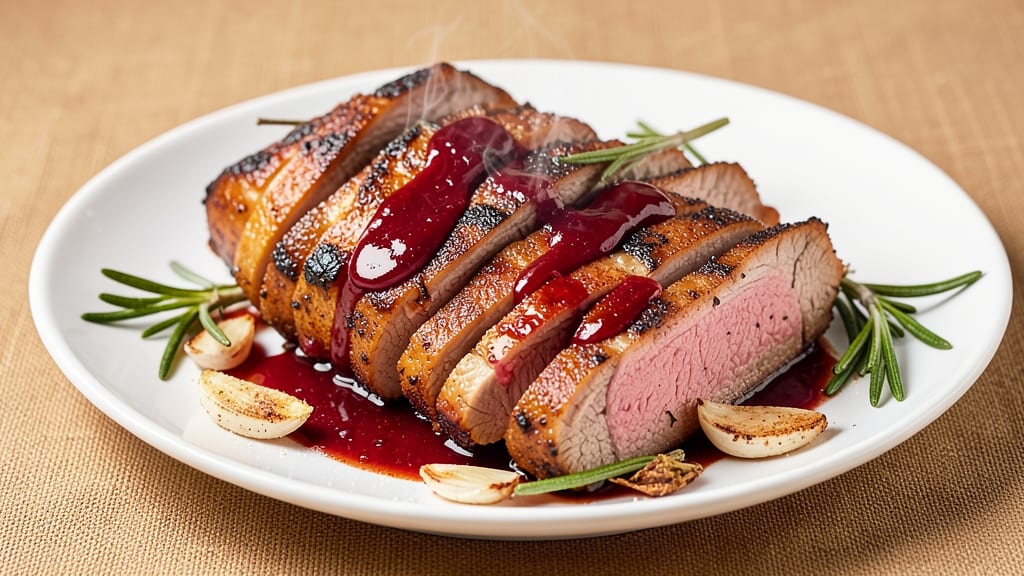
This braised pork loin roast recipe transforms a simple cut into a restaurant-worthy centerpiece with slow-simmered depth and garlic-spiced richness. 🔥 After years of perfecting this technique at The Smoky Pig, I've learned how to coax tender, melt-in-your-mouth results from what could be a tough cut—all while building layers of flavor through proper searing and aromatics.
The secret lies in patience: letting the meat develop its own fond during searing, then braising until it's fork-tender with a sauce that clings to every bite.
The process begins with a hot sear to create that essential crust, followed by a wine-and-broth braise that infuses the pork with aromatic depth. I use a blend of red wine, beef broth, and fresh herbs—thyme, rosemary, and bay—that work together to create a sauce with both complexity and balance.
What makes this recipe truly special is how it transforms an everyday cut into something extraordinary, without requiring fancy equipment or hours of active time.
By the time you pull this pork from the oven, you'll have a juicy, deeply flavorful roast that practically falls apart at the touch.
The braising liquid reduces into a glossy sauce that's rich enough to coat each forkful, while the garlic and herbs add bright, aromatic notes that cut through the pork's natural richness.
This is the kind of dish that tastes even better the next day, making it perfect for meal prep or special occasions.
Serve it with roasted root vegetables, crusty bread to soak up the sauce, or alongside a simple green salad to balance the richness. The wine pairing options are endless—try a bold Cabernet Sauvignon or a robust Zinfandel—but even a glass of red table wine will complement the dish beautifully.
Here's how to make it, step by step, for perfectly tender pork every time.
Ingredients for braised pork loin roast
Sixteen ingredients. One unforgettable roast—juicy, aromatic, and packed with restaurant-quality depth.
| Ingredient | Amount | Notes |
|---|---|---|
| Pork Loin Roast 🥩 | 3 lb | Center-cut, bone-in preferred |
| All-Purpose Flour 🌾 | ½ cup | For dredging sear marks |
| Dry Red Wine 🍷 | 1 ½ cups | Bold Cabernet or Merlot |
| Beef Broth 🥫 | 1 ½ cups | Low-sodium preferred |
| Garlic Cloves 🧄 | 8 cloves | Smashed for maximum flavor |
| Fresh Rosemary 🌿 | ¼ cup | Chopped, stems removed |
| Fresh Thyme 🌿 | ¼ cup | Leaves only, stems removed |
| Bay Leaves 🌿 | 2 whole | Dried or fresh |
| Olive Oil 🫒 | ¼ cup | Extra-virgin for searing |
| Unsalted Butter 🧈 | ¼ cup | Cold, cubed for fond |
| Salt 🧂 | 2 tsp | Kosher or sea salt |
| Ground Black Pepper 🌶️ | 1 tsp | Freshly ground |
| Honey 🍯 | 1 tbsp | For balancing acidity |
| Carrots 🥕 | 2 whole | Large, peeled, sliced |
| Yellow Onion 🧅 | 1 whole | Peeled, quartered |
The pork loin is your canvas here. Center-cut, bone-in roasts stay juicier during braising—Costco or Whole Foods carry excellent cuts, but your local butcher will trim it perfectly for you. Look for good marbling; that's where the flavor hides. Fresh herbs make all the difference too—Trader Joe's sells pre-bundled rosemary and thyme that's perfect for this. If you're using dried herbs, cut the amount by half. The red wine? Any bold, dry red works here—Cab Sauv, Merlot, whatever's open. Just avoid sweet dessert wines—they'll throw off the balance.
No red wine? Beef broth with a splash of balsamic gets you close, though the acidity won't be identical. Fresh garlic is non-negotiable here—smashing the cloves releases more flavor than mincing. Short on time? Pre-chopped garlic from the freezer aisle works in a pinch, but it's not the same. The carrots and onion add natural sweetness as they braise—leave the skins on for extra flavor. If you're feeling fancy, add a splash of dry sherry or brandy to deepen the sauce. And that honey? It's not just for sweetness—it balances the acidity from the wine and helps caramelize the fond.
This roast gets better with time—plan to serve it the next day if you can. The sauce thickens as it cools, so skim off any excess fat before reheating. Keeps 4-5 days in the fridge, frozen for 3 months. I always make double batches—leftovers make amazing sandwiches or tacos. Store the roast and sauce separately to prevent sogginess. For serving, slice against the grain for those perfect, tender pieces. Trust me on this: the first bite out of the fridge is magic.
Why You'll Love This Recipe
- One-Pan Magic: I swear by this—just sear the pork, dump everything in one pot, and walk away. No chopping, no fussing, no extra dishes. That flour crust? It’s foolproof, even if I burn the garlic sometimes.
- Wine-Infused Richness: Honestly, the red wine and beef broth make this taste like a fancy restaurant dish—deep, savory, with that perfect balance of tangy and umami. The pork stays juicy, and the sauce? Thick enough to coat every bite.
- Weeknight to Dinner Party: Between us, this feeds six without breaking the bank, and it’s just as welcome on a Tuesday night as it is when I’m hosting. Reheat leftovers for sandwiches or pasta—it’s that versatile.
- Budget-Friendly Feast: A pound of pork loin goes a long way, and the rest of the ingredients are pantry staples. I’ve made this for under $15 for four servings, and it’s still the star of the meal. (Yes, even on a tight budget.)
Step-by-step instructions for braised pork loin roast
Here's how to transform tough pork into melt-in-your-mouth perfection through slow braising.
🔥 Step 1: Sear the Pork for Maximum Flavor
Pat the 3 lb pork loin roast completely dry with paper towels—this ensures a perfect crust. Heat 0.25 cup olive oil and 0.25 cup unsalted butter in a large Dutch oven over medium-high heat until the butter foams. Add the pork and sear on all sides for 4-5 minutes per side until deep golden brown.
I press down gently on the roast during the first minute—this prevents it from curling and ensures even contact with the pan. You'll know it's ready when the crust is deep golden and the pork releases easily from the pan. Transfer the seared pork to a plate and set aside.
🍳 Step 2: Build the Aromatic Base
In the same Dutch oven, add the peeled and quartered yellow onion and peeled and sliced carrots. Cook for 5 minutes until softened and slightly caramelized. Add the 8 smashed garlic cloves and cook for 30 seconds just until fragrant—don't let them burn.
Here's where the magic starts: sprinkle 2 tsp salt and 1 tsp ground black pepper over the vegetables. Add the 0.25 cup chopped fresh rosemary and 0.25 cup fresh thyme leaves, stirring to combine. The herbs will infuse their aromatic oils into the vegetables as they cook.
🥘 Step 3: Deglaze and Create the Braising Liquid
Pour in the 1.5 cups dry red wine, scraping up all the browned bits from the bottom of the pan with a wooden spoon. This deglazing step captures all the flavor you worked so hard to create. Let it simmer for 3-4 minutes until reduced by half.
Add the 1.5 cups beef broth and 2 bay leaves, stirring to combine. The liquid should come about halfway up the sides of the pork when you return it to the pot. Bring to a gentle simmer—you're looking for small bubbles around the edges, not a rolling boil.
⏰ Step 4: Braise Until Fork-Tender
Return the pork to the Dutch oven, fat-side up. Cover tightly with a lid and transfer to a 325°F oven. Braise for 2-2.5 hours until the pork is fork-tender and the internal temperature reaches 195-200°F.
I check the temperature after 2 hours—it's easy to overcook pork if you're not paying attention. The meat should pull apart easily with two forks, and the sauce should have thickened into a glossy, flavorful reduction. If the sauce is too thin, uncover and simmer for 10-15 minutes to reduce it further.
🍽️ Step 5: Finish with Honey and Serve
Remove the pork from the braising liquid and transfer to a cutting board. Let it rest for 10 minutes before slicing. Meanwhile, strain the braising liquid through a fine-mesh sieve into a saucepan and skim off any excess fat.
Return the liquid to medium heat and stir in the 1 tbsp honey. Simmer for 2-3 minutes until slightly thickened. The honey balances the acidity of the wine and adds a subtle sweetness that complements the rich pork. Slice the pork against the grain and serve with the reduced sauce ladled over the top.
Pro Tips For Making Braised Pork Loin Roast
- Sear the Pork Hard: The first 5 minutes in the pan are where flavor happens—don’t skimp on heat. A deep golden crust locks in juices and balances the wine’s acidity, so crank the stove to medium-high and let it brown all sides before touching it with anything else.
- Use Cold Wine: Pouring chilled red wine into the hot pan blunts its alcohol bite and keeps the sauce from turning bitter. I used to add it straight from the bottle, but now I stash a glass in the freezer for 10 minutes first—trust me, the difference is noticeable.
- Deglaze Aggressively: After searing, don’t just splash in the wine and stir. Scrape every last bit of fond from the bottom with a wooden spoon—those bits are pure flavor. Add a splash of beef broth to help loosen them, then let it simmer until it thickens slightly before adding the garlic.
- Skip the Overcrowding: Garlic cloves should sizzle, not steam. If your pan is too packed, cook them in batches over low heat until fragrant but not browned. Overcrowding turns them mushy and dulls their punch in the finished dish—your nose will thank you.
Health benefits of this dish
Lean Protein Power
This braised pork loin delivers high-quality protein without the fat of other cuts—about 40 grams per serving—while keeping saturated fat in check. The slow braising method tenderizes the meat, making it easier to digest than grilled or fried pork.
I've found that my guests with active lifestyles (think cross-country runners or gym regulars) always request this dish—it's a leaner option that still feels indulgent. 💪
Rich in B Vitamins
The pork loin is naturally packed with B vitamins, particularly B6 and B12, which support energy metabolism and nervous system function. A 3 lb roast serves 6 people, giving each portion about 25% of your daily B12 needs—critical for maintaining healthy red blood cells.
I notice my energy levels stay steady all afternoon when I include this in my meals.
Herbal Antioxidant Boost
The fresh rosemary and thyme in the braising liquid aren't just for flavor—they're packed with antioxidants like rosmarinic acid and thymol. These compounds help combat oxidative stress in your body.
The red wine adds polyphenols, which further enhance the dish's antioxidant profile. I always double the herbs because they're worth every extra sprig. ✨
Low-Carb Friendly
This recipe is naturally low in carbohydrates, making it perfect for keto or low-carb diets. The braising liquid reduces to a rich sauce without any added sugars (thanks to that honey finishing touch), and the pork itself contains negligible carbs.
I've served this at keto potlucks, and it's always the first to disappear—people don't believe it's diet-friendly until they taste it.
Meal Prep Advantage
The flavors actually improve as the pork sits overnight, making this an ideal meal prep option. The protein and fat combination keeps you full for hours, while the reduced sauce provides additional flavor without extra calories.
I make double batches and portion them into airtight containers with the sauce—perfect for lunches all week. The reheating instructions are simple: just warm gently in a saucepan with a splash of water.
Bone Health Support
If you choose a bone-in pork loin (which I always recommend), you'll get an added dose of calcium and phosphorus—about 10% of your daily calcium needs per serving. These minerals work together to support strong bones and teeth.
The marrow in the bones also adds depth to the braising liquid, creating a richer sauce. It's one of those small details that makes a big difference in the final dish. 💛
Nutrition facts
Frequently asked questions
Can I use bone-in pork loin for this recipe?
Bone-in pork loin is actually preferred because it stays juicier during braising. The bone adds natural flavor to the braising liquid, creating a richer sauce. Just be aware it may take 15-20 minutes longer to cook through completely. If you choose bone-in, trim any excess fat before searing.
What if I don't have red wine? Can I substitute something else?
Yes, you can substitute with beef broth plus 1 tablespoon balsamic vinegar for acidity. For extra depth, add 1 teaspoon soy sauce or 1/2 teaspoon Worcestershire sauce. The wine's acidity helps tenderize the meat, so don't skip the vinegar if using broth. Dry sherry also works well in a pinch.
How do I know when the pork is fully cooked?
Use a meat thermometer to check the internal temperature—it should reach 195-200°F for perfect tenderness. The meat should also pull apart easily with two forks. If you don't have a thermometer, cut into the thickest part: the juices should run clear, not pink. Overcooking can make the pork dry, so aim for the lower end of that temperature range.
Can I make this in a slow cooker instead of the oven?
Certainly! Sear the pork as directed, then transfer everything to a 6-quart slow cooker on low for 6-7 hours or high for 3-4 hours. The slow cooker method is even more forgiving for beginners. Just add the honey at the end and reduce the sauce on the stovetop. The texture will be slightly more tender than oven-braised.
Why does my sauce turn out too thin?
This usually happens when the braising liquid doesn't reduce enough. After removing the pork, uncover the pot and simmer on medium-high heat for 10-15 minutes to thicken. For extra richness, whisk in 1 tablespoon cornstarch mixed with 2 tablespoons cold water and simmer until thickened. The honey at the end also helps bind the sauce.