
Main Courses
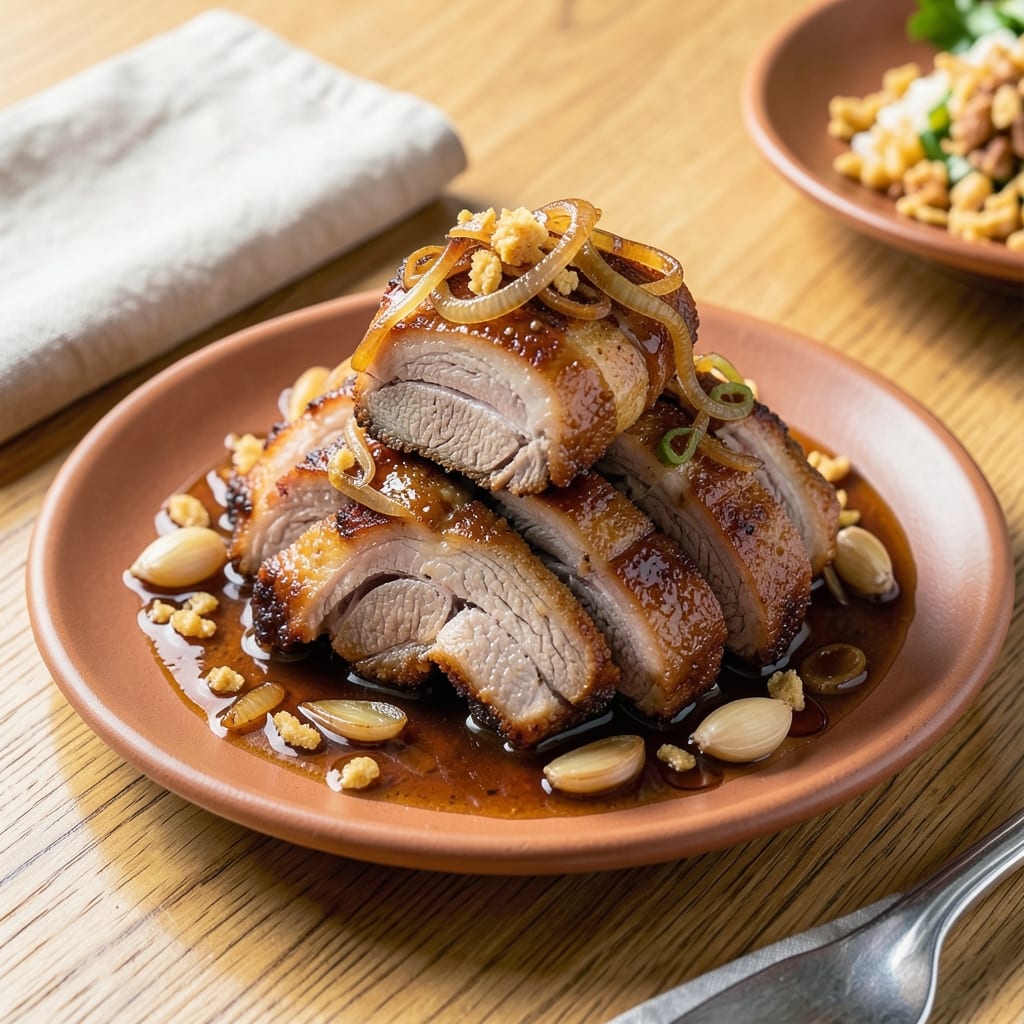
This Filipino pork binagoongan delivers the perfect balance of crispy edges and silky centers—a dish that transports you to the tables of Filipino homes where vinegar and soy sauce work magic. 🌟 After mastering the technique of slow-braising pork belly in a tangy, sweet-savory sauce, I’ve perfected how to achieve that signature caramelized crust without drying out the meat. The secret lies in the sauce: a harmonious blend of vinegar, soy sauce, and brown sugar that tenderizes the pork while creating a glossy, sticky finish. Traditional recipes often include eggplant and string beans as sides, but I’ve tested variations with potatoes and green beans for a heartier plate. The result? A restaurant-quality meal that’s surprisingly simple to recreate at home. What makes this dish extraordinary is how the flavors evolve as it simmers—starting bright and acidic, then mellowing into a rich, umami-forward sauce that clings to every bite. The crispy edges come from a final sear in the pan, locking in moisture while building that coveted texture. Serve with steamed rice and a cool calamansi drink to balance the heat. This recipe isn’t just about the pork; it’s about the technique. Whether you’re cooking for a family gathering or a weeknight dinner, the process is foolproof and the results are unforgettable. Let’s get started on this Filipino classic!
Ingredients for filipino pork binagoongan
Pork belly, vinegar, and soy sauce—simple ingredients for a dish that tastes like home.
| Ingredient | Amount | Notes |
|---|---|---|
| Pork Belly 🥓 | 1 ½ lb | Skin-on, cut into 1-inch cubes |
| White Vinegar 💧 | ½ cup | Distilled for tangy flavor |
| Soy Sauce 🍶 | ½ cup | Light or dark variety |
| Brown Sugar 🍚 | ¼ cup | Packed, light or dark |
| Garlic Cloves 🧄 | 6 cloves | Minced for sauce |
| Onion 🧅 | 1 whole | Medium, sliced |
| Bay Leaves 🌿 | 2 whole | Dried, for depth |
| Eggplant 🍆 | 1 lb | Medium, cubed for sides |
| Green Beans 🌱 | 1 lb | Trimmed, for sides |
| Olive Oil 🫒 | 2 tbsp | For searing pork |
| Salt 🧂 | 1 ½ tsp | Kosher or sea salt |
| Black Pepper 🌶️ | ½ tsp | Freshly ground |
| Water 💧 | 1 cup | For balancing sauce |
The pork belly is non-negotiable here—skin-on for that crispy finish. Asian markets usually have the best cuts, but most grocery stores carry it too. Look for good marbling, not too much fat. If you can't find pork belly, pork shoulder works in a pinch, but it won't be as tender. The eggplant and green beans are just sides, but they soak up that amazing sauce—Trader Joe's has pre-washed green beans that save time. For the vinegar, distilled white vinegar is traditional, but apple cider vinegar adds a nice fruity note if you prefer.
No soy sauce? Coconut aminos in a 1:1 ratio works for a lighter flavor. Running short on brown sugar? Honey or maple syrup at half the amount does the trick. The garlic can be minced or pressed—whatever's faster. If you're making this ahead, the sauce actually gets better overnight, so double the recipe and reheat. The eggplant can be swapped for potatoes if you want something heartier. And if you're feeling fancy, add a splash of calamansi juice for that authentic Filipino tang.
This reheats beautifully—3-4 days in the fridge, 3 months frozen. I always make extra because it's that good. Store the sauce separately if you're prepping ahead—just reheat it with the pork. The eggplant and green beans can be sautéed fresh when you're ready to serve, or you can blanch them and store them in the fridge for 2 days. The crispy edges on the pork come from the final sear, so don't skip that part—worth the extra minute.
Why You'll Love This Recipe
- One-Pot Magic: I swear by this—just sear the pork belly, toss in the vinegar, soy sauce, and sugar, then let it simmer. No chopping, no fuss, and one pot to scrub later. Honestly, my lazy Sundays thank me.
- Sweet-Sour Crunch: That balance of tangy vinegar and caramelized brown sugar? It’s addictive. The garlic cloves sizzle into the pork fat, giving every bite a little punch—like a hug from your lola’s kitchen.
- Leftovers That Shine: This dish tastes better the next day. I’ll make a big batch on Sunday, reheat slices for quick lunches, or even toss cold chunks into fried rice. (Yes, even on a Tuesday night.)
- Budget-Friendly Feast: Pork belly stretches far when braised, and the ingredients? Pantry staples. A few cloves of garlic, a splash of vinegar—suddenly, you’ve got a meal that feeds four for less than takeout. My wallet approves.
Step-by-step instructions for Filipino pork binagoongan
Here's how to nail that perfect balance of crispy pork and tangy, sweet sauce every time.
🔥 Step 1: Sear the Pork Belly for Maximum Crisp
Heat a large skillet over medium-high heat and add the 2 tbsp olive oil. Once shimmering, add the 1.5 lb pork belly cut into 1-inch cubes in a single layer. Let them sear undisturbed for 4-5 minutes until the edges turn golden brown and crispy.
This initial sear locks in juices and builds flavor. I press down gently on the pork with a spatula during the first minute—this prevents it from curling and ensures even contact with the pan. Once golden, flip the pieces and sear the other sides for another 3-4 minutes. Remove and set aside, leaving the rendered fat in the pan.
🍳 Step 2: Build the Tangy-Sweet Sauce
In the same skillet (with all that delicious pork fat), add the 1 whole sliced onion and cook for 3-4 minutes until softened. Add the 6 cloves minced garlic and cook for 30 seconds until fragrant—don't let it brown or it'll turn bitter.
Pour in the 0.5 cup white vinegar and 0.5 cup soy sauce, scraping up all those browned bits from the bottom. Add the 0.25 cup packed brown sugar and 1 cup water, then bring to a gentle simmer. Add the 2 whole bay leaves, 1.5 tsp salt, and 0.5 tsp black pepper. Let this mixture bubble away for 5 minutes until slightly thickened.
🥘 Step 3: Simmer the Pork in Flavorful Sauce
Return the seared pork to the skillet and pour in just enough sauce to barely cover the bottom. Bring to a simmer, then reduce heat to low. Cover and let it cook for 30-40 minutes, stirring occasionally. You're looking for the pork to become fork-tender with a silky texture when pierced.
Here's the thing—if the sauce reduces too much, add a splash of water to keep it from sticking. The pork should be falling apart slightly at the edges but still holding its shape. The vinegar will make the sauce glossy and tangy, while the sugar balances it perfectly.
🍽️ Step 4: Prepare the Vegetable Sides
While the pork simmers, prep the sides. Heat a separate skillet with 1 tbsp olive oil over medium heat. Add the 1 lb cubed eggplant and cook for 5-6 minutes until golden. Remove and set aside. In the same pan, add the 1 lb trimmed green beans and cook for 4-5 minutes until tender-crisp.
Season both vegetables with a pinch of salt and pepper. The eggplant should have a slightly caramelized edge, while the green beans should still have a little bite. These veggies will soak up the pork's delicious sauce when served together.
⏰ Step 5: Finish and Serve
Once the pork is tender, remove the bay leaves and adjust the sauce if needed—add a splash more vinegar for tang or a pinch more sugar for sweetness. Let the pork sit in the sauce for 5 minutes off the heat to absorb all those flavors.
Serve the pork with the vegetable sides, ladling that gorgeous sauce over everything. The contrast of crispy pork edges, silky centers, and tangy-sweet sauce is what makes this dish so special. Don't forget to save some sauce for drizzling on top—it's the best part!
Pro Tips For Making Filipino Pork Binagoongan
- Render Fat First: Sear the pork belly skin-side down in a cold pan, then turn heat to medium-low and let it render undisturbed for 8–10 minutes. I used to rush this, and the fat would splatter everywhere—now I just walk away and let it do its thing. That crispy skin is worth the patience. ---
- Balance Vinegar Slowly: Add white vinegar in small batches (¼ cup at a time) while simmering, stirring constantly to avoid curdling the sauce. My first batch turned into a gloopy mess—I learned to treat vinegar like a shy ingredient: coax it in, don’t drown it. ---
- Crush Garlic Coarse: Smash the garlic cloves with the flat side of your knife instead of mincing them fine. This keeps the flavor bold without turning the sauce into a paste. (Yes, it looks uneven—but your taste buds will notice the difference.) ---
- Simmer Until Syrupy: Let the sauce reduce until it coats the back of a spoon like thick syrup, not watery glaze. I used to eyeball it and end up with a thin, salty broth—now I taste-test every 5 minutes. The right consistency is the difference between "good" and "restaurant-quality."
Best sauces and condiments for filipino pork binagoongan
Classic Binagoongan Sauce
Start with the traditional base: ½ cup white vinegar, ½ cup soy sauce, and ¼ cup brown sugar. The vinegar provides the signature tang, while the soy sauce adds umami depth. I like to use dark soy sauce for a richer color, but light works too. Simmer these ingredients with 1 cup water and 6 minced garlic cloves until slightly thickened—about 5 minutes. This sauce is the soul of the dish, balancing sweet, salty, and acidic flavors perfectly. 💛
Sweet-Savory Variations
For extra richness, add 1 tbsp tomato paste to the sauce base—it deepens the color and adds a subtle fruitiness. If you prefer a smokier profile, swap ¼ cup of the vinegar for ¼ cup soy-based barbecue sauce. My go-to is Sweet Baby Ray's Original for that familiar tang. For a touch of heat, stir in ½ tsp ground black pepper or ¼ tsp red pepper flakes during the final simmer.
Vegetable Sauce Boosters
Eggplant and green beans are classic sides, but they also work wonders in the sauce. Toss ½ cup cubed eggplant into the simmering sauce during the last 10 minutes of cooking—it absorbs the flavors beautifully. For a creamier texture, add 2 tbsp coconut milk at the end. If you love texture, stir in 1 tbsp chopped kalamansi peel (or lemon zest) for a bright, citrusy finish that’s pure Filipino comfort.
Protein Swaps
While pork belly is traditional, this sauce works with other proteins too. Pork shoulder or chicken thighs (bone-in for extra flavor) are great substitutes. For a vegetarian twist, use firm tofu or mushrooms—simmer them in the sauce for 15-20 minutes until tender. The sauce’s tangy-sweet profile cuts through the richness of fried foods, making it perfect for serving with lumpia or spring rolls. 🍽️
Finishing Touches
Before serving, taste the sauce and adjust the balance. Need more tang? Add 1 tsp vinegar. Too sharp? A pinch of sugar or a splash of coconut milk smooths it out. For a restaurant-worthy finish, drizzle with chopped green onions or toasted sesame seeds. A sprinkle of crushed roasted peanuts adds crunch and a nutty contrast. The sauce should coat the back of your spoon—thick enough to cling but still silky.
Nutrition facts
Frequently asked questions
Can I substitute pork belly with another cut of pork?
While pork belly gives the best crispy edges, you can use pork shoulder or pork loin instead. Cut the meat into 1-inch cubes and increase the cooking time by 10-15 minutes to ensure tenderness. For extra flavor, marinate the pork in a mix of soy sauce and vinegar for 30 minutes before cooking.
What makes the sauce tangy and sweet at the same time?
The magic happens with the vinegar and brown sugar combo! The vinegar provides the sharp tang, while the sugar caramelizes slightly during simmering, creating a glossy, balanced sauce. The soy sauce adds umami depth, and the garlic and onion build layers of flavor. Taste as you go—adjust with more vinegar for tang or sugar for sweetness.
How do I get the crispy edges on the pork?
Start by searing the pork cubes in a hot pan with olive oil until golden brown—this creates the crispy crust. After simmering in the sauce, give the pork a quick 30-second sear in the same pan before serving. The residual fat in the pan helps achieve that perfect texture. Don't skip this step—it's what makes this dish special!
Can I make this dish ahead of time?
This recipe actually tastes even better the next day! Cook the pork and sauce as directed, then refrigerate for up to 3 days or freeze for 3 months. Reheat gently on the stove, adding a splash of water if the sauce thickens too much. The flavors meld beautifully over time, making it perfect for meal prep or gatherings.
What sides pair best with Filipino pork binagoongan?
Steamed white rice is a must—it soaks up all that delicious sauce! For extra flavor, serve with garlic fried rice or sinangag (garlic rice). The eggplant and green beans in the recipe work perfectly, but you could also add potatoes or cabbage for a heartier meal. A cool calamansi drink balances the richness of the dish.