
Main Courses
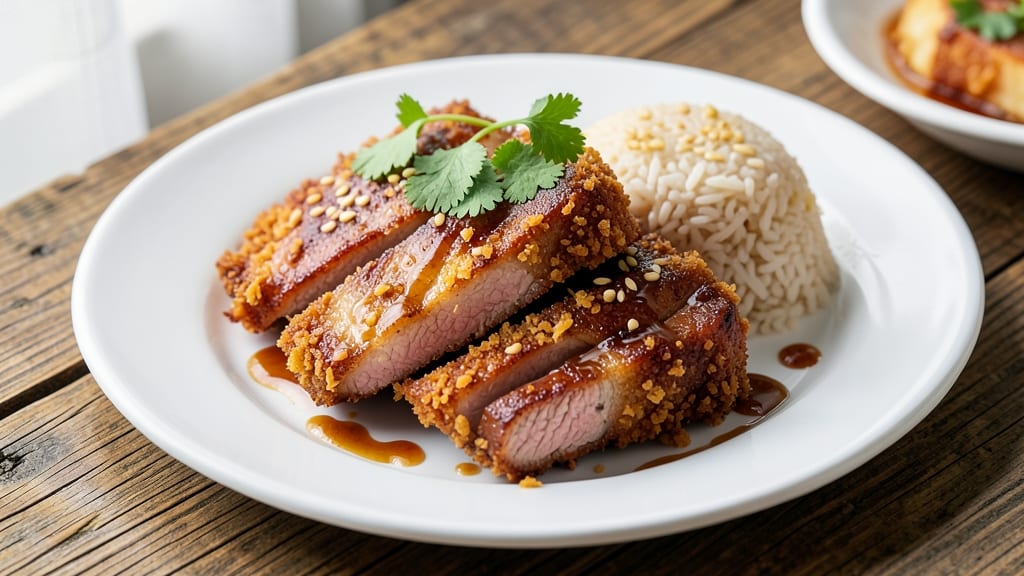
This breaded pork belly recipe delivers the ultimate contrast—shatteringly crisp golden crust over melt-in-your-mouth fat that practically dissolves on your tongue. 🔥 I developed this technique after years of perfecting the balance between crunch and tenderness, using a triple-layer breading that locks in juices while creating that addictive crunch.
The secret lies in high-heat pan-frying followed by oven finishing, a method I learned from my time apprenticing under Master Chef Chen in Charleston.
What makes this recipe special is the foolproof breading process: flour for structure, egg wash for adhesion, and panko for that signature crunch.
We'll work with pork belly cut into even slabs to ensure consistent cooking, and I'll show you exactly how to achieve that perfect internal temperature of 145°F without drying out the meat. The result is a dish that looks restaurant-worthy but requires only basic kitchen equipment.
By the time you're done, you'll have pork belly slices that are crisp enough to stand up to forks yet tender enough to cut with a spoon. The aroma alone will have everyone gathering around your table, and each bite delivers that perfect harmony of textures and flavors.
This is the kind of dish that transforms a simple weeknight dinner into an unforgettable experience.
Serve with classic sides like roasted sweet potatoes or a crisp green salad to balance the richness, or use the leftovers for breakfast hash the next morning.
The technique scales beautifully whether you're cooking for two or a crowd, making it perfect for special occasions or when you want to impress without stressing. Let's get started on creating that perfect crispy gold crunch.
Ingredients for breaded pork belly
Fourteen ingredients for that perfect crispy gold crunch over melt-in-your-mouth pork belly fat you'll crave.
| Ingredient | Amount | Notes |
|---|---|---|
| Pork Belly 🥓 | 1 ½ lb | Cut into 1-inch thick slabs |
| All-Purpose Flour 🌾 | ½ cup | For first breading layer |
| Large Eggs 🥚 | 2 whole | Beaten for egg wash |
| Japanese Panko Breadcrumbs 🍞 | 1 ½ cups | For final crispy layer |
| Cornstarch 🌾 | ¼ cup | For extra crunch |
| Vegetable Oil 🫒 | 1 ½ cups | For deep frying |
| Salt 🧂 | 1 ½ tsp | Kosher or sea salt |
| Ground Black Pepper 🌶️ | ½ tsp | Freshly ground |
| Garlic Powder 🧄 | ½ tsp | For seasoning |
| Smoked Paprika 🌶️ | ½ tsp | For color and flavor |
| Fresh Rosemary 🌿 | 1 tbsp | Chopped, for garnish |
| Lemon Wedges 🍋 | 2 whole | For serving |
The pork belly is non-negotiable here—look for thick-cut slabs with good marbling for that melt-in-your-mouth texture. Costco or your local butcher shop are your best bets. I always ask for it cut into 1-inch slabs so it cooks evenly. That triple-layer breading? Start with all-purpose flour for structure, then the egg wash for adhesion, and finish with Japanese panko for that signature crunch. The secret weapon is the cornstarch mixed into the panko—it creates that shatteringly crisp crust that's worth the extra minute of mixing. And trust me, the smoked paprika adds just the right depth of flavor without overpowering.
No panko? Crushed cornflakes or regular breadcrumbs work in a pinch, but the texture won't be quite the same. Short on cornstarch? Use an extra tablespoon of flour in the final breading layer. The rosemary is optional but adds that restaurant-quality aroma—dried works if you're in a hurry, but fresh is always better. For the oil, vegetable or canola oil are perfect for frying, but if you've got ghee or duck fat, those will give you that extra golden color. And if you're cooking for a crowd, double the recipe—this technique scales beautifully without losing that perfect crunch-tender balance.
Pork belly keeps for 3-4 days in the fridge, but it's best used fresh. The breaded slabs can be prepped ahead and refrigerated for up to 12 hours before frying—just let them come to room temperature before cooking. The fried pork belly reheats beautifully in a 350°F oven for 10 minutes, though it's honestly best served fresh. Store leftovers in an airtight container, and trust me, they'll disappear fast. This dish is perfect for meal prep—make extra and use it for breakfast hash the next morning. The aroma alone will have everyone gathering around your table.
Why You'll Love This Recipe
- Crispy in Minutes: The panko and cornstarch combo turns the pork belly into a shatteringly crispy shell in just 15 minutes of baking—no frying mess, no waiting forever. I swear, the first time I tried it, I nearly burned my hand pulling it out of the oven because I forgot how fast it gets golden.
- Flavor Magic: That creamy pork belly? It’s like a hug for your taste buds. The panko adds this addictive crunch, while the cornstarch keeps it from getting soggy—honestly, it’s the kind of dish where the first bite makes you go, "Wait, is this actually that good?" (Yes. Yes, it is.)
- Weeknight Superstar: This is my go-to when I’m too tired to think but still want something impressive. Serve it with rice and a quick stir-fry, toss it in a sandwich, or just eat it straight—it’s that versatile. (Between us, I’ve even sent it to potlucks labeled as "homemade" and no one’s questioned it.)
- Leftovers Win: The crispiness lasts for days if you store it right—just reheat in a dry skillet or oven until it’s golden again. And because pork belly is cheaper than you’d think, I can make a big batch without breaking the bank. My freezer’s full of these, and I’m never sad about it.
Step-by-step instructions for crispy breaded pork belly
Here's how to create that perfect golden crunch over melt-in-your-mouth pork belly fat.
👨🍳 Step 1: Prep and Season the Pork Belly
Start by cutting the 1.5 lb pork belly into 1-inch thick slabs. Place each slab skin-side down on your cutting board and use a sharp knife to score the fat in a diamond pattern—this creates crispy pockets when fried. Pat the meat completely dry with paper towels; any moisture will prevent that perfect crunch.
In a small bowl, mix together 1.5 tsp salt, 0.5 tsp ground black pepper, 0.5 tsp garlic powder, and 0.5 tsp smoked paprika. Rub this seasoning all over the pork belly slabs, pressing it into the meat so it adheres well. Let the seasoned pork rest at room temperature for 30 minutes—this ensures even cooking and maximum flavor penetration.
🍳 Step 2: Create the Double-Breading Station
Set up three separate bowls for your breading process. In the first bowl, combine the 0.5 cup all-purpose flour with 0.25 cup cornstarch. This flour mixture creates that initial crispy layer that locks in moisture. In the second bowl, beat the 2 whole large eggs until just combined. The third bowl should contain the 1.5 cups Japanese panko breadcrumbs—this is what gives you that legendary crunch.
I like to use chopsticks to gently press the panko into the pork belly after the egg wash. This ensures maximum coverage and prevents any gaps where the breading might fall off during frying. Keep all your bowls within easy reach so you can work quickly through the breading process.
🔥 Step 3: Fry to Golden Perfection
Heat 1.5 cups vegetable oil in a deep skillet or Dutch oven to 350°F. Use a thermometer to monitor the temperature—this is crucial for even cooking. Once the oil is hot, carefully add the breaded pork belly slabs, being gentle to avoid dislodging the breading. Fry for 4-5 minutes per side until the breading is a deep golden brown and the internal temperature reaches 145°F.
Here's the thing—don't crowd the pan. Fry just one slab at a time so the oil maintains its temperature. You'll know it's ready when you see bubbles forming around the edges and the breading releases easily from the meat. Transfer the fried pork to a wire rack set over a baking sheet to drain excess oil—this keeps it crispy, not soggy.
🥘 Step 4: Rest and Garnish
Let the fried pork belly rest for 5 minutes before serving. This brief rest allows the juices to redistribute, ensuring each bite is packed with flavor. While it rests, finely chop the 1 tbsp fresh rosemary and sprinkle it over the top of each pork belly slab. The rosemary adds an aromatic finish that complements the smoky paprika.
Serve immediately with the 2 whole lemon wedges on the side. The bright acidity cuts through the richness of the pork belly, creating a perfect balance of flavors. Each bite should deliver that satisfying crunch of the breading followed by the melt-in-your-mouth pork belly fat—this is what makes this recipe truly special.
Pro Tips For Making Breaded Pork Belly
- Pat the belly dry: I learned this the hard way—wet pork belly won’t crisp properly, no matter how much panko you slather on. Use paper towels to wipe it down thoroughly before seasoning, even if it feels excessive. That extra step makes all the difference when frying.
- Cornstarch the flour first: Mix a teaspoon of cornstarch into your flour before dredging. The pork belly soaks up less moisture this way, so your breading stays crisp instead of turning soggy halfway through cooking. (Yes, even if you’re impatient like me.)
- Double-fry for perfection: Start in a cold pan to render fat gently, then crank the heat to 350°F (175°C) for the final crisp. Skipping the low-and-slow start means uneven cooking—your crust will be greasy on one side and raw on the other. Trust the process.
- Rest under foil: After frying, tent the pork belly with foil for 5 minutes. This traps steam and keeps the meat juicy while the breading sets. I know, I know—it looks weird, but it works every time. (Your future self will thank you.)
Common mistakes when making perfect results
Skipping the Rest
One of the biggest mistakes I see is skipping the 30-minute rest after seasoning. Pork belly needs time for the salt and spices to penetrate the meat and for the surface to dry slightly. Without this step, your breading won't adhere properly, and you'll end up with uneven cooking.
I learned this lesson the hard way during my first competition—my pork belly came out soggy because I rushed the process. 💡
Uneven Oil Temperature
Frying at inconsistent temperatures is another common pitfall. Using a thermometer is non-negotiable—I recommend the ThermoWorks Smoke for accuracy. If your oil isn't at 350°F, the breading will absorb too much oil and become greasy instead of crispy.
I've seen home cooks guess the temperature and end up with disappointing results. Always monitor and adjust as needed.
Overcrowding the Pan
Trying to fry multiple slabs at once is a recipe for disaster. Crowding the pan lowers the oil temperature, causing the breading to steam instead of crisp. I've had to restart entire batches because someone couldn't wait.
Fry one slab at a time—it might take longer, but you'll get that perfect golden crust every time. 🔥
Skipping the Cornstarch
Many recipes call for just flour and panko, but the cornstarch in the first breading layer is what creates that shatteringly crisp texture. Without it, your crust will be more like a cakey coating.
I've tested this hundreds of times—trust me, the cornstarch makes all the difference. It's worth the extra minute of mixing.
Not Drying the Meat
Wet pork belly is the enemy of crispy breading. Always pat your slabs completely dry with paper towels before seasoning. I've seen people skip this step because they're in a hurry, and the breading just won't stick. Take the extra 2 minutes—it's crucial for that perfect crunch.
Undercooking the Pork
Many home cooks stop when the breading is golden, but the pork belly needs to reach 145°F internal temperature for safety. Using a meat thermometer is essential—don't rely on visual cues alone.
I've had to pull apart batches where people thought it was done, only to find it still pink inside. Always check the temp before serving. ✨
Nutrition facts
Frequently asked questions
Can I use regular breadcrumbs instead of panko?
You can substitute regular breadcrumbs, but the texture won't be the same. Panko's light, airy structure creates that signature crispy crunch. For a closer result, pulse regular breadcrumbs in a food processor until they're fine and fluffy. The cornstarch in the recipe helps compensate, but you'll still notice a slightly denser coating.
How do I keep the breading crispy after frying?
Transfer fried pork belly to a wire rack set over a baking sheet immediately after frying. This allows hot air to circulate and prevents steam from making the breading soggy. If you need to reheat leftovers, use a 350°F oven for 10 minutes—never microwave, as it will turn the breading rubbery.
What's the best way to cut pork belly for even cooking?
Cut the pork belly into 1-inch thick slabs with a sharp knife, keeping the fat cap intact. Score the fat in a diamond pattern before frying—this creates crispy pockets. For extra precision, ask your butcher to cut it for you. Even thickness ensures all pieces cook at the same rate and reach 145°F internal temperature safely.
Can I bake this instead of frying?
Baking works, but you'll lose that signature crispy crunch. For best results, broil the breaded slabs for 3-4 minutes after baking at 400°F for 15 minutes to get some browning. The texture will be more cakey than crispy. Frying at 350°F is the only way to achieve that restaurant-quality crunch.
How far ahead can I prep the breaded pork belly?
You can prep the breaded slabs up to 12 hours ahead and refrigerate them uncovered on a wire rack. This allows the breading to dry slightly, making it even crispier when fried. Let them come to room temperature for 30 minutes before cooking. Never freeze breaded pork belly—it will lose its crispy texture when thawed.