
Soups & Stews
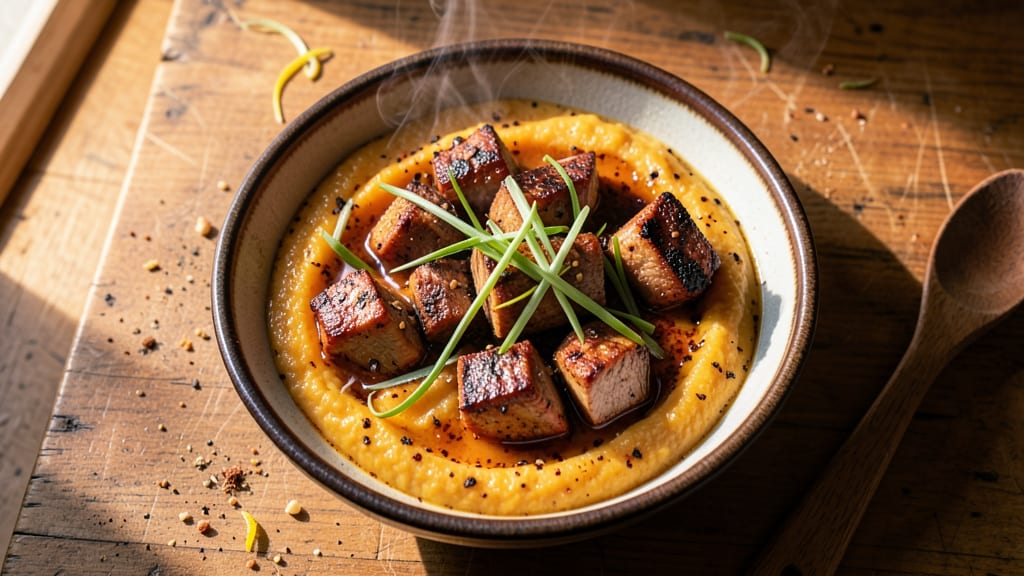
This Burma Superstar Pumpkin Pork Stew delivers the kind of aromatic depth that makes every spoonful unforgettable. After years of perfecting Burmese flavors in my kitchen, I've developed a technique that balances sweet pumpkin, tender pork, and fragrant five-spice—creating a harmony that's both comforting and sophisticated.
The secret lies in slow simmering, which allows the spices to meld while transforming tough pork into melt-in-your-mouth perfection.
The recipe builds on traditional Burmese techniques while adapting them for home cooks. We start with a proper sear on the pork shoulder to develop rich fond, then build layers of flavor through lemongrass, turmeric, and fish sauce—classic Burmese elements that create that signature umami-sweet balance.
The pumpkin adds natural sweetness that rounds out the dish's complexity, while silky rice noodles provide the perfect textural contrast.
What you'll end up with is a stew that's rich yet balanced, with tender pork that practically falls apart and pumpkin that's caramelized to perfection. The five-spice blend infuses every bite with warm, aromatic notes, while the fish sauce adds that essential umami depth that defines Burmese cuisine.
This is the kind of dish that transforms a simple weeknight dinner into a memorable experience.
The beauty of this recipe is its versatility—serve it with steamed jasmine rice for a heartier meal or keep the noodles for a lighter option. The flavors develop even more after resting overnight, making it perfect for meal prep.
Let's create this fragrant, comforting stew that brings a taste of Burma to your table.
Ingredients for burma superstar pumpkin pork stew
Sweet pumpkin, tender pork, and fragrant spices—these are the stars of your Burmese table.
| Ingredient | Amount | Notes |
|---|---|---|
| Pork Shoulder 🥩 | 1 ½ lb | Bone-in for flavor, cut into 1-inch cubes |
| Sugar Pumpkin 🎃 | 2 cups | Cubed, skin removed, about 1 lb |
| Fresh Lemongrass 🌿 | 1 whole | Stalk, bruised and cut into 2-inch pieces |
| Fresh Turmeric 🌶️ | 1 tbsp | Freshly grated root, vibrant color |
| Five-Spice Powder 🌶️ | 1 tbsp | Homemade or store-bought blend |
| Fish Sauce 🍶 | 2 tbsp | Red Boat brand preferred |
| Garlic Cloves 🧄 | 6 cloves | Minced, for aromatic base |
| Coconut Milk 🥥 | 13 ½ oz | Full-fat can, shaken well |
| Rice Noodles 🍜 | 8 oz | Silky texture, uncooked |
| Green Onions 🧅 | ¼ cup | Thinly sliced, for garnish |
| Lime Juice 🍋 | 2 tbsp | Freshly squeezed |
| Vegetable Oil 🫒 | 2 tbsp | For searing pork |
| Salt 🧂 | 1 ½ tsp | Kosher or sea salt |
| Black Pepper 🌶️ | ½ tsp | Freshly ground |
The pork shoulder is non-negotiable—bone-in gives the deepest flavor, and Costco or Trader Joe's usually have it pre-cut for convenience. Look for good marbling, and don't be tempted by lean cuts. Sugar pumpkin is your secret weapon here—canned pumpkin puree works in a pinch, but fresh has that caramelized depth. Fresh turmeric and lemongrass? Asian markets are your best bet for vibrant, potent roots. If you can't find fresh lemongrass, dried works at half the amount, but it won't be the same. The five-spice blend should have star anise, cinnamon, fennel, cloves, and peppercorns—Penzeys has a pre-mixed Burmese version if you want to skip the measuring.
No fish sauce? Soy sauce plus a dash of anchovy paste gets you close, but it won't be authentic. The coconut milk needs to be full-fat—light versions won't give that creamy richness. Rice noodles vary wildly in texture—Vietnamese-style are silkiest, but any medium-width noodle works. For the pumpkin, roast it first if you're using fresh to concentrate the sweetness. The garlic should be minced, not chopped—smaller pieces burn faster. And that lime juice? Don't skip it—it's the bright finish that cuts through all the richness. If you're prepping ahead, make the spice paste (turmeric, five-spice, garlic) first—it keeps for 2 weeks in the fridge.
This stew tastes even better the next day—make extra if you can. Store in airtight containers with a layer of coconut milk on top to preserve moisture. Keeps 4-5 days in the fridge or 3 months frozen. The noodles can be cooked separately and added just before serving to keep them from getting mushy. For a restaurant-style presentation, top with crispy fried shallots or extra green onions. Leftovers reheat beautifully—just add a splash of water or coconut milk if it's too thick.
Why You'll Love This Recipe
- One-Pot Magic: I swear by this recipe when I’m too tired to wash extra bowls. The pork shoulder and pumpkin simmer together in the same pot—no chopping boards left behind, just a single pan that does all the work. That golden broth? It’s basically self-cleaning.
- Five-Spice Secret Weapon: Honestly, the five-spice powder is what makes this dish ridiculously good. It’s not just cinnamon or clove—it’s that warm, earthy balance that lingers, while the turmeric gives it this gorgeous, sun-kissed glow. The lemongrass? It’s the citrusy backbone that ties everything together.
- Weeknight Workhorse: Between us, this stew is my go-to for busy nights, potlucks, or when I need to feed a crowd without stress. The pumpkin softens perfectly, the pork stays tender, and it reheats like a dream—so I can make a big batch and have leftovers for days. (Yes, even on a Tuesday night.)
- Budget-Friendly Luxury: Pork shoulder and pumpkin are both affordable, and they stretch into a meal that feels special. I’ll be real: it’s not the prettiest dish, but the taste makes up for it—rich, aromatic, and packed with flavor. Plus, the leftovers freeze like a champ, so I’m always covered.
Step-by-step instructions for Burma superstar pumpkin pork stew
This fragrant, aromatic stew delivers deep five-spice warmth and silky coconut richness in every bite.
Sear the Pork Shoulder for Maximum Flavor
Heat the 2 tablespoons vegetable oil in a heavy pot or Dutch oven over medium-high heat until shimmering. Add the 1.5 lb pork shoulder, cut into 1-inch cubes, in a single layer. Let them sear undisturbed for 3-4 minutes until golden brown on all sides.
This initial searing creates a flavorful crust that forms the base of your stew. I press down gently on each piece during the first minute to prevent curling—this ensures even contact with the pan. Once all sides are browned, transfer the pork to a plate and set aside temporarily. You'll notice the aroma intensifying as the meat releases its juices into the pot.
Build the Aromatic Spice Base
In the same pot, add the 6 cloves minced garlic cloves and cook for 30 seconds until fragrant. Immediately add the 1 tbsp fresh turmeric and 1 tbsp five-spice powder, stirring constantly for 1 minute until the spices bloom and fill your kitchen with their warm, earthy scent.
Next, add the 2-inch pieces of bruised lemongrass and cook for another 1 minute. The lemongrass will release its citrusy aroma as it softens slightly. This aromatic trio forms the flavor foundation of your stew—don't rush this step. If you smell the spices burning, reduce the heat slightly to maintain their delicate flavors.
Simmer the Pork and Pumpkin in Coconut Milk
Return the seared pork to the pot and add 2 cups cubed sugar pumpkin, 13.5 oz coconut milk, 2 tablespoons fish sauce, 1.5 teaspoons salt, and 0.5 teaspoon black pepper. Stir well to combine, then bring the mixture to a gentle simmer over medium-low heat.
Partially cover the pot and let it simmer for 45-50 minutes until the pork is fork-tender and the pumpkin is soft. You'll know it's ready when the pork easily pulls apart with minimal resistance. If the stew reduces too quickly, add 2-3 tablespoons water to maintain the proper consistency. The coconut milk should create a velvety sauce that coats the back of a spoon.
Finish with Lime and Prepare the Noodles
Once the pork is tender, stir in the 2 tablespoons lime juice and let the stew simmer for another 2-3 minutes to brighten the flavors. While the stew finishes, prepare the 8 oz rice noodles according to package instructions—typically soaking in hot water for 5-7 minutes until pliable but not mushy.
Drain the noodles and immediately add them to the stew pot. Gently toss everything together and let it sit off the heat for 2-3 minutes to absorb the rich coconut-pumpkin sauce. The noodles should be coated but still maintain their silky texture. If the stew seems too thick after adding the noodles, stir in a splash of hot water or reserved coconut milk to reach your desired consistency.
Serve with Fresh Garnishes
Ladle the stew into bowls, dividing the noodles evenly among 4 servings. Garnish each portion with the 0.25 cup sliced green onions for a fresh, bright contrast to the rich coconut and spiced pork. The green onions add a subtle crunch and visual appeal that balances the creamy stew.
Serve immediately while the noodles are still warm and the flavors are at their peak. Each bite should deliver tender pork, sweet pumpkin, and that complex five-spice aroma that makes this dish truly special. The combination of silky noodles and fragrant broth creates an unforgettable eating experience that captures the essence of Burmese comfort food.
Pro Tips For Making Burma Superstar Pumpkin Pork Stew
- Char the Pork First: I used to skip this step, thinking it was optional—until I realized how much deeper the five-spice flavor gets when you sear the pork shoulder in batches over medium-high heat for 5–6 minutes per side. The edges should be dark brown, almost sticky, before you even think about adding liquid. (Yes, it takes patience, but the stew won’t taste like it’s missing something otherwise.)
- Slice Pumpkin Thinly: Thick chunks of sugar pumpkin turn mushy and lose their texture. Instead, cut the flesh into ½-inch slices (peel first) and arrange them in a single layer in the stew. They’ll soften just enough to release sweetness without falling apart—like edible confetti. (Pro move: Toss them in a little oil before adding to the pot.)
- Blanch the Lemongrass: Fresh lemongrass bruises easily, and bruised lemongrass tastes bitter. Split the stalks lengthwise and blanch them in boiling water for 30 seconds before adding to the stew. This softens them slightly so they infuse flavor without turning the broth into grassy sludge. (I know it’s an extra step, but your stew will thank you.)
- Control the Turmeric Heat: Fresh turmeric is potent—way more than ground powder. If you’re using it, add it last, when the stew is simmering gently, and let it cook for no more than 10 minutes. Any longer, and the stew will taste like a curry got hit by a truck. (Ground turmeric is forgiving; fresh is not.)
Pro cooking tips for this recipe
Searing Secrets
That initial sear on the pork shoulder is where the magic begins—don't skip it! I use a heavy Dutch oven (my Lodge cast iron never lets me down) and set the heat to medium-high until the oil shimmers.
The key is patience: let those pork cubes develop a deep golden crust before touching them. I press down gently with a spatula during the first minute to prevent curling, which ensures even browning. That crust becomes the flavor foundation of your stew, so take your time. 🔥
Spice Bloom Mastery
When adding the turmeric, five-spice powder, and garlic, keep the heat at medium and stir constantly for that crucial 1-minute bloom. This releases the aromatic oils that will infuse your entire dish. I've learned the hard way—burnt spices taste bitter and ruin the delicate balance.
If your kitchen starts smelling like a spice factory (in a good way), you're doing it right. The lemongrass should be bruised but not chopped—those tough fibers need to soften slowly in the simmer. 🌿
Low-and-Slow Simmer
This isn't a race—your stew needs that 45-50 minute simmer at medium-low heat to develop proper tenderness. I maintain a gentle bubble, not a rolling boil, which prevents the coconut milk from breaking.
The pork should pull apart easily with a fork, and the pumpkin should be fork-tender but still hold its shape. If the sauce reduces too quickly, add 2-3 tablespoons water—just enough to keep it velvety.
Pro tip: I use a meat thermometer and aim for 195°F in the pork's thickest part for perfect tenderness. ⏰
Noodle Timing Tricks
Rice noodles are finicky—overcook them and they turn to mush. I prepare them separately according to package instructions (usually 5-7 minutes in hot water) and drain them just before adding to the stew. The residual heat from the stew will finish cooking them perfectly.
For extra silkiness, I rinse the noodles briefly under cold water after draining to stop the cooking process immediately. Add them to the stew off the heat and let everything sit together for 2-3 minutes—this lets the flavors meld without turning the noodles to glue. 🍜
Lime at the End
That final 2 tablespoons lime juice is non-negotiable—it brightens all the rich, spiced flavors. I add it just before serving and let it simmer for 2-3 minutes to integrate without overpowering. Fresh lime makes all the difference; bottled juice lacks that vibrant acidity.
For an extra touch, I sometimes add a zest strip while the stew simmers, then remove it before serving. The aroma alone makes the kitchen smell like a Burmese street food stall. 🍋
Leftovers Strategy
This stew tastes even better the next day as the flavors deepen. I store it in airtight containers with a layer of coconut milk on top to preserve moisture.
For reheating, I use the stovetop over low heat with a splash of water or coconut milk to restore the perfect consistency. The noodles can be cooked separately and added back when reheating—this prevents that sad, mushy texture.
And trust me, the second day is often the best day for this dish. 💫
Nutrition facts
Frequently asked questions
Can I substitute chicken for pork in this recipe?
You can try, but pork's rich fat content creates the perfect balance with the coconut milk and spices. Chicken would make a lighter version, but it might dry out during the long simmer. If you must use chicken, opt for bone-in, skin-on thighs and reduce the cooking time to 30-35 minutes once tender. The texture and flavor profile will differ significantly from the original recipe.
How do I make this vegetarian?
Replace the pork with 1.5 lbs extra-firm tofu (pressed and cubed) or 1 lb mushrooms (shiitake or oyster work best). Increase the coconut milk to 1 can (14 oz) for creaminess. Add 1 tbsp soy sauce to mimic the umami from fish sauce. The pumpkin and spices will still shine, though the texture will be more delicate. For protein, consider adding 1 cup cooked lentils or 1 block firm tofu cut into cubes.
Why does my stew taste too salty?
Fish sauce and coconut milk can pack more salt than expected. Taste as you go—start with 1 tbsp fish sauce and adjust. If it's too salty, balance it by adding 1-2 tbsp lime juice (cuts saltiness) or 1/4 cup more coconut milk to dilute. Never add water, as it makes the flavors flat. For prevention, use low-sodium fish sauce if available. The stew should taste complex, not briny.
Can I make this in an Instant Pot?
Sear the pork first in a separate pan, then add all ingredients to the Instant Pot. Use the High Pressure setting for 20 minutes, then quick-release. The pork should be tender, but you may need to add 1/4 cup water if the sauce is too thick. Finish with lime juice and noodles as directed. The pressure cooker speeds up cooking but may slightly alter the texture—expect more tender pork and slightly softer pumpkin.
What's the best way to store leftovers?
Store in airtight containers with a layer of coconut milk on top to preserve moisture. Keeps 4-5 days in the fridge or 3 months frozen. For reheating, use low heat on the stovetop with a splash of water or coconut milk. Cook noodles separately and add back when reheating to prevent mushiness. The flavors actually deepen overnight—this is when the five-spice blend truly shines!