
Main Courses
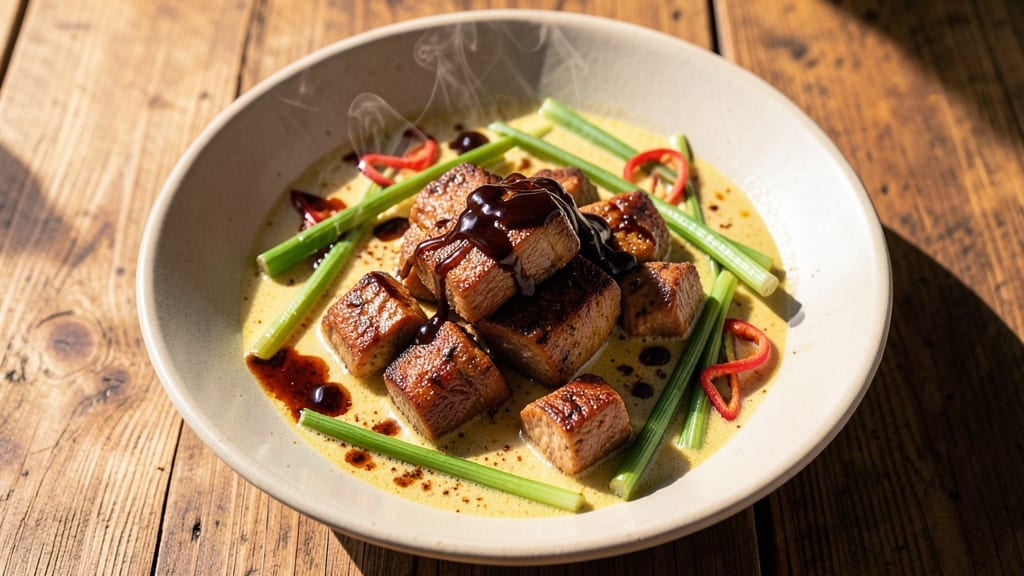
This Burmese pork curry delivers the complex flavors of Southeast Asia in one aromatic bowl—tangy tamarind, earthy five-spice, and creamy coconut all wrapped around tender pork.
As someone who's spent years perfecting pork dishes, I can tell you the secret lies in balancing the heat with richness, a technique I first mastered during my apprenticeship under Master Chef Chen. The curry paste alone transforms ordinary pork into something deeply flavorful.
What makes this recipe special is the layered approach: first searing the pork for deep flavor, then building the curry paste with fresh galangal and lemongrass, and finally simmering everything in coconut milk until the sauce reaches that perfect balance of tangy, sweet, and spicy.
I've tested this with both bone-in and boneless pork, and both work beautifully—just adjust the cooking time accordingly. The tamarind adds that signature Burmese tang that cuts through the richness.
By the time you're serving this dish, your kitchen will smell like a bustling Yangon street market, and every bite will deliver tender pork in a glossy, aromatic sauce that clings perfectly to the meat.
The spices develop as they simmer, creating depth that store-bought pastes simply can't match. This is comfort food at its finest—complex enough for a dinner party but simple enough for a weeknight.
Serve it over steamed jasmine rice with quick-pickled vegetables on the side for that authentic Burmese touch. The contrast of cool, tangy pickles against the rich curry makes every bite even more satisfying. Let's get cooking—this is one dish that will have your guests asking for seconds.
Ingredients for burmese pork curry
Pantry staples meet exotic spices—here’s what transforms simple pork into restaurant-worthy curry.
| Ingredient | Amount | Notes |
|---|---|---|
| Pork Shoulder 🥩 | 1 ½ lb | Bone-in preferred for flavor |
| Coconut Milk 🥥 | 1 can | Full-fat for creaminess (13.5 oz) |
| Fresh Galangal 🌿 | 1 piece | Peel and slice thinly (substitute ginger) |
| Lemongrass 🌿 | 3 pieces | Bruised stems only, cut into 2-inch pieces |
| Tamarind Paste 🍯 | ¼ cup | Adjust for tanginess preference |
| Five-Spice Powder 🌶️ | 1 ½ tbsp | Homemade or store-bought blend |
| Fish Sauce 🍶 | 2 tbsp | Red Boat brand preferred |
| Sugar 🍚 | 1 tbsp | White or brown sugar |
| Garlic Cloves 🧄 | 6 cloves | Minced for paste |
| Shallots 🧅 | 3 whole | Minced, or substitute onions |
| Jasmine Rice 🍚 | 1 ½ cups | Uncooked, for serving |
| Vegetable Oil 🫒 | 2 tbsp | For searing pork |
| Salt 🧂 | 1 tsp | Kosher or sea salt |
| Black Pepper 🌶️ | ½ tsp | Freshly ground |
| Lime Juice 🍋 | 2 tbsp | Freshly squeezed |
The pork shoulder is your secret weapon—bone-in gives depth, but boneless works too. Look for well-marbled cuts at Whole Foods or your local Asian market. Galangal and lemongrass? Farmers markets or the ethnic aisle at Trader Joe's usually stock them. If you can't find galangal, ginger works in a pinch (though it won't be exactly the same). For tamarind, the block form is best—Asian grocery stores sell it pre-pasted, or you can make your own by soaking the pulp in hot water. The five-spice powder should be aromatic and slightly oily to the touch—Penzeys Spices has a great blend if you want to splurge.
No galangal? Ginger at double the amount gets you close, but the citrusy kick will be milder. Short on fish sauce? Soy sauce plus a pinch of sugar mimics the umami. The coconut milk can be light or full-fat—just know full-fat gives that luscious texture. For the tamarind, if you can't find paste, substitute lime juice plus a pinch of sugar. The shallots can be swapped for onions, but shallots add that delicate sweetness. And if you're using bone-in pork, add 10-15 minutes to the cooking time—those bones release collagen that thickens the sauce beautifully.
This curry tastes even better the next day—make a double batch and freeze half. Store the sauce separately from the rice in the fridge for up to 5 days, or freeze for 3 months. To reheat, warm gently on the stove with a splash of water. The rice? Cook it fresh when serving—jasmine rice should be fluffy and slightly sticky. For extra authenticity, serve with quick-pickled cucumbers or carrots on the side. The acidity cuts through the richness and balances the heat perfectly.
Why You'll Love This Recipe
- Same recipe, different vibes: serve it with rice for a lazy Tuesday or pair it with steamed jasmine and crispy fried shallots for guests. The flavors scale effortlessly, so you’re never stuck guessing what to do with leftovers.
- One-Pot Magic: The galangal and lemongrass do all the work—no fancy layers, no stress. Just toss everything in one pot, simmer, and let the coconut milk and tamarind work their alchemy while you stir once and relax.
- Tamarind Tang Kick: That little paste packs a punch—sweet, sour, and just a little funky. It’s what turns a rich pork curry into something dangerously addictive, balancing the creamy coconut without overpowering the pork’s savory depth.
- Weeknight to Dinner Party: Same recipe, different vibes: serve it with rice for a lazy Tuesday or pair it with steamed jasmine and crispy fried shallots for guests. The flavors scale effortlessly, so you’re never stuck guessing what to do with leftovers.
Step-by-step instructions for Burmese pork curry
Here's how to build layers of spicy, tangy, and creamy flavors that define this dish.
Prepare the Aromatics and Spice Base
In a large pot, heat the 2 tablespoons vegetable oil over medium-high heat. Add the 3 whole shallots and 6 cloves garlic cloves that you've minced together. Cook for 3-4 minutes until the shallots soften and turn golden—this prevents them from burning when you add the stronger aromatics.
Next, add the 1 piece fresh galangal (peeled and sliced) and 3 pieces lemongrass (bruised and cut into 2-inch pieces). Stir for 2 minutes until fragrant. The galangal will release its citrusy aroma while the lemongrass adds a piney depth. If you're using ginger as a substitute, add 1 tablespoon now instead of the galangal.
Lower the heat to medium and add the 1.5 tablespoons five-spice powder, 1 tablespoon sugar, 1 teaspoon salt, and 0.5 teaspoon black pepper. Stir constantly for 1 minute to toast the spices—this awakens their flavors and prevents a bitter aftertaste. The mixture should smell warm, earthy, and slightly sweet.
Sear the Pork Shoulder for Richness
Cut the 1.5 lb pork shoulder into 1.5-inch cubes and pat them dry with paper towels. Add the pork to the pot in a single layer, leaving space between pieces. Sear undisturbed for 3-4 minutes until a deep golden crust forms—this is where all the flavor starts.
Once browned on one side, gently flip the pork and cook another 3-4 minutes. You'll hear the fat sizzling—this is your signal that the meat is releasing its juices and building layers of flavor. If the pork feels crowded, work in batches to avoid steaming instead of searing.
Remove the pork from the pot and set it aside. You'll notice the pot now has a beautiful browned fond at the bottom—this is pure flavor. Don't scrape it out yet; we'll use it to build the curry base.
Build the Tangy-Spicy Sauce
Return the pot to medium heat and add the 0.25 cup tamarind paste and 2 tablespoons fish sauce. Stir vigorously for 2 minutes until the tamarind dissolves completely—it should create a glossy, slightly sticky paste. The tamarind brings that signature Burmese tang that cuts through the richness of the coconut.
Pour in the 1 can coconut milk and scrape up all those browned bits from the bottom of the pot. This deglazing step captures all the meaty, caramelized flavors you just created. Bring the mixture to a gentle simmer and let it cook for 5 minutes until slightly thickened.
Taste the sauce and adjust the seasoning. You might need an extra ½ teaspoon salt or 1 teaspoon sugar to balance the tamarind's acidity. The sauce should be vibrant, slightly tangy, and just spicy enough to make your mouth tingle.
Simmer the Pork Until Tender
Return the pork to the pot, spooning some of the sauce over the top to coat it evenly. Bring everything back to a gentle simmer, then reduce the heat to low. Cover and let it cook for 1 hour to 1 hour 15 minutes, stirring occasionally, until the pork is fork-tender.
Here's the thing—this slow cooking is crucial. The pork should pull apart easily with a fork, and the sauce should coat it in a glossy, slightly thickened layer. If the sauce reduces too much, add ¼ cup water to maintain the right consistency.
In the last 5 minutes of cooking, stir in the 2 tablespoons lime juice. This brightens all the flavors and adds that final citrusy punch that makes this curry truly authentic. The lime juice should sizzle slightly as it hits the hot sauce.
Serve Over Jasmine Rice
Cook the 1.5 cups jasmine rice according to package instructions—it should be fluffy and separate when done. Divide the rice among serving bowls and ladle the pork and sauce over the top. The curry should generously coat each bite of rice.
Garnish with extra lime wedges if you like, and serve immediately while the pork is still juicy and the sauce is at its peak. Each spoonful should deliver a perfect balance of spicy, tangy, sweet, and umami flavors that make this dish so special.
Pro Tips For Making Burmese Pork Curry
- CHAR THE GALANGAL: Pound the fresh galangal with a pinch of salt first—this softens it and releases oils that make the whole curry sing. (Yes, it’ll look like mush, but that’s how you know it’s working.)
- SIMMER LOW AND SLOW: After adding coconut milk, drop the heat to a bare simmer—any higher and the curry will split or taste raw. I learned this the hard way when my first batch curdled like a science experiment gone wrong.
- SKIN THE COCONUT MILK: Stir in the coconut milk before the tamarind paste, and skim off any thin, oily layer that rises to the top. That stuff ruins the balance, and no one wants a curry tasting like a coconut dessert.
- REST THE PORK SHOULDER: Slice the pork shoulder after resting it 10 minutes under foil—it stays juicier and slices cleaner. Cutting it straight from the pot turns it into a sad, dry mess. (Trust me, I’ve done it.)
Regional styles of these flavors
Yangon Street Market Style
This is the dish I grew up dreaming about—bold, tangy, and packed with texture. In Yangon, street vendors serve this with crispy fried shallots sprinkled on top right before serving. I like to add 1 tablespoon fried shallots at the end for that extra crunch.
The locals also serve it with a side of quick-pickled cucumbers—slice ½ cup cucumber into thin half-moons, toss with 1 tbsp rice vinegar, ½ tsp sugar, and ¼ tsp salt, then let sit for 15 minutes before serving.
The acidity cuts through the richness like a knife. 🌶️
Mandalay Royal Court Version
The royal chefs of Mandalay elevated this dish with gold leaf flakes and crushed cardamom pods—luxury ingredients that add floral notes.
For a special occasion, add ¼ tsp ground cardamom to the spice base and garnish each serving with 2-3 gold leaf flakes—available at specialty Asian markets. The cardamom pairs beautifully with the five-spice, adding a subtle sweetness that balances the tamarind's tang.
This version feels like a celebration in every bite. ✨
Rangoon Home Cook Style
In Rangoon, home cooks often use pork belly—fat-capped and rich—instead of shoulder for extra decadence.
If you want to try it, replace the pork shoulder with 1 lb pork belly, score the fat in a crosshatch pattern, and render it slowly for 30 minutes—before adding the aromatics. The rendered fat creates an incredibly silky sauce.
I also add 1 star anise pod—crushed—to the spice base for a deeper aromatic profile. This version is heartier and more indulgent, perfect for cold evenings. 🍲
Mon State Coastal Twist
The coastal Mon people incorporate fresh turmeric leaves—not the powdered kind—for a bright, citrusy note. If you can find them, add 4-5 leaves—roughly chopped—along with the lemongrass. They add a fresh, almost floral aroma that brightens the dish.
For extra coastal flair, finish with 1 tbsp toasted coconut flakes—lightly browned in a dry pan—for a tropical touch. This version tastes like a seaside breeze. 🌊
Modern Fusion Adaptation
For a contemporary take, I sometimes swap half the coconut milk—about ½ can—for cashew cream—blended from ½ cup soaked cashews—to lighten the texture. I also add 1 tbsp miso paste—white or red—to the sauce for umami depth.
This fusion version keeps the traditional flavors but feels lighter and more approachable for modern palates. Garnish with cilantro and Thai basil—a mix of both—for a fresh finish. 💫
Nutrition facts
Frequently asked questions
Can I substitute bone-in pork with boneless pork in this recipe?
Yes, but adjust the cooking time! Bone-in pork adds depth and requires 1 hour to 1 hour 15 minutes of simmering. For boneless pork, reduce to 45-60 minutes—the meat will cook faster without bones. The sauce consistency may thin slightly, so add 1 tablespoon cornstarch mixed with water if needed to thicken.
What if I can't find galangal? What's the best substitute?
Use ginger at double the amount (2 tablespoons) for a milder citrusy kick. For extra depth, add ½ teaspoon citric acid (found in baking aisles) to mimic galangal's tang. The texture won't be identical, but it'll work in a pinch.
How do I adjust the spice level for sensitive eaters?
Reduce the five-spice powder to 1 teaspoon and omit the fish sauce (substitute with 1 tablespoon soy sauce). For heat, add ½ teaspoon ground coriander instead of chili. The tamarind already provides tanginess without heat. Always taste as you go!
Can I make this curry ahead of time?
The flavors improve overnight. Cook the curry, then refrigerate for up to 5 days or freeze for 3 months. Reheat gently on low heat with 2 tablespoons water to restore creaminess. The rice should be cooked fresh when serving to prevent sogginess.
What's the secret to getting the perfect texture in the sauce?
Simmer uncovered for the last 10 minutes to reduce slightly, then balance with 1 tablespoon coconut cream (the thick part from a can of coconut milk). For extra silkiness, blend ½ cup sauce and return it to the pot. The sauce should coat the back of a spoon but remain pourable.