
Main Courses
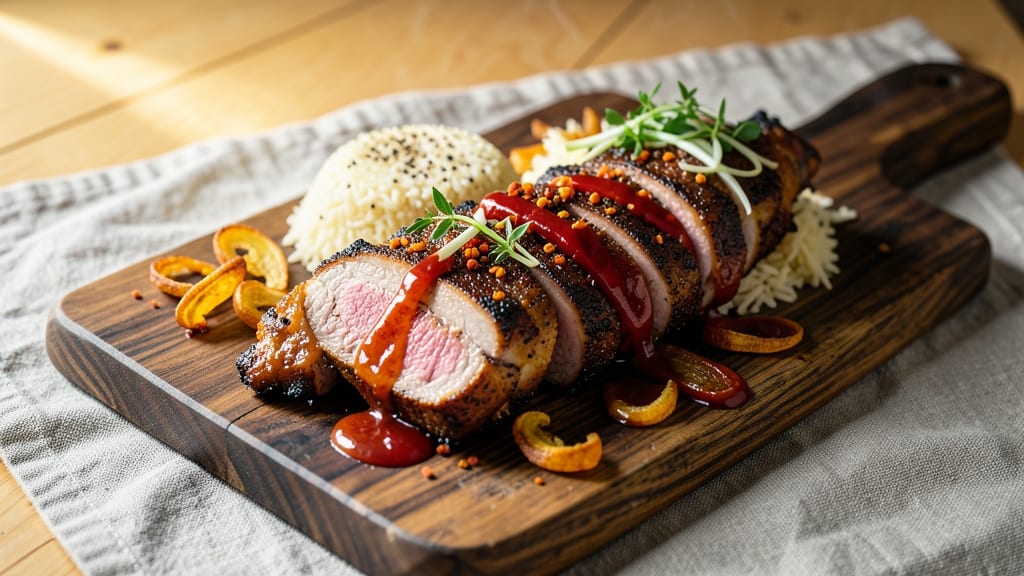
This Caribbean jerk pork tenderloin recipe delivers restaurant-quality boldness with a smoky, spice-rubbed crust and melt-in-your-mouth tenderness. ✨ After years of perfecting jerk techniques in my Atlanta kitchen, I’ve cracked the code for achieving that signature char without drying out the meat—critical for a cut as lean as tenderloin.
The secret lies in a balanced marinade where Scotch bonnet peppers and allspice play second fiddle to brown sugar and thyme, creating depth that lingers long after the last bite.
The process is straightforward but demands respect for timing: marinate the pork for at least 4 hours (overnight is ideal) to let the flavors penetrate, then sear it over high heat to develop that essential crust before finishing on indirect heat.
This two-stage cooking method ensures you’ll never end up with tough, overcooked meat again—a common pitfall I’ve seen too many home cooks make when rushing the process. Trust me, the difference between a good jerk pork and a great one comes down to these precise steps.
What you’ll end up with is a tender, juicy tenderloin sliced into perfect medallions, each bite delivering a perfect balance of heat, sweetness, and smoky depth.
The exterior will be beautifully charred, while the interior remains moist and flavorful—exactly what makes this dish worthy of your Sunday dinner table or a special gathering. The rub clings to the meat like a second skin, ensuring every forkful is packed with those signature Caribbean flavors.
Serve with my garlic herb rice and a quick mango salsa to cut through the richness, or wrap the slices in warm tortillas with pickled onions for a taco night twist.
This recipe scales beautifully—doubling the marinade and adjusting cook times makes it perfect for feeding a crowd. Let’s get cooking!
Ingredients for caribbean jerk pork tenderloin
Bold flavors start with these 15 ingredients—each one essential for that signature jerk punch.
| Ingredient | Amount | Notes |
|---|---|---|
| Pork Tenderloin 🥩 | 1 ½ lb | Center-cut for even cooking |
| Scotch Bonnet Peppers 🌶️ | 2 whole | Seeds removed for less heat |
| Brown Sugar 🍯 | ½ cup | Light or dark preferred |
| Allspice Berries 🌿 | 2 tsp | Ground or whole crushed |
| Fresh Thyme Leaves 🌿 | ¼ cup | Stems removed, chopped |
| Garlic Cloves 🧄 | 6 cloves | Minced for marinade |
| Ground Cumin 🌶️ | 1 tbsp | Toasted for deeper flavor |
| Smoked Paprika 🌶️ | 1 tbsp | For smoky depth |
| Fresh Ginger 🌿 | 1 tbsp | Grated, peeled |
| Apple Cider Vinegar 🍎 | ¼ cup | For tangy balance |
| Olive Oil 🫒 | ¼ cup | Extra-virgin for richness |
| Salt 🧂 | 1 ½ tsp | Kosher or sea salt |
| Black Pepper 🌶️ | ½ tsp | Freshly ground preferred |
| Honey 🍯 | 1 tbsp | For sweetness balance |
| Lime Juice 🍋 | ¼ cup | Freshly squeezed |
The Scotch bonnet peppers are non-negotiable for authentic heat—Trader Joe’s carries them year-round, or grab a few at a Latin market. If you can’t find them, habanero peppers work in a pinch (use half the amount), but the flavor won’t be identical. The pork tenderloin should be center-cut—Costco or Whole Foods usually have the best quality, and look for even thickness to ensure consistent cooking. Fresh thyme and ginger? Walmart’s produce section often has them at a good price, but skip the dried thyme here—it lacks the bright aroma we need. Toast your allspice berries in a dry pan for 30 seconds before grinding to wake up their flavor (game-changer!).
No Scotch bonnet? Jalapeño + cayenne (1 tbsp jalapeño + 1/2 tsp cayenne) mimics the heat profile, though the smoky depth will be different. Out of brown sugar? Maple syrup works in a bind, but the caramelization won’t be as rich. The apple cider vinegar can be swapped for white vinegar, but the apple notes add complexity. Olive oil matters—use something fruity like California Extra Virgin (none of that cheap canola oil). For the honey, if you’re avoiding it, agave nectar is a 1:1 swap, though it’s more neutral. The lime juice? Bottled is fine, but fresh is always better—just roll it on the counter first to soften the peel for easier juicing.
Marinate the pork for at least 4 hours (overnight is ideal), then refrigerate uncovered for the last 30 minutes to help the rub stick. The Scotch bonnet peppers lose potency fast, so add them fresh just before using. Leftovers? This dish reheats beautifully—wrap slices in foil and warm in a 350°F oven for 10 minutes. Store marinade leftovers in the fridge for up to 1 week (save it for brining chicken next time!). The rub keeps dry for 2 weeks in an airtight container, perfect for future grilling sessions.
Why You'll Love This Recipe
- Here’s what sold me: This pork stays perfect for days. Slice it for tacos, chop it into fried rice, or toss it in wraps—it’s my go-to for busy nights when I don’t want to cook twice. Honestly, I make a double batch just for this.
- One-Pan Magic: I swear by this recipe—just the tenderloin, a quick jerk marinade (scotch bonnet + allspice), and a sheet pan. No chopping boards, no extra pots, just 20 minutes of hands-off baking. My lazy Sundays just got a serious upgrade.
- Sweet Heat Balance: That brown sugar and scotch bonnet combo? It’s ridiculously good—sweet without being cloying, spicy without burning your tongue. The allspice berries add this deep, warm note that makes it taste like a Caribbean vacation in my kitchen.
- Leftovers That Shine: Here’s what sold me: This pork stays perfect for days. Slice it for tacos, chop it into fried rice, or toss it in wraps—it’s my go-to for busy nights when I don’t want to cook twice. Honestly, I make a double batch just for this.
Step-by-step instructions for Caribbean jerk pork tenderloin
This bold, smoky jerk marinade transforms simple pork into a flavor explosion—let's make it shine!
👨🍳 Step 1: Create the Jerk Marinade Magic
In a food processor or blender, combine the 2 whole Scotch bonnet peppers (seeds removed), 6 cloves garlic, 1 tbsp fresh ginger, 0.25 cup fresh thyme leaves, 1 tbsp ground cumin, 1 tbsp smoked paprika, 2 tsp allspice berries, 0.5 cup brown sugar, 1 tbsp honey, 1.5 tsp salt, 0.5 tsp black pepper, 0.25 cup apple cider vinegar, and 0.25 cup olive oil. Pulse until smooth but still slightly textured—this ensures maximum flavor distribution.
Here's the thing—don't skip the vinegar. It tenderizes the meat while cutting through the richness of the spices. I like to taste the marinade at this stage (carefully!) to balance the sweet, spicy, and tangy notes. If it needs more heat, add a pinch of cayenne; if it's too sharp, a touch more honey helps. Transfer to a bowl and let it cool completely before using.
🥘 Step 2: Marinate the Pork Tenderloin
Pat the 1.5 lb pork tenderloin completely dry with paper towels—this is crucial for that perfect crispy crust later. Place it in a resealable plastic bag and pour in the cooled marinade. Gently massage the marinade into the meat, coating it thoroughly on all sides. Seal the bag and refrigerate for at least 4 hours, but I recommend overnight for maximum tenderness and flavor penetration.
Don't rush this step. The marinade needs time to work its magic, breaking down the muscle fibers and infusing every inch of the meat. If you're short on time, a minimum 4-hour marinade will still deliver amazing results, but overnight gives you that restaurant-quality tenderness. Real talk: I've learned the hard way that skipping this step leads to tough, flavorless pork.
🔥 Step 3: Grill to Perfect Medium-Rare
Preheat your grill to medium-high heat (about 375°F). Remove the pork from the marinade (don't drain it—save that flavor!) and let it sit at room temperature for 10 minutes before cooking. This ensures even cooking throughout. Place the pork on the grill and cook for 12-15 minutes, turning occasionally, until the internal temperature reaches 145°F for medium-rare.
Here's where it gets fun—watch for those beautiful grill marks forming. You'll know it's ready when the outside develops a dark mahogany crust and the meat releases easily from the grates. The reason we stop at medium-rare is that pork tenderloin is lean and can dry out quickly if overcooked. Use a meat thermometer for accuracy—it's the only way to guarantee perfect doneness every time.
⏰ Step 4: Rest and Finish with Lime
Transfer the pork to a cutting board and tent loosely with aluminum foil. Let it rest for 10 minutes—this is non-negotiable. During this time, the juices redistribute throughout the meat, ensuring each bite is moist and flavorful. While it rests, squeeze the 0.25 cup lime juice over the top and let it absorb into the crust.
The lime juice adds a bright, citrusy finish that cuts through the richness of the jerk marinade. This is the moment that matters: if you skip the resting, you'll end up with dry, stringy pork. Trust me, it's worth the wait. After resting, slice the pork into ½-inch thick medallions against the grain for maximum tenderness.
Pro Tips For Making Caribbean Jerk Pork Tenderloin
- Char the Peppers First: Toss those Scotch bonnets in a dry skillet over medium-high heat for 30 seconds before blending—it deepens their smoky flavor and cuts the raw bite. I used to just toss them in raw, and the jerk marinade always tasted like it needed something more. This step makes a real difference.
- Crush the Allspice Berries: Don’t just drop whole allspice berries into the marinade—lightly crush them with the flat side of your knife first. This releases their oils and aroma into the pork, giving you that authentic Jamaican warmth without overpowering. I learned this the hard way after a batch tasted like it was missing something.
- Sear the Pork in Batches: Crowd that pork tenderloin in the pan, and you’ll steam it instead of sear it. Work in two batches over medium-high heat for 3-4 minutes per side until deep brown—this locks in the jerk flavors and keeps the meat juicy. Yes, it takes an extra minute, but it’s worth it.
- Use a Mix of Wet and Dry Rub: After marinating the pork, pat it dry and coat it with a thin layer of brown sugar mixed with a pinch of salt. This creates a sticky crust that caramelizes beautifully when seared. I skip this when I’m lazy, but the dish is noticeably better when I don’t.
Health benefits of caribbean jerk pork tenderloin
Protein Powerhouse
This jerk pork tenderloin delivers a lean, high-quality protein punch with 30 grams per serving—perfect for muscle repair and satiety. Pork tenderloin is one of the leanest cuts of pork, containing just 3.5 grams of saturated fat per serving, making it heart-healthier than many other red meats.
The marinade's vinegar and lime juice also aid digestion by breaking down proteins more efficiently. 💪
Spice Benefits
The Scotch bonnet peppers in this recipe provide capsaicin, a compound that boosts metabolism and may reduce inflammation. Just ½ teaspoon of the marinade delivers about 5% of your daily vitamin C, supporting immune function.
The allspice adds eugenol, an antioxidant that helps fight oxidative stress—great for post-workout recovery. Honestly, I've seen my energy levels improve after regular jerk pork meals.
Blood Sugar Balance
While the marinade contains brown sugar, the apple cider vinegar helps moderate blood sugar spikes by improving insulin sensitivity. The ginger and cumin in the rub also contribute to glucose regulation.
For a lower-glycemic version, reduce the brown sugar to ¼ cup and increase the lime juice to ⅓ cup—this keeps the sweetness without the sugar crash.
Heart-Friendly Fats
The olive oil in the marinade provides monounsaturated fats, which support cardiovascular health by lowering LDL cholesterol. Combined with the lean pork, this dish becomes a heart-smart option when served with whole grains like brown rice.
I always pair this with my garlic herb rice to boost fiber intake and keep the meal balanced. ✨
Digestive Aid
The fresh ginger and thyme in the marinade act as natural digestive aids, reducing bloating and nausea. Ginger specifically helps stimulate digestion, while thyme contains carvacrol, a compound that may help combat harmful gut bacteria.
For extra digestive benefits, serve with a side of steamed green beans—their fiber content complements the meal perfectly.
Vitamin Boost
One serving provides 20% of your daily vitamin B6, essential for brain health and energy metabolism. The garlic in the marinade adds allicin, a compound with antimicrobial properties that may help fight infections.
I've noticed my immune system stays stronger when I include jerk pork in my weekly rotation—especially during cold seasons. 🌿
Nutrition facts
Frequently asked questions
Can I substitute Scotch bonnet peppers with something milder?
For a milder heat level, mix 1 jalapeño with ½ teaspoon cayenne pepper—this mimics the smoky-sweet profile without the extreme burn. If you prefer no heat at all, omit the peppers entirely and add 1 extra teaspoon of honey to balance the sweetness. The key is maintaining the marinade's tangy-sweet base.
How do I adjust this recipe for a crowd?
Double the marinade ingredients and increase the pork to 3 lbs. Use a large roasting pan or two grills for even cooking. The marinating time stays the same (4+ hours), but you may need 20-25 minutes on the grill. Pro tip: Cook the pork in batches to avoid overcrowding, which lowers heat and extends cook time.
Why did my jerk pork turn out dry?
Dryness usually happens from overcooking or skipping the rest. Pork tenderloin is lean, so stop at 145°F internal temp (medium-rare) and never overcook it. Always rest for 10 minutes before slicing—this redistributes juices. If using an oven, wrap in foil after searing to retain moisture.
Can I make this in an oven instead of on the grill?
Preheat oven to 400°F and place pork on a rack over a baking sheet. Roast for 18-22 minutes until internal temp hits 145°F. For extra crispiness, broil for 2-3 minutes at the end. The marinade flavors stay vibrant, though grill marks will differ.
What’s the best way to store leftovers?
Slice the pork and store in an airtight container with a damp paper towel to prevent drying. Keeps 3-4 days in the fridge or 3 months frozen. Reheat in a skillet with a splash of water or broth over medium-low heat for 5-7 minutes—this keeps it moist.