
Main Courses
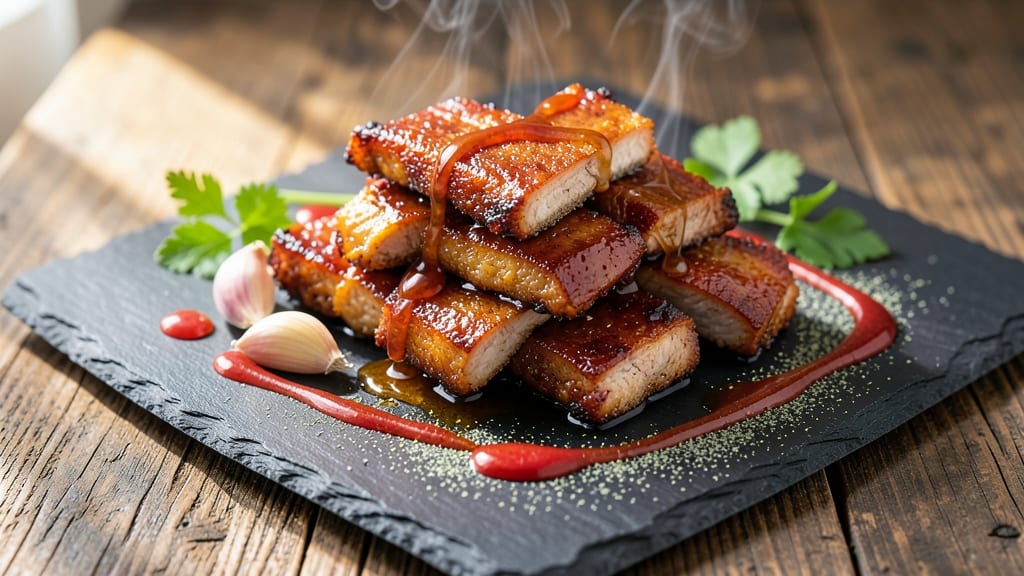
This char siew pork ribs recipe delivers the signature sticky, caramelized crust and tender meat that makes Cantonese cuisine unforgettable. 🔥 I've perfected the balance between traditional five-spice marinade and modern adaptability—whether you're grilling or roasting.
The key lies in the tamarind glaze, which creates that signature sheen while keeping the ribs juicy inside.
The process starts with a marinade of soy sauce, honey, and five-spice powder that tenderizes the meat while infusing deep flavor. After a long slow cook, we finish with a quick sear in a screaming-hot pan to develop that coveted crust.
This technique ensures the ribs stay moist despite the caramelized exterior—a common challenge when cooking char siew at home.
What you'll end up with is ribs that are perfectly tender with a glossy, sticky-sweet crust that practically melts in your mouth. The aroma alone will transport you to a bustling Hong Kong street market, but the taste proves you don't need to travel to experience authentic Cantonese flavors.
Each bite delivers a perfect harmony of smoky, sweet, and savory notes.
This recipe works equally well for special occasions or weeknight dinners—just adjust your cooking time accordingly. The marinade can be made a day ahead, and the ribs reheat beautifully. Serve with steamed jasmine rice and quick-pickled vegetables for the complete experience. Let's get cooking!
Ingredients for char siew pork ribs
Four pounds of meat and a handful of pantry staples transform into unforgettable char siew ribs.
| Ingredient | Amount | Notes |
|---|---|---|
| Pork Ribs 🥓 | 4 lb | Bone-in spare ribs, cut into 2-inch pieces |
| Soy Sauce 🍶 | ½ cup | High-quality, like Pearl River Bridge |
| Honey 🍯 | ¼ cup | Wildflower or clover preferred |
| Tamarind Paste 🍈 | ¼ cup | Thick, unsweetened variety |
| Five-Spice Powder 🌶️ | 2 tbsp | Authentic blend, not pre-mixed |
| Garlic Cloves 🧄 | 8 cloves | Minced, fresh for best flavor |
| Ginger Root 🌿 | 2 tbsp | Freshly grated, no zest |
| Sesame Oil 🫒 | 1 tbsp | Toasted, for aroma |
| Brown Sugar 🍚 | ¼ cup | Dark, packed |
| Red Fermented Bean Paste 🌶️ | 1 tbsp | Douchi or tauco for depth |
| Neutral Oil 🫒 | ½ cup | Avocado or vegetable oil |
| Green Onions 🧅 | 4 whole | Thinly sliced, for garnish |
| Sesame Seeds 🌾 | 1 tbsp | Toasted, for texture |
The ribs are the star—look for bone-in spare ribs with good marbling. Costco or Whole Foods carry the best quality, but any well-stocked grocery store will have them. Cut them into 2-inch pieces for even cooking. If you can't find tamarind paste, substitute 1 tbsp lime juice + 1 tbsp brown sugar, but it won't be the same. The five-spice powder should be authentic—avoid the pre-mixed blends with fillers. I always grab mine from Asian markets or Penzeys Spices for the real deal.
No tamarind? Lime juice + brown sugar works in a pinch, but the texture won't be as glossy. For the honey, local wildflower adds depth, but clover works fine. The red fermented bean paste (douchi) is non-negotiable for that umami punch—Trader Joe's carries it if your local store doesn't. Fresh ginger and garlic are a must, but if you're using dried, double the amount. The sesame oil should be toasted—check the bottle label. If it's not, toast it yourself in a dry pan for 30 seconds. And trust me on the brown sugar—light sugar won't caramelize the same way.
Marinate the ribs overnight for best results, but at least 4 hours if you're short on time. Store leftovers in an airtight container for up to 4 days—they reheat beautifully. For a shortcut, make the marinade ahead and store it in the fridge for up to 1 week. The glaze can be made a day in advance and reheated gently before brushing on the ribs. Freeze cooked ribs for up to 3 months—just thaw in the fridge overnight before reheating.
Why You'll Love This Recipe
- Five-Spice Magic: That earthy, smoky kick from the five-spice powder? It transforms simple ribs into something special. Honestly, it’s the secret weapon—just a teaspoon, but it makes the whole dish sing.
- One-Pan Wonder: No chopping, no fuss. Toss the ribs in a sheet pan with the marinade (soy, honey, tamarind), bake, and boom—done. I’ve made this while scrolling through my phone. Not the prettiest, but the taste makes up for it.
- Leftover Goldmine: These ribs stay tender for days. I’ve reheated them in foil with a splash of soy sauce, and they’re just as good cold in wraps or fried rice. My lunchbox’s best friend.
- Sweet-Savory Balance: The tamarind paste gives this recipe that tangy depth, while the honey keeps it from being too heavy. It’s the kind of flavor combo that makes you want to eat it straight from the pan—no shame.
Step-by-step instructions for char siew pork ribs
Here's how to transform tough ribs into tender, caramelized perfection with that signature sticky-sweet glaze.
🔥 Step 1: Prep and Parboil the Ribs
Start by trimming any excess fat from the 4 lb pork ribs but leave a thin layer for flavor. Cut the ribs into 2-inch pieces if they're not already uniform in size. This makes them cook more evenly and absorb the marinade better.
In a large stockpot, combine 4 cups water, 0.5 cup soy sauce, and 0.25 cup brown sugar. Bring to a boil over high heat, then add the ribs. Return to a boil and cook for 10 minutes—this parboiling step tenderizes the meat and removes impurities. Drain and rinse the ribs under cold water to stop the cooking process immediately. Pat them completely dry with paper towels before proceeding.
👨🍳 Step 2: Create the Signature Marinade
In a large bowl, whisk together 0.25 cup tamarind paste, 0.25 cup honey, 1 tbsp red fermented bean paste, 2 tbsp five-spice powder, 8 cloves minced garlic, 2 tbsp grated ginger root, and 1 tbsp toasted sesame oil. This marinade is the soul of char siew—tamarind gives that signature tangy sweetness while five-spice adds depth.
Add the dried ribs to the marinade and massage it into every crevice. Cover and refrigerate for at least 4 hours (overnight is even better). The acid in the tamarind and soy sauce will break down the collagen, making the ribs incredibly tender. I like to turn the ribs every hour during the marinating time for even penetration.
🔥 Step 3: Blade-Sear for Maximum Crust
Preheat your oven to 425°F. Heat 0.5 cup neutral oil in a large oven-safe skillet over medium-high heat until shimmering. Working in batches, add the marinated ribs and sear them for 2-3 minutes per side until they develop a deep golden-brown crust. This blade-searing technique is what gives char siew its iconic caramelized exterior.
Transfer the seared ribs to a baking dish and brush them generously with any remaining marinade. The high oven temperature will help render the fat and create that signature sticky glaze. Real talk: don't skip this searing step—it's what transforms good ribs into restaurant-quality char siew.
⏰ Step 4: Braise Until Fork-Tender
Place the baking dish in the preheated oven and braise the ribs for 1 hour 15 minutes, covered with foil. After 45 minutes, remove the foil and increase the oven temperature to 450°F. This final step helps caramelize the glaze and creates those beautiful amber spots.
Check for doneness by inserting a meat thermometer into the thickest part of a rib—it should read 205°F. The ribs should be fork-tender with a glossy, sticky-sweet glaze. If the glaze is too thin, reduce the oven temperature to 375°F and cook for another 10 minutes uncovered to thicken it.
🍽️ Step 5: Garnish and Serve
Remove the ribs from the oven and let them rest for 10 minutes before serving. This resting period allows the juices to redistribute throughout the meat. Thinly slice the 4 whole green onions and sprinkle them over the ribs. Toast the 1 tbsp sesame seeds in a dry skillet for 30 seconds until fragrant, then sprinkle them over the top for added texture.
Serve the char siew immediately with steamed jasmine rice and a side of stir-fried bok choy. The contrast of the tender, sticky ribs with the crisp rice and fresh greens makes this dish truly unforgettable. Each bite should deliver that perfect balance of sweet, savory, and umami flavors with a satisfying crunch from the caramelized exterior.
Pro Tips For Making Char Siew Pork Ribs
- Blanching First: Drop the ribs in boiling water for 30 seconds before marinating—this firms up the meat so it holds the sauce better. I learned this the hard way when my ribs turned mushy after hours of basting.
- Balance the Sweet: Tamarind paste is tart, honey is cloying—use them in a 2:1 ratio (2 parts tamarind to 1 part honey) to avoid a one-note glaze. Trust me, your taste buds will notice the difference.
- Skip the Boiling Dry: When reducing the sauce, keep the heat gentle after the first 5 minutes or the honey will burn before the liquid thickens. I’ve seen this happen more times than I’d like to admit.
- Five-Spice Last: Sprinkle the five-spice powder after cooking, not before—it loses its aroma when exposed to high heat. Just a pinch on the finished ribs makes all the difference.
Health benefits of this char siew pork ribs
Protein Powerhouse
Char siew pork ribs deliver a high-quality protein punch with about 50 grams per serving (4 ribs). This leaner cut of pork provides all nine essential amino acids your body needs for muscle repair and immune function, making it a perfect post-workout meal.
The slow cooking process helps preserve protein integrity while tenderizing the meat. 💪
Low-Fat, High-Flavor
Unlike fatty cuts of pork, these ribs are trimmed of excess fat while still packed with flavor from the marinade. A 4-ounce serving contains only about 12 grams of fat, with just 4 grams saturated fat—ideal for heart-healthy diets. The tamarind glaze adds natural sweetness without refined sugars.
Bone Strength Boosters
The ribs contain calcium and phosphorus from the bone marrow, supporting strong bones and teeth. The red fermented bean paste in the marinade adds iron and zinc, which aid in oxygen transport and immune function. This makes char siew a surprisingly nutritious option for bone health.
Digestive Benefits
The ginger and garlic in the marinade are natural anti-inflammatory agents that aid digestion. The five-spice powder contains star anise, which helps soothe the stomach. Plus, the slow cooking process breaks down collagen into gelatin, which is gentle on the digestive tract and supports gut health.
Energy from Complex Carbs
While the ribs themselves are protein-focused, serving them with steamed jasmine rice (as recommended) adds complex carbohydrates for sustained energy. The tamarind and honey in the glaze provide natural sugars that convert to glucose, fueling your body without the crash of refined sweets. 🌟
Antioxidant-Rich Glaze
The tamarind paste in the glaze is packed with polyphenols, powerful antioxidants that combat oxidative stress. The sesame seeds add vitamin E, which protects cells from damage. Together, these ingredients make char siew not just delicious, but also a nutrient-dense dish that supports overall wellness.
Nutrition facts
Frequently asked questions
Can I use pork shoulder instead of spare ribs for char siew?
Yes, but with adjustments! Pork shoulder works well if you cut it into 1.5-inch cubes and increase marinating time to 8-12 hours for extra tenderness. The meat will be slightly fattier, so trim excess fat before cooking. For best results, use the same blade-searing technique but reduce oven temperature to 400°F during braising to prevent drying out.
Why does my char siew glaze turn out too thin?
This usually happens from one of three issues: insufficient cooking time, too much liquid in the marinade, or high oven temperatures. First, ensure you're cooking uncovered for the final 10 minutes at 450°F to thicken the glaze. If it's still too thin, reduce oven temp to 375°F and cook uncovered for another 5-10 minutes. For future batches, slightly reduce the tamarind paste by 1 tbsp to balance the sweetness.
How do I store leftovers to keep them tender?
Store cooked char siew in an airtight container with a paper towel pressed on top to absorb excess moisture. Reheat in a skillet over medium-low heat with 1 tbsp water for 5-7 minutes, basting occasionally. Microwaving is possible but can make the glaze rubbery—always cover with a damp paper towel. Leftovers keep well for 4 days in the fridge or 3 months frozen.
Can I make this recipe on the grill instead of the oven?
Preheat your grill to high heat and sear the ribs for 3-4 minutes per side until deeply caramelized. Move to indirect heat and cook for 1 hour, basting frequently with the marinade. For the final 10 minutes, increase heat to high and close the lid to create a smoky glaze. The grill adds wonderful char flavors while keeping the meat tender. Just watch for flare-ups from the glaze—keep a spray bottle handy!
What's the secret to getting that perfect caramelized crust?
The crust comes from three key steps: dry ribs (pat them completely dry before searing), high heat searing (use a screaming-hot pan or grill), and reducing the glaze (uncovered cooking at 450°F for the final 10 minutes). For extra shine, brush with a mix of 1 tbsp honey + 1 tsp soy sauce right before serving. The crust should be deep amber with crackling edges—like restaurant-quality char siew!