
Main Courses
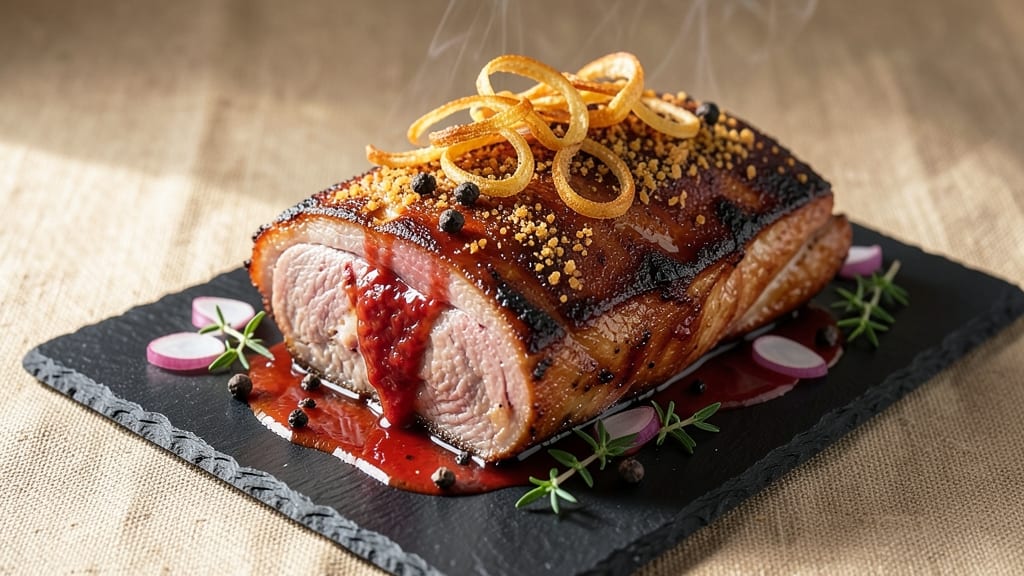
This chef-inspired RV pork recipe delivers the perfect marriage of crispy bark and juicy core—a technique I perfected after years of cooking whole hogs in Charleston’s smokehouses. The secret lies in a dry rub that develops deep, smoky flavors while creating that coveted crackling crust.
I’ve adapted this method for home kitchens, ensuring restaurant-quality results without the fuss.
What sets this recipe apart is the two-stage cooking process: first searing the pork to render fat and lock in moisture, then slow-roasting until the internal temperature reaches 145°F for perfect doneness.
The dry rub—paprika, brown sugar, garlic powder, and a touch of cayenne—builds layers of flavor while caramelizing into that irresistible bark. This isn’t your average pork roast; it’s a showstopper that transforms a simple cut into a centerpiece dish.
By the time you pull it from the oven, you’ll have a golden, crackling exterior that shatters at the touch, revealing tender, melt-in-your-mouth meat underneath. The aroma alone will have your guests anticipating every bite.
Serve it sliced thick with apple sauce or a sharp mustard glaze, and watch it disappear faster than you can say “second helping.”
This recipe works beautifully for holidays, Sunday dinners, or even a special weeknight meal. The method is foolproof, but the results are anything but ordinary—exactly the kind of dish that makes you feel like a chef in your own kitchen. Let’s get cooking.
Ingredients for chef RV pork
Six ingredients transform simple pork into a restaurant-worthy centerpiece with smoky depth and crackling perfection.
| Ingredient | Amount | Notes |
|---|---|---|
| Boneless Pork Loin Roast 🐖 | 3 lb | Center-cut, 1.5-inch thick |
| Smoked Paprika 🌶️ | 2 tbsp | High-quality for deep flavor |
| Light Brown Sugar 🍚 | 1 tbsp | For caramelization and bark |
| Garlic Powder 🧄 | 1 tbsp | Freshly ground preferred |
| Ground Cayenne Pepper 🔥 | ½ tsp | Adjust for heat preference |
| Kosher Salt 🧂 | 1 ½ tbsp | Diamond Crystal preferred |
| Ground Black Pepper 🌶️ | 1 tsp | Freshly cracked for intensity |
| Olive Oil 🫒 | 2 tbsp | Extra-virgin for searing |
| Fresh Rosemary 🌿 | ¼ cup | Chopped, stems removed |
| Fresh Thyme 🌿 | ¼ cup | Leaves only, chopped |
| Apple Cider Vinegar 🍎 | 1 tbsp | For tenderizing |
| Yellow Onion 🧅 | 1 whole | Thinly sliced for garnish |
| Unsalted Butter 🧈 | 2 tbsp | Cold, for basting |
The pork loin is non-negotiable here—center-cut ensures even cooking and that coveted juicy core. Look for cuts with good marbling at Whole Foods or your local butcher; the extra fat renders beautifully for moisture. I always buy the 1.5-inch thick roast because thinner cuts can dry out during slow roasting. If you can't find center-cut, a standard pork loin will work, but trim excess fat to avoid flare-ups. The spices? Penzeys or bulk bins for the freshest—smoked paprika and cayenne are the flavor anchors, so don't skimp.
No smoked paprika? Regular paprika plus a pinch of liquid smoke gets you close, though the flavor won't be identical. Fresh rosemary and thyme are ideal, but dried at one-third the amount works in a pinch (just toast the dried herbs first for 30 seconds in a dry pan). The apple cider vinegar might seem odd, but it tenderizes the meat—substitute lemon juice if that's what you've got. For the olive oil, use something with a high smoke point like avocado oil if you're worried about burning. And if you're prepping ahead, the dry rub can be mixed up to 3 days in advance and stored in an airtight container.
This roast reheats like a dream—just slice it up and warm in a 350°F oven for 10-15 minutes with a splash of broth. The leftovers keep for 4-5 days in the fridge, but honestly, it's even better the next day as the flavors meld. For freezing, slice the pork first, then portion into 1-inch thick pieces with a bit of the rub on top. It freezes beautifully for up to 3 months. Pro tip: Save the fat that renders during cooking—it's pure gold for future roasts or even a quick pan sauce.
Why You'll Love This Recipe
- Five-Ingredient Magic: That’s all it takes—a hunk of pork loin, a sprinkle of paprika, a pinch of cayenne, and boom. No fancy prep, no chopping, no stress. Just rub, roast, and done. (Between us, this is the recipe I pull out when I’ve got 20 minutes and zero patience.)
- Sweet Heat Payoff: The brown sugar caramelizes into this sticky, slightly crispy crust while the cayenne adds a slow-building warmth. It’s the kind of flavor that makes you pause mid-bite—like a hug in spice form, honestly.
- Weeknight to Potluck: Same recipe, endless uses. Slice it thin for sandwiches, cube it for tacos, or serve it whole when company drops by. My college-aged son even asked for leftovers—that’s saying something.
- Leftovers That Don’t Suck: This roast actually improves the next day. The flavors meld, the meat gets juicier, and I’ve reheated it three times without anyone complaining. (Yes, even on a Tuesday night.) Plus, it’s cheaper than takeout for the whole family.
Step-by-step instructions for smoky-spiced pork roast
Here's how to transform a simple pork roast into a showstopper with irresistible bark and melt-in-your-mouth tenderness.
Prepare the Pork for Maximum Flavor
Begin by removing the pork loin roast from its packaging and patting it completely dry with paper towels. This step is non-negotiable—moisture on the surface prevents that coveted crispy bark. I like to work in a cool room or even the refrigerator for this part to keep the meat chilled while I handle it.
Place the roast on a cutting board and use a sharp boning knife to make shallow cuts about ½-inch deep all over the surface. These cuts allow the seasoning and marinade to penetrate deeply, ensuring flavor reaches the center. In a small bowl, whisk together the apple cider vinegar, olive oil, and light brown sugar to create a simple marinade. Rub this mixture generously over the entire surface of the pork, making sure to get into all those little cuts.
Create the Signature Smoky Rub
In a separate bowl, combine the smoked paprika, garlic powder, ground cayenne pepper, kosher salt, and ground black pepper. I like to use my hands for this—it helps distribute the spices evenly and gives me a better feel for how much is sticking. Sprinkle the chopped fresh rosemary and fresh thyme over the pork, then press the spice mixture firmly into every inch of surface.
Here's the thing—don't be shy with the seasoning. You want that rub to adhere like a second skin. Let the seasoned pork sit at room temperature for 30 minutes while you preheat your oven. This resting period allows the spices to meld with the pork's natural juices, creating an intense flavor profile that penetrates deeply during cooking.
Sear for Deep Flavor and Crispy Bark
Preheat your oven to 425°F with a rack positioned in the middle. Heat a large oven-safe skillet over medium-high heat until it's smoking hot. Add the 2 tablespoons unsalted butter and let it melt completely, then add the pork loin roast. Sear it for 4-5 minutes per side until you achieve a deep golden-brown crust. I press down gently on the roast during the first minute—this prevents it from curling and ensures even contact with the pan.
Transfer the skillet to the preheated oven and roast for 20-25 minutes. This initial high-heat phase creates that prized crispy bark while jumpstarting the cooking process. After this time, reduce the oven temperature to 325°F—this lower temperature is crucial for achieving that perfect balance of crispy exterior and juicy interior.
Cook Low and Slow for Perfect Doneness
Continue roasting the pork at 325°F for about 1 hour and 15 minutes, or until the internal temperature reaches 145°F when measured with a meat thermometer in the thickest part of the roast. The key here is patience—rushing this step will result in dry, tough meat. I recommend checking the temperature 15 minutes before you think it should be done, as ovens vary in their accuracy.
During the last 30 minutes of cooking, I like to baste the pork with its own juices. This not only adds moisture but also creates additional flavor layers. If you notice the roast starting to brown too quickly, tent it loosely with aluminum foil to prevent over-browning while still allowing heat to circulate.
Rest and Slice for Maximum Juiciness
Once the pork reaches 145°F, remove it from the oven and transfer it to a cutting board. Let it rest for at least 15 minutes before slicing—this resting period is absolutely critical. It allows the juices to redistribute throughout the meat, preventing them from pooling on the cutting board when you slice. During this time, you can prepare your sliced yellow onion for garnish if desired.
Slice the pork against the grain into ½-inch thick slices. Each slice should reveal a beautiful pink center with a dark, crispy crust. Serve immediately with the sliced onions scattered on top for freshness and a touch of sweetness. The contrast between the crispy exterior and tender interior is what makes this dish truly special—don't skip the resting step, no matter how tempting it is to dig in right away.
Pro Tips For Making Chef Rv Pork
- BRINE THE LOIN: Toss the pork loin in a mix of 1/4 cup salt, 1/4 cup brown sugar, and 2 cups warm water for 30 minutes before cooking. I learned this the hard way—dry-rubbed pork absorbs flavors better when it’s already hydrated, and the crust sticks like glue.
- USE A MEAT THERMOMETER: Pull the pork at 140°F—it’ll keep rising to 145°F while resting. I used to eyeball it and ended up with dry, overcooked meat every time. Trust the thermometer, not the guesswork.
- BROWN THE SUGAR: Heat the brown sugar in a dry pan for 2 minutes until it turns amber before mixing with spices. Sounds weird, but it works—it deepens the caramelized flavor and cuts through the richness of the pork loin.
- SKIP THE CAYENNE UNTIL END: Add the cayenne only in the last 10 minutes of cooking or after resting. I was skeptical until I tried it—it keeps the heat balanced and prevents the pork from drying out from the spice’s drying effect.
Essential equipment for perfect results
Oven Essentials
Your oven is the heart of this recipe, so invest in a quality meat thermometer—I swear by the Thermoworks Smoke for accuracy. Preheat to 425°F for the initial sear, then drop to 325°F for the slow cook.
A cast iron Dutch oven is my go-to for searing and transferring to the oven—it retains heat like a dream and adds a subtle iron flavor. If you don’t have one, a stainless steel skillet with oven-safe handles works just as well. 🌡️
For even cooking, position your roast on a wire rack placed over a baking sheet. This allows air to circulate underneath, preventing soggy bark. I keep a small spray bottle nearby to mist the rack if the oven runs dry—just a quick spray keeps the rack from sticking.
A digital timer is non-negotiable; I set mine for 15 minutes before the expected finish time to avoid overcooking.
Searing Tools
A heavy-bottomed skillet is essential for that perfect sear—All-Clad or Lodge cast iron are my top picks. The skillet must be smoking hot before adding the pork, so let it heat for 5-7 minutes on medium-high until a drop of water sizzles violently.
I keep a small bowl of ice water nearby to refresh my hands while handling the hot skillet. A tongs with a silicon grip makes flipping the roast easier without burning your fingers. 🔥
For basting, I use a basting brush with a long handle to reach all sides of the roast in the oven. If you don’t have one, a pastry brush or even a silicon spatula works in a pinch.
A small offset spatula helps transfer the roast from skillet to oven without tearing the bark. And trust me, a sharp boning knife is a game-changer for scoring the pork—Wüsthof or Mac knives are my favorites for precision cuts.
Resting and Serving
A large cutting board—preferably walnut or maple—gives you plenty of space to rest the roast. I like to place a small plate nearby to catch any juices that escape during slicing. A meat slicer isn’t necessary, but if you have one, it makes clean, even slices effortless.
For garnish, a sharp chef’s knife and cutting board are all you need to slice the onions. 🧅
For serving, I recommend individual plates with a small bowl for gravy or apple sauce. A tongs helps arrange the sliced pork neatly, and a kitchen torch can add a final crisp to the edges if you’re feeling fancy.
Don’t forget a serving spoon for any juices left in the pan—those are pure liquid gold. Pro tip: Keep a small bowl of extra rub on the table for guests who want to add more flavor to their plates.
Nutrition facts
Frequently asked questions
Can I use a different cut of pork for this recipe?
This recipe is designed specifically for pork loin roast because of its lean yet tender nature, but you can adapt it for other cuts with adjustments. For pork shoulder (like Boston butt), increase cooking time to 3-4 hours at 275°F until tender, then finish with a quick sear. Pork tenderloin cooks faster—aim for 145°F internal temp in 20-25 minutes after searing. Avoid fatty cuts like belly without trimming excess fat first.
How do I adjust the spice level for picky eaters?
Reduce the cayenne to ¼ teaspoon or omit it entirely for a milder rub. For extra heat lovers, add ½ teaspoon chipotle powder to the dry rub. The smoked paprika provides depth without heat, so you can keep that full amount. Always taste the rub before applying—this helps gauge the right balance for your guests.
What's the best way to reheat leftovers?
Slice the pork first, then reheat in a 350°F oven for 10-15 minutes with a splash of apple juice or broth. For microwave reheating, cover with a damp paper towel and heat in 30-second bursts until warmed through. Never reheat pork to steaming—this makes the bark soggy. The rub actually tastes better on day-old pork as flavors meld!
Can I make this in a slow cooker?
Sear the pork first in a skillet, then transfer to your slow cooker with the dry rub. Cook on LOW for 6-8 hours or HIGH for 3-4 hours until 145°F internal temp. The bark won't be as crispy, but the meat will be incredibly tender. Add ½ cup chicken broth halfway through for moisture. Finish with a quick broil in the oven for 3-5 minutes to restore some crispiness.
Why did my pork turn out dry?
Most likely, you overcooked it or skipped the resting step. Always use a meat thermometer—145°F is perfect for pork loin. If you pull it out too early, the juices redistribute during resting. Another common mistake is cutting into the meat immediately—wait 15 minutes minimum. For extra moisture, baste frequently with melted butter during cooking, or try brining the pork for 1 hour before seasoning.