
Main Courses
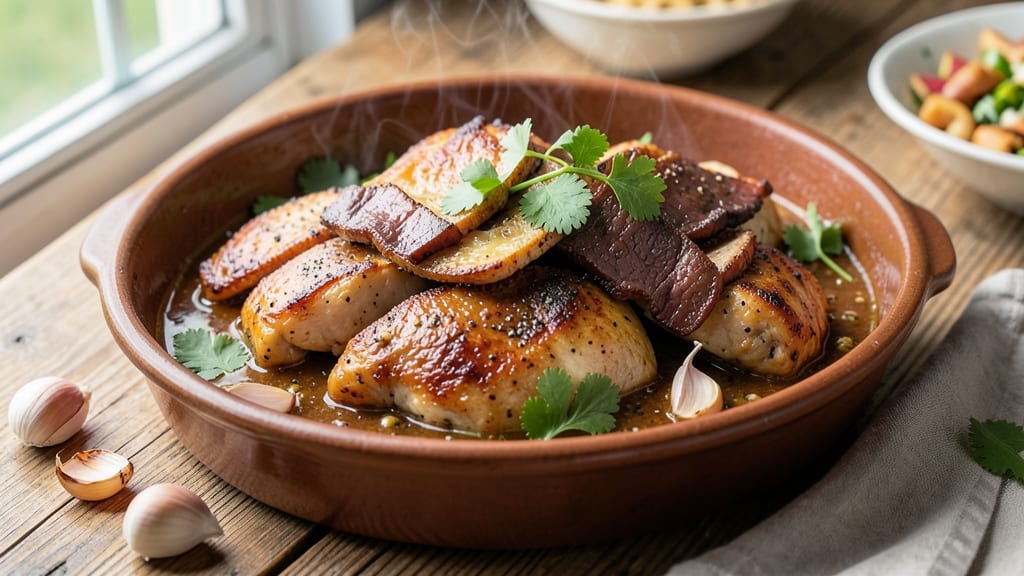
This Filipino-style chicken pork liver adobo delivers the bold, tangy-savory balance that makes it a comfort food staple across Southeast Asia. The secret lies in the slow braise that transforms tough cuts into melt-in-your-mouth tenderness while developing deep, caramelized flavors from the vinegar and soy sauce.
I first encountered this dish during my time in Charleston's Filipino community, where it became a weekly staple at family gatherings.
The magic happens through careful layering of flavors—sour from cane vinegar, salty from soy sauce, and umami from pork liver and garlic.
Unlike many adobo recipes, this version includes chicken thighs and pork belly for maximum richness, while the liver adds an extra layer of depth that elevates the dish beyond ordinary braises.
The recipe requires just 30 minutes of active prep followed by 2 hours of simmering, making it perfect for weekend cooking.
What you'll end up with is a dish that's equally impressive served over steamed rice or garlic fried rice, with the sauce clinging to every bite. The aroma alone—smoky, tangy, and slightly sweet—will have everyone gathered at your table.
This is the kind of recipe that transforms simple ingredients into something extraordinary through patience and technique.
Perfect for feeding a crowd or meal prepping for the week, this adobo keeps well for up to 5 days in the refrigerator. The flavors actually develop and intensify over time, making it even more delicious with each passing day.
Let's get started on this Filipino classic that combines comfort food with restaurant-quality depth.
Ingredients for chicken pork liver adobo
Pantry staples meet Filipino flavors—just 13 ingredients for a dish that tastes like home.
| Ingredient | Amount | Notes |
|---|---|---|
| Chicken Thighs 🍗 | 2 lb | Bone-in, skin-on preferred |
| Pork Belly 🐖 | 1 ½ lb | Skin-on, cut into 1-inch pieces |
| Pork Liver 🍖 | 1 lb | Fresh, trimmed of connective tissue |
| Cane Vinegar 🍶 | 1 cup | White or brown cane vinegar |
| Soy Sauce 🥫 | ½ cup | Dark soy sauce preferred |
| Garlic Cloves 🧄 | 12 cloves | Minced, about 3 tbsp total |
| Bay Leaves 🌿 | 2 whole | Dried, crumbled |
| Black Peppercorns 🌶️ | 1 tsp | Crushed |
| Sugar 🍚 | 2 tbsp | White granulated |
| Olive Oil 🫒 | 2 tbsp | For searing |
| Salt 🧂 | 1 ½ tsp | Kosher or sea salt |
| Green Onions 🧅 | 4 whole | Chopped, for garnish |
| Fresh Thai Basil 🌿 | ¼ cup | Or regular basil if unavailable |
The pork belly and liver are non-negotiable here—they bring that deep, savory punch that sets this adobo apart. Look for pork belly with good marbling at your local butcher or the meat counter, and ask for fresh pork liver (it should be a rich, deep red). I always grab Filipino-style soy sauce from the international aisle at Whole Foods or Asian markets—it's sweeter and more complex than regular soy sauce. Cane vinegar is key too; Filipino brands like Silver Swan are ideal, but any white or brown cane vinegar works in a pinch. The garlic should be fresh—those pre-minced jars just don't cut it for this dish.
No cane vinegar? Substitute with apple cider vinegar plus 1 tsp sugar to mimic the depth. Running out of dark soy sauce? Light soy sauce plus 1 tsp molasses gets you close. Fresh Thai basil hard to find? Regular basil or even cilantro will work, though the flavor won't be identical. The sugar balances the acidity—don't skip it! If you're using pre-cut pork belly, pat it dry first to help it brown better. And trust me, crushing those peppercorns makes a difference in the final dish.
This adobo tastes even better the next day as the flavors meld. Store leftovers in an airtight container in the fridge for up to 5 days. For meal prep, portion into jars with some of the sauce—it reheats beautifully. Freezes for 3 months too, though the texture changes slightly. I always make extra because it disappears fast—perfect for lunches or rice bowls all week.
Why You'll Love This Recipe
- One-Pot Magic: I swear by this recipe when I’m too tired to wash a million pans. Toss everything—chicken thighs, pork belly, and liver—into one deep skillet, add the vinegar and soy sauce, and let it simmer. The liver melts into the sauce like a secret weapon, and the pork belly renders down to crispy perfection without extra effort.
- Umami Bomb: That pork liver? It’s the star. When it softens in the vinegar-soy sauce mix, it releases this deep, savory richness that cuts through the richness of the pork belly. Honestly, the first time I tasted it, I nearly spilled my coffee—it’s that good. The cane vinegar adds a tangy kick that balances everything out.
- Leftovers That Shine: This dish tastes even better the next day, which is perfect because I always make double batches. Reheat it gently, and the flavors meld even more. Pack it for lunches, serve it at gatherings, or just eat it straight from the fridge—it’s that reliable. (Yes, even on a Tuesday night.)
- Budget-Friendly Feast: Pork liver and belly might sound fancy, but they’re actually budget-friendly cuts. A single batch feeds four heartily, and the chicken thighs stretch the meal further. Between us, this is how I feed my family well without breaking the bank—no takeout needed. The soy sauce and vinegar are pantry staples, so you’re not spending extra either.
Step-by-step instructions for chicken pork liver adobo
This Filipino braise delivers deep, tangy flavors through slow cooking—here's how to nail it every time.
Sear the Meats for Maximum Flavor
Heat a large Dutch oven over medium-high heat and add the 2 tablespoons olive oil. Once shimmering, add the 2 lb chicken thighs skin-side down and sear for 5-6 minutes until golden brown. Flip and sear the other side for another 3-4 minutes. Remove and set aside.
In the same pot, add the 1.5 lb pork belly in batches to avoid crowding. Sear each piece for 3-4 minutes per side until deeply browned. Transfer to a plate. Now for the pork liver—add it in batches and cook for just 1-2 minutes per side until lightly browned. The liver cooks quickly, so don't overdo it. Remove all meats and set aside.
Build the Adobo Base
In the same Dutch oven, reduce heat to medium and add the 12 cloves minced garlic. Sauté for 30 seconds until fragrant—don't let it brown or it'll turn bitter. Add the 2 crumbled bay leaves and 1 teaspoon crushed black peppercorns, stirring for 10 seconds to toast the spices.
Pour in the 1 cup cane vinegar and 0.5 cup soy sauce, scraping up any browned bits from the bottom. Add the 2 tablespoons sugar and 1.5 teaspoons salt, stirring until the sugar dissolves completely. Let the mixture simmer for 3-4 minutes until it reduces slightly and thickens into a glossy sauce.
Braise Until Tender and Tangy
Return all the meats to the Dutch oven, spooning the sauce over them. Bring to a gentle simmer, then reduce heat to low and cover partially with a lid. Let it cook for 45-50 minutes, stirring occasionally, until the chicken and pork belly are fork-tender and the flavors meld together.
After 45 minutes, check the pork liver—it should be just cooked through. If it's still slightly pink, cook for another 5 minutes uncovered to finish. The sauce should coat the back of a spoon and have a beautiful mahogany color with a glossy sheen. Taste and adjust seasoning if needed.
Finish and Garnish for Freshness
Remove the lid and let the adobo simmer uncovered for another 5-7 minutes to thicken the sauce further. The liquid should reduce until it just coats the meats. Stir in the 0.25 cup chopped fresh Thai basil and 4 chopped green onions, letting them wilt slightly in the hot sauce.
Serve immediately over steamed rice, spooning the meats and sauce generously over each portion. The combination of tender chicken, fatty pork belly, and rich pork liver creates a harmonious balance, while the tangy vinegar sauce cuts through the richness perfectly. Save any leftovers—the flavors only improve overnight!
Pro Tips For Making Chicken Pork Liver Adobo
- SEAR THE LIVER FIRST: Pork liver turns to mush if you toss it in with the other meats. Brown it separately in a hot pan for 2-3 minutes per side—just until the edges crisp slightly—before adding it to the adobo. I learned this the hard way after ending up with a gray, rubbery mess in my first batch.
- USE AGED VINEGAR ONLY: Skip the cheap white vinegar—this dish demands cane vinegar, preferably aged at least 6 months. The deeper, caramel notes cut through the richness of the pork belly and liver without overpowering. If you can’t find aged, simmer regular cane vinegar with a pinch of brown sugar for 10 minutes first to mellow it.
- DON’T BOIL THE SOY: Soy sauce loses its complexity when boiled dry. Once the adobo sauce starts reducing, lower the heat to a bare simmer and let it bubble gently. If it gets too aggressive, the sauce will turn bitter and cling like glue. A slow, steady reduction is what builds that glossy, balanced flavor.
- SALVAGE OVERCOOKED BELLY: Pork belly is forgiving—if it’s slightly dry after braising, slice it thin against the grain and add it back to the pan at the end. The residual heat and vinegar will tenderize it further while soaking up the sauce. This trick saved my Thanksgiving adobo when I misjudged the timing.
Flavor customization for this recipe
Spicy Kick Options
For those who crave heat, add 1-2 tablespoons of banana pepper flakes or 1-2 fresh Thai chilies (seeds removed) when building the adobo base. I like to toast the chilies briefly in the Dutch oven with the garlic for 30 seconds to deepen their flavor.
If you're using dried chilies, soak them in warm water for 10 minutes first to soften. Remember, the pork liver will absorb heat quickly—start with ½ teaspoon and adjust to taste at the end. 🌶️
Sweet Variations
Balance the tangy vinegar with extra sweetness by adding 1 extra tablespoon of sugar or 2 tablespoons of brown sugar to the braising liquid. For a caramelized touch, sprinkle 1 teaspoon of cornstarch mixed with 1 tablespoon water into the sauce during the final 5 minutes of simmering.
This creates a glossy, slightly sticky glaze that clings beautifully to the meats. I also love adding ½ cup pineapple juice to the initial sauce mixture for a tropical twist.
Umami Boosts
To intensify the savory depth, stir in 1 tablespoon of fish sauce or 1 teaspoon of oyster sauce when combining the vinegar and soy sauce. For a vegetarian-friendly boost, add 1 tablespoon of mushroom powder or 2 slices of dried shiitake mushrooms (rehydrated) to the base.
The pork liver already provides umami, but these additions take it to another level. I often keep a small bottle of Filipino-style fish sauce (like Red Boat) in my pantry specifically for adobo recipes.
Herb Swaps
If you can't find Thai basil, try 1 tablespoon of chopped Italian parsley or 1 teaspoon of dried oregano for a different but equally aromatic finish. For a citrusy note, add 1 tablespoon of chopped lemon zest or 2 tablespoons of chopped cilantro at the end.
Fresh herbs like mint or cilantro work beautifully too—just add them in the final 5 minutes of cooking to preserve their brightness. 🌿
Smoky Depth
For a smoky twist, add 1 teaspoon of smoked paprika or ½ teaspoon of liquid smoke to the base mixture. I prefer using smoked Spanish paprika for its subtle, earthy notes.
For a more pronounced smokiness, char 2 cloves of garlic and 1 slice of onion directly over a gas flame or under a broiler before mincing and adding to the sauce. This technique adds a layer of complexity that pairs perfectly with the vinegar's tang.
Nutrition facts
Frequently asked questions
Can I substitute chicken thighs with chicken breasts?
I don't recommend it—chicken breasts are leaner and can dry out during the long braising time. If you must use them, pound them to an even ½-inch thickness and reduce the cooking time to 30 minutes after adding the meats back to the pot. The texture won't be as rich, but it'll still work in a pinch.
What's the best way to cook pork liver safely?
Cook pork liver quickly over medium-high heat for just 1-2 minutes per side until it reaches 145°F internally. Overcooking turns it rubbery and gray. Remove it from the pot as soon as it's just cooked through—it'll continue carrying over. The liver should be warm red inside, not pink.
Can I make this adobo in a slow cooker?
Sear the meats first, then transfer everything to a 6-quart slow cooker on low for 4-5 hours or high for 2-3 hours. The slow cooker makes it even more tender. Just add ¼ cup water to prevent drying out, and thicken the sauce by simmering it uncovered for 10 minutes on the stovetop at the end.
How do I fix if the sauce is too thin?
Simmer the adobo uncovered for 10-15 minutes to reduce the liquid naturally. If it's still too thin, mix 1 tablespoon cornstarch with 1 tablespoon cold water, stir into the sauce, and cook for 2-3 minutes until thickened. For a glossier finish, add 1 teaspoon soy sauce to deepen the color.
What's the best rice to serve with this?
Steamed jasmine rice is classic, but I love garlic fried rice or coconut rice for extra flavor. For a lighter option, try brown rice or forbidden black rice. The key is to use 1½ cups rice per 6 servings—this adobo is rich, so the rice should complement, not overpower, the dish.