
Main Courses
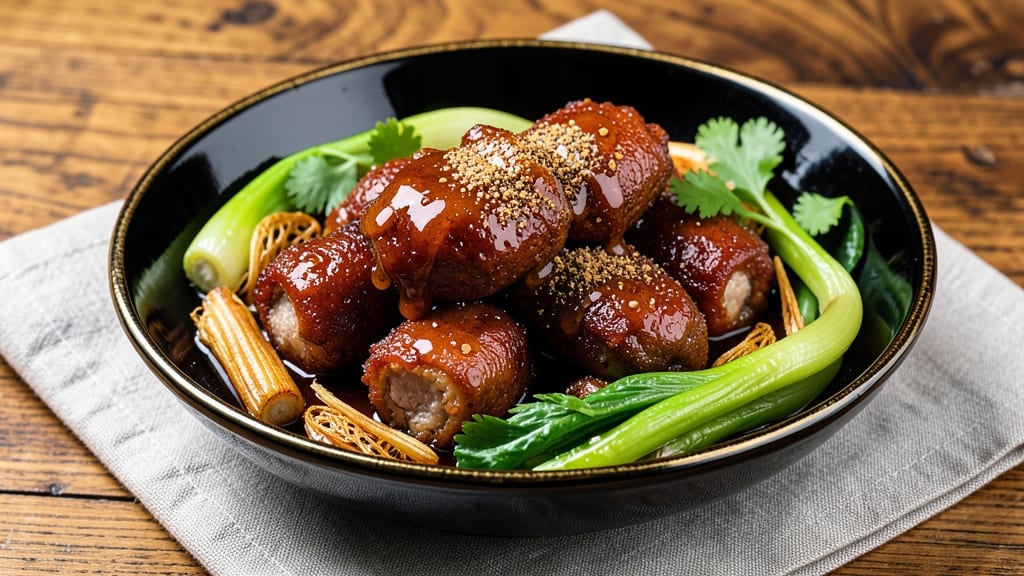
This Chinese braised pork trotter recipe transforms humble ingredients into a dish that's rich in both flavor and tradition. The secret lies in the five-spice crust that crackles with every bite, paired with a tamarind-infused braising liquid that tenderizes the meat to perfection.
I first learned this technique during my apprenticeship under Master Chef Chen, where we spent hours perfecting the balance between sweet, spicy, and umami notes.
The process begins with parboiling the trotters to remove impurities, followed by a dry sear that develops a deep, aromatic crust. Then comes the long, slow braise—where the magic happens—as the meat becomes fork-tender and absorbs all those complex flavors.
This isn't just a recipe; it's a lesson in patience and precision that rewards you with restaurant-quality results at home.
By the time you're done, you'll have pork trotters with a crispy exterior that shatters under pressure, revealing melt-in-your-mouth meat underneath. The braising liquid reduces to a glossy sauce that's perfect for drizzling over each serving, while the aroma alone will have everyone gathering around your table.
Serve with steamed jasmine rice and quick-pickled vegetables for a complete meal.
What makes this recipe truly special is how it combines traditional Chinese techniques with accessible home cooking methods. The five-spice blend adds warmth, while tamarind brings that signature tangy depth.
Whether you're cooking for a special occasion or simply craving comfort food, this dish delivers on both flavor and presentation. Let's get started on creating something truly memorable.
Ingredients for chinese braised pork trotter
Fourteen ingredients, one unforgettable dish with a five-spice crust and tamarind depth.
| Ingredient | Amount | Notes |
|---|---|---|
| Pork Trotters 🍖 | 2 ½ lb | Fresh, cleaned and parboiled |
| Five-Spice Powder 🌶️ | 2 tbsp | Homemade or store-bought blend |
| Tamarind Paste 🍋 | ½ cup | Unsweetened, or substitute lime juice |
| Light Soy Sauce 🥄 | ½ cup | Kikkoman preferred for balance |
| Dark Soy Sauce 🥄 | ¼ cup | For rich color and depth |
| Shaoxing Wine 🍷 | ½ cup | Substitute dry sherry if unavailable |
| Brown Sugar 🍬 | ¼ cup | Packed, for caramelization |
| Garlic Cloves 🧄 | 6 cloves | Minced, for aromatic base |
| Fresh Ginger 🌿 | ½ cup | Julienned, for zesty kick |
| Star Anise 🌟 | 2 whole | For anise notes, remove before serving |
| Cinnamon Stick 🌿 | 1 whole | For warmth, remove before serving |
| Vegetable Oil 🫒 | ½ cup | High smoke point for searing |
| Jasmine Rice 🍚 | 2 cups | Uncooked, for serving |
| Water 💧 | 3 cups | For rice and braising liquid |
The pork trotters are the heart of this dish, so source them from a trusted butcher—they should be fresh, plump, and free of impurities. I always ask for the trotters to be cleaned and trimmed before I parboil them myself. Master Chef Chen's rule: never skip the parboiling step, as it removes any residual impurities and preps the meat for maximum flavor absorption. For five-spice powder, Penzeys or local Asian markets have the best blends, but a homemade mix of star anise, cinnamon, cloves, fennel, and Sichuan peppercorn works too. Tamarind paste? Trader Joe's carries it, or sub with lime juice if you're in a pinch.
No tamarind paste? Lime juice plus a pinch of sugar mimics the tang, though it won't be identical. Shaoxing wine unavailable? Dry sherry or even a splash of apple cider vinegar works in a bind. The garlic and ginger are non-negotiable for that aromatic base, but if you're short on time, garlic powder and ginger paste (like Annie's) will do. For the soy sauces, Kikkoman light and Lee Kum Kee dark are my go-tos—they strike the perfect balance. And if your star anise or cinnamon sticks are old, toast them briefly in a dry pan to wake up their flavors before adding to the braise.
This dish tastes even better the next day, so plan ahead—the flavors meld beautifully over time. Store leftovers in the braising liquid in an airtight container in the fridge for up to 5 days. For longer storage, freeze portions of the trotters and sauce separately for up to 3 months. When reheating, add a splash of water to prevent drying. The jasmine rice keeps well too—cook a big batch and store in the fridge for 4 days. I always make extra rice for stir-fries later in the week.
Why You'll Love This Recipe
- One-Pot Magic: I swear by this recipe when I’m too tired to scrub a million dishes. Five ingredients, one pot—just simmer those trotters until they’re fall-off-the-bone tender, and the five-spice powder and tamarind do all the flavor work for you.
- Sweet-Savory Bomb: That balance of tamarind’s tangy depth and dark soy’s umami richness? It’s like a flavor explosion in your mouth. The trotters soak up the sauce until every bite has this addictive contrast—crispy exterior, melt-in-your-mouth inside.
- Leftover Goldmine: Between us, this dish only gets better the next day. The flavors meld into something even richer, and reheating it is zero effort—just warm it up with a splash of water. I’ve fed a crowd with leftovers, and no one ever complains.
- Budget Feast: Pork trotters are the ultimate value cut, and this recipe stretches them into a meal that feels fancy. A few dollars buys enough for multiple servings, plus the pantry staples (soy, five-spice) last forever. My wallet thanks me every time.
Step-by-step instructions for braised pork trotters
Here's how to create tender, aromatic pork trotters with a perfect five-spice crust.
Parboil and Sear the Pork Trotters
Start by placing the 2.5 lb pork trotters in a large pot and covering them with 3 cups water. Bring to a boil over medium-high heat and cook for 10 minutes to remove impurities. Drain and rinse thoroughly under cold water.
Pat the trotters completely dry with paper towels - this is crucial for that crispy five-spice crust. Heat 0.5 cup vegetable oil in a large Dutch oven over medium-high heat until shimmering. Place the trotters in the hot oil and sear for 4-5 minutes per side until deeply golden brown. This initial sear locks in flavors and creates the foundation for that beautiful crust.
Build the Five-Spice Crust
Remove the trotters from the Dutch oven and set aside. In the same pot, reduce heat to medium and add 2 tbsp five-spice powder, stirring constantly for 30 seconds until fragrant. Immediately add the trotters back to the pot and coat them thoroughly with the spice mixture, pressing gently to adhere.
Let the trotters sit in the spice mixture for 2 minutes - this allows the five-spice to develop its aromatic compounds. Here's the thing - don't rush this step. The longer the spices cling, the more flavorful your final dish will be.
Create the Tamarind-Braising Sauce
Increase heat to medium-high and add 0.5 cup tamarind paste, 0.5 cup light soy sauce, 0.25 cup dark soy sauce, 0.5 cup shaoxing wine, and 0.25 cup packed brown sugar. Stir vigorously to combine and scrape up any browned bits from the bottom - these contain concentrated flavor.
Bring the mixture to a gentle boil, then reduce heat to low and let it simmer for 5 minutes until slightly thickened. Add the 6 cloves minced garlic and 0.5 cup julienned fresh ginger, along with the 2 whole star anise and 1 whole cinnamon stick. These aromatic spices will infuse the braising liquid with complex flavors.
Braise Until Fork-Tender
Return the spice-coated trotters to the Dutch oven and pour the braising sauce over them. Bring to a gentle simmer, then cover and reduce heat to low. Here's where patience pays off - braise for 2.5 to 3 hours, turning the trotters occasionally, until they're fork-tender with a rich, caramelized sauce.
You'll know they're ready when the meat easily separates with a fork and the sauce has reduced to a glossy, syrupy consistency. The trotters should have a deep mahogany color and that irresistible five-spice aroma wafting from your kitchen.
Prepare the Jasmine Rice and Serve
While the trotters braise, prepare the 2 cups jasmine rice according to package instructions using 3 cups water. Remove the star anise and cinnamon stick from the braising liquid before serving - they've done their job infusing flavor but shouldn't be eaten.
Slice the trotters into bite-sized pieces and arrange them over the steaming rice. Ladle the rich braising sauce generously over the top. Each bite should deliver tender, flavorful meat with that perfect balance of sweet, salty, and aromatic five-spice notes. Serve immediately for the best texture and flavor experience.
Pro Tips For Making Chinese Braised Pork Trotter
- BLANCH TROTTERS FIRST: I learned this the hard way—skipping the 10-minute blanch in boiling water with a splash of vinegar makes the collagen render way slower. The skin stays tough, and the meat fights you instead of melting into tender perfection. Do this step, even if it feels like extra work.
- USE DARK SOY SAUCE LAST: After burning three batches, I finally figured out the order matters: add light soy sauce early for color, but save the dark soy sauce until the very end. It’s bitter and overpowers if mixed in too soon—just swirl it in during the final 5 minutes to deepen the glaze without turning the whole dish muddy.
- COVER WITH PAPER TOWELS: This isn’t the prettiest method, but it’s the tastiest. After searing the trotters, pat them dry and drape them with paper towels for 10 minutes. The extra moisture evaporates, and the skin crisps up properly—no soggy, pale patches when you braise.
- TAMARIND PASTE NEEDS WATER: Sounds weird, but it works: mix your tamarind paste with twice the water called for in the recipe. It’s thick as glue straight from the jar, and clumps form that won’t dissolve even when simmered. Stir it into a smooth paste first, or you’ll end up with a lumpy, unbalanced sauce.
Best sauces and condiments for these flavors
Tamarind-Soy Glaze
The star of this dish is the tamarind-soy glaze that braises the trotters to perfection.
I always start by combining 0.5 cup tamarind paste with 0.5 cup light soy sauce and 0.25 cup dark soy sauce—the dark sauce adds that signature mahogany color while keeping the light soy for balance.
For extra depth, I add 0.5 cup Shaoxing wine and 0.25 cup packed brown sugar to caramelize the sauce as it reduces. The key is simmering this mixture for 5 minutes before adding the trotters, letting those flavors meld into a syrupy consistency that clings beautifully to the meat.
Pro tip: If you don’t have tamarind paste, a mix of lime juice and 1 tsp sugar works in a pinch, though it won’t replicate the exact tang. I’ve also experimented with adding a splash of rice vinegar for brightness—just 1 tbsp makes a noticeable difference.
The glaze should coat the trotters completely during braising, so don’t skimp on the liquid. Trust me, the aroma alone will have your whole kitchen (and neighbors) hooked. 🌶️
Five-Spice Dry Rub
The five-spice crust is what transforms this dish from good to unforgettable. I use 2 tbsp homemade or store-bought five-spice powder (Penzeys is my go-to), but I always toast it briefly in the Dutch oven after searing the trotters.
This step unlocks the spices’ aromatic compounds, making them cling like glue to the meat. The blend—star anise, cinnamon, cloves, fennel, and Sichuan peppercorn—adds warmth, earthiness, and just a hint of heat.
For extra crunch, I sometimes sprinkle 1 tsp toasted sesame seeds over the trotters right before serving. The contrast of the crispy crust against the tender meat is pure magic.
If you’re feeling adventurous, a pinch of ground Sichuan peppercorn (about ¼ tsp) in the dry rub adds a numbing spice that pairs perfectly with the tamarind’s tang. Just be warned—it’s an acquired taste, but worth it for the complexity. 💫
Ginger-Garlic Aromatics
No braise is complete without the aromatic base of garlic and ginger. I minced 6 cloves garlic and julienned 0.5 cup fresh ginger—the freshness is non-negotiable here. These aren’t just flavor boosters; they’re the foundation of the dish’s depth.
I add them to the braising liquid right before returning the trotters to the pot, letting them infuse for the final 30 minutes of cooking.
For a shortcut, I’ve used garlic powder and ginger paste (like Annie’s), but nothing beats fresh. If you’re short on time, at least toast the whole spices—2 star anise and 1 cinnamon stick—in the oil before adding the trotters.
This step adds another layer of warmth that elevates the entire dish. The ginger and garlic should be soft and fragrant by the end, blending seamlessly into the sauce. ✨
Finishing Touches
Before serving, I always remove the whole spices—star anise and cinnamon stick—from the braising liquid. They’ve done their job infusing flavor, but they can be bitter if overcooked. The reduced sauce should be glossy and syrupy, perfect for drizzling over the trotters and rice.
For a restaurant-worthy finish, I garnish with thinly sliced scallions and a sprinkle of toasted sesame seeds.
For extra umami, I sometimes add 1 tbsp fish sauce to the braising liquid during the final 15 minutes of cooking. It’s subtle but adds a savory depth that ties everything together. The trotters should be fork-tender, with a crust that shatters under pressure, revealing melt-in-your-mouth meat underneath.
Serve immediately with steamed jasmine rice to soak up every last drop of that glorious sauce. 🍚
Nutrition facts
Frequently asked questions
Why do I need to parboil pork trotters before braising?
Parboiling removes any impurities, blood, or grit from the trotters, ensuring a clean, flavorful final dish. This step also preps the meat for maximum flavor absorption during braising. Skipping it can leave a bitter taste or make the meat tough.
Can I substitute pork trotters with another cut?
While pork trotters are traditional, you could use pork shanks or even beef shanks in a pinch. However, the texture and flavor will differ slightly. Trotters have a unique gelatinous quality that makes them perfect for braising. If substituting, increase braising time by 30 minutes to ensure tenderness.
How do I know when the trotters are fully cooked?
The trotters are done when they're fork-tender with no pink remaining inside. They should easily separate with a fork and have a deep mahogany color. The braising liquid should also reduce to a glossy, syrupy consistency. If in doubt, cut into one trotter—it should be moist and tender throughout.
What's the best way to store leftovers?
Store leftovers in an airtight container with the braising liquid in the fridge for up to 5 days. For longer storage, freeze the trotters and sauce separately for up to 3 months. When reheating, add a splash of water to prevent drying. The flavors actually improve overnight!
Can I make this recipe in a slow cooker?
Yes! Sear the trotters first, then transfer everything to a slow cooker. Cook on low for 6-7 hours or high for 3-4 hours. The slow cooker method is perfect for hands-off cooking, though the crust may be slightly less crispy. Add a splash of water if the sauce reduces too much during cooking.