
Soups & Stews
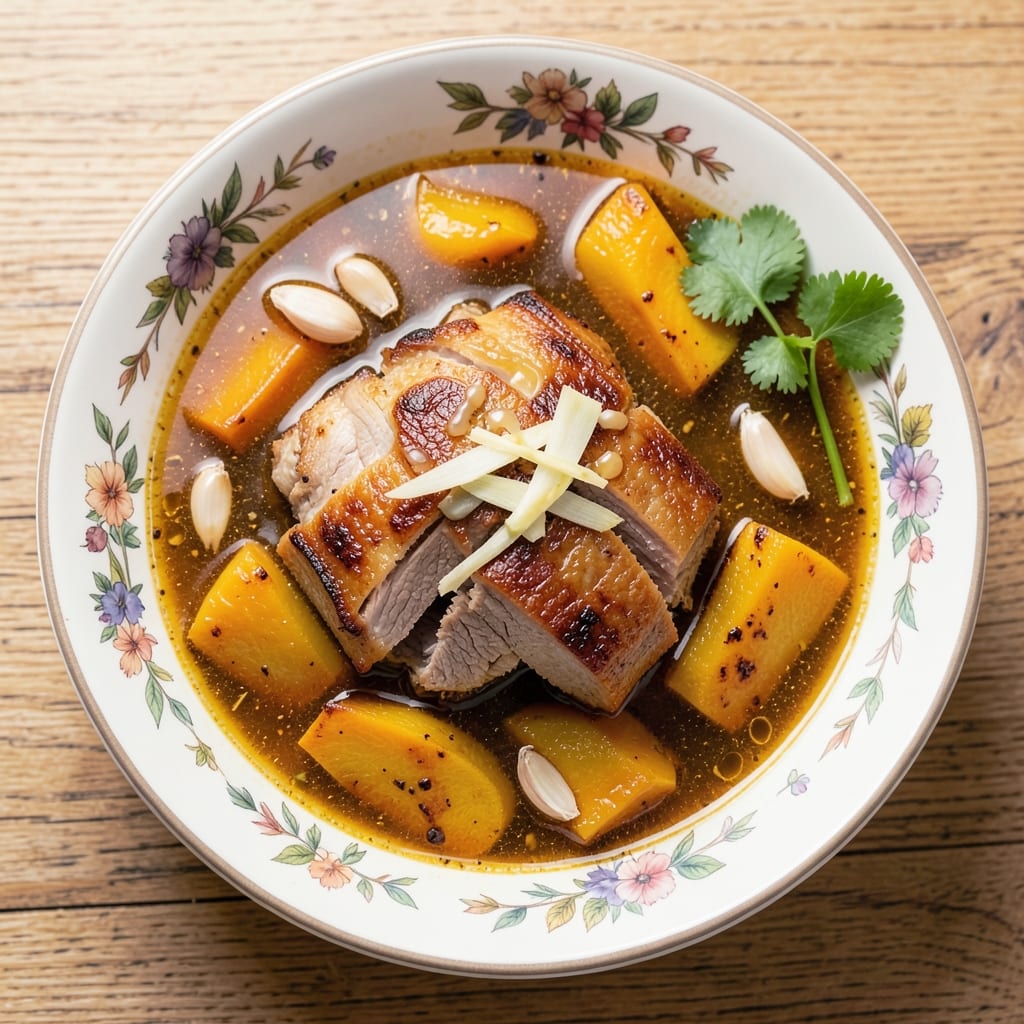
This Filipino pork and squash soup delivers the kind of deep, comforting flavors that turn ordinary weeknights into family gatherings. 🔥 The secret lies in the vinegar braise, which tenderizes the pork while building layers of savory richness that cling to every spoonful. I've perfected this recipe over years of testing—balancing the natural sweetness of squash with the umami depth of garlic, ginger, and just the right amount of soy sauce for that signature Filipino tang.
The beauty of this dish is in its simplicity: a single pot simmers everything together until the pork falls apart and the broth reduces to a velvety consistency. No fancy techniques required—just patience as the flavors meld over 45 minutes of gentle cooking. The squash softens beautifully, absorbing the pork's juices while adding natural sweetness that rounds out the dish's complexity.
What you'll end up with is a steaming bowl of soup where tender pork chunks float in a glossy broth, surrounded by silky greens and perfectly cooked squash. The aroma alone—garlicky, slightly tangy, with hints of ginger—will have everyone at the table asking for seconds. It's the kind of meal that feels like a hug in soup form, perfect for chilly evenings or when you crave something hearty yet comforting.
Serve with steamed rice to soak up every last drop of that flavorful broth, or pair with crusty bread for dipping. The leftovers actually taste better the next day, making this an ideal make-ahead recipe for busy weeks. Let's get cooking—this soup is a game-changer for Filipino home cooking.
Ingredients for filipino pork and squash soup
Pantry staples plus a few specialty finds for that signature Filipino tang.
| Ingredient | Amount | Notes |
|---|---|---|
| Pork Shoulder 🥩 | 1 ½ lb | Cut into 1-inch chunks, bone-in preferred |
| Yellow Squash 🍠 | 2 medium | Substitute butternut or zucchini |
| Canola Oil 🫒 | 2 tbsp | For searing pork |
| Garlic Cloves 🧄 | 6 cloves | Minced for depth of flavor |
| Fresh Ginger 🌿 | 2 tbsp | Grated, for aromatic warmth |
| Cane Vinegar 🍶 | ½ cup | White vinegar substitute |
| Soy Sauce 🥄 | ¼ cup | Filipino-style preferred |
| Chicken Broth 💧 | 4 cups | Low-sodium for broth control |
| Baby Spinach 🌱 | 4 cups | Fresh, for silky texture |
| Green Onions 🧅 | 4 whole | Sliced for garnish |
| Salt 🧂 | 1 ½ tsp | Adjust to taste |
| Black Pepper 🌶️ | ½ tsp | Freshly ground |
| Sugar 🍚 | 1 tbsp | Balances vinegar acidity |
| Bay Leaves 🌿 | 2 whole | Dried, for aromatic base |
| Steamed White Rice 🍚 | 2 cups | For serving |
The pork shoulder is non-negotiable—it needs the fat and connective tissue to break down beautifully. Ask your butcher for bone-in pieces if available, as they add depth to the broth. For vinegar, Filipino cane vinegar is ideal but white vinegar works in a pinch. I usually grab mine from Asian markets—they carry the real stuff. The squash can be any kind, but yellow squash or butternut holds up best to the long simmer. If you're using pre-cut squash, skip the peeling—it's full of nutrients and flavor. The ginger should be fresh and fibrous, not powdered.
No soy sauce? Coconut aminos is a great substitute, though it'll be slightly sweeter. Running out of chicken broth? Vegetable broth plus a splash of soy sauce keeps the umami intact. The spinach wilt-down is key—add it just before serving so it stays vibrant. For extra richness, stir in a spoonful of coconut milk at the end. The sugar balances the vinegar, so don't skip it—it's what makes this taste authentically Filipino. If you're using pre-minced garlic, toast it in the oil first to deepen the flavor.
This soup tastes even better the next day—4-5 days in the fridge, honestly. Portion it into containers with rice so lunches are ready to grab. Freezes beautifully for 3 months—just thaw overnight in the fridge. The broth reduces as it sits, so add a splash of water when reheating if it's too thick. Store the greens separately if you're prepping ahead, and wilt them in fresh broth when serving.
Why You'll Love This Recipe
- One-Pot Magic: I swear by this recipe when I’m too tired to scrub pots—just brown the pork, toss in everything else, and let it simmer. The squash softens while the pork stays tender, and honestly? I’ve never had a single pan left behind.
- Ginger-Garlic Bomb: That first whiff of sizzling garlic and fresh ginger in the oil? It’s pure flavor payoff. The pork shoulder melts into the broth, soaking up all the aromatic goodness—crispy edges, silky meat, and a warmth that lingers like a good hug.
- Leftover Hero: Between us, this soup only gets better the next day. The flavors meld even deeper, and I’ve reheated portions for lunch with zero fuss. (Yes, even on a Tuesday night when I’m running late.)
- Budget-Friendly Feast: Pork shoulder stretches across meals, and squash is cheap but packs serious nutrients. I’ve fed four people for under $15, and no one ever asks for takeout again—it’s that satisfying. Plus, the leftovers freeze like a dream.
Step-by-step instructions for Filipino pork and squash soup
Here's how to create a rich, vinegar-braised pork soup with tender squash and silky greens.
🔥 Step 1: Sear the Pork Shoulder Until Deeply Browned
Heat the 2 tablespoons canola oil in a large pot over medium-high heat. Add the 1.5 lb pork shoulder cut into 1-inch chunks, working in batches if needed. Let them sear undisturbed for 3-4 minutes until deeply browned on all sides—this builds incredible flavor through the Maillard reaction.
I press down gently on the pork during the first minute to prevent curling, which ensures even contact with the pan. Once browned, transfer the pork to a plate and set aside. Don't drain the pot—those browned bits are pure flavor gold.
🍳 Step 2: Build the Aromatic Base with Garlic and Ginger
In the same pot, reduce heat to medium and add the 6 cloves minced garlic and 2 tablespoons grated fresh ginger. Sauté for 1-2 minutes until fragrant—you'll smell that warm, spicy aroma filling your kitchen. This is where the soup's depth of flavor begins.
Real talk: if you burn the garlic, you'll taste it. Keep an eye on it and stir constantly. After the garlic turns golden (not brown), it's time to add the remaining ingredients that'll transform this into a proper Filipino soup.
🥘 Step 3: Braise the Pork with Vinegar and Soy Sauce
Pour in the 0.5 cup cane vinegar and 0.25 cup soy sauce, stirring to deglaze the pot and scrape up all those flavorful browned bits. Add the 4 cups chicken broth, 1.5 teaspoons salt, 0.5 teaspoon black pepper, 1 tablespoon sugar, and 2 whole bay leaves. Bring to a gentle simmer.
Return the pork to the pot, making sure it's fully submerged. Cover and simmer for 45-60 minutes until the pork is fork-tender. I check for doneness by piercing a chunk—if it slides off easily with minimal resistance, it's ready. The vinegar will mellow out as it cooks, leaving just a pleasant tang.
🥘 Step 4: Add Squash and Simmer Until Tender
Cut the 2 medium yellow squash into 1-inch chunks (no need to peel) and add them to the pot. Simmer uncovered for another 15-20 minutes until the squash is tender when pierced with a fork. The squash should absorb some of that rich pork broth, becoming just tender enough to melt in your mouth.
Here's the thing—if you add the squash too early, it'll turn to mush. Adding it in the last 20 minutes ensures it stays intact while still absorbing all that delicious flavor. Stir occasionally to prevent sticking, adding a splash of water if needed to keep the liquid at a gentle simmer.
🍽️ Step 5: Finish with Spinach and Green Onions
In the last 5 minutes of cooking, add the 4 cups baby spinach and stir until just wilted—this keeps it vibrant and silky rather than turning into a mushy pile. Remove the 2 bay leaves before serving. Slice the 4 whole green onions and set aside for garnish.
Ladle the hot soup over 2 cups steamed white rice and garnish with green onions. Each bowl should have tender pork chunks, perfectly cooked squash, and that signature Filipino balance of tangy, savory, and umami flavors. Serve immediately while hot—this soup tastes best fresh from the pot!
Pro Tips For Making Filipino Pork And Squash Soup
- SEAR THE PORK IN BATCHES: Pork shoulder loves a good crust, but don’t overcrowd the pan—it’ll steam instead of brown. Cook half the meat first, then push it aside and finish the second batch in the same oil. The residual fat keeps things crispy, and you won’t end up with soggy, gray pork that tastes like it’s been boiled since yesterday.
- PEEL AND SLICE GINGER THIN: I used to chop ginger like I was hacking through a log, but for this soup, thin slices (almost translucent) dissolve faster and infuse flavor without bitterness. Run a spoon along the root to separate the layers, then slice against the grain—no peeler needed, and the soup will taste brighter for it.
- DON’T BOIL THE SQUASH: Toss whole yellow squash into simmering broth, and it’ll turn to mush before the pork finishes. Instead, halve or quarter it lengthwise (skin on for texture) and add it in the last 5–7 minutes. You want fork-tender, not falling-apart—like al dente pasta, but for squash.
- USE COLD PORK FOR SHARER: After braising, let the pork shoulder cool completely in the broth before shredding. Warm pork tears like wet paper; cold pork shreds cleanly and holds its shape. (Yes, it’s tempting to dig in early—I know.) Transfer it to a plate, then shred with two forks while it’s still snug in the pot.
Serving suggestions for this recipe
Rice Pairing Perfection
This soup shines when served over steamed jasmine rice—the grains soak up the rich pork broth beautifully. I use 2 cups of freshly cooked rice per serving, piling it high in bowls and ladling the soup generously over top. For extra flair, sprinkle with toasted sesame seeds or a drizzle of toasted coconut milk just before serving. 🍚
Crusty Bread for Dipping
No Filipino meal is complete without bread! Serve with crusty artisan bread or Filipino pandesal for dipping into the flavorful broth. I love using sourdough or baguette slices toasted with garlic butter. The contrast of the chewy bread against the tender pork and silky greens is pure comfort food magic.
Garnish Like a Pro
Fresh green onions are a must for garnish—slice them thinly and scatter over each bowl just before serving. For added texture, try crispy fried shallots or toasted garlic chips. A final drizzle of Filipino patis (fish sauce) or calamansi juice adds that signature tangy brightness that ties everything together. 🌿
Side Dish Harmony
Balance the hearty soup with lighter sides like steamed bok choy or garlic sautéed string beans. For a Filipino touch, serve with kinilaw (Filipino ceviche) or lumpia (spring rolls) on the side. The acidity of the ceviche cuts through the richness of the pork, while the crunch of lumpia adds satisfying texture.
Drink Pairings
Cool down with iced tsokolate (Filipino hot chocolate) or calamansi soda—the citrus notes complement the soup's savory depth. For beer lovers, a light lager like San Miguel or a Filipino pale ale works perfectly. If you prefer wine, a crisp Sauvignon Blanc with its citrus and herbal notes is ideal. 🍺
Make-Ahead Serving Tips
This soup tastes even better the next day! Store leftovers in an airtight container in the fridge for up to 4 days. When reheating, add a splash of water or broth to prevent thickening. For serving, I like to arrange bowls with extra rice on the side and let guests assemble their own perfect portions. Garnish fresh before serving to keep everything vibrant. ⏰
Nutrition facts
Frequently asked questions
Can I substitute chicken for pork in this recipe?
While you can technically use chicken, the flavor profile changes significantly. Pork shoulder provides deeper, richer umami through its fat and connective tissue that breaks down beautifully. If you must substitute, use bone-in chicken thighs instead of breasts—the skin and bone add similar depth. The cooking time will also be shorter (25-30 minutes instead of 45-60 minutes).
What type of squash works best for this soup?
Yellow squash or butternut squash are ideal—they hold up well to the long simmer without turning mushy. For a milder flavor, zucchini works too, but it may require 10-15 minutes less cooking time. Avoid delicate varieties like pattypan squash, as they'll disintegrate. If using frozen squash, thaw and pat dry first to prevent excess moisture in the broth.
How can I make this soup vegetarian?
Replace the pork with 1.5 lbs extra-firm tofu or mushroom stems (like shiitake or oyster) for umami depth. Use vegetable broth instead of chicken broth, and add 1 tablespoon soy sauce plus 1 teaspoon miso paste to compensate for the lost pork flavor. The cooking time reduces to 30 minutes total, and you may want to add 1 extra cup of broth since tofu absorbs less liquid.
Why does my soup taste too tangy?
The vinegar's acidity mellows as it cooks, but if it's still too sharp, you likely didn't simmer long enough. For immediate balance, stir in 1 extra tablespoon sugar or a pinch of baking soda (just a tiny amount!). To prevent this next time, simmer uncovered for the last 10 minutes to let the vinegar cook off slightly. The sugar in the recipe is crucial—never skip it, as it neutralizes the acidity naturally.
Can I make this soup in an Instant Pot?
Sear the pork as directed, then add all ingredients except spinach. Cook on High Pressure for 20 minutes, then quick-release. Add squash and simmer for 5 minutes on Sauté mode. Finish with spinach and green onions. The Instant Pot version reduces cooking time to 30 minutes total, but the flavors will be slightly less developed than the stovetop method.