
Main Courses
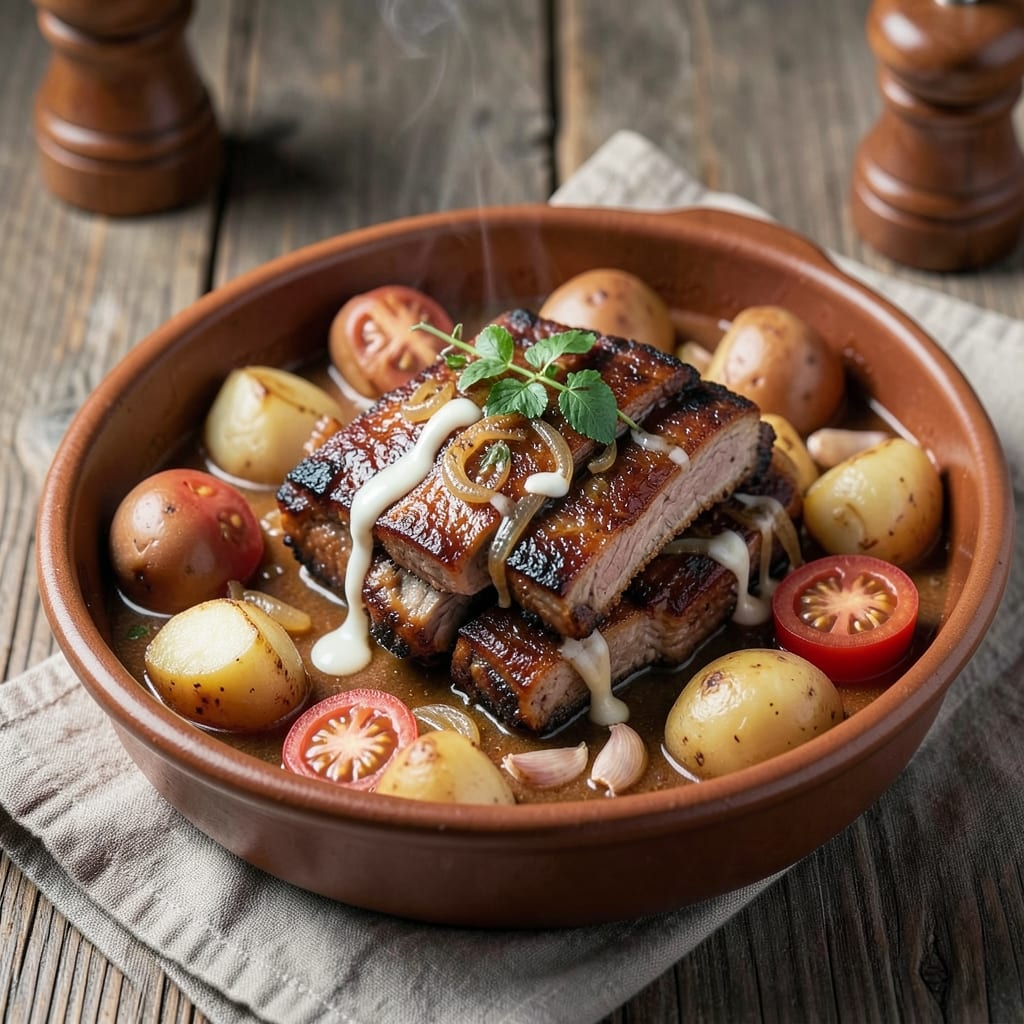
This Filipino pork ribs caldereta recipe brings the comforting flavors of home to your dinner table with its signature vinegar-kissed meat and rich tomato sauce. 🔥 As someone who's spent years perfecting pork dishes, I can tell you this braised recipe transforms tough ribs into melt-in-your-mouth tenderness through a slow cooking process that builds depth of flavor with every passing hour.
The beauty of caldereta lies in its simplicity—just a few key ingredients work together to create something extraordinary. We'll start with pork ribs marinated in a blend of vinegar, garlic, and spices that form the foundation of the dish, then braise them until they're fork-tender. The sauce, built from tomatoes, potatoes, and bell peppers, develops a perfect balance of tangy, sweet, and savory notes that make this more than just a meal.
What you'll end up with is a dish that's rich in both flavor and tradition, where the vinegar tenderizes the meat while the tomatoes create a velvety sauce that coats every bite. The potatoes and bell peppers add texture and color, making this caldereta as visually appealing as it is delicious. This is the kind of recipe that tastes even better the next day as the flavors continue to meld together.
Perfect for family gatherings or when you want to impress guests with authentic Filipino flavors, this caldereta delivers restaurant-quality results in your own kitchen. The slow cooking process makes it ideal for meal prep, and the leftovers reheat beautifully, making it a practical choice for busy weeks. Let's get started on this comforting classic that's sure to become a staple in your recipe collection.
Ingredients for filipino pork ribs caldereta
Six key ingredients transform tough ribs into melt-in-your-mouth tenderness with vinegar and tomato sauce.
| Ingredient | Amount | Notes |
|---|---|---|
| Pork Ribs 🍖 | 3 lb | Baby back ribs preferred |
| White Vinegar 💧 | ½ cup | For marinating ribs |
| Garlic Cloves 🧄 | 8 cloves | Minced for marinade |
| Onion 🧅 | 1 whole | Yellow, chopped |
| Tomatoes 🍅 | 2 lbs | Roma or vine-ripened |
| Russet Potatoes 🥔 | 3 medium | Peeled and quartered |
| Green Bell Pepper 🌶️ | 2 whole | Sliced into strips |
| Bay Leaves 🍃 | 2 whole | Dried for flavor |
| Black Peppercorns 🌶️ | 1 tsp | Crushed for seasoning |
| Salt 🧂 | 2 tsp | Kosher or sea salt |
| Olive Oil 🫒 | ¼ cup | For searing ribs |
| All-Purpose Flour 🌾 | ¼ cup | For coating ribs |
| Ground Black Pepper 🌶️ | 1 tsp | Freshly ground preferred |
| Sugar 🍚 | 1 tbsp | Balances acidity |
The ribs are everything here—baby back ribs are ideal, but spare ribs work too. Look for good marbling at the butcher counter; Filipino markets often have the freshest cuts. If you can't find baby backs, Costco or Walmart usually carry them prepped and ready. The vinegar does double duty: tenderizing the meat and forming the base of the tangy sauce. I always grab white vinegar over apple cider vinegar for that classic caldereta brightness. For the tomatoes, Roma or vine-ripened make the best sauce—skip the canned unless it's San Marzano (trust me on this).
No baby back ribs? Spare ribs or pork shoulder will work, but adjust cooking time. Running short on vinegar? Lemon juice works at half the amount. The bell peppers can be swapped for red or yellow peppers—just adjust color expectations. For the potatoes, Yukon Golds hold up better than Russets when simmered, but either works. The bay leaves? Dried is fine, but fresh adds a subtle earthiness. If you're using canned tomatoes, drain and crush them to avoid a watery sauce. The sugar balances the vinegar's acidity—don't skip it, even if it's not traditional in all versions.
This reheats beautifully—even better the next day as flavors meld. Store in the fridge for 4-5 days or freeze for 3 months. I portion mine into containers with sauce so lunches are ready to grab. The ribs keep best in the fridge if you're not cooking them right away—use within 2 days for peak tenderness. For meal prep, double the batch and freeze half—Costco-sized portions are perfect for family gatherings.
Why You'll Love This Recipe
- One-Pot Magic: Honestly, I swear by this recipe—just toss everything into one pot, and the vinegar and garlic work their alchemy. No fancy techniques, no extra dishes to wash.
- Tangy-Sweet Perfection: That white vinegar cut with tomatoes? It’s the secret—tender ribs with a glossy, slightly sweet-sour sauce that clings like a hug. The garlic? Oh, it’s there in the best way.
- Weeknight to Party Fix: Between us, this is my lazy Sunday dinner and my "oh no, we have guests" go-to. Serve it with rice, or let people scoop it straight from the pot—no judgment here.
- Leftovers That Beg for More: I make a double batch because the sauce gets even richer the next day. Reheat it, and suddenly you’ve got a free lunch or a midnight snack that tastes like a restaurant meal.
Step-by-step instructions for Filipino pork ribs caldereta
Here's how to make this rich, tangy stew with melt-in-your-mouth ribs.
🔥 Step 1: Marinate and Sear the Pork Ribs
In a large bowl, combine the 3 lb pork ribs, 0.5 cup white vinegar, 2 tsp salt, and 1 tsp ground black pepper. Massage the marinade into the ribs, coating them evenly. Let them sit at room temperature for 30 minutes—this helps tenderize the meat and prepares it for searing.
Heat a large Dutch oven over medium-high heat and add 0.25 cup olive oil. Once hot, carefully add the ribs in a single layer, working in batches if needed. Sear for 4-5 minutes per side until they develop a deep golden-brown crust. This step builds flavor through the Maillard reaction—don't rush it or the ribs will steam instead of sear.
👨🍳 Step 2: Build the Flour Slurry and Sauté Aromatics
Remove the ribs from the Dutch oven and set them aside. In the same pot, reduce heat to medium and add 0.25 cup all-purpose flour, stirring constantly for 1-2 minutes until it turns a light golden color. This creates a roux that will thicken your sauce beautifully.
Add 8 cloves minced garlic and cook for 30 seconds until fragrant. Toss in 1 whole chopped onion and cook for 3-4 minutes until softened. Stir in 2 whole sliced green bell peppers and cook for another 2 minutes until slightly tender. This aromatic base forms the flavor foundation of your caldereta.
🥘 Step 3: Simmer the Tomatoes and Vegetables
Add 2 lbs chopped tomatoes, 1 tbsp sugar, 2 whole bay leaves, and 1 tsp crushed black peppercorns to the Dutch oven. Stir well to combine, then pour in 2 cups water (or enough to barely cover the ingredients). Bring to a gentle simmer over medium-low heat, then reduce heat to low and cover partially.
Return the ribs to the pot, nestling them into the sauce. Add 3 medium peeled and quartered russet potatoes on top. Simmer uncovered for 1.5 hours, stirring occasionally, until the ribs are fork-tender and the sauce has thickened to a rich consistency. The potatoes should be tender when pierced with a fork.
⏰ Step 4: Finish and Rest for Maximum Tenderness
Once the ribs are tender (they should pull apart easily with two forks), remove them from the pot and set aside. Skim any excess fat from the sauce if desired, then return the ribs to the pot. Increase heat to medium and simmer uncovered for 10-15 minutes to reduce the sauce slightly and deepen the flavors.
Let the caldereta rest for 10 minutes before serving. This resting period allows the juices to redistribute throughout the ribs and sauce, ensuring each bite is perfectly tender and flavorful. Serve with steamed rice to soak up that delicious, tangy sauce.
Pro Tips For Making Filipino Pork Ribs Caldereta
- Brown the Ribs First: Don’t skip this step—sear the pork ribs in a hot pot for 5-7 minutes until deeply golden. The Maillard reaction here builds flavor that vinegar alone can’t mask, and it keeps the meat from falling apart later when simmered. ---
- Soak Vinegar in Water: Never dump straight vinegar into the pot—dilute ¼ cup white vinegar in ½ cup water first. This softens the acidity so it tenderizes the ribs without making the sauce taste harsh. (Yes, even if you’re impatient like me.) ---
- Simmer, Don’t Boil: After adding tomatoes and garlic, keep the heat low enough that tiny bubbles just break the surface—no rolling boil. Caldereta needs time to develop its creamy texture, not rush through it. I learned this the hard way when my sauce turned watery. ---
- Save the Vinegar Water: Strain the vinegar-soaked water through a fine sieve into the pot after searing the ribs. That liquid holds dissolved meaty bits and garlic oils—don’t pour it down the drain. (Your future self will thank you.)
Perfect pairings for this recipe
Steamed White Rice
No Filipino meal is complete without steamed white rice—it's the perfect canvas for soaking up that rich, tangy caldereta sauce. I use jasmine rice for its delicate aroma and slightly sticky texture, which pairs beautifully with the dish. For 6 servings, cook 2 cups uncooked rice with 3 cups water in a rice cooker or pot. Let it steam until fluffy and tender, about 15 minutes. The rice should be hot when served to contrast the warm ribs. 💛
Garlic Fried Rice
For a heartier side, try garlic fried rice using leftover caldereta ingredients. Sauté 2 cups cooked rice in 2 tbsp olive oil with 3 minced garlic cloves until fragrant. Add ½ cup chopped bell peppers and ¼ cup chopped onions, then stir in 1 tbsp soy sauce and 1 tsp sugar. Top with crispy fried shallots for crunch. This adds a savory twist and uses up any extra veggies from your caldereta. 🌶️
Crispy Fried Shallots
Filipino cuisine loves texture, and crispy fried shallots bring that perfect crunch to every bite. Heat 1 cup vegetable oil in a deep pan to 350°F and fry 1 cup thinly sliced shallots in batches for 2-3 minutes until golden brown. Drain on paper towels and sprinkle over rice or caldereta just before serving. I keep a jar of these on hand—they add flavor and crunch to any dish. ✨
Pickled Vegetables
To balance the richness, serve tangy pickled vegetables like carrots and daikon radish. Thinly slice 1 carrot and 1 daikon radish, then soak in a mixture of 1 cup vinegar, 1 tbsp sugar, and 1 tsp salt for at least 30 minutes. This adds a refreshing crunch and brightens the meal. Store-bought pickles work in a pinch, but homemade tastes 10 times better. 🥕
Warm Beer Pairing
A cold Filipino lager like San Miguel cuts through the richness of caldereta beautifully. The crisp, slightly malty notes complement the tangy sauce and tender ribs. For a non-alcoholic option, try calamansi soda—this citrusy Filipino drink balances the dish's acidity. Serve drinks chilled to refresh your palate between bites. 🍺
Garnish with Fresh Herbs
Brighten the dish with fresh herbs like cilantro or parsley. Chop ¼ cup cilantro and sprinkle over the caldereta right before serving. The fresh, bright notes contrast the deep flavors of the stew. If you want extra aroma, add 1 tbsp toasted sesame seeds for a nutty finish. Trust me, this simple garnish elevates the whole dish. 🌿
Nutrition facts
Frequently asked questions
Why does Filipino caldereta use vinegar?
The vinegar serves two crucial purposes in this dish: it tenderizes the tough pork ribs through its acidic properties, breaking down connective tissues, and it creates that signature tangy flavor that balances the rich tomato sauce. The acidity also helps preserve the meat's natural juices during the long cooking process.
Can I substitute white vinegar with another acid?
Yes, but with adjustments. Apple cider vinegar works well at the same quantity, while lemon juice should be used at half the amount (¼ cup). For a milder tang, try white wine vinegar. Just remember that different acids will slightly alter the final flavor profile—white vinegar gives the most authentic caldereta taste.
How do I know when the pork ribs are fully tender?
The ribs are done when they easily pull apart with two forks and the meat slides off the bone with minimal resistance. For baby back ribs, this typically takes 1.5-2 hours of simmering. If you're using spare ribs, they may need an extra 30 minutes. The sauce should also coat the back of a spoon thickly when reduced.
What's the best way to reheat leftover caldereta?
Reheat gently in a covered pot over low heat with a splash of water (about 2 tbsp) to prevent drying. Stir occasionally for 10-15 minutes until warmed through. The sauce will thicken further, making it even more flavorful. Never microwave—this makes the sauce watery and the ribs rubbery.
Can I make this recipe in a slow cooker?
Sear the ribs first, then transfer everything (including sauce and veggies) to your slow cooker. Cook on low for 6-8 hours or high for 4-5 hours. The ribs will be even more tender, and the sauce will develop deeper flavors. Just add 1 cup water if the mixture seems too thick during cooking.