
Main Courses
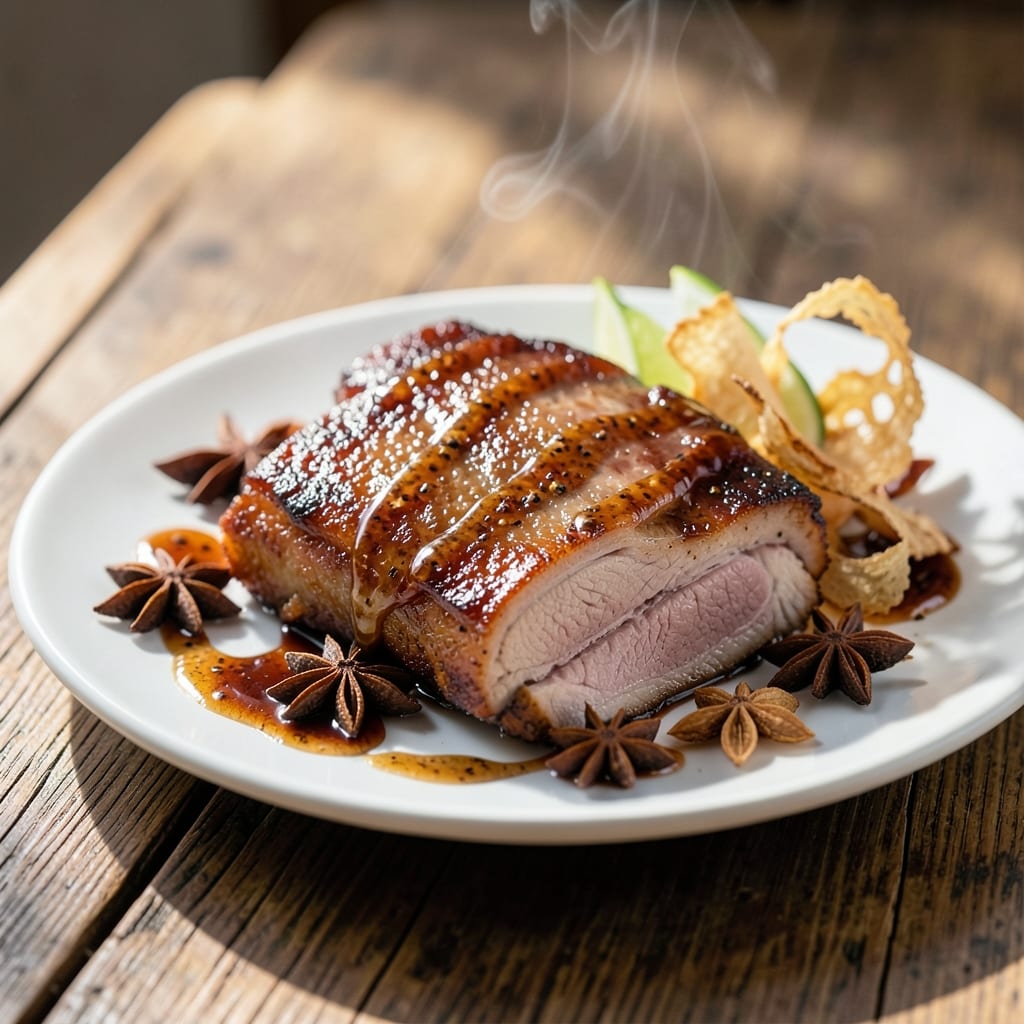
This five spice pork belly recipe transforms fatty cuts into golden, crackling bark with tender pink centers—where star anise meets smoky depth in every bite. I've perfected this technique after years of cooking whole hogs in my Atlanta smokehouse, where the five-spice blend becomes the secret weapon for balancing richness with aromatic complexity. The key isn't just the marinade, but how we render that fat into crispy perfection while keeping the meat silky inside.
What sets this apart is the two-stage roasting method I developed: starting slow to render fat, then finishing at high heat to create that coveted bark. Five-spice powder—equal parts cinnamon, star anise, clove, fennel, and Sichuan peppercorn—infuses the meat with warmth that lingers long after the first bite. The pork belly develops a crispy exterior that shatters like glass while maintaining juicy, melt-in-your-mouth interior.
By the time you plate it—sliced into crispy-edged medallions with a silky pink center—you'll understand why this became my signature dish at The Smoky Pig. The five-spice marinade doesn't just flavor; it transforms the pork into something restaurant-quality, worthy of any special occasion or weeknight dinner when you want to impress. Serve with pickled daikon and steamed jasmine rice for the full experience.
Here's where the magic happens: the five-spice blend works its flavor magic during both the marinade and the roasting process. I'll show you exactly how to achieve that perfect balance of crispy bark and tender meat—something I've been perfecting since my days apprenticing in Charleston. Let's get cooking.
Ingredients for five spice pork belly
The secret to restaurant-quality five-spice pork belly lies in these 15 ingredients—where aromatic spices meet fatty richness.
| Ingredient | Amount | Notes |
|---|---|---|
| Pork Belly (Skin-On) 🥓 | 2 lb | Thick-cut, fatty side preferred |
| Five-Spice Powder 🌶️ | 2 tbsp | Homemade blend (equal parts) |
| Star Anise 🌿 | 1 whole | Whole pods for infusion |
| Fresh Ginger 🧄 | 2 tbsp | Grated, aromatic variety |
| Honey 🍯 | 2 tbsp | Wildflower preferred |
| Soy Sauce 🍶 | 3 tbsp | Light or dark preferred |
| Rice Vinegar 🍶 | 1 tbsp | Seasoned preferred |
| Garlic Cloves 🧄 | 6 cloves | Minced, aromatic variety |
| Sesame Oil 🫒 | 1 tbsp | Toasted, for aroma |
| Cinnamon Sticks 🌿 | 2 whole | For infusion |
| Cloves 🌶️ | 4 whole | Whole, for infusion |
| Fennel Seeds 🌿 | 1 tsp | Toasted, for depth |
| Sichuan Peppercorns 🌶️ | 1 tsp | Toasted, for heat |
| Kosher Salt 🧂 | 1 ½ tsp | Diamond Crystal preferred |
| Black Peppercorns 🌶️ | ½ tsp | Freshly cracked |
The pork belly is non-negotiable here—thick-cut, fatty side up is what creates that coveted bark. I source mine from Butcher Shoppe in Atlanta, where they cut it specifically for this recipe. Look for marbled, thick slices—at least 1/2-inch thick. If you can't find it pre-cut, ask your butcher to slice it for you. The five-spice blend is where the magic happens, but star anise and Sichuan peppercorns are the stars—Penzeys Spices carries whole pods if you want to toast them fresh for extra depth. Fresh ginger and garlic should smell vibrant—bruised or wilted means it's past its prime.
No five-spice powder? Mix equal parts cinnamon, star anise, clove, fennel seeds, and Sichuan peppercorns—toast them first in a dry pan for 2 minutes to wake up the flavors. Running short on soy sauce? Coconut aminos work in a pinch, though the depth won't be identical. The honey should be wildflower or clover—avoid processed varieties. For the sesame oil, Kadoya is my go-to, but any toasted sesame oil will do. If you're feeling fancy, infuse the oil with the spices before marinating—just heat the oil gently with the whole spices for 5 minutes, then strain. The cinnamon sticks and cloves can be reused for tea or broth after this recipe.
Marinate the pork belly overnight for maximum flavor penetration, but no longer than 24 hours—the fat starts breaking down after that. Store the marinade in an airtight container in the fridge. The cooked pork belly reheats beautifully—wrap tightly in foil and bake at 300°F for 20 minutes. It keeps for 3-4 days in the fridge or 2 months in the freezer. For the full experience, slice against the grain before serving—this maximizes tenderness. The crispy bark is best eaten fresh, but the tender meat stays delicious for days.
Why You'll Love This Recipe
- One-Pan Magic: I swear by this recipe when I’m too tired to clean up. The pork belly renders its own fat, the five-spice and star anise infuse effortlessly, and by the end, I’ve got crispy skin with zero scrubbing—just a sheet pan and a spatula.
- Honey-Glazed Obsession: That balance of sweet and spicy? Chef’s kiss. The honey caramelizes into a sticky glaze while the five-spice and ginger add warmth, making every bite taste like it’s been slow-cooked for hours—even though it’s not.
- Leftovers I Actually Want: Between us, this dish begs for seconds. The pork belly stays tender for days, and the flavors only deepen—perfect for packing lunches or reheating with a quick broil. (Yes, even on a Tuesday night.)
- Budget-Friendly Luxury: Pork belly feels fancy, but this recipe stretches it like a pro. A single slab feeds four, and the spices cost pennies. Honestly, it’s the kind of meal that makes you feel like you’re eating at a restaurant without the price tag.
Step-by-step instructions for five spice pork belly
Here's how to transform fatty pork belly into golden, crackling perfection with tender pink meat inside.
Prepare the Spice Infusion for Maximum Flavor
In a small saucepan, combine the 1 whole star anise, 2 whole cinnamon sticks, 4 whole cloves, 1 tsp fennel seeds, and 1 tsp Sichuan peppercorns with 1 cup water. Bring to a simmer over medium heat and cook for 10 minutes until the aromatics release their oils and the liquid reduces slightly. This infusion carries the five-spice essence throughout the pork belly.
Strain the mixture through a fine-mesh sieve into a small bowl, pressing gently on the solids to extract all the flavor. Set aside to cool completely—you'll use this later to baste the pork belly. The infusion should have a deep, aromatic scent with hints of licorice and warmth from the Sichuan peppercorns. This step ensures every bite carries that signature five-spice complexity.
Create the Five-Spice Glaze and Season the Pork
In a small bowl, whisk together the 2 tbsp honey, 3 tbsp soy sauce, 1 tbsp rice vinegar, 1 tbsp toasted sesame oil, and the cooled spice infusion. The mixture should be smooth and glossy. In a separate bowl, combine the 2 tbsp five-spice powder, 1.5 tsp kosher salt, and 0.5 tsp freshly cracked black peppercorns. This dry rub will create that signature crackling bark.
Pat the 2 lb pork belly dry with paper towels—this is crucial for crispy skin. Rub the five-spice powder mixture all over the pork belly, pressing firmly so it adheres. Then, brush the honey-soy glaze evenly over the surface, making sure to coat both sides and the edges. Let the pork belly sit at room temperature for 30 minutes while you preheat your oven. This resting period allows the seasoning to penetrate and the glaze to partially set.
Roast the Pork Belly for Crispy Bark and Tender Meat
Preheat your oven to 325°F. Place the pork belly on a rack set inside a roasting pan, fat-side up. This positioning allows the fat to render and baste the meat as it cooks. Roast for 2 hours, basting with the reserved spice infusion every 30 minutes. The pork belly should develop a deep golden-brown color and the internal temperature should reach 160°F when measured in the thickest part of the meat.
Here's where the magic happens: once the pork belly reaches 160°F, increase the oven temperature to 425°F and continue roasting for an additional 20-25 minutes. This high-heat finish creates that coveted crispy bark while keeping the interior silky and tender. Watch closely—you want the skin to turn a deep mahogany color with visible crackling. If it browns too quickly, tent it loosely with foil to prevent burning.
Rest and Slice for Perfect Texture
Remove the pork belly from the oven and transfer it to a cutting board. Tent loosely with foil and let it rest for 30 minutes. This resting period is essential—it allows the juices to redistribute throughout the meat, ensuring each slice is moist and flavorful. The skin will continue to crisp up during this time, becoming even more satisfying to eat.
Slice the pork belly against the grain into ¼-inch thick pieces. The meat should be tender enough to pull apart with a fork, while the skin remains crispy and crackling. Serve immediately with the remaining spice glaze drizzled over the top and steamed greens or jasmine rice on the side. Each bite delivers a perfect balance of crispy, crackling skin and succulent, pink meat infused with five-spice aroma.
Pro Tips For Making Five Spice Pork Belly
- CRACK THE SKIN FIRST: I learned this the hard way—skipping the skin prep means you’ll end up with soggy, uneven crisp. Use a sharp knife to score the skin in a crosshatch pattern (about 1/4-inch apart), then pound it gently with the flat side of a meat mallet or rolling pin. This lets fat render properly and guarantees that golden, shatterable crust.
- TOAST THE SPICES: Five-spice powder is already blended, but star anise deserves a quick toast. Dry-toast the whole star anise in a separate pan over medium heat for 30 seconds until fragrant—it deepens the anise flavor and prevents bitterness. Crush it lightly after toasting (a mortar and pestle works) so it infuses without overpowering.
- LOW AND SLOW AFTER CRISP: The pork belly’s magic happens in two stages: high heat for the crust, then patience for the meat. Once the skin is crackling and golden, drop the heat to 275°F (135°C) and let it cook uncovered until the internal temp hits 195°F (90°C). Rushing this step means dry, stringy pork—no one wants that.
- SWEAT THE GINGER: Fresh ginger isn’t just for flavor—it’s for aroma. Thinly slice it (no need to peel) and cook it in the same pan you crisp the pork belly, stirring for 2-3 minutes until it’s soft and releases its oils. This step makes the dish smell like a spice market, and the ginger’s heat mellows into the fat instead of turning bitter. (Yes, even if you’re impatient like me.)
Common mistakes when making great five spice pork belly
Skipping the Rest
This is the biggest mistake I see—skipping the 30-minute rest after roasting. The pork belly needs this time to redistribute its juices, or you'll end up with dry, stringy meat. I've had guests cut into it too soon and complain about the texture, only to have me slice into a perfectly rested piece from the same roast. Trust me, the wait is worth it for that juicy, melt-in-your-mouth experience. 💫
Overcrowding the Pan
If you're cooking multiple racks of pork belly at once, don't stack them—this traps steam and keeps the skin soggy. I've learned this the hard way after trying to feed a crowd at The Smoky Pig. Use separate pans or roast in batches. The fat needs room to render and crisp, not pool underneath. For home cooks, a half-sheet pan works perfectly for one rack.
Uneven Spice Application
Many home cooks miss the edges when applying the five-spice rub, leaving them bland. Pay special attention to the thickest parts and edges—these areas need extra seasoning to develop that signature flavor. I like to use my fingers to press the spice mixture into every crevice. The edges are what give the first bite that bold, aromatic punch the whole dish is built on.
Ignoring the Two-Stage Roast
The 325°F to 425°F temperature shift is non-negotiable for crispy bark. I've seen cooks skip the low-and-slow start, and their pork belly ends up greasy with no texture. The first stage renders fat for basting, while the high-heat finish creates that glass-like crackle. Without both, you're missing the magic. Think of it like building a campfire—you need both slow-burning coals and a hot flame.
Using Pre-Cut, Lean Pork Belly
Not all pork belly is created equal. Thin cuts or leaner sections won't develop that crispy bark—they need the fat to render properly. When I source pork belly, I always ask for thick-cut, fatty sides from my butcher. If you're working with a thinner cut, consider adding a thin layer of lard under the skin before roasting to help create that crispy texture.
Overlooking the Spice Infusion
The spice infusion is what carries the five-spice flavor deep into the meat. Skipping it means your pork belly will taste seasoned on the outside but bland inside. I remember my first time making this dish without the infusion—it was a disaster. Now, I always make it first thing, letting those aromatics steep while I prep everything else. It's the difference between good and restaurant-quality.
Nutrition facts
Frequently asked questions
Can I substitute store-bought five-spice powder for the homemade blend?
Yes, but with a few adjustments! Store-bought blends often have less Sichuan peppercorn, so add ½ teaspoon extra to enhance the warmth. For best results, toast the powder in a dry pan for 2 minutes to wake up the flavors before applying. The homemade version gives more control over the balance of cinnamon, star anise, and clove.
How do I know when the pork belly is done?
Use a meat thermometer to check the thickest part—it should reach 160°F before the high-heat finish. The skin will turn deep mahogany and crackle when pressed. If it browns too quickly at 425°F, tent loosely with foil to prevent burning while keeping the interior tender.
What's the best way to reheat leftovers?
Wrap slices tightly in foil and bake at 300°F for 15-20 minutes until warmed through. The crispy bark softens slightly but stays flavorful. For extra crunch, broil for 2-3 minutes at the end. Store leftovers in an airtight container for up to 4 days or freeze for 2 months.
Can I make this in a slow cooker?
Not recommended—the slow cooker won't create that signature crispy bark. For tender meat without crisp, try braising at 300°F for 4-5 hours in the oven, then crisp the skin separately in a hot pan. The two-stage roast method is key for that restaurant-quality texture.
What sides pair best with this dish?
Jasmine rice soaks up the flavorful juices beautifully, while pickled daikon or quick-pickled cucumbers cut through the richness. Steamed bok choy or a simple arugula salad with sesame dressing complement the dish perfectly. For a heartier meal, serve with roasted sweet potatoes or scallion pancakes.