
Main Courses
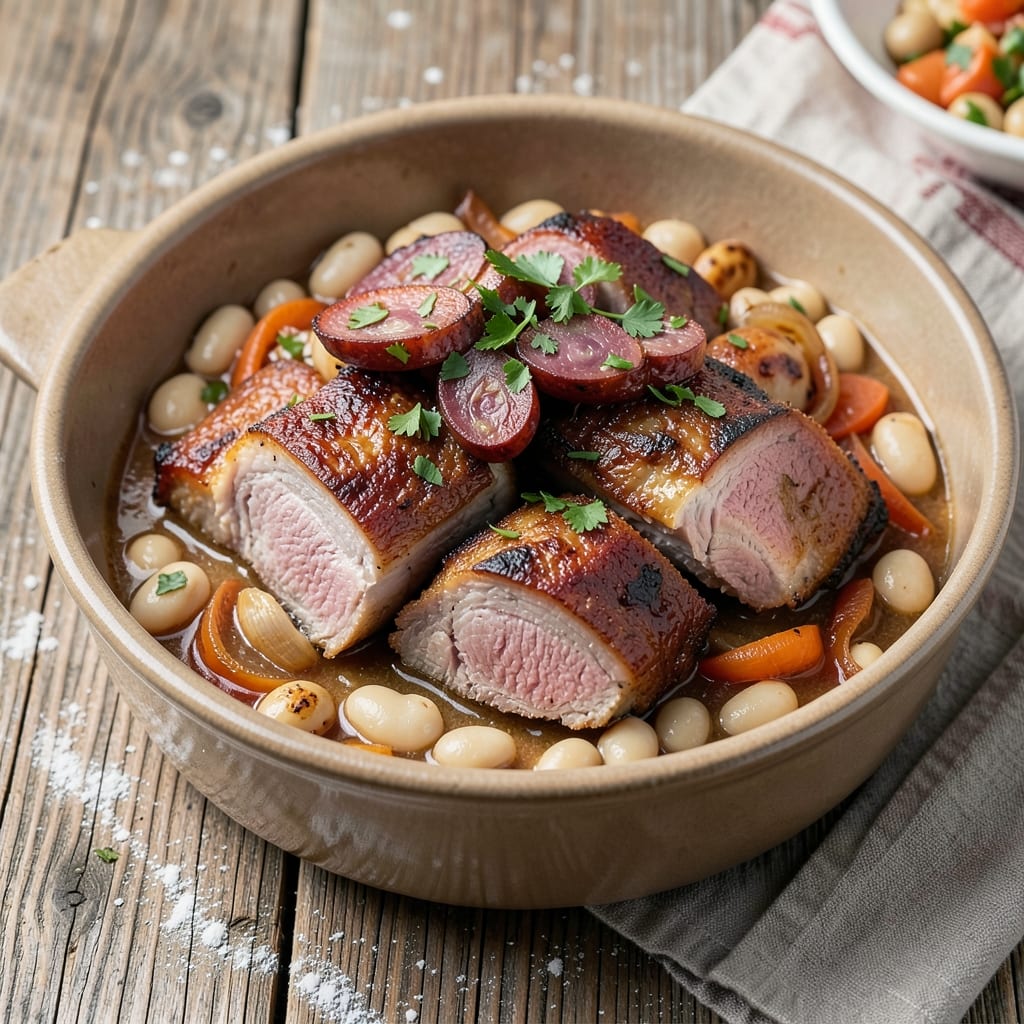
This French pork cassoulet recipe brings the heart of southwestern France to your dinner table with its signature layers of tender pork, smoky sausage, and creamy white beans. Growing up in small-town Georgia, I learned how pork transforms simple ingredients into something extraordinary—just like this dish does. The secret lies in slow cooking, where flavors meld into a rich, comforting harmony that makes every bite feel like a homecoming.
Traditional cassoulet requires patience: browning pork and sausage until deeply caramelized, layering ingredients in a heavy cast iron dish, and baking until the top crust is golden and crisp. I've adapted this classic technique for home cooks by offering both the traditional oven method and a pressure cooker shortcut—because even heritage recipes deserve a modern twist. The result? A dish so tender and flavorful, it turns weeknights into celebrations.
What makes this recipe truly special is how the layers work together: crispy pork and sausage on the bottom, tender beans in the middle, and a golden crust on top that crackles with every bite. The aroma alone—smoky, herby, and deeply comforting—will have your kitchen feeling like a French bistro. Serve it with crusty bread to soak up every last drop of that rich bean sauce.
Whether you're recreating a family tradition or introducing cassoulet to your dinner rotation, this recipe delivers restaurant-quality results with a touch of Southern charm. The key is letting the flavors develop slowly, just as they would in a French countryside kitchen. Let's get cooking—your taste buds will thank you.
Ingredients for french pork cassoulet
Simple but transformative ingredients that turn a weeknight into a French bistro feast.
| Ingredient | Amount | Notes |
|---|---|---|
| Pork Shoulder 🥩 | 3 lb | Bone-in, cut into 2-inch chunks |
| Smoked Sausage 🌭 | 1 lb | Kielbasa or andouille, sliced into rounds |
| Great Northern Beans 🌱 | 2 cups | Dried, soaked overnight |
| Yellow Onion 🧅 | 1 whole | Diced, about 1.5 cups |
| Carrots 🥕 | 4 whole | Medium, peeled and sliced into rounds |
| Garlic Cloves 🧄 | 6 cloves | Minced, fresh preferred |
| Fresh Thyme 🌿 | 2 tbsp | Leaves only, chopped |
| Fresh Rosemary 🌿 | 1 tbsp | Needles only, chopped |
| Bay Leaves 🍃 | 2 whole | Dried, standard size |
| Tomato Paste 🍅 | 2 tbsp | Squeeze tube or canned |
| Chicken Broth 💧 | 3 cups | Low-sodium preferred |
| Olive Oil 🫒 | ½ cup | Extra-virgin for richness |
| Salt 🧂 | 2 tsp | Kosher or sea salt |
| Black Pepper 🌶️ | 1 tsp | Freshly ground preferred |
| Crusty Bread 🍞 | 1 loaf | For serving, torn into pieces |
The pork shoulder is your secret weapon—look for well-marbled cuts at Whole Foods or your local butcher. Costco usually has great prices too, but check the sell-by date. For the sausage, kielbasa is easiest to find, but andouille gives that authentic Cajun kick. The beans? Soak them overnight in cold water—double the soaking time if you're using dried. Fresh thyme and rosemary make all the difference here, so don't grab the dried stuff unless you're in a pinch. I always buy extra because they keep for months in the freezer.
No smoked sausage? Italian sausage works in a pinch, but it won't have that same smoky depth. Short on time? Canned white beans are fine for a quick version, but dried gives that creamy texture. The tomato paste can be the squeeze tube kind—Trader Joe's has those in the pantry aisle. For extra richness, add a splash of red wine to the broth. The carrots can be baby carrots if that's what's in your fridge, but whole carrots give more flavor when they caramelize. And if you're feeling fancy, add a pinch of saffron to the broth.
This dish tastes even better the next day—make extra if you can. Store leftovers in an airtight container for up to 5 days in the fridge. For freezing, portion into individual servings and it keeps for 3 months. The bread? Toast it lightly before serving so it stays crisp. If you're using the pressure cooker method, you can skip the crusty bread layer—just top with extra sausage and herbs instead.
Why You'll Love This Recipe
- One-Pot Magic: I swear by this recipe because it’s basically a dump-and-bake miracle. Brown the pork shoulder and sausage first—takes 10 minutes, no fancy skills—and then the beans, onions, and carrots just soak up all that rich juices while you sip wine. No straining, no extra pots, just hands-off perfection.
- Smoky, Savory Bliss: That smoky sausage paired with tender pork shoulder? It’s a flavor bomb. The slow-cooked beans turn creamy, the onions caramelize into sweetness, and the crust on top—if you don’t burn it—is chef’s kiss. Honestly, I’ve had this cold the next day and still craved it.
- Weeknight to Party Upgrade: Make it for Tuesday dinner or double the batch for Sunday brunch. The leftovers reheat like a dream (just add a splash of water), and it’s hearty enough for a potluck but fancy enough for company. My in-laws think I’m a French chef now—no one’s questioning the cassoulet.
- Budget-Friendly Feast: Pork shoulder and dried beans stretch this dish into a full meal for half the cost of takeout. Between us, I’ve fed six people for under $20 with this—plus, the flavors are so rich, no one misses the expensive cuts. It’s my secret weapon for stretching groceries without sacrificing taste.
Step-by-step instructions for French pork cassoulet
Here's how to build this rustic French classic layer by layer—just like Grandma used to make.
Brown the Pork and Sausage for Deep Flavor
Heat the 0.5 cup olive oil in a large Dutch oven over medium-high heat. Add the 3 lb pork shoulder in 2-inch chunks, working in batches if needed, and brown on all sides for 8-10 minutes total. This step is crucial—it develops that rich, caramelized crust that makes cassoulet taste like home.
Once the pork is golden, remove it and set aside. In the same pot, add the 1 lb smoked sausage sliced into rounds and cook for 3-4 minutes until lightly browned. You want both the pork and sausage to contribute to the flavor base, not just simmer blandly later. Don't rush this—good browning takes time.
Sauté Vegetables and Build the Base
In the same Dutch oven, add the 1 whole yellow onion (diced) and 4 whole carrots (sliced into rounds). Cook for 5-6 minutes until the onions soften and the carrots begin to caramelize. This sweetness balances the savory pork and sausage perfectly.
Stir in the 6 cloves garlic cloves (minced), 2 tbsp fresh thyme, and 1 tbsp fresh rosemary, cooking for 30 seconds until fragrant. Add the 2 whole bay leaves and 2 tbsp tomato paste, stirring to coat everything evenly. This aromatic base is the soul of your cassoulet—don't skip it.
Layer Beans and Meat for Perfect Texture
Return the browned pork and sausage to the Dutch oven. Pour in the 3 cups chicken broth, scraping up any browned bits from the bottom. Add the 2 cups soaked Great Northern Beans (drained) and bring to a gentle simmer. Here's the key: let it cook uncovered for 30 minutes—this allows the beans to absorb liquid gradually without turning mushy.
After 30 minutes, stir in the 2 tsp salt and 1 tsp black pepper. Taste the liquid—it should be rich and savory, not bland. If it needs more depth, add a splash of broth. The beans should be tender but still hold their shape. This is your first checkpoint before layering.
Assemble the Cassoulet for Oven Perfection
Preheat your oven to 325°F. Transfer the bean mixture to a 9x13-inch baking dish (or similar size). Arrange the pork shoulder chunks and sausage slices on top, overlapping slightly but not crowded. The goal is to create a rustic, layered look—this isn't a neat casserole, it's a hearty French feast.
Cover tightly with foil and bake for 2 hours. The foil traps steam, ensuring the meat stays moist and the beans don't dry out. After 2 hours, remove the foil and bake for another 30 minutes to let the top develop a golden crust. This final step is what gives cassoulet its signature texture—crispy on top, tender underneath.
Rest and Serve with Crusty Bread
Let the cassoulet rest for 15 minutes before serving. This resting period lets the juices redistribute, so every bite is rich and flavorful. The dish should be hot but not boiling—perfect for serving family-style.
Tear the 1 loaf crusty bread into pieces and serve alongside. The bread soaks up the delicious bean and meat juices, making every bite even more satisfying. Cassoulet is meant to be shared, so dig in while it's warm—this is comfort food at its finest.
Pro Tips For Making French Pork Cassoulet
- CRUSH THE PORK SHOULDER: Start it in a cold Dutch oven with just enough water to cover—no oil, no rushing. After 3 hours, when it’s fork-tender, remove it and let it rest in the broth (yes, even if you’re impatient). I learned this the hard way: skipping the rest makes the meat turn to mush when you slice it later.
- SOAK BEANS OVERNIGHT: Great Northern beans are stubborn. Dump them in cold water with a pinch of salt the night before—no need to change the water in the morning. The key is patience: under-soaked beans stay mealy, and cassoulet demands that creamy, slow-cooked texture. Trust me, your future self will notice the difference.
- LAY THE SAUSAGE LAST: Toss the smoked sausage in halfway through cooking, not at the start. If you add it too early, it’ll turn into a greasy, rubbery mess. Save it for the final hour so it stays juicy and can soak up all that rich pork and bean flavor—like a flavor sponge.
- BROWN THE ONIONS FIRST: Don’t skip the 15 minutes of caramelizing those onions in butter. The deeper the color, the sweeter the base for your cassoulet. I used to rush this, and the dish always tasted flat. Low and slow here means big flavor later—no shortcuts.
Storing and reheating this recipe
Refrigerator Storage
Let your cassoulet cool completely before storing—this prevents condensation that can make the crust soggy. Transfer to an airtight container with a tight-fitting lid, leaving about ½ inch headspace for expansion. I use glass Pyrex containers because they preserve texture better than plastic. Store at 40°F or below for up to 5 days, but trust me, it tastes even better the next day when flavors meld. 💫
Freezer Prep Tips
For long-term storage, portion cassoulet into individual meal-sized containers or freezer bags. Press out excess air to prevent freezer burn—this is where my vacuum sealer comes in handy. Label with the date and freeze for up to 3 months. The crust may soften slightly after thawing, so I recommend adding a sprinkle of breadcrumbs and 1 tbsp olive oil before reheating to restore crispiness. ❄️
Oven Reheating Method
My preferred way to revive cassoulet is in the oven. Transfer the container to a 350°F oven and heat for 45-60 minutes, covered with foil for the first 30 minutes to retain moisture. Remove the foil for the last 15 minutes to crisp the top. If using a 9x13-inch dish, add ¼ cup water to the bottom to prevent drying. The internal temperature should reach 165°F for safe serving. 🌡️
Stovetop Revival
For quicker reheating, use a heavy-bottomed pot on medium-low heat. Add ½ cup chicken broth to prevent sticking and break up any clumps with a wooden spoon. Simmer for 10-15 minutes, stirring occasionally, until heated through. If the top looks dry, cover with a lid for 5 minutes to steam. This method works best for smaller portions—2-3 servings at a time. 🔥
Microwave Shortcut
When you're in a rush, microwave 1-2 servings at a time on 50% power for 3-4 minutes, stirring halfway. Cover loosely with a microwave-safe lid to retain moisture. If the cassoulet looks dry, add 1-2 tablespoons of broth and heat for another 30 seconds. This isn't my first choice, but it's a lifesaver for busy weeknights. 💡
Crust Restoration
After reheating, the crust might lose its crispness. Fix this by broiling for 2-3 minutes under the oven's high heat setting. For extra crunch, sprinkle with 1 tbsp crushed cornflakes or panko before broiling. This step transforms reheated cassoulet into something that tastes almost as good as fresh—because let's be honest, nobody wants sad, soggy leftovers. 💪
Nutrition facts
Frequently asked questions
Why does cassoulet need to be baked in a heavy dish?
A heavy Dutch oven or cast iron dish retains heat evenly and prevents the bottom from burning while the top stays moist. This creates the signature crispy crust on top while keeping the beans and meat tender underneath. If you don't have a heavy dish, use a 9x13-inch baking dish with a tight-fitting lid to trap steam.
Can I substitute canned beans for dried?
Yes, but your cassoulet won't have the same creamy texture. Use 2 (15-oz) cans of white beans drained and rinsed, and add ½ cup extra broth to compensate for the liquid lost during soaking. For best results, I recommend soaking dried beans overnight—they develop a richer flavor.
How do I fix mushy beans?
Mushy beans usually happen from overcooking or too much liquid. If your beans are still firm, add ½ cup broth and bake uncovered for 15 minutes to thicken. If they're already mushy, stir in 1 tbsp cornstarch mixed with 2 tbsp water and cook for 5 minutes to restore texture. The key is patience—don't rush the cooking process.
What's the best sausage for authentic flavor?
For true French cassoulet, use Toulouse sausage (if available) or smoked andouille. Kielbasa is a good substitute, but it lacks the deep smokiness. If you can't find these, Italian sausage works in a pinch—just add ½ tsp smoked paprika to mimic the smoky flavor. The fat content in sausage is essential for rich flavor.
Can I make cassoulet in a slow cooker?
Yes! Brown the meat first, then layer everything in your slow cooker. Cook on Low for 6-7 hours or High for 3-4 hours. For the crust, sprinkle with breadcrumbs mixed with olive oil and broil for 5 minutes at the end. The texture will be slightly different but still delicious—perfect for hands-off cooking.