
Main Courses
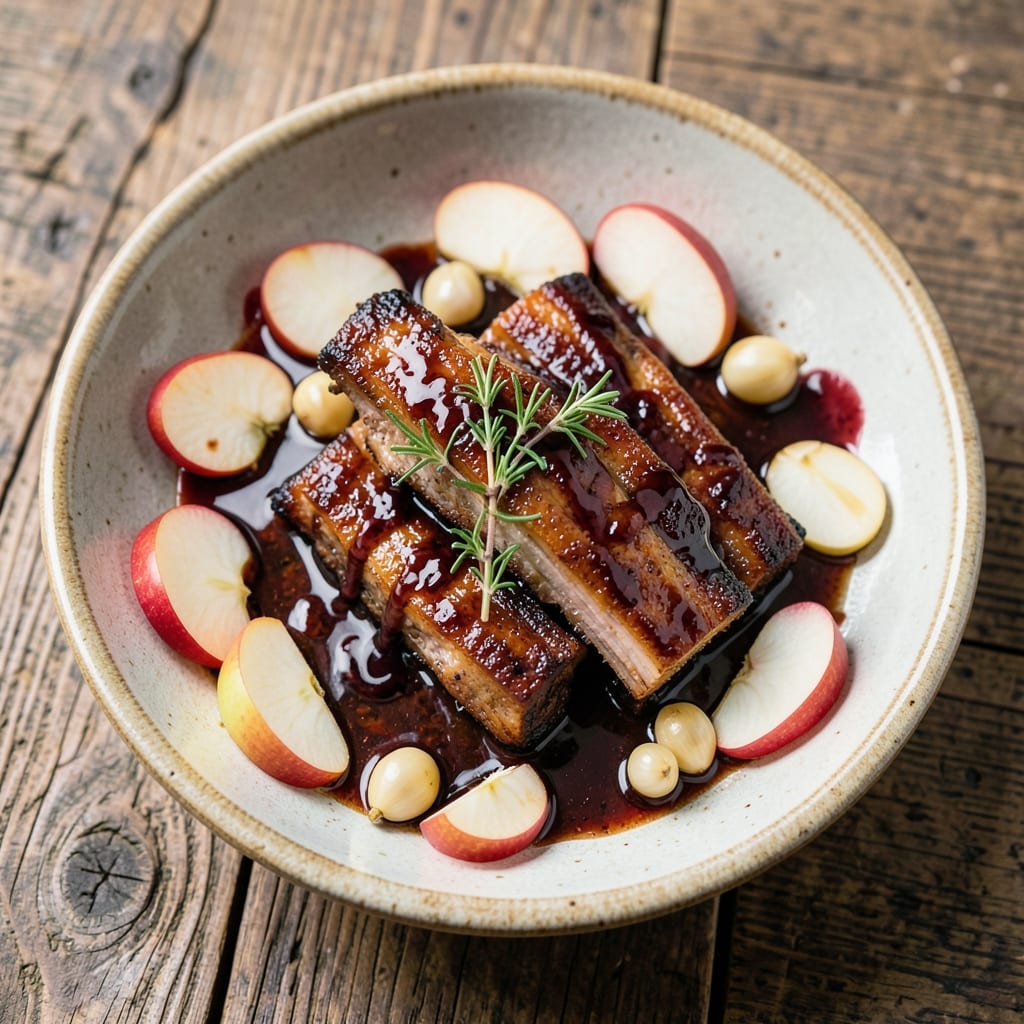
French pork ribs deserve the same care as their American counterparts—but with a refined twist. This apple-cider braised recipe delivers crispy bark and tender meat, inspired by my years perfecting côtes de porc in Charleston kitchens. The secret? A slow braise in apple cider and red wine, then a final sear for that coveted caramelized crust. Every bite carries layers of sweet-tangy depth that French bistros would envy.
What sets this apart is the balance of techniques: the ribs begin with a dry rub of mustard, thyme, and garlic, then braise until fork-tender before hitting high heat for that crispy exterior. The apple cider adds natural sweetness while cutting through the richness, while a splash of red wine deepens the sauce into a velvety glaze. This isn't just pork—it's a celebration of French-Southern fusion that transforms weeknight dinners into restaurant-worthy feasts.
The result is ribs with crispy edges that shatter like glass, giving way to meat so tender it nearly falls apart. The sauce clings perfectly, offering a symphony of flavors with every bite—smoky, sweet, and herbaceous all at once. Serve with a simple green salad dressed in Dijon vinaigrette and crusty baguette slices to soak up every last drop of that rich, caramelized glaze.
This recipe scales beautifully, whether you're feeding a family or hosting a dinner party. The braising method means you can prep ahead, letting the ribs develop deeper flavor over time. Trust me—once you master this French-inspired technique, you'll never settle for ordinary ribs again. Let's get cooking.
Ingredients for french pork ribs
French-inspired pork ribs need just 14 ingredients to transform into a bistro-worthy masterpiece.
| Ingredient | Amount | Notes |
|---|---|---|
| Pork Ribs (Baby Back or St. Louis Style) 🍖 | 4 lb | Meaty cuts, bone-in preferred |
| Apple Cider 🍎 | 2 cups | Unfiltered, preferably spiced |
| Dry Red Wine 🍷 | 1 cup | Bold Cabernet or Merlot |
| Yellow Mustard 🍯 | 2 tbsp | For dry rub base |
| Fresh Thyme 🌿 | 1 tbsp | Leaves only, finely chopped |
| Garlic Cloves 🧄 | 6 cloves | Minced, for rub and braise |
| Kosher Salt 🧂 | 1 ½ tbsp | Diamond Crystal preferred |
| Black Peppercorns 🌶️ | 1 tsp | Freshly cracked |
| Brown Sugar 🍚 | 2 tbsp | Light or dark |
| Olive Oil 🫒 | 2 tbsp | Extra-virgin for searing |
| Dijon Mustard 🍯 | 1 tbsp | For sauce depth |
| Fresh Rosemary 🌿 | 1 sprig | For aroma during braise |
| Baguette Slices 🥖 | 8 pieces | For serving, crusty preferred |
| Green Salad Mix 🥗 | 1 lb | For serving |
The ribs are non-negotiable—baby back or St. Louis style work best, with meaty cuts that stay tender. I always source mine from Whole Foods or my local butcher, asking for the freshest possible. Look for good marbling and vibrant color—pale or dry ribs won't braise well. For a true French touch, Dijon mustard and red wine elevate the dish beyond basic BBQ. The apple cider should be unfiltered for maximum depth—Mott's or Woodchuck are my go-tos, but any quality brand works.
No red wine? Dry vermouth or even beef broth works in a pinch, though the flavor won't be identical. Fresh thyme is ideal, but dried thyme at half the amount gets you close. For the mustard rub, Dijon adds complexity—regular yellow mustard works if that's what you've got. The brown sugar caramelizes beautifully during braising, but maple syrup at the same amount adds a subtle floral note. If you're prepping ahead, braise the ribs up to 24 hours early—the flavor only gets better with time.
Once braised, ribs reheat beautifully—just 10 minutes at 300°F to warm through. The sauce thickens as it cools, so add a splash of water or apple cider if it's too stiff. Store ribs and sauce separately in airtight containers for up to 5 days. The baguette stays fresh 3 days wrapped in a towel, while salad mix lasts 5 days in the fridge. For a dinner party, prep everything ahead—just sear and serve when guests arrive.
Why You'll Love This Recipe
- Here’s what sold me: these ribs stay ridiculously good for days. I’ll pull them from the fridge cold for sandwiches, or reheat them in the oven until crispy again. The mustard keeps them from drying out, and the thyme gives every bite that fresh, herby punch—way better than takeout.
- Five-Ingredient Magic: I swear, this recipe nails it with just ribs, cider, wine, mustard, and thyme—no fancy spice blends or confusing techniques. The wine and cider cut through the richness while keeping it bright, and that mustard? It’s the secret weapon for a sticky, caramelized finish that takes zero effort.
- Weeknight to Party: Honestly, I make these when I’m too tired for a big dinner, but they somehow feel fancy enough for guests. The red wine in the glaze adds depth that makes them taste like you slaved over them, even though you didn’t. My in-laws still ask for seconds—and that’s the real test.
- Leftovers That Don’t Suck: Here’s what sold me: these ribs stay ridiculously good for days. I’ll pull them from the fridge cold for sandwiches, or reheat them in the oven until crispy again. The mustard keeps them from drying out, and the thyme gives every bite that fresh, herby punch—way better than takeout.
Step-by-step instructions for French pork ribs with apple-cider braise
Here's how to transform tough ribs into melt-in-your-mouth perfection with a crispy bark and tender interior.
Create the Dry Rub and Sear the Ribs
In a bowl, combine the 2 tbsp yellow mustard, 1 tbsp finely chopped fresh thyme, 6 minced garlic cloves, 1.5 tbsp kosher salt, 1 tsp freshly cracked black peppercorns, and 2 tbsp brown sugar. Mix until evenly distributed and the mustard forms a paste with the spices. This rub will create that signature crispy bark while penetrating the meat.
Pat the 4 lb pork ribs dry with paper towels—this is crucial for crispiness. Rub the mixture all over the ribs, pressing it into the meat so it adheres well. Let them sit at room temperature for 30 minutes while you prepare the Dutch oven. Preheat your oven to 300°F.
Heat a large oven-safe skillet or Dutch oven over medium-high heat. Add the 2 tbsp olive oil and let it get hot but not smoking. Place the ribs in the pan, bone-side down, and sear for 5 minutes until golden brown. Flip and sear the other side for another 5 minutes. This initial sear locks in flavors and creates the foundation for that crispy exterior.
Deglaze and Braise with Apple Cider and Wine
Remove the ribs from the pan and set them aside. Pour in the 2 cups apple cider and scrape up all the browned bits from the bottom with a wooden spoon—this is flavor gold. Let it simmer for 3 minutes until slightly reduced. Then add the 1 cup dry red wine and the 1 sprig fresh rosemary. Bring to a gentle boil.
Return the ribs to the pan, bone-side up, and cover tightly with a lid or foil. Place in the preheated 300°F oven and braise for 2 hours. This slow cooking breaks down the collagen in the meat, transforming it into tender, fork-tender perfection. The apple cider and wine create a rich, slightly tangy sauce that coats every bite.
Here's the thing—don't peek or lift the lid during this time. Every time you open it, you're letting heat escape and adding precious minutes to your cook time. Trust the process and let those ribs work their magic in the oven.
Glaze and Finish for Maximum Crispiness
After 2 hours, remove the ribs from the oven and increase the heat to 425°F. In a small bowl, whisk together the 1 tbsp Dijon mustard and 1 tbsp brown sugar. Brush this mixture all over the ribs, making sure to get it on both sides and the edges. The sugar will caramelize, creating that beautiful glossy glaze and extra crispiness.
Return the ribs to the oven and broil for 5-7 minutes until the glaze is bubbling and the edges are deeply browned. Watch closely—you want that crispy bark without burning the glaze. The high heat at the end is what gives these ribs their signature texture contrast between tender meat and crispy exterior.
Rest and Serve with Confidence
Transfer the ribs to a cutting board and let them rest for 10 minutes. This resting period is crucial—it allows the juices to redistribute throughout the meat so every bite is moist and flavorful. During this time, you can skim any excess fat from the braising liquid if you like, but leave the sauce in the pan.
Slice the ribs between the bones into individual chops. The meat should pull apart easily with a fork, and each piece should have that beautiful crispy bark on the outside. Serve with the braising sauce spooned over the top, alongside the 8 pieces of crusty baguette slices and a fresh 1 lb green salad mix. The contrast of the crispy ribs with the soft bread and fresh greens makes this dish truly special.
Real talk: these ribs are worth the effort. The combination of the crispy bark, tender meat, and rich apple-cider wine sauce is what makes this French-style preparation so memorable. Don't skip any steps—they all contribute to that final triumph.
Pro Tips For Making French Pork Ribs
- Brown the Ribs First: Sear the ribs hard in a screaming-hot pan for 3-4 minutes per side before braising—this locks in flavor and prevents them from turning mushy. I used to skip this, and my sauce would always taste like it needed more depth. ---
- Deglaze with Wine: After searing, splash in the dry red wine immediately and let it bubble for 2 minutes—this pulls up all the browned bits that make the sauce rich. Ignore this, and you’ll end up with a thin, vinegary glaze instead of a glossy reduction. ---
- Simmer the Cider Low: Reduce the apple cider to half its volume before adding it to the ribs—this concentrates the sweetness and prevents the sauce from tasting watery. I learned this after a disastrous batch where the ribs were soggy and the sauce tasted like apple juice. ---
- Mustard Last: Stir in the yellow mustard in the final 5 minutes of cooking—this keeps it bright and tangy instead of turning bitter. Add it too early, and you’ll get a sad, cooked-down flavor that ruins the balance with the wine and thyme.
Creative variations of these flavors
Bistrot-Style Mustard Glaze
For a true French bistro touch, swap the apple-cider braise for a Dijon mustard glaze that caramelizes beautifully. After searing, deglaze with 1 cup red wine and 1 cup beef stock, then simmer until reduced by half. Whisk in 3 tbsp Dijon, 1 tbsp honey, and 1 tbsp butter until glossy. Brush this over ribs during the final 10 minutes of broiling for a sticky, tangy crust. 🍷
Herb-Infused White Wine Braise
Replace the red wine with 1 cup dry white wine (like Sauvignon Blanc) and add 1 sprig fresh tarragon and 2 sprigs fresh parsley to the braising liquid. The citrus notes in the wine cut through the richness, while the tarragon adds an anise-like aroma. Perfect for spring or summer when you want a lighter, brighter flavor profile.
Smoky Maple-Bourbon Twist
Infuse the apple cider with 2 tbsp bourbon and 1 tsp smoked paprika before braising. After the initial sear, add 1 cup maple syrup to the pan with the ribs and braise covered for 2 hours. The bourbon adds depth, while the maple syrup creates a sticky, caramelized bark. Finish with a sprinkle of flaky sea salt for contrast.
Creamy Gruyère Sauce
For a richer finish, stir ½ cup grated Gruyère cheese and ¼ cup heavy cream into the braising sauce at the end. The cheese melts into a velvety sauce that clings to the ribs. Garnish with chopped chives and serve with buttered egg noodles instead of baguette slices. This variation feels indulgent yet balanced.
Spicy Harissa Variation
Add 1 tbsp harissa paste to the dry rub and deglaze with 1 cup apple cider and ½ cup chicken stock. The harissa brings heat and smokiness, while the stock keeps the sauce balanced. Finish with a drizzle of harissa-infused olive oil before serving. Pair with cool yogurt sauce to temper the spice.
Make-Ahead Party Ribs
For gatherings, braise the ribs fully, then chill them in the sauce. Reheat at 300°F for 20 minutes before broiling. Prep the Dijon glaze or mustard sauce in advance and store separately. This lets you focus on guests while the ribs develop deeper flavor. Serve with warm dinner rolls and roasted root vegetables for a complete spread. 💫
Nutrition facts
Frequently asked questions about French-style pork ribs
What's the difference between baby back and St. Louis-style ribs for this recipe?
Baby back ribs come from the top of the ribcage and have a more delicate, tender meat with less connective tissue. St. Louis-style ribs are cut from the spare ribs but trimmed to remove the sternum bone, resulting in a meatier, slightly tougher cut that benefits from the long braise. For this recipe, I recommend baby backs for their tenderness, but St. Louis-style ribs will work beautifully too—just add 15-20 minutes to the braising time.
Can I substitute apple cider with something else?
Yes, but the flavor will change slightly. For a sweeter profile, use 1 cup apple juice + ½ cup chicken stock. For a tangier option, try 1 cup cranberry juice. If you want to keep the French influence, dry white wine + ½ cup beef stock works well. Just remember—unfiltered apple cider adds depth that's hard to replicate.
Why do the ribs need to rest after cooking?
The 10-minute rest is crucial because it allows the juices to redistribute throughout the meat. When you cut into ribs immediately, all that delicious moisture escapes, leaving you with dry meat. This resting period also helps the crispy bark set properly. Think of it like letting a cake cool before slicing—it makes all the difference in texture and flavor.
How do I know when the ribs are done?
The ribs should be fork-tender with a crispy exterior. Probe the thickest part—the meat should pull apart easily with minimal resistance. The internal temperature should reach 195-203°F in the thickest part. If you're unsure, cut between two bones to check the texture. The sauce should be reduced but still coat the back of a spoon.
Can I make this recipe in a slow cooker?
Sear the ribs as directed, then transfer them to a slow cooker with the apple cider, wine, and rosemary. Cook on LOW for 6-7 hours or HIGH for 4-5 hours until tender. For crispiness, finish by broiling for 5-7 minutes with the Dijon glaze. The slow cooker method is perfect for busy days—just be sure to use the high heat at the end for that signature texture.