
Main Courses
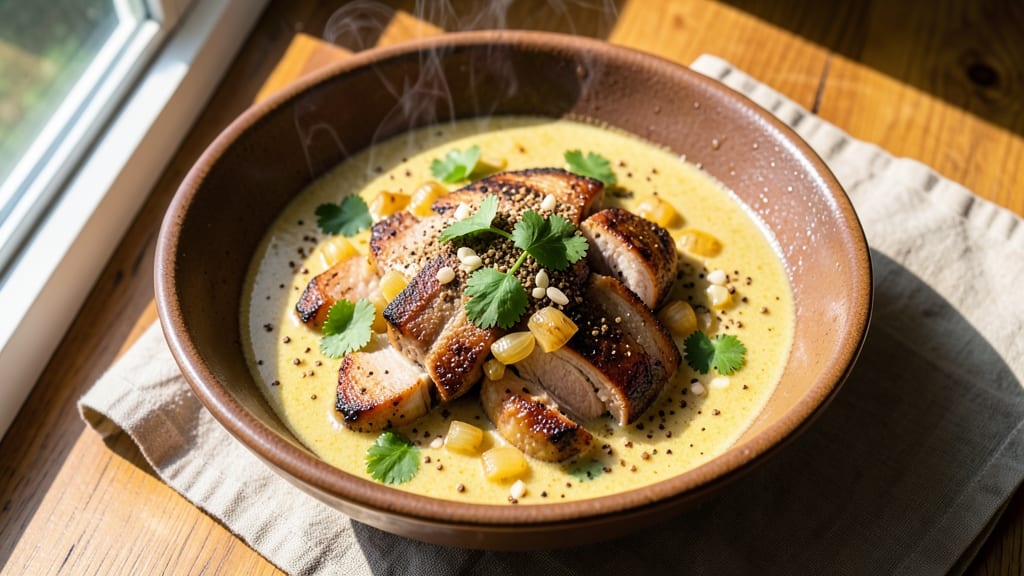
This mild pork curry recipe transforms tender pork into a velvety, comforting dish where gentle spices and coconut milk create a creamy embrace. 💛 After years of perfecting curries for picky eaters—including my own children—I’ve developed a method that delivers rich, aromatic flavors without overwhelming heat.
The secret lies in balancing sweet, savory, and umami notes through slow cooking and aromatic base-building.
What sets this recipe apart is its approachability: no complex spice blends or intimidating techniques. We start with a simple paste of ginger, garlic, and mild spices, then let the pork simmer until fall-apart tender in a luscious coconut milk sauce.
The result is a dish that’s equally at home on a weeknight table or a special occasion menu, with a texture that’s creamy yet light and a flavor profile that’s deeply satisfying.
The final dish delivers perfectly tender pork pieces suspended in a sauce that’s velvety yet bright, with just enough spice to warm without burning. Each bite offers a harmonious blend of caramelized pork, fragrant spices, and the natural sweetness of coconut milk—proof that comfort food doesn’t require heat to shine.
Paired with steamed basmati rice or warm naan, this curry becomes a complete meal experience.
This recipe also excels as a make-ahead dish, with flavors deepening as it rests. The instructions walk through every step—from marinating the pork to balancing the sauce—so you can achieve restaurant-quality results at home. Let’s create this gentle yet deeply flavorful curry together.
Ingredients for mild pork curry
Gentle spices, tender pork, and velvety coconut milk create this comforting curry's heart.
| Ingredient | Amount | Notes |
|---|---|---|
| Pork Shoulder 🥩 | 1 ½ lb | Bone-in for flavor, cut into 1.5-inch cubes |
| Coconut Milk 🥥 | 1 can | Full-fat, 13.5 oz can (not carton) |
| Yellow Onion 🧅 | 1 whole | Medium size, diced (about 1.5 cups) |
| Garlic Cloves 🧄 | 4 cloves | Fresh, peeled and minced |
| Fresh Ginger 🌿 | 2 tbsp | Grated, about 1-inch piece |
| Ground Cumin 🌿 | 1 tsp | Toasted for deeper aroma |
| Ground Coriander 🌶️ | 1 tsp | Sweet, not bitter |
| Turmeric Powder 🌶️ | ½ tsp | Bright yellow color |
| Garam Masala 🌶️ | 1 tsp | Store-bought blend preferred |
| Tomato Paste 🍅 | 2 tbsp | Smooth, no chunks |
| Vegetable Oil 🫒 | 2 tbsp | High smoke point |
| Salt 🧂 | 1 ½ tsp | Kosher or sea salt |
| Black Pepper 🌶️ | ½ tsp | Freshly ground |
| Fresh Cilantro 🌿 | ¼ cup | Chopped, for garnish |
| Lemon Juice 🍋 | 1 tbsp | Freshly squeezed |
The pork shoulder is key—bone-in for flavor, but don't stress if you find boneless. Look for good marbling at Costco or Whole Foods—it keeps the meat juicy. Cubes should be 1.5 inches max so they cook evenly. Coconut milk? Full-fat only—the carton kind won't give that rich texture. If you can't find it, Thai Kitchen brand is my go-to at regular grocery stores. Fresh ginger and garlic should smell vibrant—no musty aromas. For the spices, Penzeys or Spicewalla have the best quality, but the regular grocery store stuff works if it's recent.
No fresh ginger? Substitute with 1 tbsp powdered ginger, but it won't be as bright. Out of garam masala? Mix 0.25 tsp each cumin, coriander, cinnamon, and cardamom—close enough. The tomato paste can be the squeeze tube kind from Trader Joe's if you hate measuring. For extra richness, add 1 tbsp coconut cream at the end. Want it milder? Reduce the garam masala to 0.5 tsp. The cilantro is optional—skip if you dislike it, but it adds freshness that balances the creamy sauce.
This curry tastes even better the next day as flavors meld—double the batch if you can. Keeps 4-5 days refrigerated or 3 months frozen. For freezing, portion into containers with sauce—reheat gently with a splash of water. The pork gets more tender with time, so don't rush the cooking. Store spices in airtight containers away from light to keep their punch. Fresh cilantro? Wrap in damp paper towels and store in a bag for up to 5 days.
Why You'll Love This Recipe
- One-Pot Magic: I swear by this recipe when I’m too tired to wash a million dishes. Just brown the pork, toss in the onions and garlic, then let the coconut milk and simmering spices do all the work—no extra pots, no fuss.
- Creamy Without Overpowering: That balance of ginger and garlic upfront, then the rich coconut milk melting into tender pork? It’s the kind of mild flavor that doesn’t whisper—it sings, but still lets you talk through dinner.
- Leftover Goldmine: Between us, this curry tastes better the next day. The pork gets even more fall-apart, the sauce thickens just right, and I’m always scrambling to eat it before my kids do.
- Budget-Friendly Feast: Pork shoulder stretches for days, and coconut milk adds luxury without breaking the bank. Honestly, it’s my go-to when I need to feed a crowd or just stretch a meal for the week.
Step-by-step instructions for mild pork curry with creamy coconut
This gentle yet flavorful curry delivers tender pork in a velvety coconut hug—no heat, just comfort.
🔥 Step 1: Sear the Pork Shoulder for Depth of Flavor
Heat the 2 tablespoons vegetable oil in a large Dutch oven over medium-high heat until shimmering. Add the 1.5 lb pork shoulder cut into 1.5-inch cubes, working in batches if needed to avoid crowding. Sear for 3-4 minutes per side until golden brown and slightly crispy—this builds flavor that will infuse the sauce.
Real talk: Don't rush this step. You want that Maillard reaction happening to create rich, caramelized crusts. Once all pieces are seared, remove them to a plate and set aside. The pork will finish cooking later, but this initial sear is non-negotiable for flavor.
👨🍳 Step 2: Build the Aromatic Base
In the same Dutch oven, reduce heat to medium and add the diced yellow onion. Cook for 5-6 minutes until softened and light golden, stirring occasionally. Add the 2 tablespoons grated fresh ginger and 4 cloves minced garlic cloves, cooking for another 1-2 minutes until fragrant—you should smell that bright, zesty aroma.
Here's where it gets fun—stir in the 2 tablespoons tomato paste and cook for 1 minute to deepen its flavor. Sprinkle in the 1 teaspoon ground cumin, 1 teaspoon ground coriander, 0.5 teaspoon turmeric powder, 1 teaspoon garam masala, 1.5 teaspoons salt, and 0.5 teaspoon black pepper. Stir vigorously for 30 seconds to toast the spices and release their oils—this creates the aromatic foundation.
🍳 Step 3: Simmer the Pork in Spiced Sauce
Return the seared pork to the Dutch oven, spooning any accumulated juices over the top. Pour in 1 can coconut milk and stir gently to combine. Bring to a gentle simmer over medium-low heat, then reduce heat to maintain a barely bubbling state. Cover and let it cook for 1 hour to 1 hour 15 minutes, stirring occasionally, until the pork is fork-tender and easily pulls apart.
I know it seems like a long time, but patience is key. The pork needs to break down into tender, melt-in-your-mouth pieces. If the sauce starts to reduce too much, add 2-3 tablespoons water to maintain the creamy consistency. The curry should have a thick, velvety texture without being watery.
🥘 Step 4: Finish with Fresh Herbs and Brightness
Once the pork is tender, stir in the 1 tablespoon fresh lemon juice and taste. Adjust seasoning if needed—you might need a touch more salt or a splash of water to reach your preferred consistency. Remove from heat and let it sit for 5 minutes to allow the flavors to meld.
Garnish with 0.25 cup chopped fresh cilantro just before serving. The bright, citrusy lemon and fresh cilantro cut through the richness of the coconut milk, balancing the dish perfectly. Serve immediately with steamed basmati rice or warm naan to soak up every last bit of that creamy sauce.
Pro Tips For Making Mild Pork Curry
- Brown the Pork First: After cutting pork shoulder into chunks, sear them in a hot pan for 3-4 minutes per side until golden. I learned this the hard way—skipping the browning leaves the curry tasting flat, even with coconut milk. The Maillard reaction adds depth that no amount of spices can replace.
- Grate Ginger Like a Chef: Use the largest holes on your grater for fresh ginger—this keeps the texture smooth and prevents it from turning to mush in the curry. I used to mince it, and the dish always ended up grainy, no matter how much I stirred.
- Simmer, Don’t Boil: Keep the curry at a gentle simmer (tiny bubbles, occasional skimming) after adding coconut milk—boiling can split the milk and make the sauce separate. My first few attempts looked like a science experiment gone wrong until I dialed down the heat.
- Slice Onions Thin: Thinly slice yellow onions (1/8-inch or less) so they soften completely without turning to mush. Thick slices sit like rocks in the curry, no matter how long you cook them. I now use a mandoline for consistency—worth the splurge.
Pro cooking tips for this recipe
Sear Like a Pro
That initial sear transforms bland pork into flavor-packed cubes. Use a heavy-bottomed Dutch oven—I swear by All-Clad—and work in batches to avoid steaming the meat. The goal is golden brown crusts, not charred bits.
If your pork releases juices, don't wipe them away—those carry flavor! I like to sear at medium-high heat until I see 360° caramelization, then set aside. 🔥
Toast Your Spices
Never skip toasting your spices—it's where the magic happens. Heat your spices in the same pot over medium heat for 30 seconds while stirring constantly. You'll smell that toasted aroma (like warm bread meets cinnamon) that fresh spices lack.
For garam masala, I recommend Patel Brothers brand—it's consistently balanced. Toasting also prevents bitterness, especially with cumin and coriander.
Low and Slow Wins
Patience here makes all the difference. After adding coconut milk, maintain a gentle simmer—not a rolling boil. I use a meat thermometer to track doneness: 203°F internal temp for perfect tenderness. If your sauce reduces too quickly, add 2 tbsp water at a time.
The key is consistent heat—I keep my burner at 2 out of 10 on my gas stove. This slow cook transforms tough pork into fall-apart texture.
Coconut Milk Tricks
Full-fat coconut milk is non-negotiable for creaminess. For extra richness, I sometimes add 1 tbsp coconut cream at the end. If your sauce seems too thin, simmer uncovered for 5-10 minutes to reduce it naturally.
And here's my secret: stir in 1 tsp honey if you want to balance any acidity from the lemon juice. The coconut milk should coat the back of a spoon but still be pourable.
Resting Matters
After cooking, let the curry rest for 5 minutes before serving. This allows the sauce to thicken slightly and the flavors to meld. I cover it loosely with foil to trap heat.
During this time, I also prep my garnishes—cilantro and lemon wedges—because fresh herbs lose their vibrancy if added too early. This resting period makes the difference between good curry and restaurant-quality curry. ✨
Equipment Shortcuts
No Dutch oven? Use a heavy-bottomed skillet or slow cooker on high for 3 hours. For the slow cooker, sear the pork first, then transfer everything in.
I've also made this in an instant pot on high pressure for 45 minutes—just add 1 cup water and skip the initial sear. The key is even heat distribution—whatever you use, make sure it's heavy enough to handle the simmering without hot spots. 💡
Nutrition facts
Frequently asked questions
Can I use chicken or beef instead of pork in this curry? This recipe is specifically designed for pork, but you can adapt it! For chicken, use 1.5 lbs boneless thighs and reduce cooking time to 45-50 minutes (chicken cooks faster). For beef, opt for 1.5 lbs chuck roast cut into cubes and simmer for 2-2.5 hours—the slow cook will break down the connective tissue beautifully. Just
How can I make this curry even milder?
The recipe already uses gentle spices, but you can reduce the garam masala to 0.5 teaspoon and omit the black pepper entirely. For extra mildness, add 1 tablespoon honey or 1 teaspoon sugar at the end to balance any residual spice. You can also strain out some of the spices after toasting them (before adding coconut milk) to reduce their intensity. The coconut milk itself is naturally mild and helps dilute any spice flavors.
What's the best way to reheat leftovers?
Reheat gently to preserve the creamy texture. Place the curry in a saucepan over low heat and add 2-3 tablespoons water to prevent drying. Stir occasionally for 5-7 minutes until warmed through. For microwave reheating, cover with a damp paper towel and heat in 30-second intervals, stirring between each, until hot. Never reheat to a boil—this can make the sauce separate. The curry will actually taste better the next day as flavors meld!
Can I make this curry in an Instant Pot?
Sauté the onions, ginger, garlic, and spices as directed, then add the pork and coconut milk. Cook on high pressure for 45 minutes, then quick-release the pressure. For extra tenderness, you can increase to 60 minutes (natural release). The Instant Pot version will be slightly thinner, so you may want to reduce it uncovered for 5-10 minutes on the sauté function after cooking. The pressure cooker method is perfect for busy weeknights!
What if my sauce gets too thick or too thin?
If your sauce is too thick, simply add 2-3 tablespoons water or coconut milk at a time while stirring. For a thinner sauce, simmer uncovered for 5-10 minutes to reduce it naturally. The ideal consistency should coat the back of a spoon but still be pourable. Remember, the sauce will thicken slightly as it rests, so don't over-reduce it. For extra richness, you can stir in 1 tablespoon coconut cream at the end if needed.