
Side Dishes
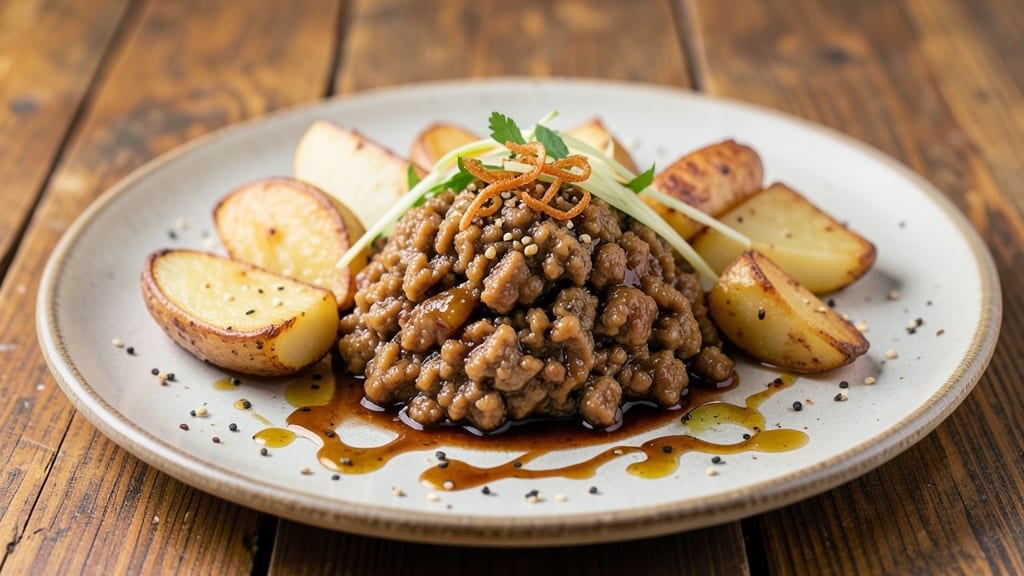
This minced pork potato Chinese recipe delivers the perfect balance of crispy edges and tender bites in every forkful. After years of perfecting stir-fry techniques in Charleston's bustling kitchens, I've developed a method that transforms simple ingredients into a restaurant-worthy dish with just 30 minutes of active time.
The secret lies in high-heat wok frying and proper seasoning ratios that create that signature umami depth we all crave.
The recipe begins with ground pork cooked until just golden, then sets aside to make room for the potatoes.
What makes this dish truly special is the two-stage cooking process—first searing the potatoes until crispy on the outside while keeping them tender inside, then combining everything with a savory sauce of soy, ginger, and garlic.
This technique ensures every bite has the perfect texture contrast that makes Chinese street food so addictive.
By the time you're done, you'll have a dish that's rich in flavor yet light enough to satisfy any meal. The potatoes absorb the pork's savory juices while maintaining their tender bite, and the crispy edges add that satisfying crunch.
This recipe serves four and comes together faster than takeout, making it perfect for weeknight dinners when you want something authentic without the fuss.
Serve with steamed jasmine rice and a side of quick-pickled vegetables for the full experience. The leftovers reheat beautifully, so you'll have delicious meals ready for the next day too. Let's get cooking!
Ingredients for minced pork potato chinese
Crispy edges meet tender bites in this wok-fried masterpiece—just 13 ingredients for restaurant-quality flavor.
| Ingredient | Amount | Notes |
|---|---|---|
| Ground Pork 🐖 | 1 lb | Lean or fatty works fine |
| Russet Potatoes 🥔 | 2 lbs | Cut into 1-inch cubes |
| Light Soy Sauce 🥢 | ½ cup | Kikkoman preferred |
| Dark Soy Sauce 🥢 | 1 tbsp | For color depth |
| Sesame Oil 🫒 | 1 tbsp | Toasted for aroma |
| Fresh Ginger 🧄 | 1 ½ tbsp | Finely grated |
| Garlic Cloves 🧄 | 6 cloves | Minced for intense flavor |
| Neutral Oil 🫒 | ½ cup | Peanut or vegetable oil |
| Cornstarch 🌾 | 1 tbsp | For crispy coating |
| Green Onions 🧅 | ¼ cup | Sliced for garnish |
| Salt 🧂 | 1 tsp | Diamond Crystal preferred |
| White Pepper 🌶️ | ½ tsp | Freshly ground |
| Sugar 🍚 | 1 tsp | Balances flavors |
The ground pork makes this dish sing—look for 80/20 fat ratio at Whole Foods or your local butcher for that perfect juicy texture. Potatoes should be firm and starchy, not waxy—Russets or Yukon Golds work best. Kikkoman soy sauce is the gold standard here, but any light soy will do. For ginger, grab a small knob from the produce section—freshly grated makes all the difference. The garlic should be plump and firm, not sprouting. I always double-check my oil—peanut oil has the highest smoke point for wok frying, but vegetable oil works in a pinch.
No light soy sauce? Substitute with coconut aminos plus a pinch of salt. Running out of sesame oil? Toasted sesame seeds at half the amount give you that nutty aroma. The cornstarch is non-negotiable for crispy edges—arrowroot works too if you're gluten-free. Green onions can be swapped for scallions or chives if that's what you've got. For the ginger, if you only have powdered, use half the amount but add a splash of vinegar to mimic freshness. The sugar balances the soy—brown sugar works too if you prefer a caramel note. And trust me on the white pepper—it's subtle but adds depth that black pepper can't match.
Potatoes stay crispy for 2-3 days in the fridge if stored in an airtight container. The pork mixture keeps 3 days too, so make extra for lunches. Freeze portions for up to 3 months—just thaw overnight before reheating. I always portion mine into single-serving containers so I can grab and go. The leftovers reheat beautifully—just 2 minutes in a wok or skillet with a splash of water to restore crispiness. This dish tastes even better the next day as flavors meld.
Why You'll Love This Recipe
- One-Pan Magic: I swear by this dish when I’m too tired to wash extra bowls. The potatoes go in raw, the pork browns in the same pan, and boom—you’ve got a sticky, savory mess that’s actually worth the cleanup.
- Umami Bomb: That combo of light and dark soy sauce? It’s the secret weapon here. The dark soy gives it that deep, caramelized richness, while the light keeps it bright—plus, a single drizzle of sesame oil at the end turns "meh" into "I need seconds."
- Lunchbox Hero: Between us, this is my go-to for packed lunches. The potatoes stay warm for hours, the pork stays tender, and the flavors only get better the next day. (Yes, even on a Tuesday.)
- Budget Stretch: Ground pork and russets are cheap, but this recipe feels like a restaurant dish. I make it for four, eat it for six, and still have leftovers that disappear faster than my willpower on a bad day.
Step-by-step instructions for wok-fried pork and potatoes
Here's how to achieve that perfect balance of crispy edges and tender centers every time.
🍳 Step 1: Prepare the Potatoes for Maximum Crispiness
Cut the 2 lbs russet potatoes into 1-inch cubes—uniform size is key for even cooking. Place them in a large bowl and toss with 1 tbsp cornstarch, 1 tsp salt, and 0.5 tsp white pepper. This coating creates a crispy barrier while keeping the insides tender. Let them sit for 10 minutes while you prep the pork—this gives the starch time to adhere fully.
Real talk: Don't skip the cornstarch. I've tried this recipe without it, and the potatoes turn out soggy instead of perfectly crispy. The starch absorbs moisture and creates that satisfying crunch we're after.
🍳 Step 2: Cook the Pork Until Golden and Aromatic
Heat 0.25 cup neutral oil in a wok or large skillet over medium-high heat until shimmering. Add the 1 lb ground pork and cook, breaking it apart with a spatula, for 5-6 minutes until it loses its raw color and becomes golden brown. This is where all the flavor develops—don't rush it.
Push the pork to one side of the wok and add 0.5 cup neutral oil (the remaining amount). Stir in 6 cloves minced garlic and 1.5 tbsp finely grated fresh ginger, cooking for 30 seconds until fragrant. Here's the thing—ginger burns fast, so keep an eye on it. You want aroma, not bitterness.
🥘 Step 3: Combine Potatoes and Build the Sauce
Add the cornstarch-coated potatoes to the wok and stir to coat them evenly in the pork mixture. Pour in 0.5 cup light soy sauce, 1 tbsp dark soy sauce, and 1 tsp sugar, then toss everything together. The dark soy sauce adds that signature caramelized color while balancing the flavors.
Cook for 8-10 minutes over medium-high heat, stirring occasionally, until the potatoes are golden brown in spots and starting to soften. You'll see the edges crisp up while the centers stay tender—that's exactly what we're aiming for. If the mixture looks dry, add 1-2 tablespoons water to help steam the potatoes.
🔥 Step 4: Finish with Sesame Oil and Garnish
Reduce heat to medium and drizzle in 1 tbsp sesame oil, tossing to coat everything evenly. The sesame oil adds that nutty aroma that makes this dish sing. Cook for another 2-3 minutes until the potatoes are fork-tender but still hold their shape when pierced.
Taste and adjust seasoning if needed—you might want to add a splash more light soy sauce for saltiness or a pinch of sugar if it needs balancing. Stir in 0.25 cup sliced green onions just before serving to add freshness and color. The green onions should be bright and crisp, not wilted.
🍽️ Step 5: Serve Immediately with Perfect Texture
Transfer the pork and potatoes to a serving platter and serve right away while everything is hot. The contrast of crispy potato edges with tender centers and perfectly cooked pork is what makes this dish so satisfying. Each bite should deliver that satisfying crunch followed by juicy pork and tender potatoes.
For extra drama, serve with steamed jasmine rice and a side of quick-pickled cucumbers. The acidity from the cucumbers cuts through the richness of the pork and potatoes beautifully. Don't let it sit too long—this dish is best enjoyed immediately when everything is at its peak texture and temperature.
Pro Tips For Making Minced Pork Potato Chinese
- Pre-Cook the Pork: Toss the raw ground pork in a hot, dry pan for 2-3 minutes before adding anything else—just until it loses its pinkness. I learned this the hard way after serving undercooked pork that tasted bland and rubbery. This step kills bacteria and renders fat first, so your sauce won’t turn greasy later.
- Cube Potatoes Evenly: Cut Russets into 1-inch chunks before boiling, not after—uneven sizes mean some potatoes turn mushy while others stay hard. Save the scraps for mash or fries, but don’t skip this prep. A colander and a sharp knife make this faster than you’d think.
- Balance the Soy Sauces: Use three times more light soy than dark—about 3 tablespoons light to 1 teaspoon dark—for depth without bitterness. Dark soy’s job is color, not flavor, so go easy. Trust me, your dish won’t taste like a chemistry experiment.
- Finish with Sesame Oil: Drizzle sesame oil after the pan’s off the heat—just before serving. Heat destroys its nutty aroma, and you’ll end up with a dish that smells like a Chinese takeout bag instead of a home-cooked meal. A little goes a long way; start with ½ teaspoon.
Essential equipment for minced pork potato chinese
Wok Essentials
Your wok is the star of this recipe—nothing beats a carbon steel wok for heat distribution and crispy edges. I swear by my De Buyer 14-inch wok from Williams Sonoma, but a well-seasoned cast iron works too.
If you're new to woks, start with one that has two ears for better heat control. Preheat your wok over high heat for 3-5 minutes until it's smoking hot before adding oil—this is non-negotiable for proper searing. 🔥
Heat Control Tools
You'll need a heavy-bottomed wok to maintain even heat, but even then, you'll want a wok lid and tongs for perfect stir-frying. My Bamix wok lid has built-in vents that let steam escape while keeping heat contained.
For stirring, long-handled metal tongs (like OXO Good Grips) give you the control to toss without losing crispy edges. And trust me—silicon spatulas won't cut it here; you need metal for that crispy texture.
Potato Prep Gear
Uniform potato cubes are key for even cooking, so grab a sharp chef's knife (I use a Mac Knife 8-inch) and a mandoline if you want perfect consistency. For the cornstarch coating, a large mixing bowl with high sides prevents messes.
I also recommend kitchen twine to tie up your potatoes in bundles for frying—it keeps them from falling through the wok's gaps while cooking. This little trick makes all the difference for crispy edges. 🥔
Sauce and Seasoning Kit
Measure your sauces precisely with a liquid measuring cup—soy sauce ratios matter! I keep Kikkoman soy sauces in my pantry at all times, along with a small microplane for fresh ginger. A garlic press saves time when mincing 6 cloves quickly.
For sesame oil, a small squeeze bottle makes drizzling easy without overdoing it. And don't forget a fine-mesh strainer if you prefer your green onions sliced without the tough bottoms. 🧄
Optional Upgrades
Want restaurant-quality results? Invest in a thermometer to monitor your wok's temperature—aim for 450-500°F for perfect searing. A smoking gun (like Victorinox) clears any smoke that builds up during high-heat cooking. For leftovers, glass Pyrex containers keep everything fresh while maintaining crispiness better than plastic.
And if you're making this often, a meat grinder lets you control your pork's fat ratio for juicier results. 💡
Nutrition facts
Frequently asked questions
Can I substitute ground beef for the pork in this recipe?
You can try it, but the flavor and texture will differ significantly. Ground pork has a natural juiciness and fat distribution that creates tender, flavorful bites. If substituting, use 80/20 ground chuck and add an extra 1/2 teaspoon salt to compensate for the beef's stronger flavor. For best results, stick with pork for that authentic Chinese street food taste.
Why do my potatoes turn out soggy instead of crispy? This usually happens when potatoes absorb too much moisture during cooking.
How can I make this dish spicier?
Add 1/2 teaspoon chili flakes or 1/4 teaspoon red pepper flakes to the sauce mixture. For extra heat, stir in 1 tablespoon chili garlic sauce at the end. If you love Sichuan flavors, add 1/2 teaspoon ground Sichuan peppercorns (toasted first) to the pork mixture. Always taste as you go—start with less and adjust to your preference.
Can I make this recipe in an oven instead of a wok?
Yes, but you'll lose some of the signature texture. Preheat oven to 425°F and toss the cornstarch-coated potatoes with pork and sauce on a baking sheet. Roast for 20-25 minutes, stirring halfway, until potatoes are golden. For crispier edges, broil for 2-3 minutes at the end. The flavor will be good, but the texture won't be as satisfying as wok-fried.
What's the best way to reheat leftovers?
Reheat in a wok or skillet over medium-high heat for 3-4 minutes, adding 1 tablespoon water to restore crispiness. For oven reheating, bake at 375°F for 10-12 minutes. Microwaving is possible but will make potatoes rubbery. The key is quick, high-heat reheating to maintain texture. Store leftovers in an airtight container for up to 3 days.