
Main Courses
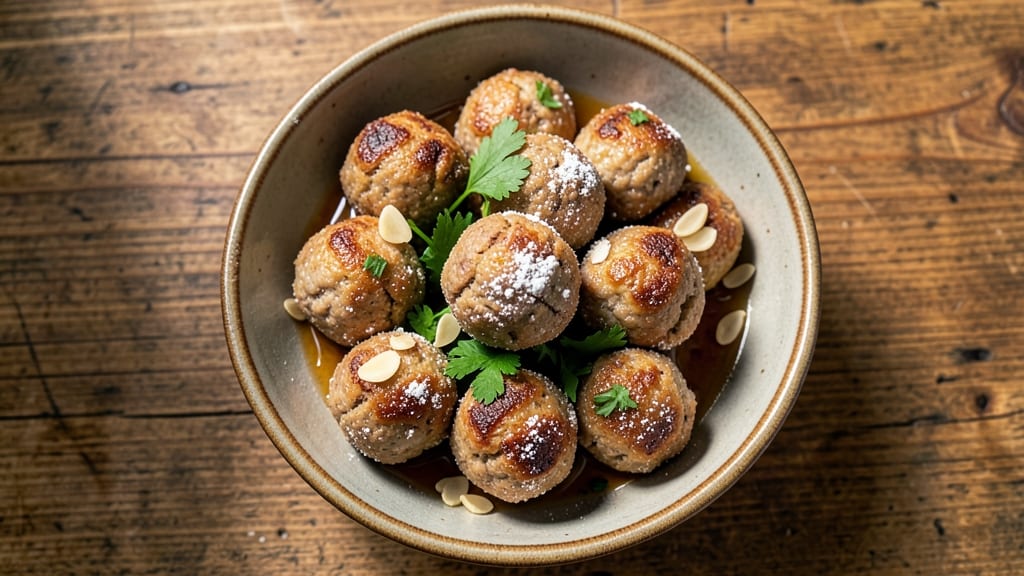
These mini pork meatballs recipe delivers all the comfort of traditional meatballs in perfect, bite-sized portions with crispy edges and tender centers. After years of perfecting the technique at The Smoky Pig, I've developed a method that ensures every meatball stays juicy while developing that irresistible golden crust.
The secret lies in the right pork-to-fat ratio and a quick sear in a screaming-hot pan—no deep-frying required.
What sets these apart is their versatility—they're just as delicious served as an appetizer with marinara and toothpicks as they are as a main course over creamy polenta or in a hearty soup.
I use a blend of ground pork shoulder and pork fat for maximum flavor and tenderness, combined with simple pantry staples that come together in 15 minutes of prep time. The high-heat searing creates that coveted crispy exterior while keeping the interior moist and flavorful.
By the time you're done, you'll have a platter of golden, crispy meatballs that disappear faster than you can say "second helping." The aroma alone will have everyone gathering around your table—smoky, savory, with just a hint of garlic and herbs.
These are the kind of meatballs that turn casual gatherings into memorable meals, whether you're feeding a crowd or treating yourself to a comforting snack.
Serve them warm with your favorite dipping sauce or build them into a pasta dish for a meal that feels special without requiring hours in the kitchen. The technique is straightforward, but the results are restaurant-quality—exactly what you'd expect from a chef who's spent years perfecting pork dishes.
Let's get started on these crowd-pleasing bites.
Ingredients for mini pork meatballs
Simple ingredients, restaurant-quality results—these mini pork meatballs need just 13 staples for perfect bite-sized comfort.
| Ingredient | Amount | Notes |
|---|---|---|
| Ground Pork Shoulder 🐖 | 1 ½ lb | 80% lean, 20% fat ratio preferred |
| Pork Fat Back 🍖 | ¼ lb | Finely chopped for moisture |
| Large Eggs 🥚 | 1 whole | Room temperature for binding |
| All-Purpose Flour 🌾 | ¼ cup | For structural integrity |
| Fresh Garlic 🧄 | 4 cloves | Minced for aromatic depth |
| Fresh Parsley 🌿 | ¼ cup | Finely chopped, stems removed |
| Fresh Thyme 🌿 | 1 tbsp | Leaves only, finely chopped |
| Diamond Crystal Kosher Salt 🧂 | 1 ½ tsp | Adjust to taste |
| Freshly Ground Black Pepper 🌶️ | ½ tsp | Cracked peppercorns preferred |
| Extra-Virgin Olive Oil 🫒 | 2 tbsp | For high-heat searing |
| Panko Breadcrumbs 🍞 | ½ cup | Lightly toasted for crunch |
| Unsalted Butter 🧈 | 2 tbsp | Melted for finishing |
| Vegetable Oil 🫒 | ½ cup | For deep-frying alternative |
The pork-to-fat ratio is everything here. Butcher shops often have pre-blended pork shoulder and fat back—ask for 80/20 if they don't. I always grab mine from Whole Foods or my local Costco for consistent quality. Fresh herbs make all the difference: Trader Joe's sells pre-chopped parsley and thyme in convenient jars, but fresh is worth the extra minute. The garlic should be vibrant purple cloves with no sprouts—those add bitterness. Panko is non-negotiable for that signature crunch—Japanese-style works best, but don't substitute regular breadcrumbs.
No pork fat back? Ground pork with 25% extra fat works in a pinch, but texture suffers. Fresh herbs wilt fast—if you're prepping ahead, store them in damp paper towels in sealed containers. The olive oil matters here: California avocado oil has a higher smoke point for that perfect sear. For the breadcrumbs, toast them in a dry pan for 3 minutes to remove any moisture before mixing. Want extra crispiness? Add 1 tbsp cornstarch to the panko mixture. The egg should be room temperature—cold eggs make the mixture tough.
These keep beautifully for 3 days in the fridge, but honestly? They taste better reheated. Air fryer at 375°F for 5 minutes revives them perfectly. Freeze uncooked meatballs on a tray first, then transfer to a bag for 3 months. For serving, I always keep a small bowl of warm marinara and another of garlic aioli on hand—trust me, it's a game-changer. The meatballs reheat best in a 200°F oven for 10 minutes to maintain that crispy exterior.
Why You'll Love This Recipe
- No Fuss Mixing: I just toss everything—ground pork, fat back, eggs, and flour—into a bowl and knead it like bread dough. No food processor, no overthinking. The fat back keeps them juicy without extra effort.
- Crispy-Garlic Magic: That raw garlic gets worked right into the mix, then the meatballs hit the pan until they’re golden and crackling. One bite and you’ve got a flavor punch that’s simple but ridiculously good.
- Game for Any Meal: Use them straight from the pan for a quick weeknight dinner, toss them in pasta for a hearty lunch, or freeze half for when you’re too tired to cook. They’re my go-to for lazy days and busy nights.
- Budget-Friendly Leftovers: A pound of pork shoulder and a little fat back stretch far—these meatballs are cheap to make but feel like a splurge. Plus, they reheat like a dream, so I always end up with seconds (or thirds).
Step-by-step instructions for mini pork meatballs
Here's how to craft tender, juicy meatballs with perfectly crisp edges every time.
Prepare the Meat Mixture
In a large mixing bowl, combine the 1.5 lb ground pork shoulder and 0.25 lb finely chopped pork fat back. This fat ratio is crucial—it keeps the meatballs moist while creating that irresistible crispy exterior. Use your hands to gently break up any large chunks and distribute the fat evenly throughout the pork.
In a separate small bowl, whisk together the 1 whole large egg, 0.25 cup all-purpose flour, 1.5 tsp Diamond Crystal kosher salt, and 0.5 tsp freshly ground black pepper until fully combined. The egg acts as a binder, while the flour helps create structure. Add this mixture to the pork and mix gently with your hands until just incorporated. Overmixing develops gluten, which can make the meatballs tough.
Add Aromatics and Herbs
Finely mince the 4 cloves fresh garlic and chop the 0.25 cup fresh parsley and 1 tbsp fresh thyme leaves. Fold these aromatics into the pork mixture along with the 0.5 cup panko breadcrumbs. The panko adds texture and helps create that satisfying crunch when seared. Mix everything together until the ingredients are evenly distributed and the mixture holds together when pressed.
Here's the thing—don't be tempted to add too much liquid. The fat from the pork fat back and the egg should provide enough moisture. If the mixture feels too dry, add just 1 teaspoon of water at a time until it comes together. You want it to be cohesive but not sticky.
Shape the Meatballs
Using slightly wet hands (dip them in cold water and wipe on a paper towel), roll the mixture into 1-inch diameter meatballs. I find it easiest to scoop about 1 tablespoon of mixture at a time and roll it between my palms. Keep them uniform in size so they cook evenly. As you shape each meatball, place them on a plate and cover with plastic wrap to prevent drying.
This is where precision matters. If the meatballs are too large, they'll stay undercooked inside; too small, and they'll dry out. Aim for consistency—each should be about the size of a large grape. You should have about 24-28 meatballs total, perfect for appetizers or skewers.
Sear for Crispy Edges
Heat 2 tablespoons extra-virgin olive oil in a large skillet over medium-high heat until shimmering. Working in batches to avoid crowding, add the meatballs and let them sear undisturbed for 2-3 minutes per side until golden brown. You'll see the edges develop a beautiful crust—that's your signal they're ready to flip. Don't rush this step; patience ensures that crispy texture we're after.
If you notice the meatballs releasing too much fat, reduce the heat slightly to medium to prevent burning. The fat should sizzle gently, not smoke. Once all sides are golden, transfer the meatballs to a paper towel-lined plate to drain excess fat. Real talk: this step makes all the difference between good meatballs and extraordinary ones.
Finish with Butter and Serve
Return the skillet to medium heat and add the 2 tablespoons unsalted butter. Let it melt completely, then add the seared meatballs back to the pan. Toss gently to coat them in the buttery sauce for 1-2 minutes. This step adds richness and helps carry any browned bits from the pan, creating a flavorful sauce.
Serve the meatballs immediately while still warm. They should be tender inside with a crisp exterior that gives way to juicy pork. Pair them with toothpick-friendly dipping sauces like marinara, sweet chili, or a tangy aioli. The contrast of warm, crispy meatballs with cool dips is pure comfort food magic.
Pro Tips For Making Mini Pork Meatballs
- CHILL THE FAT BACK: Grate that pork fat back cold—like, straight from the fridge—so it stays firm when mixed with the pork shoulder. I learned this the hard way: room-temperature fat melts into a greasy mess, and your meatballs turn into sad, greasy patties instead of staying compact and juicy.
- MINCE THE GARLIC FINE: Skip the press—use a sharp knife to mince that garlic into a paste. You want it so fine it disappears into the mix, not just tiny specks that burn or stay identifiable. (Yes, even if you’re impatient like me—take the extra 30 seconds.)
- REST THE MIX 15 MINUTES: After mixing everything, let the meatball mixture sit uncovered in the bowl for 15 minutes. This lets the flour absorb moisture and the fat redistribute, so your meatballs hold together when frying or baking. I used to skip this and ended up with crumbly, falling-apart mini meatballs every time.
- FRY IN BATCHES, LOW AND SLOW: Don’t crowd the pan—work in small batches with just enough oil to coat the bottom. Medium-low heat is your friend here; high heat = greasy meatballs, low heat = even cooking without burning the outside before the inside is done. (And yes, this means two rounds of frying if you’ve got a big batch.)
Flavor customization for this recipe
Spicy Kick
For heat lovers, add 1 teaspoon Penzeys smoked paprika and ½ teaspoon cayenne pepper to the pork mixture. The paprika adds depth while the cayenne delivers a slow-building heat that pairs perfectly with the crispy edges.
I like to finish with a sprinkle of chili flakes right before serving—just ½ teaspoon over the whole batch. 🌶️
Sweet and Tangy
Brighten the flavor profile with 1 tablespoon honey or maple syrup mixed into the egg mixture. The sweetness balances the savory pork beautifully. For extra tang, fold in 1 teaspoon lemon zest with the herbs.
Serve with a side of spicy honey> (mix ¼ cup honey with 1 teaspoon sriracha) for dipping.
Herb-Forward Variations
Swap the parsley and thyme for 1 tablespoon fresh rosemary and 1 tablespoon fresh sage for a Mediterranean twist. Or try ½ teaspoon ground coriander and ½ teaspoon ground cumin for a Middle Eastern-inspired flavor. The coriander adds a citrusy note that cuts through the richness of the pork.
Umami Boost
For deeper savory notes, stir in 1 tablespoon fish sauce or 1 teaspoon soy sauce with the egg mixture. The umami richness elevates the meatballs, especially when paired with a hoisin glaze> (mix 2 tablespoons hoisin sauce with 1 teaspoon rice vinegar and ½ teaspoon sesame oil).
This works wonderfully for Asian-inspired dishes.
Cheesy Twist
Add ¼ cup grated Parmesan cheese or ½ cup shredded mozzarella to the pork mixture for a cheesy surprise. The cheese melts slightly during searing, creating pockets of gooey goodness.
I recommend using shredded mozzarella> (like Sargento) for the best melt. Serve with a side of marinara> or alfredo sauce> for a classic Italian touch.
Nutrition facts
Frequently asked questions about mini pork meatballs
Can I use ground pork with different fat percentages?
For best results, stick with 80% lean, 20% fat pork shoulder. The fat keeps meatballs juicy and helps create crispy edges. If using 90% lean pork, add 1 extra tablespoon of pork fat back per pound of meat to compensate. Never substitute with chicken or turkey—they lack the rich flavor and fat content needed for tender, flavorful meatballs.
How do I prevent meatballs from falling apart when shaping?
Keep your hands slightly damp when handling the mixture—this prevents sticking. Also, avoid overmixing after adding wet ingredients. If the mixture feels too dry, add just 1 teaspoon of water at a time until it holds together when pressed. For extra stability, chill the mixture for 15 minutes before shaping. The cold temperature firms up the fat and proteins for easier handling.
What's the best way to cook these if I don't want to pan-sear?
For oven-baked meatballs, preheat to 400°F and bake on a parchment-lined tray for 18-20 minutes, turning halfway. For air fryer versions, cook at 375°F for 10-12 minutes, shaking the basket halfway. Deep-frying works too—use 375°F vegetable oil for 3-4 minutes until golden. The key is high heat for crispiness, regardless of method.
Can I make these ahead of time?
Shape meatballs and refrigerate on a tray for up to 24 hours before cooking. For freezing, form meatballs and freeze on a tray first (to prevent sticking), then transfer to a bag for 3 months. Cook from frozen in the oven (425°F for 20-25 minutes) or air fryer (375°F for 12-15 minutes). Reheating in the pan works too—just add 1 tablespoon of oil and cook over medium heat for 5-7 minutes.
Why do some meatballs stay undercooked inside?
This usually happens from uneven sizing or crowding the pan. Keep meatballs 1-inch diameter for even cooking. When searing, work in batches—overcrowding lowers pan temperature and steams instead of crisps. For oven versions, use a meat thermometer: they're done at 160°F internal temperature. If using leaner pork, reduce cooking time by 1-2 minutes to prevent drying.