
Main Courses
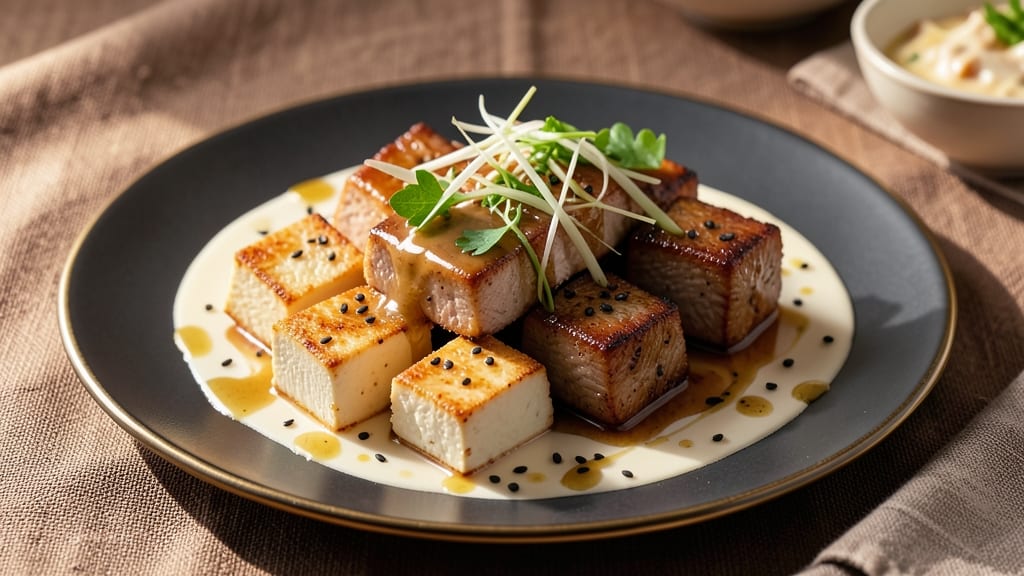
This miso pork tofu recipe delivers restaurant-quality umami bites in just 20 minutes—a perfect balance of savory depth and quick preparation. The secret lies in fermented miso's ability to tenderize pork while infusing tofu with rich, complex flavor.
I developed this dish after years of perfecting miso marinades for both meat and plant-based proteins, and it never fails to impress. What makes this recipe special is its versatility—whether you're serving it as a main course or adding it to bowls and salads.
The pork stays juicy and flavorful, while the tofu absorbs the miso marinade beautifully, creating a satisfying texture contrast. Traditional techniques meet modern efficiency here, ensuring bold flavor without complicated steps.
By the end, you'll have golden-brown pork cubes and tender tofu pieces coated in a sticky-sauce glaze that's both sweet and savory. The aroma alone will draw everyone to the table, and each bite delivers that perfect umami punch.
This dish proves you can achieve restaurant-quality results at home with minimal effort. Serve with steamed jasmine rice or fresh greens to complete the meal. The combination of textures and flavors makes this recipe a standout for any occasion. Let's get cooking!
Ingredients for miso pork tofu
Fermented miso and tender proteins deliver bold umami in under 20 minutes.
| Ingredient | Amount | Notes |
|---|---|---|
| Extra-Firm Tofu 🍢 | 1 lb | Pressed and cubed (1-inch pieces) |
| Lean Pork Tenderloin 🐖 | ¾ lb | Trimmed and cubed (1-inch pieces) |
| White Miso Paste 🧈 | ½ cup | High-quality fermented miso |
| Soy Sauce 🥫 | ¼ cup | Low-sodium preferred |
| Honey 🍯 | 2 tbsp | For sticky-sweet balance |
| Sesame Oil 🫒 | 1 tbsp | Toasted for aroma |
| Rice Vinegar 🍶 | 1 tbsp | White or seasoned |
| Garlic Cloves 🧄 | 4 cloves | Minced for marinade |
| Fresh Ginger 🌿 | 1 tbsp | Grated, peeled |
| Vegetable Oil 🫒 | 2 tbsp | For high-heat cooking |
| Neutral Oil 🫒 | 1 tbsp | For finishing |
| Toasted Sesame Seeds 🌾 | 1 tbsp | For garnish |
| Green Onions 🧅 | 3 whole | Sliced, for garnish |
| Kosher Salt 🧂 | ½ tsp | For seasoning |
| Black Pepper 🌶️ | ¼ tsp | Freshly ground |
The miso paste is the heart of this dish—look for high-quality white miso at Asian markets or the international aisle of major grocery stores like Whole Foods or Trader Joe's. Brands like Hikari or Marukome are reliable choices. Fresh ginger and garlic should be vibrant; if they smell sharp and bright, you're good to go. For the tofu, extra-firm holds its shape best, but don't skip pressing it—wrap in a towel and place a heavy pan on top for 15 minutes before cubing. The pork tenderloin should be lean and trimmed of fat to stay juicy during cooking.
No white miso? Red miso works too, but it'll add a deeper, slightly sweeter flavor. Short on sesame oil? Avocado oil or light olive oil will work, though they lack the nutty aroma. Substituting honey? Maple syrup or agave nectar keeps things veg-friendly. For the pork, if you're avoiding meat entirely, extra-firm tofu or tempeh can replace it—just marinate them an extra 10 minutes to absorb the flavors. The green onions can be swapped for scallions or chives if that's what you have on hand.
Marinate the proteins for at least 30 minutes (overnight is ideal) to maximize flavor absorption. Store miso paste in the fridge after opening—it keeps for up to 6 months. Pressed tofu can be refrigerated for 3-4 days in its marinade, making this a great make-ahead dish. For leftovers, reheat gently in a skillet with a splash of water to prevent drying. The sticky glaze thickens as it cools, so serve it warm for the best texture.
Why You'll Love This Recipe
- One-Pan Magic: I swear by this for nights when I’d rather scroll than chop. The tofu and pork marinate in the same sticky-sweet miso-soy glaze—no extra bowls, no extra mess—just throw it all on a sheet pan and let the oven do the work.
- Umami Bomb: That first bite? The miso paste and soy sauce create this deep, savory punch that sticks with you. The honey balances it just enough to make it feel rich but not heavy—like comfort food had a glow-up.
- Meal Prep MVP: Between us, this is my go-to for lunches. The pork stays tender, the tofu holds its shape, and the sauce clings perfectly. Pack it cold or reheat it—either way, it’s a hit (even when I forget to pack a fork).
- Budget Flex: Lean pork tenderloin and extra-firm tofu stretch further than you’d think when paired with miso and honey. I’ve fed four people for under $15, and honestly? No one complains about the leftovers.
Step-by-step instructions for miso pork tofu bites
This quick umami-packed recipe delivers restaurant-quality flavor in less than 20 minutes.
Prepare the Protein
Begin by pressing the 1 lb extra-firm tofu for 15 minutes to remove excess water. Cut both the tofu and 0.75 lb lean pork tenderloin into 1-inch cubes. I use a sharp knife for clean cuts—this ensures even cooking and better texture. Place the tofu cubes on a wire rack set over a plate to drain any remaining liquid while you prepare the marinade.
For the pork, trim away any visible fat and cut into uniform 1-inch pieces. The pork should be about the same size as the tofu cubes to ensure they cook at the same rate. Keep both proteins separate until ready to cook—the marinade will adhere better to dry surfaces.
Create the Umami Marinade
In a small bowl, whisk together the 0.5 cup white miso paste, 0.25 cup soy sauce, 2 tbsp honey, 1 tbsp sesame oil, and 1 tbsp rice vinegar until smooth. The miso should dissolve completely into the liquid, creating a thick, glossy marinade. I like to use a small whisk or fork for this step to ensure no lumps remain.
Add the 4 minced garlic cloves and 1 tbsp grated fresh ginger to the marinade. The aroma should be intense and inviting—this is your flavor foundation. Taste a small amount to adjust seasoning if needed, though the miso and soy sauce provide plenty of umami depth. Divide the marinade evenly between two small bowls.
Marinate and Cook the Proteins
Add half of the tofu cubes to one bowl of marinade and half of the pork cubes to the other. Toss each gently to coat completely, ensuring every piece is well-covered. Let them marinate for 10 minutes while you heat 2 tbsp vegetable oil in a large skillet over medium-high heat.
Watch the oil carefully until it shimmers—this indicates it's ready for high-heat cooking. Working in batches if needed, add half of each protein to the skillet, leaving space between pieces. Cook for 3-4 minutes until the pork is golden brown and the tofu develops crisp edges. Remove and set aside on a plate.
Finish and Assemble
Repeat with the remaining proteins, adding more oil if needed. Once all pieces are cooked, return everything to the skillet and drizzle with 1 tbsp neutral oil. Toss gently to coat, then remove from heat. The residual heat will finish cooking the proteins while distributing the oil for extra shine.
Transfer the umami bites to a serving platter and garnish with 1 tbsp toasted sesame seeds and sliced 3 green onions. Sprinkle with 0.5 tsp kosher salt and 0.25 tsp freshly ground black pepper. Serve immediately while still warm for maximum flavor impact and crispy texture.
Pro Tips For Making Miso Pork Tofu
- Press the Tofu Dry: Extra-firm tofu still holds moisture like a sponge—wrap it in a clean kitchen towel, press it between two heavy plates (or a cast-iron skillet) for 15 minutes before slicing. This keeps your tofu from turning soggy when it hits the pan, especially after marinating in that sticky miso-soy glaze.
- Slice Pork Thinly Against the Grain: Lean pork tenderloin cooks fast and dries out easy, so cut it into paper-thin slices against the grain—no wider than ¼-inch. This ensures it stays tender even when seared hot in the stir-fry, while still holding up to the miso’s umami punch.
- Deglaze with Cold Water: After searing the pork and tofu, don’t grab that leftover cooking oil to deglaze—use ice-cold water instead. It cuts through the caramelized bits faster, lifts more flavor from the pan, and keeps the sauce from getting too thick when you add honey later.
- Marinate Pork Separately: Tossing pork and tofu together in the miso-honey mix? Bad idea—the pork will overcook while the tofu stays raw, or vice versa. Marinate the pork in a separate bowl for 20 minutes max (it’s lean and absorbs fast), then toss the tofu in the same sauce just before cooking to keep it firm.
Regional styles of this miso pork tofu
Japanese Teriyaki Twist
In Japan, this dish would transform into a teriyaki-miso fusion—replace the honey with 2 tbsp mirin and 1 tbsp sake, then add 1 tbsp grated daikon to the marinade.
Cook the proteins in a cast iron skillet until caramelized, then finish with a drizzle of homemade teriyaki sauce (simmer 0.25 cup soy sauce, 2 tbsp mirin, and 1 tbsp sugar for 5 minutes). Garnish with thinly sliced shiso leaves for a bright, herbal note. 🍶
Korean Gochujang Fusion
For a Korean-inspired version, swap the white miso for 0.3 cup gochujang (Korean chili paste) and add 1 tbsp toasted sesame paste. Increase the honey to 3 tbsp to balance the heat, then stir in 1 tsp grated ginger and 1 minced garlic clove.
Cook the proteins until deeply caramelized, then finish with 1 tbsp toasted sesame seeds and thinly sliced Korean pear for a sweet-tangy contrast. 🌶️
Thai Peanut Glaze
Bring Thai flavors to the table by mixing 0.3 cup smooth peanut butter, 2 tbsp soy sauce, 1 tbsp rice vinegar, and 1 tbsp lime juice into the marinade. Add 1 tsp grated galangal (or ginger) and 1 minced lemongrass stalk for aromatic depth.
After cooking, toss the proteins in a sauce made by simmering 0.25 cup coconut milk, 1 tbsp peanut butter, and 1 tsp palm sugar for 3 minutes. Garnish with crushed peanuts and cilantro. 🥜
Chinese Five-Spice
For a Chinese twist, infuse the marinade with 1 tsp five-spice powder and 1 star anise pod (removed after marinating). Add 1 tbsp Shaoxing wine and 1 tsp grated ginger for depth. After cooking, finish with a drizzle of hoisin sauce and crushed peanuts.
Serve over steamed jasmine rice with quick-pickled cucumbers for a balanced meal. The five-spice adds warmth that complements the umami perfectly. 🌿
Vietnamese Lemongrass
Vietnamese flavors shine here with lemongrass and fish sauce. Replace the honey with 2 tbsp coconut sugar and add 1 tbsp fish sauce, 1 minced lemongrass stalk, and 1 tsp grated galangal.
After cooking, toss the proteins in a sauce of 0.25 cup coconut milk, 1 tbsp soy sauce, and 1 tsp sugar. Garnish with fresh cilantro and thinly sliced red onion. The fish sauce adds a salty depth that elevates the dish. 🌺
Nutrition facts
Frequently asked questions
Can I make this recipe without pork?
For a fully plant-based version, simply replace the pork with an additional 1 lb of extra-firm tofu (or tempeh) and increase the marinade by 2 tbsp to ensure all pieces are well-coated. The tofu will absorb the umami flavors beautifully, especially if marinated for 15-20 minutes instead of 10. Just be sure to press the extra tofu thoroughly to avoid a soggy texture.
How do I prevent the tofu from getting too mushy?
Pressing the tofu is key—wrap it in a clean towel, place a heavy pan on top, and let it drain for at least 15 minutes before cubing. For extra crispiness, pat the cubes dry with a paper towel before marinating. Cooking in small batches at medium-high heat also helps develop a golden crust while keeping the centers tender.
Can I prep the marinade ahead of time?
Yes! The marinade keeps well in the fridge for up to 3 days in an airtight container. For best flavor, let it sit at room temperature for 10 minutes before using. Store the miso paste itself in the fridge after opening—it stays fresh for 6 months. The proteins can marinate overnight for deeper flavor, but don't exceed 12 hours to prevent texture issues.
What's the best way to reheat leftovers?
Reheat gently in a skillet over medium-low heat with 1 tbsp neutral oil and a splash of water to prevent drying. Stir frequently and cook for 3-4 minutes until warmed through. Avoid microwaving—the moisture can turn the tofu rubbery. For extra shine, finish with a drizzle of sesame oil and a sprinkle of toasted sesame seeds.
How can I adjust the sweetness level?
The honey provides balance to the salty-savory miso. For less sweetness, reduce to 1 tbsp or swap for 1 tbsp maple syrup. For more depth, add 0.5 tsp grated ginger or a pinch of white pepper to complement the flavors. Taste the marinade before cooking—adjust to your preference!