
Main Courses
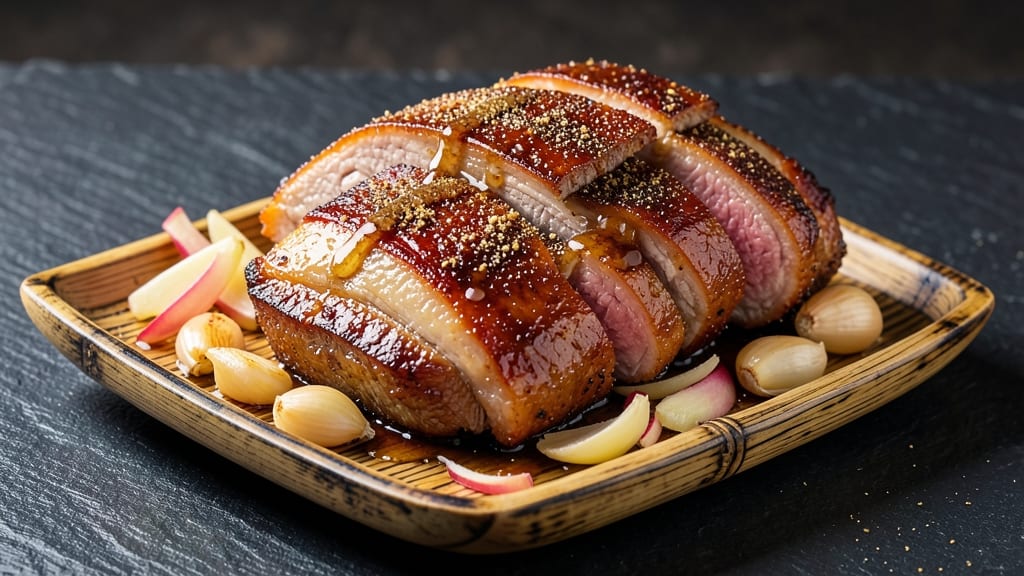
This authentic Chinese roast pork delivers the perfect balance of crispy, caramelized crust and silky, tender meat that makes every bite unforgettable. 🔥 As someone who's spent years perfecting Cantonese-style roasting techniques, I can tell you the secret lies in the marinade and slow cooking process—transforming simple pork into a showstopping centerpiece for any table.
The recipe begins with a foolproof marinade of five-spice powder, honey, and soy sauce, which tenderizes the meat while building layers of flavor. What sets this apart is the two-stage roasting method: first baking to render fat, then broiling to create that signature glossy, crackling crust.
This approach ensures restaurant-quality results at home, even with basic equipment. By the time you're done, you'll have golden-brown roast pork with a caramelized exterior and melt-in-your-mouth interior, ready to impress at family gatherings or festive celebrations.
The aroma alone will have everyone gathering around your table, eager for a taste of this timeless classic. Serve with steamed jasmine rice and stir-fried vegetables for an authentic meal experience. Let's get started on creating this Cantonese masterpiece!
Ingredients for authentic chinese roast pork
Six ingredients transform simple pork into Cantonese showstopper with crispy crust and melt-in-your-mouth tenderness.
| Ingredient | Amount | Notes |
|---|---|---|
| Pork Shoulder (Bone-in) 🐖 | 4 lb | Well-marbled, trimmed of excess fat |
| Five-Spice Powder 🌶️ | 2 tbsp | Authentic Chinese blend preferred |
| Honey 🍯 | ½ cup | Dark amber for caramelization |
| Light Soy Sauce 🥫 | ⅓ cup | Kikkoman preferred for balance |
| Fresh Ginger Root 🧄 | 2 tbsp | Finely grated, aromatic |
| Garlic Cloves 🧄 | 8 cloves | Minced, aromatic |
| Sesame Oil 🫒 | 1 tbsp | Toasted, for aroma |
| Brown Sugar 🍚 | ¼ cup | Lightly packed |
| Shaoxing Wine 🍷 | ¼ cup | Dry, aromatic |
| Cornstarch 🌾 | 2 tbsp | For crispy crust |
| Vegetable Oil 🫒 | ½ cup | High smoke point |
| Salt 🧂 | 1 ½ tsp | Kosher, for seasoning |
| Black Peppercorns 🌶️ | ½ tsp | Freshly cracked |
The pork shoulder is non-negotiable—bone-in for flavor, well-marbled for juiciness. I always grab mine from Whole Foods or a trusted Asian market (look for the pork belly section), where the cuts are fresher than your average supermarket. Five-spice powder? Penzeys Spices has the best blend, but any authentic Chinese brand works. For the ginger, skip the jarred stuff—freshly grated makes all the difference. Shaoxing wine? Don't stress if you can't find it—dry sherry works in a pinch, but it's worth hunting down for that authentic depth.
No five-spice powder? Mix 1 tsp cinnamon, 1 tsp fennel seeds, 1 tsp star anise, 1 tsp cloves, 1 tsp Sichuan peppercorns—toast the spices first for extra flavor. Shaoxing wine unavailable? Dry vermouth is a decent swap, though less authentic. The honey should be dark amber—Manuka honey if you want to splurge, but regular works fine. For the cornstarch, arrowroot powder works too if you're out, but cornstarch gives that signature crispy texture. Pro tip: Toast your sesame oil in a dry pan for 30 seconds before adding to the marinade—amplifies the aroma by 1000%.
Marinate the pork overnight for best results, but at least 4 hours if you're short on time. The mixture keeps in the fridge for 3 days, so double the batch if you're feeding a crowd. For the roasting, use a meat thermometer—pull it at 145°F internal temp, then broil for that caramelized crust. Leftovers? Slice thinly and reheat in a steamer basket to keep the meat tender. Stores for 4 days in the fridge or 3 months frozen—though honestly, it disappears faster than that.
Why You'll Love This Recipe
- One-Pan Magic: Honestly, this dish is that easy—just rub the pork with five-spice, honey, and ginger, then roast it. No chopping, no fussing, just hands-off perfection while you sip tea or scroll through your phone.
- Sweet-Savory Crisp: That honey glaze caramelizes into a sticky, addictive crust, while the five-spice powder gives it a warm, aromatic depth. It’s the kind of flavor that makes you want to lick the plate clean—no exaggeration.
- Leftover Hero: Between us, this pork gets better the next day. Slice it thin for rice bowls, wrap it in bao, or toss it into stir-fries. I’ve had it three days in a row and still crave it—proof it’s a pantry lifesaver.
- Budget Win: Bone-in pork shoulder is cheap, and a single roast feeds my family of four for days. The five-spice and ginger cost pennies, and the honey adds richness without breaking the bank. Solid math for a dish this good.
Step-by-step instructions for Cantonese roast pork
Here's how to create that iconic Cantonese BBQ crust with melt-in-your-mouth pork.
🍳 Step 1: Marinate the Pork Shoulder for Maximum Flavor
In a large bowl, combine the 0.5 cup honey, 0.33 cup light soy sauce, 0.25 cup shaoxing wine, 2 tbsp brown sugar, 2 tbsp five-spice powder, 1.5 tsp salt, 0.5 tsp cracked black peppercorns, 2 tbsp finely grated fresh ginger root, and 8 minced garlic cloves. Mix until the brown sugar and five-spice powder dissolve completely.
Place the 4 lb bone-in pork shoulder in a large resealable bag or container. Pour the marinade over the pork, coating it thoroughly on all sides. Seal and refrigerate for at least 12 hours (I prefer 24 hours for maximum flavor penetration). The pork should absorb the marinade completely, taking on a deep amber color. This step ensures the meat stays juicy while developing that signature Cantonese flavor profile.
🔥 Step 2: Build the Signature Crust Mixture
In a small bowl, whisk together 2 tbsp cornstarch and 1 tbsp toasted sesame oil until smooth. This will be your crusting mixture. In a separate small bowl, combine 0.5 cup vegetable oil and 2 tbsp five-spice powder remaining from the marinade. The oil helps create that signature crispy exterior while the five-spice powder adds depth of flavor.
Here's the thing—this crust mixture is what makes this dish authentic. The cornstarch creates the crispy exterior while the oil prevents it from becoming too dry. I like to make this mixture ahead and let it sit for 10 minutes at room temperature so the spices bloom properly before applying.
🔥 Step 3: Roast Until Fork-Tender with Crispy Exterior
Preheat your oven to 325°F. Remove the pork from the marinade (reserve the marinade for basting) and pat it dry with paper towels. This step is crucial—you want the pork to have good contact with the oven rack for even browning.
Place the pork shoulder on a rack set in a roasting pan. Roast for 3 hours, basting with the reserved marinade every 45 minutes. After 3 hours, increase the oven temperature to 400°F. Brush the pork generously with the cornstarch-oil mixture, making sure to coat it thoroughly. Return to the oven and roast for another 30-45 minutes until the internal temperature reaches 195-203°F and the crust is deep golden brown.
⏰ Step 4: Rest and Slice for Perfect Texture
Remove the pork from the oven and transfer it to a cutting board. Tent loosely with foil and let it rest for at least 30 minutes (I prefer 1 hour). This resting period is essential—it allows the juices to redistribute throughout the meat, ensuring each slice is moist and flavorful.
When ready to slice, cut the pork against the grain into ¼-inch thick slices. The meat should be fork-tender with a crispy, caramelized exterior. Serve immediately with steamed rice and quick-pickled vegetables to complement the rich flavors of the roast pork. The contrast between the crispy crust and silky meat is what makes this dish truly special.
🍽️ Step 5: Garnish and Serve with Authentic Touches
Arrange the sliced pork on a warm platter. Drizzle any remaining pan juices over the top and garnish with thinly sliced scallions and sesame seeds for that authentic restaurant presentation. The aroma alone will have everyone gathering around your table.
Here's a pro tip: I like to serve this with a side of hoisin sauce for dipping. The sweet and tangy flavors complement the rich, caramelized pork perfectly. And don't forget to save some of that crispy crust—it's the best part!
Pro Tips For Making Authentic Chinese Roast Pork
- START HOT, END LOW: The first 10 minutes over high heat—400°F (200°C)—seals the fat and renders it crisp. After that, drop to 300°F (150°C) and let it slow-cook for 3 hours. I used to rush the low-and-slow part, and the meat ended up dry. Patience here makes the difference between tender and tough.
- SCORE THE FAT, NOT THE MEAT: Use a sharp knife to cut shallow slits only into the fat cap, not the muscle. This lets the fat render out evenly without turning the pork into jerky. I learned this the hard way after a batch turned out chewy—now I treat the fat like a map, not a cutting board.
- BRINE THE PORK OVERNIGHT: Soak the bone-in pork shoulder in a mix of 1 cup soy sauce, 2 tbsp honey, and 1 tbsp salt per gallon of water for 12–24 hours. The five-spice powder goes in the marinade, not just on top. This step guarantees moisture and depth—skip it, and you’ll fight dryness later.
- GLAZE IN STAGES: Don’t dump all the honey-soy glaze at once. Brush on half after the first hour, then the rest in the last 30 minutes. The high heat early on caramelizes it faster, but too much too soon burns before it sticks. Think of it like painting—light layers, not a flood.
Perfect pairings for these flavors
Rice Pairings
Steamed jasmine rice is my go-to pairing—its delicate floral aroma complements the pork's rich, caramelized flavors without overpowering them. Cook 2 cups jasmine rice with 2.5 cups water and 1 tsp salt, steaming for 15 minutes until tender.
For extra authenticity, add 1 tbsp toasted sesame oil to the pot before steaming. 💛
Quick-Pickled Veggies
Bright, tangy pickles cut through the pork's richness beautifully. Thinly slice 2 cups daikon radish and 1 cup cucumber, then soak in a mixture of ½ cup rice vinegar, 2 tbsp sugar, and 1 tsp salt for 30 minutes.
Garnish with 1 tbsp chopped cilantro for a refreshing contrast.
Dipping Sauces
A small bowl of hoisin sauce is essential for dipping—its sweet, tangy profile balances the pork's savory depth. Mix ½ cup hoisin with 1 tbsp rice vinegar and a pinch of Sichuan peppercorns for a spicy kick.
For a lighter option, blend ¼ cup Greek yogurt, 1 tbsp soy sauce, and 1 tsp honey into a creamy dip.
Side Dish Harmony
Add stir-fried bok choy with garlic and chili for a quick, flavorful side. Sauté 2 heads bok choy, 3 minced garlic cloves, and 1 tbsp chili crisp in 1 tbsp oil for 3 minutes until wilted. The bitterness and heat cleanse the palate between bites of pork. ✨
Drink Pairings
Serve with a crisp green tea, like Dragon Well, to complement the pork's umami notes. For something stronger, a dry Chinese white wine like Shaoxing wine (the same used in the marinade) enhances the dish's authenticity. Avoid heavy reds—they can overpower the delicate flavors.
Garnish Finishing
Top each serving with toasted sesame seeds and thinly sliced scallions for color and texture. The sesame adds nutty depth, while the scallions bring a fresh, oniony brightness. A sprinkle of flaky sea salt elevates the dish to restaurant-quality presentation. 💫
Nutrition facts
Frequently asked questions about authentic Chinese roast pork
Can I use pork tenderloin instead of pork shoulder for this recipe?
Pork tenderloin is leaner and more delicate, so it won't give you the same fork-tender texture that pork shoulder provides. For best results, stick with the bone-in pork shoulder—it's more flavorful and handles the long cooking time perfectly. If you're set on using tenderloin, marinate it for 4 hours max and roast at 375°F for just 20-25 minutes to avoid drying it out.
How do I get that perfect crispy crust without burning the pork?
The secret is in the two-stage roasting method: slow-roast first, then broil at the end. Start at 325°F for 3 hours to render fat, then increase to 400°F and apply the cornstarch mixture. Watch closely during the final 30 minutes—the crust forms quickly! If it browns too fast, tent with foil and finish under the broiler for 2-3 minutes per side.
What's the difference between Cantonese roast pork and char siu?
Both are Cantonese-style roasted pork, but char siu is typically made with pork shoulder or belly, marinated in a sweeter sauce with hoisin and honey, and often glazed with extra sauce before roasting. This recipe leans closer to traditional Cantonese roast pork, which focuses on a dry crust from cornstarch and oil rather than a sticky glaze. Char siu is more common in dim sum, while this version excels as a main course.
Can I make this recipe in a slow cooker?
Not ideal for the crispy crust, but you can adapt it! Cook the pork on low for 8 hours with the marinade, then transfer to a baking sheet. Brush with the cornstarch mixture and broil for 5-7 minutes to create a crust. The meat will be tender but lose some of the caramelized exterior. For best results, stick with the oven method—it's worth the effort!
How do I store and reheat leftovers?
Store sliced pork in an airtight container for up to 4 days in the fridge. To reheat, steam or bake at 300°F for 10-15 minutes until warmed through—microwaving makes the crust soggy. For frozen leftovers, thaw overnight in the fridge, then reheat using the same method. The crust won't be as crispy, but the meat stays juicy and flavorful.