
Main Courses
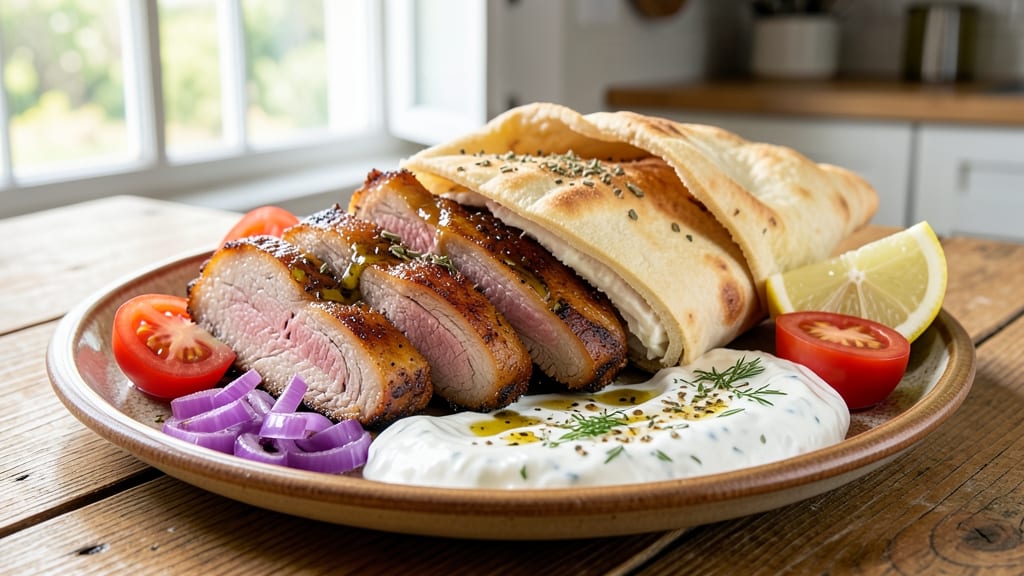
This authentic Greek pork gyros recipe brings the flavors of Athens to your kitchen with perfectly marinated pork and sizzling skewers. 🔥 The secret lies in the marinade—oregano, garlic, and lemon transform simple pork into tender, flavorful bites that practically melt in your mouth.
I've perfected this technique after years of studying Greek street food traditions, and it delivers restaurant-quality results at home.
The key to authentic gyros is the marinade, which needs at least 4 hours (overnight is best) to penetrate the meat. We'll use vertical rotisserie-style cooking to achieve that signature charred exterior and juicy interior that makes gyros so irresistible.
This method ensures even cooking and maximum flavor in every bite, just like the ones you'd find at a bustling Greek taverna.
By the time you're done, you'll have perfectly cooked pork skewers with a caramelized crust and tender centers, ready to be served in warm pita bread with fresh tomatoes, red onions, and a dollop of creamy tzatziki.
The aroma alone will have everyone gathering around your table, and the first bite will transport them straight to Greece.
This recipe serves 4-6 people and comes together in about 2 hours of active time (plus marinating), making it perfect for a weekend dinner or a gathering with friends. The best part?
You can make the marinade and prep the meat ahead of time, so all you need to do is fire up the grill or oven when you're ready to cook.
Ingredients for authentic greek pork gyros
Pork shoulder, fresh herbs, and zesty lemon—these ingredients transform simple skewers into restaurant-quality Greek magic.
| Ingredient | Amount | Notes |
|---|---|---|
| Pork Shoulder 🥩 | 2 ½ lb | Boneless, cut into 1-inch cubes |
| Extra-Virgin Olive Oil 🫒 | ¼ cup | For marinade and cooking |
| Fresh Lemon Juice 🍋 | ½ cup | Freshly squeezed |
| Garlic Cloves 🧄 | 8 cloves | Minced, for marinade |
| Dried Oregano 🌿 | 2 tbsp | Greek oregano preferred |
| Dried Thyme 🌿 | 1 tsp | For depth of flavor |
| Ground Cumin 🌿 | 1 tsp | Toasted for warmth |
| Salt 🧂 | 1 ½ tsp | Kosher or sea salt |
| Black Pepper 🌶️ | 1 tsp | Freshly ground |
| Wooden Skewers 🪵 | 12 whole | Soaked in water for 30 minutes |
| Fresh Tomatoes 🍅 | 2 medium | Seeded and chopped |
| Red Onion 🧅 | 1 medium | Thinly sliced |
| Pita Bread 🍞 | 6 whole | Warm, for serving |
| Greek Tzatziki Sauce 🥛 | 1 cup | Store-bought or homemade |
The pork shoulder is the star here—look for well-marbled cuts at your local butcher or Costco for the best quality. I always grab extra because it marinates so well, and the flavor only gets better overnight. For the oregano, Greek oregano from a specialty store makes all the difference—it's got that distinct, earthy flavor that's hard to replicate. If you can't find it, regular dried oregano works in a pinch, but trust me on the Greek kind. The garlic should be fresh, not that powdered stuff in the jar—it's worth the extra minute to mince it yourself.
No fresh lemon? Bottled lemon juice works, but it lacks that bright, fresh punch. Short on time? Substitute lime juice at half the amount, though it'll have a slightly different tang. The tomatoes and onion can be swapped for any veggies you've got—cucumber slices or bell peppers add a nice crunch. For the pita, warm it in a dry skillet for 30 seconds per side—it makes all the difference. And if you're feeling fancy, make your own tzatziki with Greek yogurt, cucumber, and garlic. It’s easier than you think!
Marinate the pork for at least 4 hours, but overnight is best—it’s worth the wait. Store the marinade and meat in a sealed container in the fridge. The pita stays fresh for 2 days if wrapped in foil, and the tzatziki keeps for 3 days in the fridge. Skewers can be prepped ahead and grilled straight from the fridge—no thawing needed. Leftovers? Toss them in a container and reheat in the oven for a quick lunch. This recipe is all about making ahead—just fire up the grill when you're ready to cook!
Why You'll Love This Recipe
- One-Pan Magic: I swear by this—just rub the pork shoulder with olive oil, garlic, and oregano, then let it slow-cook until it falls apart. No flipping, no fussing, no extra dishes.
- Tangy Garlic Kiss: That lemon juice and crushed garlic? It’s the secret weapon. The pork stays juicy while the marinade gives it this bright, herby punch that hits all the right notes—no dry bites here.
- Weeknight Workhorse: Make a big batch on Sunday, and you’ve got lunch or dinner covered all week. Wrap it in pita, toss it in salads, or even slice it for a quick pasta—it’s that adaptable.
- Budget-Friendly Feast: Pork shoulder is cheap, but it feels like a splurge. A few dollars buys enough meat to feed four, with leftovers that taste just as good reheated as they do fresh. (Yes, even on a Tuesday night.)
Step-by-step instructions for authentic Greek pork gyros
Here's the secret to restaurant-quality gyros—juicy pork, bold flavors, and that perfect smoky char.
🍳 Step 1: Marinate the Pork Shoulder for Maximum Flavor
In a large bowl, combine the 2.5 lb pork shoulder cubes, 0.25 cup extra-virgin olive oil, 0.5 cup fresh lemon juice, 8 minced garlic cloves, 2 tbsp dried oregano, 1 tsp dried thyme, 1 tsp ground cumin, 1.5 tsp salt, and 1 tsp black pepper. Use your hands to mix everything thoroughly—this ensures the marinade coats every cube.
Transfer the pork to a resealable plastic bag and seal tightly. Refrigerate for at least 4 hours (overnight is even better). The acidity from the lemon juice and garlic will tenderize the meat while infusing it with authentic Greek flavors. You'll know it's ready when the pork absorbs the marinade completely and smells irresistibly aromatic.
🔪 Step 2: Thread and Prep the Skewers
Remove the marinated pork from the refrigerator and let it sit at room temperature for 15 minutes. This ensures even cooking. Soak the 12 wooden skewers in water for 30 minutes (if not already soaked) to prevent burning.
Thread 4-5 pork cubes onto each skewer, alternating directions slightly to create a compact shape. This arrangement helps the meat cook evenly and prevents it from falling apart. Arrange the skewers on a plate and let them sit while you prepare the grill or skillet.
🔥 Step 3: Cook the Skewers to Juicy Perfection
Heat a grill or large skillet over medium-high heat. When it's hot enough to see a slight shimmer, add the skewers and cook for 8-10 minutes, turning occasionally, until the pork reaches an internal temperature of 145°F and develops a beautiful golden-brown crust. The meat should be tender but still slightly firm to the touch.
Here's the thing—don't overcrowd the grill. Cook in batches if needed to maintain even heat. The goal is to get that perfect sear while keeping the inside juicy. You'll know they're ready when the edges are caramelized and the meat pulls away from the skewer with gentle pressure.
👨🍳 Step 4: Assemble the Gyros with Classic Toppings
While the pork cooks, prepare the toppings. Thinly slice the 1 medium red onion and chop the 2 medium fresh tomatoes. Warm the 6 whole pita bread in a dry skillet or wrap them in a damp towel and microwave for 20 seconds—this makes them soft and pliable.
Spread 2-3 tablespoons of the 1 cup Greek tzatziki sauce on each pita. Then layer with the cooked pork skewers, sliced tomatoes, and red onion. The combination of cool tzatziki, juicy pork, and fresh vegetables creates that perfect balance of flavors and textures that makes gyros so addictive.
🍽️ Step 5: Serve Immediately for the Best Experience
Fold the pita in half or roll it up, and serve immediately. The warmth of the pita contrasts beautifully with the cool tzatziki, while the smoky, spiced pork steals the show. For an extra touch, sprinkle with a pinch of dried oregano or a squeeze of fresh lemon juice right before serving.
This is where it gets fun—watch your guests dig in! The authentic Greek flavors come together in every bite, with tender pork, fresh toppings, and that perfect pita wrap. Leftovers? Store the cooked pork in the fridge for up to 3 days and reheat gently in a skillet or microwave before serving.
Pro Tips For Making Authentic Greek Pork Gyros
- Trim the Fat First: Pork shoulder has layers of fat that render unevenly—trim those thickest ones before cooking. I learned this after my first batch turned greasy instead of crispy; now I use kitchen shears to slice away the biggest patches, leaving just a thin layer for flavor.
- Marinate Overnight (No Exceptions): The acid in lemon juice and olive oil needs time to break down the meat’s fibers. Toss the pork with garlic, oregano, and a splash of lemon juice at least 8 hours ahead—overnight is ideal. Rushing this step means tough, flavorless gyros, and nobody wants that.
- Sear in Batches: Crowd the pan, and you’ll steam the meat instead of sear it. Use a 12-inch skillet and cook the pork in two batches over medium-high heat, letting each piece develop a deep crust before flipping. The first batch will be golden; the second will thank you later.
- Rest Before Slicing: Freshly cooked pork shoulder is still releasing juices—if you slice it immediately, you’ll end up with dry, stringy gyros. Tent the meat with foil and let it rest for 5 minutes before cutting against the grain. Your sandwiches will stay juicy and tender.
Essential equipment for this dish
Vertical Rotisserie
For that authentic Greek taverna experience, a vertical rotisserie is your best bet—it mimics the traditional method perfectly. I use my Broil King K600 with a 12-inch spit for even cooking.
The vertical rotation ensures all sides get equal exposure to heat, creating that signature charred crust while keeping the interior juicy. If you don't have a rotisserie, a heavy-duty grill or cast-iron skillet works in a pinch. 🔥
Cast Iron Skillet
A 12-inch cast iron skillet is my go-to for weeknight gyros because it’s versatile and retains heat beautifully. Heat it over medium-high heat until it’s screaming hot, then add the skewers. The key is to keep the heat consistent—cast iron holds up better to temperature fluctuations than nonstick pans.
I like to use my Lodge Pre-Seasoned Skillet because it develops a natural nonstick surface over time. For extra flavor, add a splash of olive oil to the skillet before cooking.
Grill Essentials
If you're grilling outdoors, a charcoal or gas grill works perfectly. For charcoal, use lump charcoal for better heat control and avoid lighter fluid—it can impart unwanted flavors. I like to set up a two-zone fire with direct heat on one side and indirect on the other.
This lets you sear the skewers over direct heat, then move them to indirect heat to finish cooking. A meat thermometer is non-negotiable here—shoot for 145°F internal temperature. For gas grills, preheat for 10-15 minutes to ensure even cooking.
Skewer Tools
Wooden skewers are traditional, but they burn easily, so soak them in water for 30 minutes before using. For a more durable option, metal or stainless steel skewers (like OXO Good Grips) won’t burn and hold up better to flipping.
If you’re using wooden skewers, thread them with 4-5 pork cubes per skewer, alternating directions to create a compact shape. This prevents the meat from falling apart and ensures even cooking. Pro tip: Use long-handled tongs to flip the skewers safely on the grill or skillet.
Tongs and Thermometer
You’ll need long-handled tongs to flip the skewers without burning your hands—OXO Good Grips are my favorite because they’re sturdy and easy to grip. A meat thermometer is essential for perfect doneness. I use a ThermoWorks Smoke because it’s precise and has a backlit display.
Insert the probe into the thickest part of the pork to check for 145°F internal temperature. If you don’t have a thermometer, cut into a skewer—juices should run clear, and the meat should pull away from the bone with gentle pressure.
Nutrition facts
Frequently asked questions
Can I use chicken or beef instead of pork for gyros?
While pork is traditional, you can absolutely use chicken thighs (bone-in works best) or beef sirloin for gyros. For chicken, marinate for 2-4 hours and cook to 165°F internal temp. Beef should reach 145°F and be sliced thinly against the grain. The marinade time and cooking method remain the same—just adjust the internal temperature!
How do I keep the pita from getting soggy?
Warm the pita in a dry skillet for 10-15 seconds per side right before serving—this keeps it crisp. For extra protection, layer the tzatziki on the bottom half of the pita, then add the meat and toppings on top. Fold or roll immediately to seal in freshness. Pro tip: Keep the pita wrapped in a clean towel to stay soft while you cook.
What's the best way to reheat leftover gyros?
Reheat pork skewers in a skillet over medium heat with a splash of water for 2-3 minutes—this prevents drying. For pita wraps, warm in a toaster oven at 350°F for 1-2 minutes to restore crispness. Never microwave—it turns the meat rubbery. Store cooked pork in the fridge for up to 3 days in an airtight container.
Can I make this recipe on an indoor grill pan?
Yes! Use a 12-inch cast iron grill pan over medium-high heat with a splash of olive oil. Cook skewers for 8-10 minutes, turning frequently to mimic outdoor grill marks. For best results, work in batches to maintain heat. The flavor will be slightly different but still delicious—just expect more vertical char lines than the traditional horizontal grill marks.
Why does my gyro meat sometimes stick to the skewers?
This happens when the pork cubes are too large or the skewers aren't soaked properly. Use 1-inch cubes and soak wooden skewers for 30+ minutes. For extra security, thread the meat with the grain running in the same direction on each skewer. If using metal skewers, ensure they're 3-4 inches long to hold the meat securely while flipping.